

TL;DR:
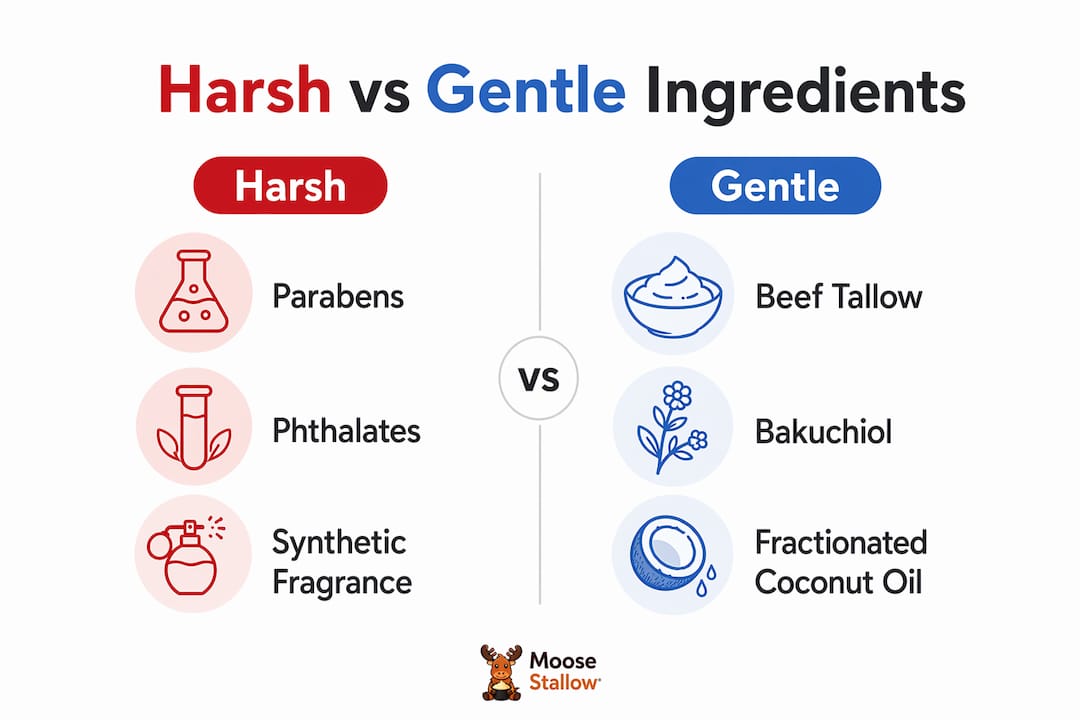
- Harsh skincare ingredients such as parabens, phthalates, and synthetic fragrance can disrupt the skin barrier and pose health risks.
- Reading labels carefully and using verification tools helps identify and avoid harmful chemicals in personal care products.
- Replacing high-exposure products gradually with simple, natural formulations like Moosestallow’s tallow-based skincare supports sensitive skin safely.
Harsh skincare ingredients are defined as synthetic chemicals, preservatives, and compounds that disrupt your skin barrier, trigger irritation, or pose long-term health risks. Learning how to avoid harsh skincare ingredients is the most direct way to protect sensitive skin and reduce your exposure to toxins hiding in everyday products. The five most harmful ingredients found in cosmetics include parabens, phthalates, formaldehyde-releasing preservatives, PFAS, and synthetic fragrance. These are not rare chemicals. They appear in moisturizers, cleansers, and serums sold at every price point. The good news is that reading labels and choosing cleaner alternatives is a skill anyone can learn.
How to avoid harsh skincare ingredients: what to watch for
The ingredient category known as “irritants and endocrine disruptors” covers a wide range of chemicals found in personal care products. Here are the most common offenders and why they matter:
- Parabens (methylparaben, propylparaben, butylparaben): Used as preservatives. Linked to hormone disruption and potential cancer risk with long-term use.
- Phthalates: Often hidden inside the word “fragrance.” Connected to reproductive toxicity and developmental concerns.
- Formaldehyde releasers (DMDM hydantoin, quaternium-15): Slowly release formaldehyde into your skin. Classified as a known carcinogen.
- Synthetic fragrance: A single word that can hide hundreds of chemicals. Manufacturers are not required to disclose what is inside it.
- Sodium lauryl sulfate (SLS): A harsh detergent that strips the skin’s natural oils. Common in cleansers and body washes.
- Drying alcohols (alcohol denat., isopropyl alcohol): Damage the skin barrier over time and worsen dryness and sensitivity.
The real problem is that these ingredients are not always obvious. “Fragrance” is a trade secret under U.S. law, so a product can list one word and contain dozens of undisclosed compounds. That is why avoiding irritating skincare products requires more than a quick glance at the front of the bottle.
Pro Tip: Search for “DMDM hydantoin” or “quaternium-15” on any product label. If you find either one, the product releases formaldehyde as it breaks down on your skin.
How do you read skincare labels to spot bad ingredients?
Reading an INCI (International Nomenclature of Cosmetic Ingredients) label is a skill that pays off fast. Ingredients are listed in order of concentration, with the highest amounts first. An ingredient listed in the first five positions makes up the bulk of the formula. Ingredients near the very end are typically present at less than 1%. This means a harmful ingredient near the top is far more concerning than one listed last.
Here is a simple process for reading any skincare label:
- Check the first five ingredients. These form the core of the product. If water, a harsh alcohol, or a synthetic fragrance appears here, reconsider the product.
- Search for “fragrance” or “parfum.” Both words can mask phthalates and other undisclosed chemicals. Choose fragrance-free products for sensitive skin.
- Look for paraben variants. Any ingredient ending in “-paraben” is a paraben. Methylparaben and propylparaben are the most common.
- Use a verification tool. The EWG Skin Deep database and Think Dirty app rate products and flag harmful ingredients by name. INCI Decoder is another reliable resource for decoding unfamiliar terms.
- Ignore front-label marketing. Terms like “all natural,” “green,” and “clean” are unregulated and unreliable. The ingredient list is the only honest part of the package.
One distinction worth knowing: “fragrance-free” and “unscented” are not the same thing. Fragrance-free means no fragrance compounds were added. “Unscented” may still contain masking fragrances to cover chemical odors. For sensitive skin, fragrance-free is always the safer choice.
Pro Tip: Even products labeled “phthalate-free” may contain other harmful compounds. Cross-reference the full ingredient list with EWG Skin Deep before trusting any single claim on the label.
What are the best gentle and natural skincare alternatives?
Safe skincare does not mean ineffective skincare. Several ingredients deliver real results without the risk of irritation or toxicity.
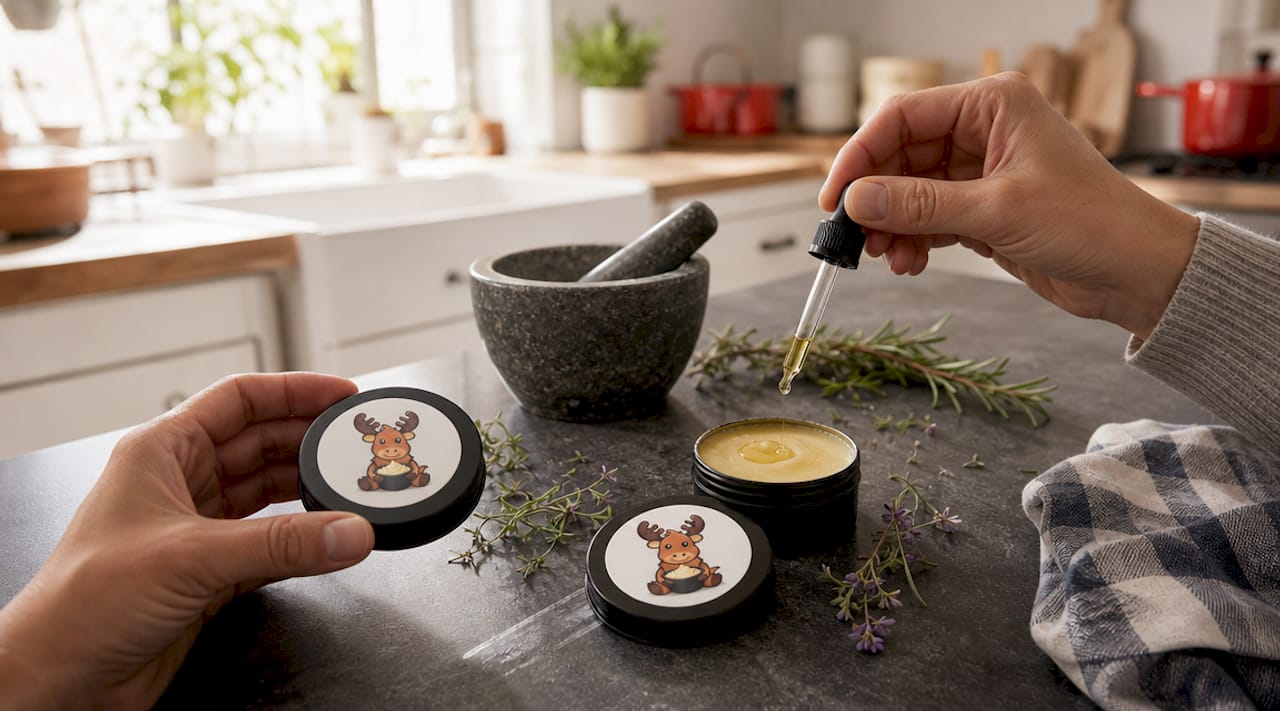
At Moosestallow, every formula starts with beef suet tallow as the foundation. Tallow is rich in fat-soluble vitamins and has a fatty acid profile that closely mirrors human skin. It absorbs without a greasy residue and supports the skin barrier rather than stripping it. Supporting ingredients in Moosestallow formulas include:
- Fractionated coconut oil: Stable, oxidation-resistant, and absorbs easily. It outperforms many carrier oils on shelf life and skin feel.
- Beeswax: Creates a breathable protective layer without clogging pores.
- Jojoba: Technically a liquid wax, not an oil. It mimics the skin’s natural sebum and is well-tolerated by most skin types.
- Castor oil: Adds thickness and supports moisture retention.
- Egg yolk infused oil: Rich in lecithin and fat-soluble nutrients that feed the skin barrier.
- Tocopherols (Vitamin E): A natural antioxidant that protects the formula and supports skin repair.
Beyond tallow-based products, a few other ingredients have strong safety records. Bakuchiol is a plant-based retinol alternative that reduces inflammation and supports collagen without the irritation retinol causes. Niacinamide and hyaluronic acid are both well-studied and gentle across most skin types.
One caution: not all natural ingredients are safe. Essential oils in high concentrations, lemon juice, baking soda, and coconut oil used on the face can irritate skin or clog pores. “Natural” does not automatically mean gentle. Ingredient transparency and formulation quality matter more than the natural label.
| Ingredient | Why it works for sensitive skin |
|---|---|
| Beef suet tallow | Matches skin’s fatty acid profile; supports barrier repair |
| Fractionated coconut oil | Stable, non-oxidizing, absorbs cleanly |
| Bakuchiol | Retinol-like results without redness or peeling |
| Tocopherols | Antioxidant protection; extends formula stability |
| Jojoba | Mimics sebum; non-comedogenic and well-tolerated |
Step-by-step approach to cleaning up your skincare routine
Changing your entire routine overnight is not necessary and often not helpful. A gradual, methodical approach works better for sensitive skin.
- Audit what you already own. Pull out every product you use daily. Enter each one into EWG Skin Deep or Think Dirty. Note which products score poorly or contain parabens, fragrance, or SLS.
- Prioritize the highest-exposure products first. Moisturizers and serums stay on your skin all day. Replace these before rinse-off products like cleansers.
- Swap one product at a time. This makes it easy to identify what is helping or hurting your skin. Replacing everything at once makes reactions impossible to trace.
- Patch test every new product. Apply a small amount to your inner arm for 24 to 48 hours before using it on your face. This is the standard practice recommended for sensitive skin routines.
- Keep your routine minimal. A minimalist routine with a few well-chosen ingredients reduces your total exposure to irritants and makes it easier to know what is working.
Pro Tip: When shopping, look for products that list every ingredient with a clear purpose. If a brand cannot explain why an ingredient is in the formula, that is a reason to look elsewhere. Learn how to evaluate skincare ingredients before your next purchase.
Key takeaways
Avoiding harsh skincare ingredients requires reading INCI labels carefully, using tools like EWG Skin Deep, and replacing high-exposure products with gentle, transparent alternatives one step at a time.
| Point | Details |
|---|---|
| Know the top offenders | Parabens, phthalates, synthetic fragrance, SLS, and formaldehyde releasers are the highest-risk ingredients. |
| Read labels by concentration | Ingredients listed first make up the bulk of the formula and carry the most risk. |
| Use verification tools | EWG Skin Deep, Think Dirty, and INCI Decoder help identify harmful ingredients quickly. |
| Choose transparent formulas | Fragrance-free, paraben-free products with named ingredients are safer for sensitive skin. |
| Swap gradually | Replace high-contact leave-on products first and patch test every new addition. |
Why ingredient lists matter more than marketing
I started paying close attention to ingredient lists after noticing that my skin reacted to products that claimed to be “gentle” or “natural.” The front of the bottle said one thing. The ingredient list said another. That disconnect is what pushed me to build Moosestallow around a different standard.
The honest truth is that marketing terms are written to sell products. Ingredient lists are written to comply with regulations. One of them tells you what is actually in the bottle. I have found that the simplest formulas almost always perform best for sensitive skin. Not because fewer ingredients is a trend, but because every ingredient you add is another variable your skin has to tolerate.
What I tell people who are just starting out: do not try to fix everything at once. Pick your moisturizer first. It stays on your skin the longest. Get that one right, and the rest of the routine becomes easier to manage. For more on building a cleaner routine, the clean beauty guide on the Moosestallow blog is a good place to start.
— Brian
Moosestallow: skincare you can actually trust
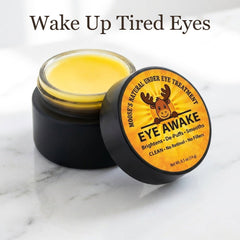
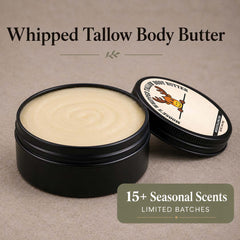
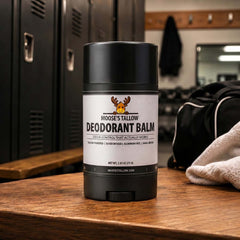
At Moosestallow, every ingredient earns its place. Beef suet tallow is always the foundation. Fractionated coconut oil, beeswax, jojoba, castor oil, egg yolk infused oil, and tocopherols round out our formulas with purpose and nothing extra. No synthetic fragrance. No parabens. No fillers. Every batch is handcrafted in small quantities so we can stand behind what goes into each jar. If you are ready to swap out products that are working against your skin, browse our full collection and find something that was made to nourish, protect, and feel good from the first use.
FAQ
What are the most harmful ingredients in skincare?
The five most harmful skincare ingredients are parabens, phthalates, formaldehyde-releasing preservatives, PFAS, and synthetic fragrance. These are linked to hormone disruption, cancer risk, and long-term toxicity.
Is “fragrance-free” actually safer for sensitive skin?
Yes. Fragrance-free means no fragrance compounds were added to the formula. “Unscented” products may still contain masking fragrances, making fragrance-free the safer choice for sensitive skin.
Can natural ingredients still irritate skin?
Yes. Essential oils, lemon juice, and baking soda can all irritate skin or disrupt the skin barrier. Natural does not automatically mean safe or gentle.
What tools help identify harmful skincare ingredients?
EWG Skin Deep, Think Dirty, and INCI Decoder are the most reliable tools for checking ingredient safety. They rate products and flag specific chemicals by risk level.
How do I choose safe skincare for sensitive skin?
Start with a minimal routine using fragrance-free, paraben-free products. Patch test every new product and prioritize leave-on formulas like moisturizers when making your first swaps.


0 comments