

The fastest way to soften a beard naturally is a short, repeatable routine: gentle wash when needed, a weekly deep-condition, beard oil on a damp beard, then a comb and a light balm to seal it in. Stick with it and you’ll notice a real change within 1 to 3 weeks. Brian Smith, founder of Moose’s Tallow, built his own grooming habits around this same idea: simple steps, done consistently, beat any single miracle product.
TL;DR:
- Consistency in washing, conditioning, and applying oil on a damp beard produces softening effects within one to three weeks.
- Using a weekly deep-conditioning treatment or clarifying rinse enhances softness, especially on coarse or curly beard hair.
- Selecting carrier oils like jojoba or fractionated coconut oil, and avoiding greasy or oxidizing oils, improves oil absorption and beard feel.
- Proper grooming techniques, such as gentle washing with lukewarm water, patting dry, and using appropriate combs and brushes, significantly reduce roughness.
- Hard water buildup, dehydration, and over-washing are common causes of stiffness, which can be mitigated by clarifying rinses and staying consistent with routine.
The Daily and Weekly Routine That Actually Softens a Beard
Wiry, scratchy beard hair usually isn’t a product problem. It’s a habit problem. Most men buy an oil, use it once or twice, then give up when nothing changes overnight. The fix is order and consistency, not a new bottle every month.
Here’s the daily sequence worth building:
- Rinse your beard with lukewarm water, or use a gentle beard wash only when it needs it. Daily shampoo strips natural oils.
- Pat it dry with a towel. Don’t rub.
- While it’s still slightly damp, apply 2 to 6 drops of beard oil, depending on length. Oil absorbs better into damp hair than into dry hair, since damp strands take in moisture more readily.
- Comb it through from root to tip so the oil coats every strand evenly.
- If you want extra hold or protection from wind and cold, warm a small amount of balm between your fingers and work it through last.
Weekly, add two more steps. First, a deep-conditioning treatment, like a hot oil soak or a leave-in butter, left on for a few minutes before rinsing. This step matters more than most guides admit. A weekly deep-condition can loosen stiffness faster than oil alone, especially on beards that run coarse or curly. Second, if your beard feels crunchy no matter what you apply, use a clarifying rinse once a week to clear mineral buildup before your next conditioning session.
Pro Tip: Apply oil right after a shower, while your pores are still open and your beard is damp. It’s the single easiest change you can make to how well your oil actually works.
A few things to avoid: don’t layer three or four products at once hoping for a faster result. Don’t wash daily with a harsh cleanser. And don’t skip the comb step. Distribution matters as much as the product itself.
Which Store-Bought Products Actually Help?
Walk into any grooming aisle and you’ll see oils, balms, butters, washes, and conditioners all claiming to soften your beard. They don’t all do the same job, and picking the wrong one for your beard length wastes both money and time.
- Beard oil works best for daily hydration. It’s light, absorbs fast, and supports the skin underneath the hair, which matters because moisturized skin under the beard supports softer hair growth. Apply it to a damp beard, not a dry one.
- Beard balm is heavier and built for hold. It seals in moisture and tames flyaways, which makes it the better pick if you’re also trying to shape or style.
- Beard butter sits between the two: thicker than oil, softer than balm, and best for beards that need deep conditioning without much styling control.
- Beard shampoo or a gentle cleanser should replace regular bar soap or body wash. Sulfates dry out both skin and hair, and overwashing removes the natural oils your beard needs to feel soft.
On ingredients, look at the carrier oil listed first. Jojoba closely mimics your skin’s own sebum, and fractionated coconut oil resists oxidation and absorbs cleanly, which is why it’s the carrier oil Moose’s Tallow builds around. Steer clear of products leaning on olive, almond, or grapeseed oil as their main carrier. They oxidize faster and tend to sit greasy on coarse hair instead of soaking in.
Natural DIY Blends and Carrier Oils Worth Trying
If you’d rather mix your own softener, the carrier oil you pick matters more than any essential oil you add on top. Jojoba oil mimics natural sebum closely, and fractionated coconut oil is prized for staying stable and light, resisting rancidity better than most plant oils, and absorbing without a greasy film. That combination of shelf stability and easy absorption is exactly why Moose’s Tallow relies on fractionated coconut oil as its base carrier rather than something like avocado or shea, which tend to feel heavier and turn rancid faster in a handmade batch.
A simple DIY blend:
- 1 tablespoon fractionated coconut oil or jojoba oil as your base
- 1 to 3 drops of an essential oil, if you use one at all, such as cedarwood or tea tree
- Mix in a small dropper bottle and shake before each use
Keep the essential oil light. More isn’t better here, and undiluted essential oils can irritate skin, especially if yours runs sensitive. Skip essential oils entirely if you’ve had reactions to fragrance before, and always patch test a new blend on your forearm before putting it on your face.
Pro Tip: If mixing your own feels like one more chore, a tallow-based balm gets you a similar result with zero measuring. Tallow’s fatty-acid profile sits close to your skin’s own oils, so it absorbs cleanly and supports the skin barrier without needing a long ingredient list.
Grooming Techniques That Cut Scratchiness Fast
Product only does half the work. How you wash, dry, and comb your beard changes how soft it feels just as much as what you put on it.
- Use lukewarm water, never hot. Hot water feels good but strips natural oils and leaves hair drier than before you started.
- Pat dry, don’t rub. Rubbing with a towel roughs up the hair cuticle and creates more friction, which is exactly what makes a beard feel wiry.
- Comb with wood or acetate, brush with boar bristle. A wide-tooth wood comb detangles without static, and a boar-bristle brush pulls natural oils from the skin out to the tips.
- Trim split ends and stray wiry hairs with small scissors, not a razor. Split ends catch on each other and make the whole beard feel rougher than it is.
- Skip the blow-dryer when you can. If you must speed-dry after a shower, use the lowest heat setting held a few inches away, and never dry a fully soaked beard directly with high heat.
None of this takes more than a few extra minutes. It’s the difference between a beard that lies flat and one that pokes in every direction.
Why Your Beard Feels Rough and How Long Fixing It Takes
A wiry beard almost always comes down to one of a few causes. Beard hair itself is structurally thicker than the hair on your scalp, and raised cuticles combined with uneven sebum distribution create friction, which is what gives coarse beards that scratchy feel in the first place. Other common culprits:
- Hard water mineral buildup, which leaves hair feeling crunchy and blocks conditioner from soaking in
- Dehydration, since dry hair from the inside out never softens no matter what you apply outside
- Over-washing, which strips the oils your skin needs to keep hair flexible
- Short length, since shorter beards feel wiry until there’s enough hair to lie flat and overlap
To check for hard water, look at your faucets and shower head. White, chalky buildup is a giveaway. A clarifying rinse once a week, or a shower filter, clears that buildup so your conditioner and oil can actually reach the hair shaft.
On timeline, expect small changes within days of starting a consistent routine, and visibly softer texture within 1 to 3 weeks if you stick with it. If your skin underneath stays red, flaky, or painfully itchy beyond that, that’s a skin issue worth a dermatologist’s attention rather than another oil.
Why I Keep Beard Care Simple
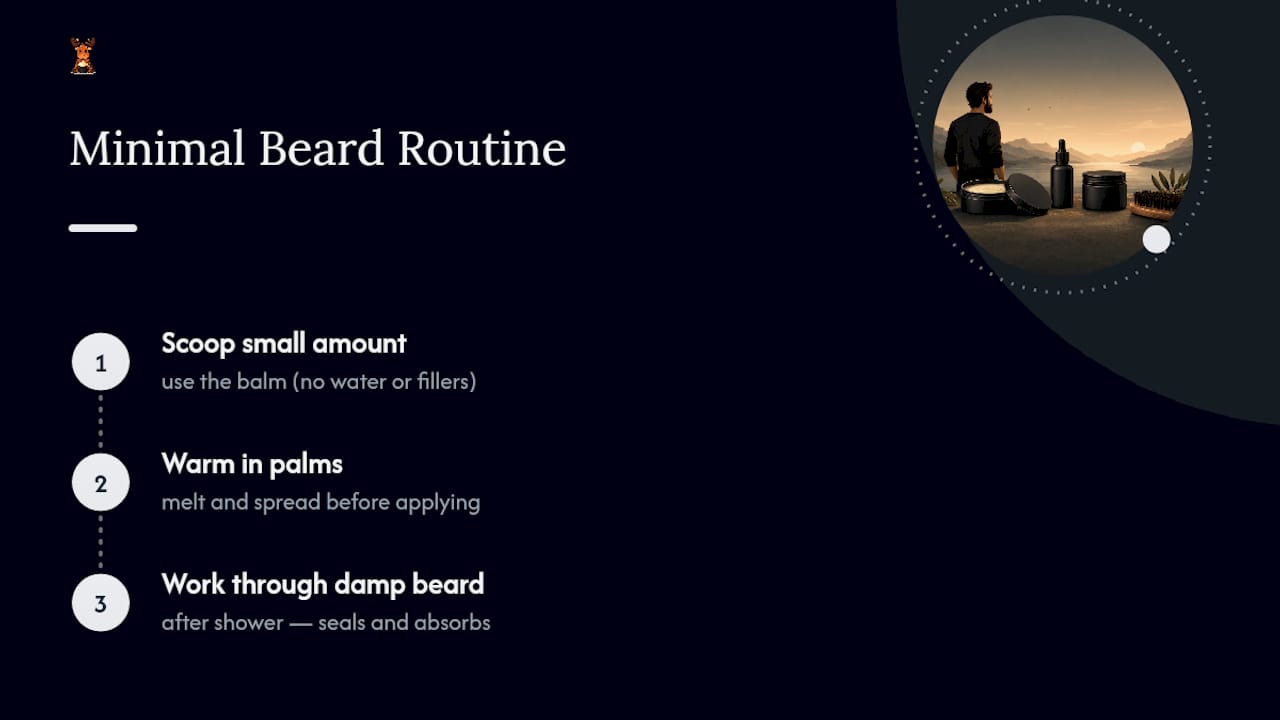
I didn’t start Moose’s Tallow because I loved long ingredient lists. I started it after reading one on my own lotion and counting 52 items, water listed first. That’s backwards. Skin and hair don’t need more ingredients. They need the right ones, chosen on purpose.
Every balm we make leans on the same short list: beef suet tallow, fractionated coconut oil, beeswax, vitamin E, jojoba, castor, and egg yolk infused oil. No filler, no water diluting the formula down. Tallow’s fatty-acid profile sits close to what your own skin produces, so it absorbs instead of sitting on top. For a beard routine, that means one small amount, warmed between your palms and worked through a damp beard after your shower, does the sealing job a five-step product stack usually tries to do.
— Brian Smith
How Moose’s Tallow Fits Your Beard Routine
You don’t need a shelf full of products to follow this routine. You need a few that actually earn their place, and that’s the whole idea behind Moose’s Tallow.
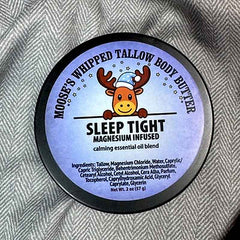
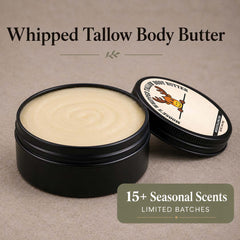
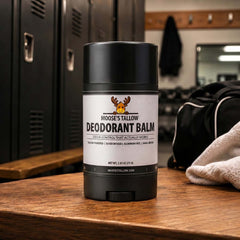
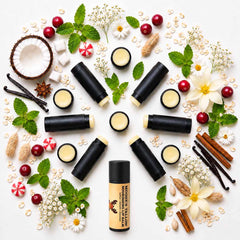
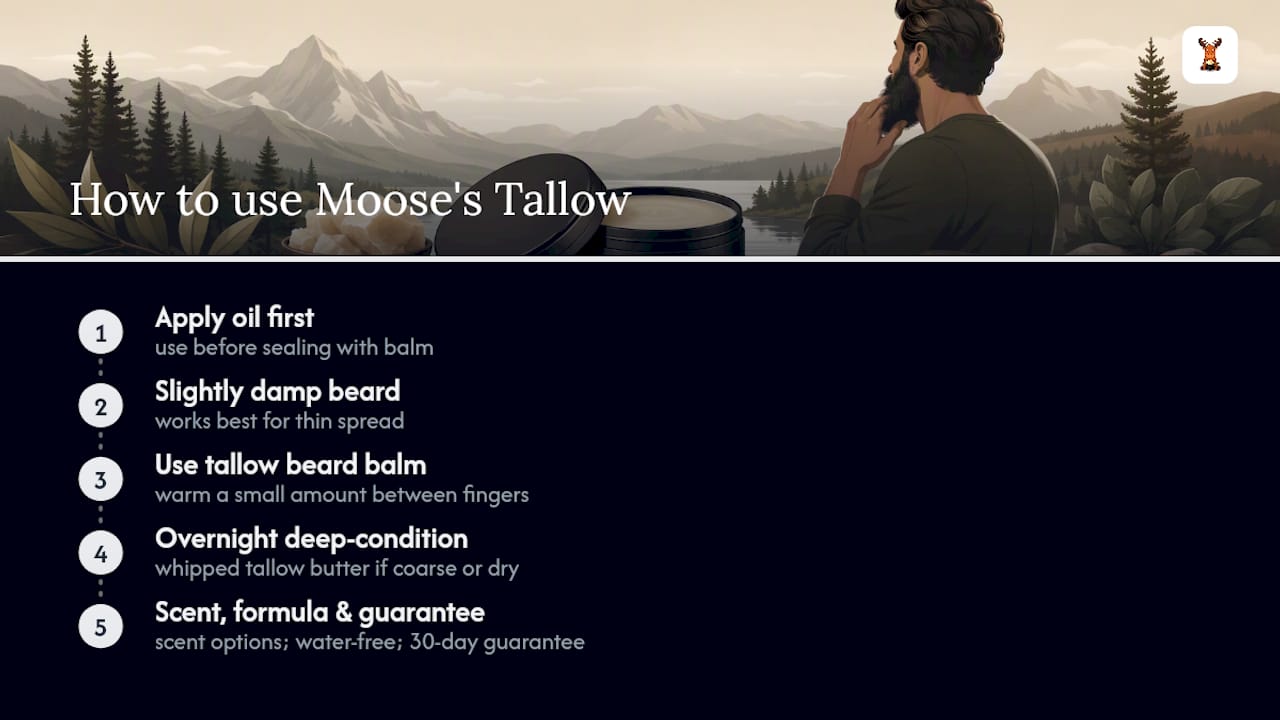
Our tallow beard balm is built for the sealing step. Use it last, after oil, on a slightly damp beard, warming a small amount between your fingers first so it spreads thin instead of sitting heavy. If your beard runs especially coarse or dry, our whipped tallow body butter works well as an overnight deep-condition for the skin underneath, since moisturized skin supports softer hair growth over time. Prefer a scent option? Try the Evergreen Cedar tallow beard balm or the Spicy Rum Bay Rum variant, both built on the same egg-yolk-oil-infused base.
Every formula is water-free and lightly diluted, so a little goes a long way. These are cosmetic products, meant to support your skin barrier and condition hair, not treat any medical condition. If a product doesn’t work for you, our 30-day guarantee has you covered. Start with the tallow beard balm collection and see how your beard feels in a week.
Sources
The routine above draws on dermatology-reviewed guidance and practical grooming research, not guesswork. Healthline’s breakdown of beard-softening methods covers product roles and home remedies in clinical detail. Cleveland Clinic Health explains the skin-hair connection behind itch and roughness. A hair-structure review on NCBI explains why beard hair behaves differently than scalp hair, while a companion NCBI review on hair treatments explains how humectants and lipids work together. For a step-by-step consumer take, GQ’s beard-softening guide lines up closely with the routine outlined here.
- How to Soften Beard Hair: OTC Products, Home Remedies, and Care — Healthline
- How to Soften Your Beard — GQ
- PMC article on hair structure and properties (NCBI)
- Why Your Beard Itches (and What to Do) — Cleveland Clinic Health
FAQ
Why Is My Beard Hard and Rough?
Beard hair is naturally thicker than scalp hair, and raised cuticles plus uneven sebum distribution create friction that feels rough or wiry to the touch.
How Do I Stop My Beard From Being Wiry?
Follow a consistent routine of gentle washing, weekly conditioning, and daily oil applied to a damp beard, then seal with a light balm. Most men see clear softening within 1 to 3 weeks.
Why Is My Beard So Stiff?
Stiffness often comes from hard water mineral buildup, dehydration, or over-washing, all of which strip the oils your beard needs to stay flexible. A clarifying rinse and consistent conditioning usually resolve it.
Can I Make a Homemade Beard Softener?
Yes. Mix a tablespoon of fractionated coconut oil or jojoba oil with 1 to 3 drops of a mild essential oil, and always patch test first. A ready-made tallow balm skips the mixing and gives a similar sealing effect.
0 comments