



What does a good transition workflow actually look like?
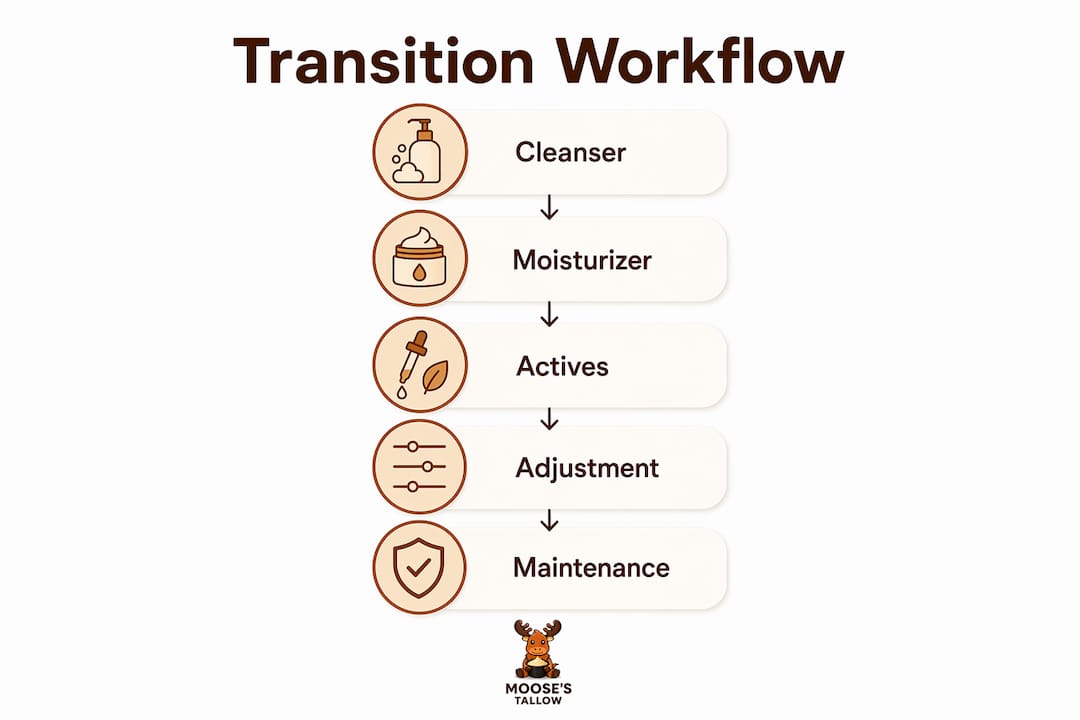
The most effective workflow for transitioning to natural skincare is a gradual, one-category-at-a-time approach with several weeks between each new product. Start with your cleanser. Build from there. Your skin needs time to rebalance, and rushing the process is the single biggest reason people give up too soon.
Here is the core workflow at a glance:
- Audit your current products. List everything you use daily and weekly. Note which items stay on your skin longest.
- Identify what to replace first. Daily-use products like your cleanser and moisturizer have the most consistent contact with your skin.
- Replace one category at a time. Never swap everything at once. Your skin cannot tell you what caused a reaction if five things changed simultaneously.
- Introduce each new product slowly. Allow 2–4 weeks before adding the next one.
- Choose products built on stable, clean ingredients. Beef suet tallow, fractionated coconut oil, beeswax, vitamin E (tocopherols), jojoba, castor, and egg yolk infused oil are all intentional choices with real barrier benefits.
- Keep your old products as backup. Do not discard them immediately. If your skin reacts poorly, you need a safe fallback.
- Patch test every new product. Apply to a small area and wait 24–48 hours before full use.
How to follow a week-by-week transition plan
A structured timeline removes the guesswork. Here is a practical sequence:
- Weeks 1–2: Switch your cleanser. This is the lowest-risk starting point. A gentle, water-free or minimal-ingredient cleanser sets a clean baseline without stripping your barrier.
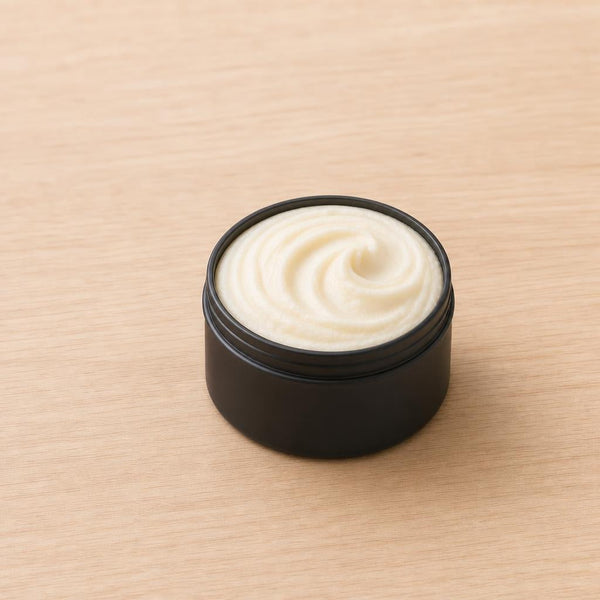
- Weeks 3–4: Introduce a natural moisturizer. Look for one built on tallow-based formulations with fractionated coconut oil as the carrier. These absorb cleanly and support your skin barrier without synthetic fillers.
- Weeks 5–6: Add one treatment product. A serum or targeted balm, introduced alone, lets you monitor your skin’s response clearly.
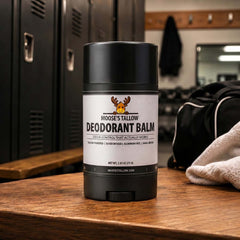
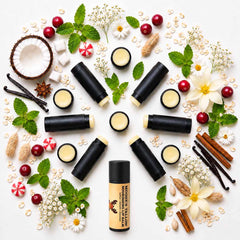
- Week 7 onward: Replace specialty items. Eye creams, deodorant, lip balm, and body butter can follow once your core routine is stable.
A few supporting habits make this timeline work:
- Keep a simple skin journal. Note the product, the date you introduced it, and any changes in texture, hydration, or breakouts.
- Take weekly photos in consistent lighting. Objective records are more reliable than memory.
- Track breakout patterns and hydration daily. This helps you respond to your skin rather than guess.
Pro Tip: Start with a simplified baseline of just cleanser and moisturizer for the first two weeks. Adding actives to an already-adjusted routine is far easier than troubleshooting three new products at once.

What should you expect during the skin adjustment phase?
Your skin will feel different. That is normal, and it does not mean the products are failing.
When you remove synthetic silicones from your routine, the artificial smoothing layer disappears. Your skin may feel rougher or drier for one to two weeks. That is your skin’s actual hydration state showing through, not a reaction to the new product. Using a consistent natural moisturizer during this window supports barrier recovery.
Mild flakiness or a few extra breakouts in the first two to three weeks are common adjustment signs. They typically resolve by week four if the products suit your skin type. The key distinction is direction: adjustment improves over time, while a true reaction worsens.
Signs of normal adjustment: Slightly different texture, minor breakouts in areas where you typically get them, temporary dryness that eases within two weeks. Signs of a reaction: Persistent redness, stinging or burning after application, itching, hives, or irritation that worsens with continued use. Stop the product and assess which ingredient may be responsible.
Pro Tip: If you are unsure whether you are adjusting or reacting, remove the newest product for five days. If symptoms improve, that product is likely the cause. If nothing changes, the issue may be something else entirely.
Which natural ingredients actually support your skin barrier?
Not all natural ingredients perform equally. Choosing stable, well-matched ones makes the difference between a routine that works and one that frustrates.
Beef suet tallow is the foundation at Moose’s Tallow. Its fatty acid profile closely mirrors your skin’s own lipids, so it absorbs cleanly and supports the barrier without sitting on top of it. Every Moose’s Tallow product is built on properly rendered, locally sourced beef suet tallow. Nothing is added as filler.
Fractionated coconut oil is the preferred carrier oil for stability. It resists oxidation, absorbs easily, and has a long shelf life compared to other vegetable oils. That stability matters in a natural formula. Oils like olive, almond, or grapeseed are less stable and more prone to going rancid, which is why Moose’s Tallow does not use them.
The supporting cast matters too:
- Beeswax provides a light occlusive layer that locks in moisture without clogging pores.
- Vitamin E (tocopherols) supports barrier integrity and helps extend formula freshness.
- Jojoba is structurally similar to your skin’s sebum, making it well-tolerated across skin types.
- Castor oil adds slip and supports moisture retention.
- Egg yolk infused oil delivers fat-soluble nutrients directly to the skin surface.
Ingredient transparency matters. You can review Moose’s Tallow’s full natural skincare ingredient approach to see exactly what goes into each formula and why. For a broader look at selecting quality tallow-based products, the tallow product checklist is a practical starting point.
How do you actually pace the transition without overwhelming your skin?
The gradual approach works because it gives your skin one variable at a time. Replace your cleanser first. Use it alone for two to three weeks. Then add a moisturizer. Wait again. Only after that baseline is stable should you consider adding a treatment product.
Simplifying before adding is the principle that separates successful transitions from frustrating ones. If you are coming from a multi-step conventional routine, spend the first week on just cleanser and moisturizer. That gives you a clear picture of your skin’s baseline before any new actives enter the picture.
Natural products often feel and smell different from conventional ones. A tallow-based body butter has a different texture than a water-based lotion. That shift is not a flaw. It reflects what happens when you remove synthetic fillers and water from a formula. Most people find the experience preferable once the expectation adjusts. You can explore whipped body butters to get a feel for how natural textures differ from conventional creams.
What mistakes do most people make when switching to natural skincare?
Switching too fast is the most common error. Replacing everything at once makes it impossible to identify what caused a reaction, and it overwhelms your skin’s ability to adapt.
Skipping the patch test is the second mistake. Even clean, natural ingredients can cause sensitivities. Essential oils, plant proteins, and botanical extracts are among the most common contact allergens in dermatological practice. “Natural” does not mean reaction-free. Always patch test new products on a small area for 24–48 hours before full application.
A few other mistakes worth avoiding:
- Discarding old products immediately. Keep them as backup for at least the first month.
- Layering multiple new actives at once. Introduce one treatment product at a time, weeks apart.
- Expecting overnight results. Natural products work with your skin’s biology over time. Give each product a full 4–6 weeks before evaluating it.
- Ignoring hydration during the adjustment phase. Consistent moisturizing supports your barrier as synthetic occlusives are removed. A tallow-based moisturizer or even a simple healing lip balm can help maintain moisture in drier areas while your routine stabilizes.
Key Takeaways
A gradual, one-product-at-a-time approach with several weeks between each change is the most reliable workflow for transitioning to natural skincare with minimal irritation.
| Point | Details |
|---|---|
| Replace one category at a time | Start with your cleanser, then moisturizer, then treatments, spaced 2–4 weeks apart. |
| Patch test every new product | Apply to a small area for 24–48 hours before full-face use to catch reactions early. |
| Expect an adjustment phase | Mild dryness or breakouts in weeks 1–3 are normal; symptoms that worsen signal a reaction. |
| Choose stable, clean ingredients | Beef suet tallow, fractionated coconut oil, beeswax, vitamin E, jojoba, castor, and egg yolk infused oil support the barrier without fillers. |
| Keep a skin journal | Track new products, introduction dates, and daily observations to identify patterns quickly. |
FAQ
How long does the transition to natural skincare take?
Most people need over a month to complete a full transition, replacing one product category at a time over multiple weeks. The adjustment phase for each new product typically resolves within several weeks.
How do you switch to natural skincare without breaking out?
Introduce one product at a time, patch test before full use, and keep your routine simple during the first few weeks. Mild breakouts in familiar areas are a normal adjustment sign; breakouts in new areas with redness or stinging suggest a reaction.
What is the best first product to switch when going natural?
Start with your cleanser. It has frequent skin contact but lower risk than actives or treatments, making it the safest place to begin and the easiest product to evaluate in isolation.
Do natural skincare products work as well as conventional ones?
Natural products work differently, not necessarily faster. They support your skin’s biology over time rather than masking symptoms with synthetic fillers. Consistent use over 4–6 weeks typically reveals clearer texture and more stable hydration.
Is beef suet tallow safe for sensitive skin?
Beef suet tallow’s fatty acid profile closely mirrors your skin’s own lipids, which generally makes it well-tolerated. Patch testing is still recommended, especially for anyone with known sensitivities to animal-derived ingredients.


0 comments