
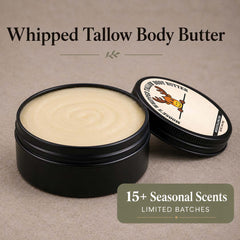


How do you store tallow skincare? Keep it cool, dry, and out of direct sunlight. Heat can soften tallow and shorten its shelf life. Close the lid tightly after each use. Use clean, dry fingers to keep water out. Stored well, tallow balms last many months.
Choosing how to store your favorite tallow skincare products can make all the difference between lasting freshness and disappointing spoilage. For eco-conscious women who carefully blend ingredients like beef suet tallow, beeswax, and fractionated coconut oil, the right container and environment become a true priority. With a focus on preventing oxidation and contamination while keeping those luxe textures intact, you'll find guidance here for airtight storage options and smart kitchen habits designed to protect your investment in natural beauty.
How to store beef tallow so it lasts
Store beef tallow in an airtight jar, away from heat and light. At room temperature in a cool pantry, rendered tallow keeps for several months. In the fridge it lasts a year or more, and you can freeze it to keep it even longer. The enemies are heat, light, air, and water, so keep the lid on and use a clean, dry spoon.
You do not have to refrigerate tallow, but cold storage extends its life. If it ever smells sour or paint-like, it has gone rancid and should be tossed. Fresh tallow smells clean and mild, and stays creamy white to pale yellow.
Table of Contents
- Step 1: Choose Ideal Containers For Tallow Storage
- Step 2: Prepare Tallow Products For Safe Keeping
- Step 3: Control Temperature And Light Exposure
- Step 4: Monitor Product Consistency And Freshness
Quick Summary
| Key Point | Explanation |
|---|---|
| 1. Choose airtight containers | Use glass jars or food-grade plastic with tight-fitting lids to prevent oxidation and contamination of tallow. |
| 2. Prepare tallow before storage | Ensure tallow products are fully solidified and free from impurities to maintain their quality and effectiveness. |
| 3. Monitor temperature and light | Store tallow in cool, dark places, with specific temperature ranges to extend shelf life and effectiveness. |
| 4. Inspect for freshness regularly | Check appearance, smell, and texture periodically to determine product quality and detect spoilage. |
| 5. Label containers with dates | Mark storage dates on containers to keep track of freshness and prioritize product usage accordingly. |
Step 1: Choose ideal containers for tallow storage
The container you choose for your tallow skincare products directly impacts how long they stay fresh and effective. Your goal here is to prevent oxidation and contamination while maintaining the integrity of the carefully blended ingredients like beef suet tallow, fractionated coconut oil, beeswax, and the other nourishing components that make your products work so well.
Start by understanding what makes a container suitable for tallow storage. You need something airtight with a tight-fitting lid to block out oxygen and prevent unwanted exposure. Glass jars and food-grade plastic containers both work beautifully, though glass is often preferred because it's inert and doesn't interact with your product over time.
Here are the container types that work best for different storage situations:
- Glass jars with secure lids (ideal for room temperature storage and short-term use)
- Food-grade plastic containers with airtight seals (lightweight and portable for travel)
- Silicone ice cube trays or small freezer-safe containers (perfect for portioning tallow before freezing)
- Vacuum-sealed bags or tightly sealed glass jars (best for long-term freezer storage)
If you're storing multiple products, consider using smaller containers rather than one large jar. This approach keeps unopened portions fresh while you're actively using a smaller amount. When you open a container, oxygen exposure begins immediately, so smaller portions mean less surface area gets disturbed each time you dip in your spatula.
Payay attention to the lid quality. A loose or poorly fitting lid defeats the entire purpose. Your tallow products contain ingredients like vitamin E tocopherols that are susceptible to oxidation, so that seal really matters. Check that the lid closes completely and sits flush against the container rim.
If you're preparing to freeze your tallow, understanding how fractionated coconut oil works with tallow can help you choose containers that won't crack when the product solidifies. Glass generally handles freezing beautifully, while some plastics can become brittle in cold temperatures.
The container is your first line of defense against oxidation. Choose it as carefully as you'd choose the product itself.
One final consideration: make sure your container has room for a label. You'll want to write the storage date and product name directly on the container or on a label attached to it. This simple step keeps you organized and helps you track when products should be used or refreshed.
Here's a quick guide comparing storage container choices for tallow products:
| Container Type | Durability | Suitability for Freezing | Potential for Ingredient Interaction |
|---|---|---|---|
| Glass Jar | Highly durable, long-lasting | Excellent, rarely cracks | Inert, no reaction with tallow |
| Food-Grade Plastic | Lightweight, moderately durable | Variable, some types can crack | May interact with oils over time |
| Silicone Tray | Flexible, reusable | Ideal for portioning, works well | Inert, minimal reaction |
| Vacuum-Sealed Bag | Strong, space-saving | Best for long-term freezer storage | Minimal, but possible with seams |
Pro tip: Label your containers immediately after filling them with the date you stored them, and keep them in consistent, cool locations so you can quickly identify which products are oldest and should be used first.
Step 2: Prepare tallow products for safe keeping
Before your tallow skincare products go into storage, they need proper preparation to ensure they stay fresh, safe, and effective throughout their shelf life. This step is about creating the ideal conditions for your tallow to remain stable and protected from the factors that can compromise its quality.
Start by ensuring your tallow products are completely cool and solidified before you begin any preparation. If you're working with freshly made products, patience is your friend here. Allow them to reach room temperature naturally and set fully, which typically takes several hours. Rushing this step can trap moisture or uneven cooling patterns that affect texture and stability.
Once solidified, examine your products for any signs of impurities or separation. High-quality tallow should look uniform in color and texture. If you notice any discoloration or separation, this signals that proper filtration removes solids that might affect longevity. Your Moose's Tallow products come pre-filtered and ready to use, but understanding this ensures you're starting with the best foundation.
Here's how to prepare your products for storage:
- Verify the product is completely solid and at room temperature
- Check that all ingredients like beef suet tallow, fractionated coconut oil, and beeswax are evenly distributed
- Ensure your chosen container is clean and completely dry before transfer
- If portioning into smaller containers for freezing, work gently to avoid introducing air bubbles
If you're planning to freeze portions, consider using ice cube trays or muffin tins as molds for consistent sizing. This approach makes it easy to grab exactly what you need without thawing an entire container. Once frozen solid (usually 4-6 hours), you can transfer the portions into airtight bags or jars.
When transferring tallow between containers, use a clean spatula or spoon and work deliberately. Minimize unnecessary handling and air exposure during the transfer process. The goal is to move from one secure container to another without letting your product sit exposed to oxygen or dust.
Preparation sets the stage for successful storage. A few minutes spent now protects your investment for months to come.
Label everything immediately after preparation, including the date and product name. This small act becomes invaluable when you're deciding which products to use first or checking how long something has been stored.
Pro tip: Prepare your tallow products for storage on a cool day or in the evening when your kitchen temperature is lowest, and work quickly to minimize exposure to warm air and oxygen.
Step 3: Control temperature and light exposure
Temperature and light are two of the biggest factors that determine how long your tallow skincare products stay fresh and effective. Getting these environmental conditions right extends shelf life significantly and keeps your investment in quality skincare working the way it should.
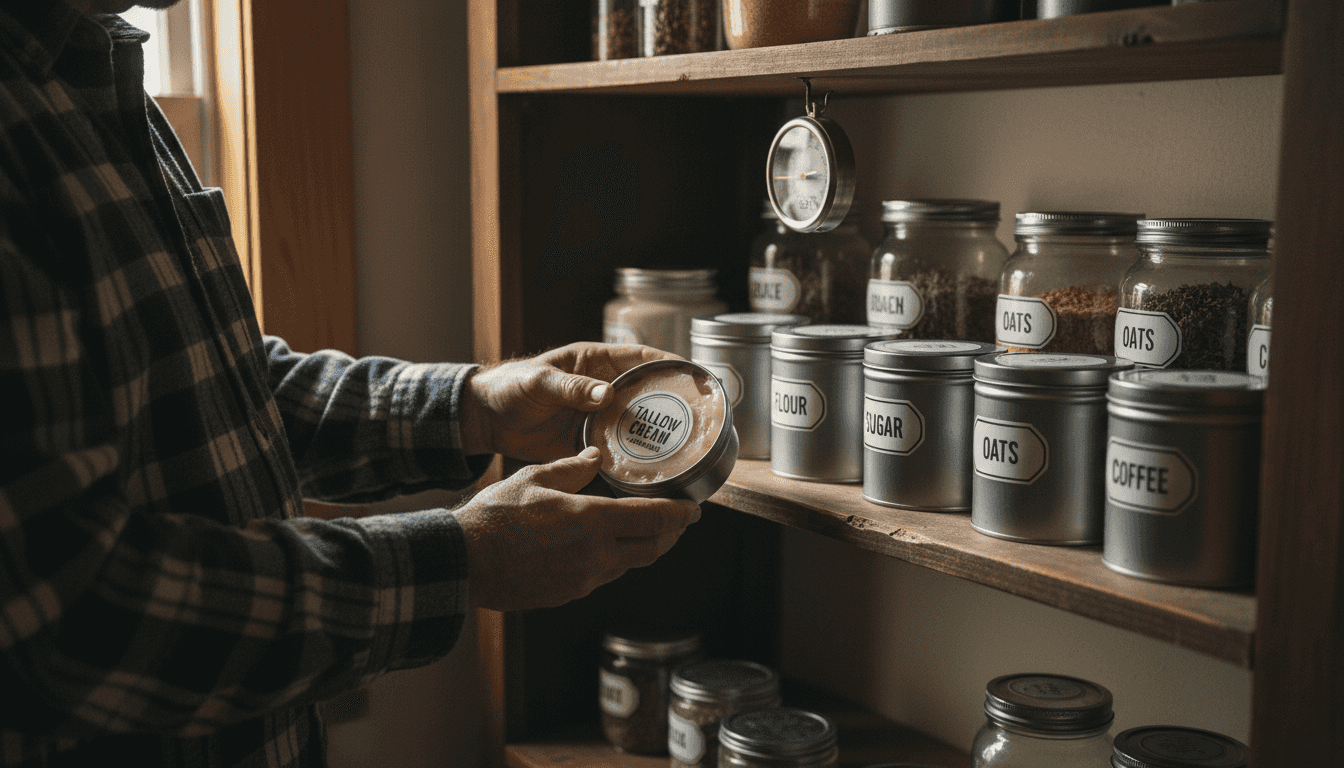
Start by understanding that heat and light break down the beneficial properties in your tallow products. The beef suet tallow, fractionated coconut oil, beeswax, and vitamin E tocopherols all become susceptible to oxidation and rancidity when exposed to warm temperatures or direct sunlight. This is why storage location matters just as much as the container itself.
Here are the best storage temperature options ranked by effectiveness:
- Freezer storage (0°F or below) preserves quality longest, often 2+ years
- Refrigerator storage (35–40°F) extends freshness up to one year
- Cool pantry or closet (65–70°F) works for 6-9 months in sealed containers
- Room temperature (70°F+) is acceptable but limits shelf life to 3-6 months
Choose your storage location based on how quickly you use your products. If you go through them regularly, cool pantry storage is convenient. If you prefer to stock up or want maximum longevity, refrigerator or freezer storage is worth the small amount of extra space.
Light exposure is equally important. Storing tallow in opaque or dark containers prevents photodegradation, which is a fancy way of saying that light gradually breaks down your product's molecular structure. Keep your containers in dark spaces away from windows, bright countertops, or areas with overhead lighting that runs frequently.
The ideal storage spot combines three things: consistent cool temperature, darkness, and stability. A pantry shelf, refrigerator shelf, or freezer drawer all work beautifully. Avoid areas above the stove, near heating vents, or in direct sunlight. Temperature fluctuations are just as damaging as consistently warm storage, so consistency matters more than perfection.
If you freeze your tallow, remember that thawing matters too. Avoid thawing at room temperature, which can encourage spoilage. Instead, move a container to the refrigerator the night before you need it, or dip your spatula into a frozen portion and let it warm slightly in your hand.
Cool, dark, and consistent beats every other storage strategy. Your tallow will thank you with months of reliable performance.
One practical approach is to keep a small working container in your daily bathroom routine while storing the rest in the refrigerator or freezer. This minimizes exposure to the warm, humid bathroom environment while keeping backup supply protected.
To help select the ideal spot for storage, here's a summary of temperature and light impact on tallow shelf life:
| Storage Location | Typical Shelf Life | Light Exposure Risk | Recommended Use Frequency |
|---|---|---|---|
| Freezer (0°F) | Up to 2 years | Very low | For infrequent use or bulk storage |
| Refrigerator (35–40°F) | 1 year | Low | For regular but not daily use |
| Cool Pantry (65–70°F) | 6-9 months | Moderate | For frequent daily use |
| Room Temperature (>70°F) | 3-6 months | High | For short-term use only |
Pro tip: Place a small thermometer in your storage area to verify it stays consistently cool, and consider storing your tallow in the back of the fridge or freezer where temperature is most stable and light exposure is minimal.
Step 4: Monitor product consistency and freshness
Regularly checking your stored tallow products keeps you informed about their condition and ensures you're using them at their peak. This simple habit protects your skin and helps you get the most value from your investment in quality skincare.
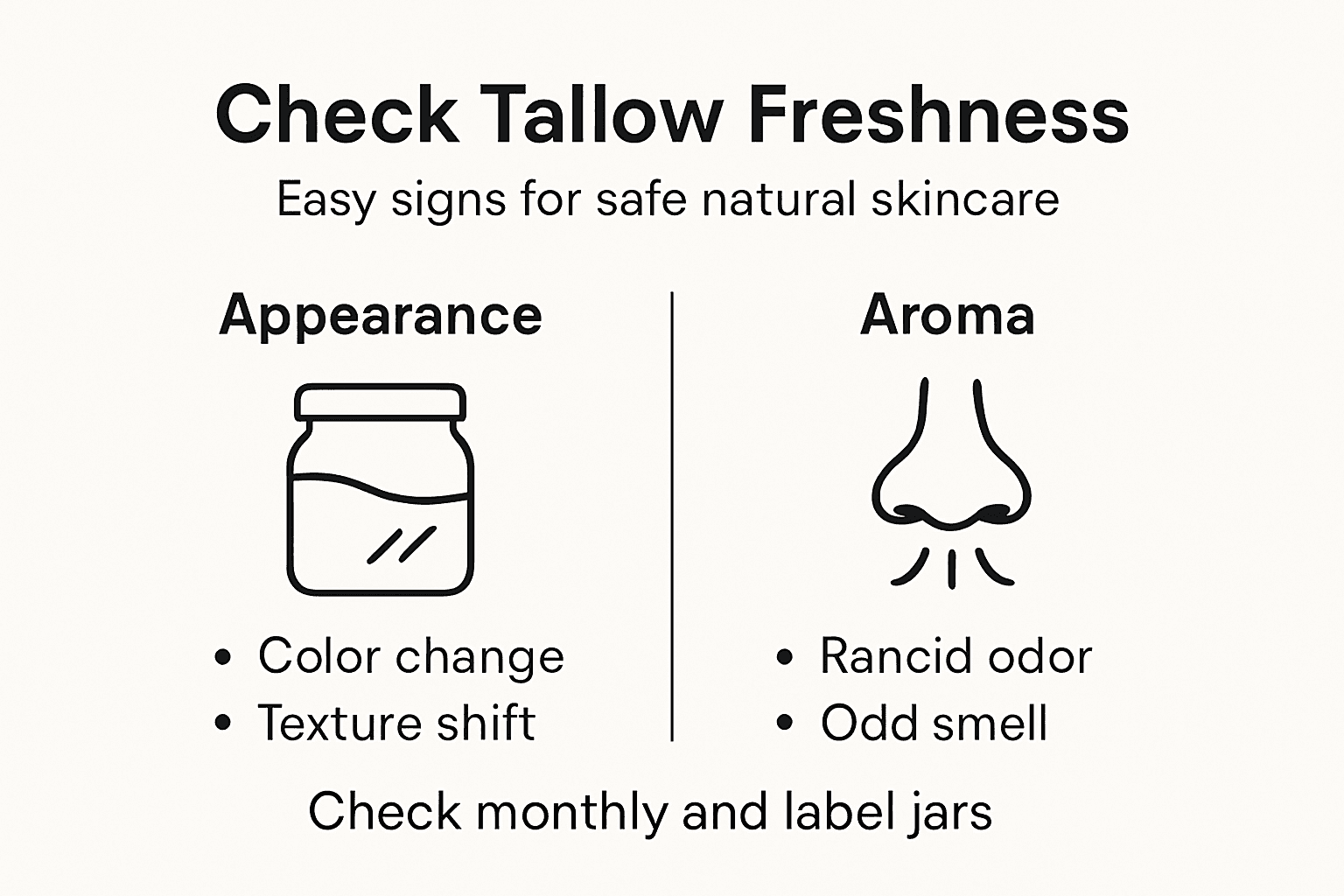
Your senses are your best tools here. Start by establishing a baseline of what your fresh tallow should look and smell like when you first open it. Quality tallow has a creamy, uniform appearance and a neutral or mildly earthy aroma. Remember this as your reference point for future checks.
Inspect your stored products regularly using these sensory markers:
- Color: Should remain creamy white or pale yellow without dark spots or discoloration
- Texture: Should feel smooth and consistent without grainy separation or excessive oiliness
- Smell: Should have a neutral scent without harsh, rancid, or off odors
- Consistency: May soften slightly after thawing, which is normal and doesn't affect quality
When you notice changes in your tallow's appearance or aroma, inspect stored tallow for changes in color, odor, and texture as key freshness indicators. Discoloration, separation, or a strong odor signals it's time to discard that container. Your skin deserves products that perform optimally, not ones that are past their prime.
Graininess after thawing is normal and doesn't mean your product has spoiled. The fat recrystallizes slightly as it freezes and thaws, which can create a slightly different texture. This is cosmetic and doesn't affect the product's efficacy. However, a rancid smell is a true warning sign to stop using the product immediately.
Create a simple routine. Check your products every few weeks if stored in the fridge or pantry, and monthly if frozen. Open the container, take a quick look, and give it a gentle smell. This takes less than a minute but gives you confidence that your tallow is staying fresh.
Fresh tallow performs beautifully. Once it shows signs of spoilage, it's not worth using on your skin.
Keep a mental note of when you first opened each container. Most properly stored tallow in the fridge stays fresh for six months to a year, while frozen portions last two years or longer. If you've had something open longer than these timeframes, it's probably time for a refresh.
Pro tip: Set a monthly phone reminder to inspect your stored tallow products, and document any observations in a simple spreadsheet or notes app so you can track which storage methods work best for your home conditions.
Ready to restock with skincare built to stay fresh? Shop all natural beef tallow skincare →
Protect Your Investment in Natural Skincare With Moose's Tallow
Storing your tallow skincare products properly can be challenging. You want to maintain freshness, prevent oxidation, and avoid contamination while preserving the nourishing qualities of beef suet tallow and other natural ingredients like fractionated coconut oil and beeswax. Common concerns include choosing airtight containers, controlling temperature and light exposure, and monitoring product consistency to ensure your skincare delivers lasting benefits.
At Moose's Tallow, we understand these needs because our products are handcrafted with care and thoughtfully rendered to nourish your skin deeply without greasy residue. To keep your skincare at its best, explore our full collection of handmade small-batch skincare— featuring carefully balanced formulations ideal for natural skin care routines. Whether you're stocking up or trying something new, our tallow balms are ready to perform when stored correctly.
Don't let improper storage diminish the power of your tallow products. Act now to choose skincare that is ready to perform when stored correctly. Visit our full collection to find your perfect natural companion and enjoy skincare designed with old-world care for modern skin today.
Ready to stock your shelf with skincare that's built to last? Shop all natural beef tallow skincare →
Frequently Asked Questions
How do I choose the best container for storing tallow skincare products?
Choosing an airtight container is crucial for storing tallow skincare products. Opt for glass jars or food-grade plastic containers with tight-fitting lids to minimize exposure to oxygen and prevent contamination.
Can I freeze my tallow skincare products for long-term storage?
Yes, you can freeze tallow skincare products to extend their shelf life. Use freezer-safe containers or vacuum-sealed bags, and label them with the date for easy tracking; tallow can last up to 2 years in the freezer.
What temperature should I store my tallow skincare products at?
Store your tallow skincare products in a cool, dark place for optimal freshness. The best options are the freezer at 0°F for the longest shelf life, or the refrigerator at 35–40°F for up to a year.
How can I tell if my tallow has gone bad?
Inspect your tallow skincare products regularly for signs of spoilage, such as discoloration, separation, or a strong rancid odor. If you notice any of these changes, it's best to discard the product for safety.
What should I do before transferring tallow to a storage container?
Ensure that your tallow is completely solidified and at room temperature before transferring it to a storage container. Check that the container is clean and dry to maintain product quality.
How often should I monitor the freshness of my stored tallow products?
Check your stored tallow products every few weeks if they are in the fridge or pantry, and monthly if frozen. This routine helps you ensure they remain fresh and effective for use.
How long does beef tallow last?
Rendered beef tallow lasts several months in a cool pantry and a year or more in the fridge. Frozen, it keeps even longer. Water or a dirty spoon shortens its life, so keep it dry and covered.
Can you freeze beef tallow?
Yes. Freezing beef tallow is a great way to store extra. Portion it into jars or an ice cube tray, seal it well, and freeze. It thaws with no loss of quality.
Does beef tallow need to be refrigerated?
No, but it helps. Tallow is shelf-stable for months in a cool, dark spot. The fridge or freezer just extends how long it stays fresh.


0 comments