

If your underarms sting, itch, or break out after using natural deodorant, baking soda is likely the culprit. The gentler fix is a baking soda free deodorant built on magnesium salts or arrowroot, with a short, honest ingredient list and no unnecessary fillers.
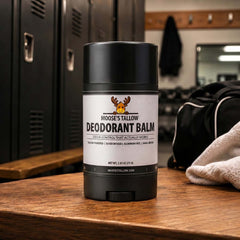
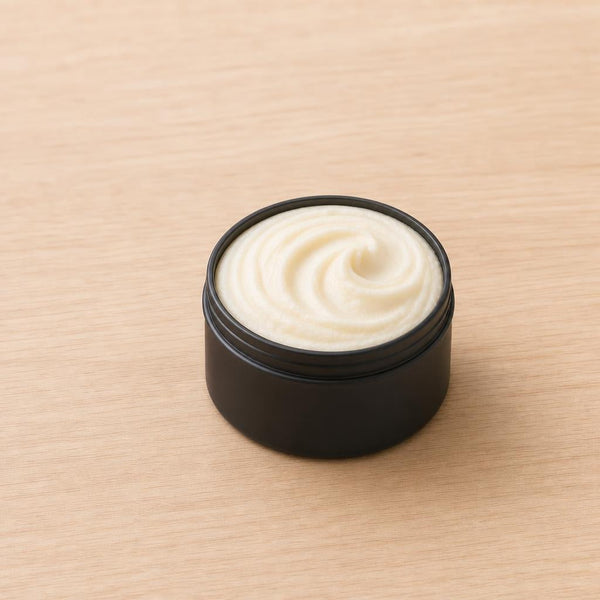
Moose’s Tallow Natural Deodorant is the pick we recommend for sensitive skin. It is a water-free balm made with beef suet tallow, fractionated coconut oil, beeswax, vitamin E, jojoba, castor, and egg yolk infused oil. No baking soda. No synthetic fragrance. No filler ingredients.
- Format: Water-free balm, handmade in small batches in Lebanon, PA
- Active approach: Magnesium salts for odor control, arrowroot for absorbency
- Guarantee: Backed by a satisfaction guarantee
- Sensitive skin start: Patch test on your inner arm before full use (more on that below)
Key Takeaways
A baking-soda-free deodorant built on magnesium salts, arrowroot, and a water-free tallow base offers effective odor control without the irritation risk that baking soda creates for sensitive skin.
| Point | Details |
|---|---|
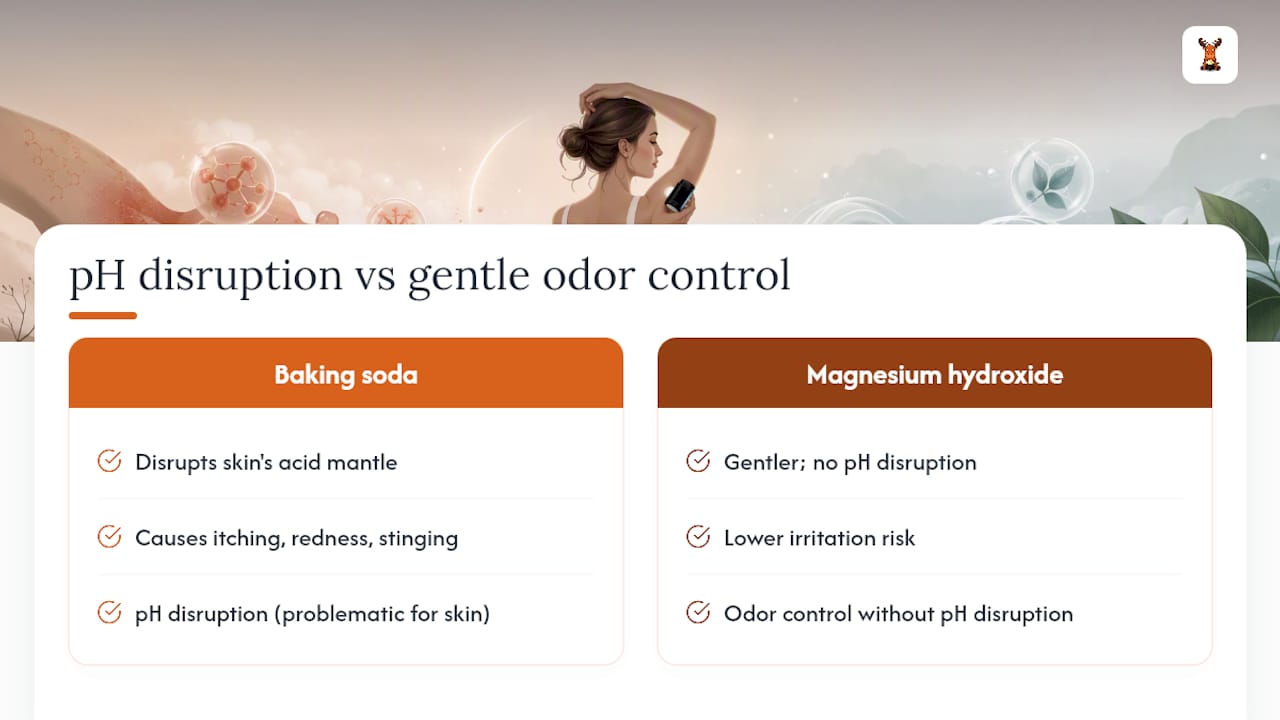
| Skip baking soda for sensitive skin | Baking soda’s high alkalinity can disrupt the skin’s acid mantle and cause itching, redness, and stinging. |
| Choose gentle actives | Magnesium salts and arrowroot control odor and absorb moisture without aggressive pH shifts. |
| Patch test before committing | Apply to your inner arm, wait 24–48 hours, and start with an unscented formula to isolate reactions. |
| Water-free balms offer more | A water-free format skips fillers, supports the skin barrier, and tends to feel gentler than aqueous sprays. |
| Moose’s Tallow is the recommended pick | The unscented tallow-based balm uses magnesium salts, arrowroot, and a fully transparent ingredient list, backed by a 60-day guarantee. |
What to look for in a baking soda free deodorant
Choosing a deodorant without baking soda comes down to reading the label carefully. Here is what to prioritize.
Ingredients to seek:
- Magnesium hydroxide or magnesium salts (odor control without high pH)
- Zinc salts (antimicrobial support)
- Arrowroot or cornstarch (natural absorbency)
- Probiotic or prebiotic mentions (microbiome-friendly formulas)
- “Unscented” or “fragrance-free” labeling for sensitive underarms
Label and certification cues:
- Full ingredient list published openly, not hidden behind “proprietary blend”
- Cruelty-free certification
- Small-batch or water-free statements on the label
- Clear product format: balm, stick, or spray
Carrier oil matters. Fractionated coconut oil is the preferred carrier for stability, oxidation resistance, easy absorption, and shelf life. It generally outperforms heavier vegetable oils in these categories for a deodorant balm format.
Pro Tip: Scan the ingredient list from top to bottom. The first ingredient is the largest by volume. Look for your active (magnesium or zinc) near the top, a clean carrier oil second, and a short list of botanicals or waxes after that. If “fragrance” appears anywhere without further detail, put it back.
Why health-conscious people pick baking-soda-free deodorants
Baking soda works by raising pH to create an environment less hospitable to odor-causing bacteria. The problem is that your underarm skin has a naturally acidic pH, and a high-alkalinity ingredient can disrupt that balance. Baking soda’s high alkalinity is a recognized cause of underarm irritation, particularly for people with already-sensitive skin.
The result can show up quickly or build over weeks of daily use. Common signs you may be reacting to baking soda:
- Persistent itching or burning after application
- Redness or a rash along the underarm crease
- Stinging that worsens after shaving
- Dry, flaking skin in the underarm area
- Small bumps or contact dermatitis-style irritation
Baking soda is not the only trigger. Harsh denatured alcohols, heavy essential oil concentrations, and long undisclosed “fragrance” blends can all cause similar reactions. If you have ruled out baking soda and still see irritation, check those next.
How baking-soda-free deodorants control odor and keep skin calm
The key is choosing actives that manage odor without forcing a dramatic pH shift. Patented deodorant formulas use magnesium hydroxide and similar low-water-solubility actives to provide malodor control while staying free of baking soda. The mechanism is gentler: magnesium hydroxide can maintain a mildly elevated pH for hours without the sharp alkalinity spike that baking soda creates.
Common baking-soda-free actives and their roles:
- Magnesium salts: Odor control through pH modulation; gentler on the acid mantle
- Zinc salts: Antimicrobial action that limits odor-causing bacteria
- Arrowroot/cornstarch: Absorbs surface moisture to reduce the damp environment bacteria thrive in
- Probiotic/prebiotic ingredients: Support a balanced underarm microbiome rather than wiping it out
Formulation format matters too. Water-free balms tend to feel smoother, leave less residue, and sit more gently on sensitive skin than aqueous sprays. A tallow-based, water-free balm adds a skin-barrier-supportive layer that many spray or stick formats skip entirely. Magnesium salts combined with fractionated coconut oil and tallow can control odor while respecting the skin barrier, a combination that aqueous formats rarely achieve.
Fractionated coconut oil as the carrier keeps the formula stable, resists oxidation, and absorbs without greasiness, which is why it is the preferred choice over heavier vegetable oils.
What to realistically expect from a baking-soda-free deodorant
A deodorant controls odor. An antiperspirant blocks sweat. These are different products with different mechanisms, and most baking-soda-free natural deodorants are deodorants only. You will still sweat. That is normal and healthy.
Practical realities of daily use:
- An adjustment period of one to two weeks is common when switching from antiperspirant
- Reapplication may be needed on high-activity days
- Performance varies by person, diet, and stress level
- Balm formats offer skin-barrier support that sticks and sprays typically do not
Format choice shapes the experience. A balm applies with fingertips and deposits a thin, protective layer. A stick is faster but may feel drier. A spray is light but often needs more frequent reapplication. For sensitive skin, starting with an unscented balm gives you the most control over what touches your skin.
How to test for sensitivity and switch safely
Switching to natural deodorant goes smoothest when you start slow and unscented. Follow these steps:
- Patch test first. Apply a small amount to your inner arm. Wait 24–48 hours. Look for redness, itching, or stinging.
- Start unscented. Choose a fragrance-free formula for your first two weeks. Fragrance is a common secondary irritant.
- Apply a small amount. Less is more with balm formats. A pea-sized amount covers both underarms.
- Monitor daily. Note any redness, bumps, or stinging. Mild adjustment is normal; a rash is not.
- Pause if needed. If a reaction occurs, stop use and let skin calm for a few days before trying again.
- Avoid heavy exercise during the first few days if you are concerned about sensitivity.
If severe irritation, open sores, or a spreading rash develop, stop use and consult a dermatologist.
Pro Tip: Keep a simple log: product name, date of first use, and any symptoms. After two or three products, patterns become obvious. You will know quickly whether your reaction is to baking soda, fragrance, or something else entirely.
Why Moose’s Tallow Natural Deodorant fits sensitive skin
Moose’s Tallow’s unscented natural deodorant is a water-free balm built for people who read labels and want nothing hidden.
What is in it:
- Beef suet tallow (locally rendered, grass-fed)
- Fractionated coconut oil (stable carrier, absorbs cleanly)
- Beeswax (structure and skin-barrier support)
- Vitamin E / tocopherols (antioxidant protection)
- Jojoba, castor, egg yolk infused oil (intentional additions, not fillers)
- Magnesium salts (odor control without baking soda)
- Arrowroot (natural absorbency)
No baking soda. No synthetic fragrance. No water. Every ingredient is on the label and chosen on purpose.
The magnesium-based balm format offers gentler odor control and a smooth, protective application suited to sensitive underarms. Tallow’s fatty-acid profile sits close to your skin’s own oils, so it absorbs without clogging or leaving a heavy residue.
Trust signals:
- Satisfaction guarantee on every order
- Small-batch production in Lebanon, PA
- Full ingredient list published on the product page
- Real customer reviews available on the site
The same small-batch, intentional formulation approach carries across the entire line. The Dog Paw Balm with Calendula uses the same tallow-first, minimal-ingredient philosophy, showing the brand’s consistency from human skin to pet paws.
Ingredients and claims to avoid for sensitive underarms
Short lists are safer. Here are the red flags to look for on any deodorant label:
- Baking soda (sodium bicarbonate): High pH, common irritant for sensitive skin
- High concentrations of essential oils: Lavender, tea tree, peppermint, and lemongrass can all cause contact irritation
- Denatured alcohol: Dries and disrupts the skin barrier
- “Fragrance” without detail: A single word that can hide dozens of undisclosed ingredients
- Long perfume ingredient lists: More fragrance compounds mean more potential triggers
“Natural” and “botanical” on a label do not guarantee low irritation. Essential oils are natural. So is baking soda. The label that matters is the full ingredient list, not the marketing claim on the front. Prefer “unscented” over “naturally scented,” and favor short, water-free formulas where every ingredient is named and explained.
A note on why we formulate the way we do
When I flipped over my old lotion bottle and counted 52 ingredients, the first being water, I knew something had to change. Water is a filler. It dilutes everything that follows it. I wanted products where every ingredient had a reason to be there.
That is why Moose’s Tallow deodorant skips baking soda entirely. We use magnesium salts for odor control and arrowroot for absorbency. Tallow is always the star because its fatty acids mirror your skin’s own oils. Fractionated coconut oil carries the formula cleanly, resists oxidation, and keeps the product stable on the shelf. Every batch is made by hand in Lebanon, PA, from locally rendered beef suet tallow.
We back every order with a 60-day satisfaction guarantee because we believe in what we make.
Moose’s Tallow: clean deodorant for people who read labels
Sensitive underarms deserve a short, honest ingredient list, not a long one full of things you cannot pronounce. Moose’s Tallow’s aluminum-free deodorant line is built on beef suet tallow, magnesium salts, arrowroot, and fractionated coconut oil. No baking soda. No synthetic fragrance. No water. Every ingredient is listed, named, and chosen on purpose.
It is handmade in small batches in Lebanon, PA, and shipped across the US. Every order comes with a 60-day satisfaction guarantee, so there is no risk in trying it. Start with the unscented balm, patch test first, and see how your skin responds.
Try the unscented natural deodorant and check the full ingredient list before you buy.
Sources
These links go deeper on the topics covered above:
- Deodorant compositions | patentgrant
- How to make the switch to natural deodorant
- Why Choose Baking Soda Free Deodorant? Benefits + Top Picks
FAQ
What deodorants have no baking soda?
Deodorants without baking soda typically use magnesium salts, zinc salts, or arrowroot as active ingredients. Moose’s Tallow’s unscented natural deodorant is one example, using magnesium salts and arrowroot in a water-free tallow balm.
Why use a baking-soda-free deodorant?
Baking soda’s high alkalinity can disrupt the skin’s natural acid mantle, causing itching, redness, and stinging, especially for sensitive skin. Gentler actives like magnesium hydroxide provide odor control without that pH disruption.
Does natural deodorant without baking soda actually work?
Yes, though it controls odor rather than blocking sweat. Magnesium salts can maintain a mildly elevated pH for hours to limit odor-causing bacteria, and arrowroot absorbs surface moisture. An adjustment period of one to two weeks is normal when switching from antiperspirant.
What is the best non-toxic baking-soda-free deodorant?
Look for a short ingredient list, magnesium or zinc as the active, an unscented or low-fragrance formula, and a water-free base. Moose’s Tallow’s unscented deodorant balm meets all four criteria and is backed by a 60-day satisfaction guarantee.

0 comments