


Reviews are the single most reliable signal shoppers have when they can’t test a product on their skin first. They build trust, reduce purchase risk, reveal real-world performance that lab claims can’t replicate, and feed the product changes that make formulas better over time.
For shoppers, reviews do three things at once:
- Social proof: Volume and star ratings reduce uncertainty before buying.
- Skin-type signals: Detailed reviews from people with similar skin help predict fit.
- Safety signals: Recurring mentions of irritation or breakouts flag ingredients worth avoiding.
For brands, the same reviews are a product roadmap. They surface texture complaints, packaging failures, and ingredient reactions faster than any internal test. The rest of this guide unpacks both sides, with a shopper checklist and a practical playbook for small DTC brands.
How do reviews influence skincare buying decisions?
Skincare is a high-stakes purchase. You can’t smell, touch, or try a product before it arrives. Reviews step in as a substitute for that sensory test. A product with dozens of detailed reviews from people who share your skin type carries far less risk than one with a handful of vague five-star ratings.

The psychological mechanism is straightforward. When you see that many people with dry, sensitive skin used a product for four weeks and noticed less tightness, you’re not just reading an opinion. You’re gathering evidence. Argument quality, post popularity, and clear presentation all raise brand trust, which then lifts purchase intention.
Review sentiment also shapes perceived value. A product with consistent praise for texture and absorption feels worth a higher price point. One with repeated complaints about pilling or greasiness signals a formulation problem, regardless of the star average.
- Volume matters: More reviews reduce uncertainty, even when individual opinions vary.
- Skin-type specificity: Reviews that name skin type and usage timeline are far more useful than generic praise.
- Negative signals: A cluster of irritation mentions around one ingredient is a real warning, not noise.
- Price justification: Positive, detailed reviews make premium pricing feel earned.
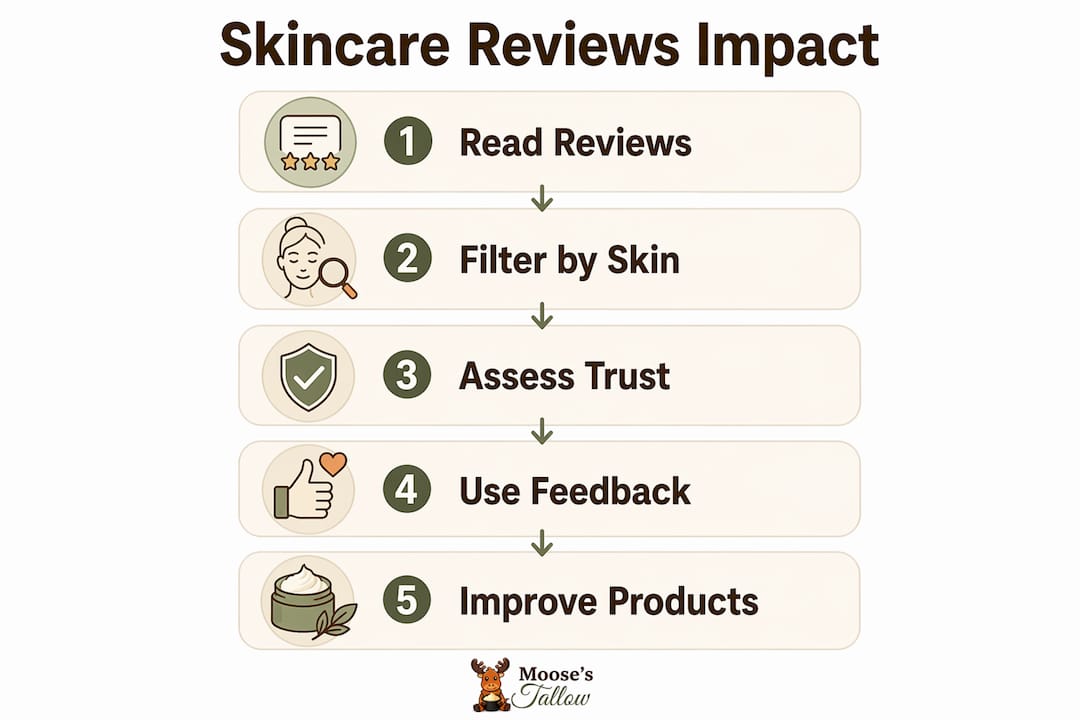
Pro Tip: When scanning reviews, filter by your skin type first. A product that works beautifully for oily skin may behave completely differently on dry or sensitive skin.
Where do consumers look for skincare reviews?
Shoppers don’t rely on a single source. They cross-reference, and the platforms they trust most depend on what they’re trying to confirm.
- Retailer marketplaces: Verified-purchase pages on major e-commerce platforms carry weight because the badge confirms the reviewer actually bought the product.
- Brand websites: On-site reviews and testimonials are convenient, but shoppers know brands can moderate them. Transparency here matters more than polish.
- Social platforms: Short-form video on platforms like TikTok and Instagram shows texture, application, and immediate skin response in ways text can’t. Long-form YouTube reviews add depth and routine context.
- Forums and niche communities: Reddit skincare communities and specialty beauty forums attract label-readers who go deep on ingredients, formulations, and long-term results. Before/after image galleries in these spaces carry real credibility.
The most confident shoppers triangulate. They check the retailer for verified volume, watch a short video for texture and application, then read a forum thread for ingredient-level discussion. Brands that show up well across all three touchpoints earn the most trust.
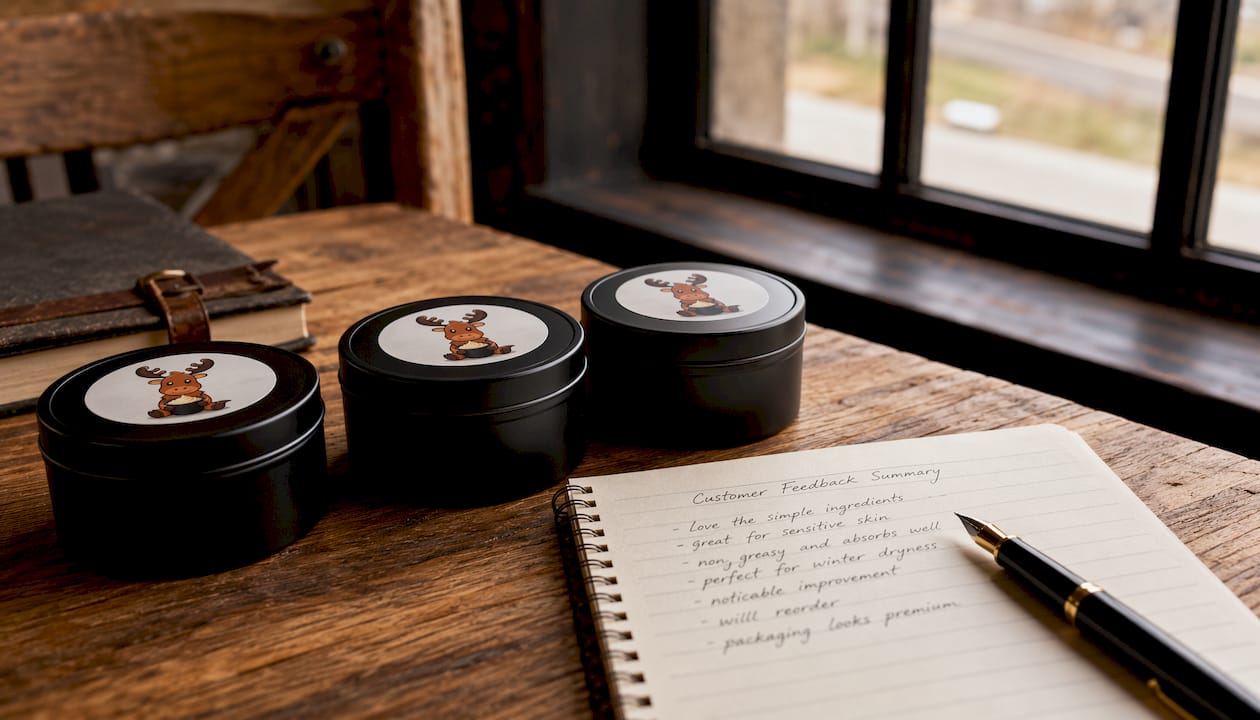
What makes a skincare review actually trustworthy?
Not all reviews are equal. A five-star rating with two words tells you almost nothing. A three-star review that lists skin type, usage timeline, and a specific texture observation tells you a great deal.
Verified purchase badges and visual evidence like photos and videos substantially improve perceived credibility. Platforms that surface these signals see higher consumer trust across the board.
- Verified purchase badge: Confirms the reviewer bought the product, not just commented.
- Skin type and routine context: “Combination skin, used morning and night for six weeks” is actionable. “Love it!” is not.
- Timeline: Short-term results and long-term results are different things. A review written after three days of use is less useful than one written after a month.
- Photos or video: Real skin, real lighting, real texture. These are harder to fake and easier to trust.
- Argument quality: Specific observations (“absorbed in under a minute, no greasy residue”) beat vague praise (“amazing product”).
- Red flags: Generic language, extreme brevity, repeated wording across multiple reviews, and no mention of skin type are all signs of low-quality or potentially inauthentic feedback.
Volume and diversity matter too. A product with reviews from people across multiple skin types and concerns is more trustworthy than one with fifty near-identical five-star comments. Diversity signals real-world use.
Pro Tip: Look for reviews that mention what didn’t work as well as what did. Honest, balanced feedback is a stronger trust signal than uniformly glowing praise.
How do brands turn reviews into product improvements?
Customer feedback reveals real-world performance that lab testing simply can’t replicate. Brands that treat reviews as operational intelligence, not just marketing assets, build better products faster.
The process starts with pattern recognition. One complaint about a leaky cap is a customer service issue. Ten complaints about the same cap are a packaging problem. Recurring mentions of irritation around a specific ingredient are a formulation signal. The key is reading for frequency and severity, not just sentiment.
“Actively communicating changes made from customer feedback turns shoppers into advocates. Closing the feedback loop converts critics into repeat buyers for many small brands.” — D2C feedback loop research
Small-batch DTC brands have a real advantage here. They can adjust a formula, swap a carrier oil, or redesign packaging in weeks. Larger firms often need months to move through the same cycle. That agility is a genuine competitive edge when reviews are surfacing issues in real time.
- Collect signals: Surface recurring complaints about texture, irritation, scent, or packaging.
- Prioritize fixes: Weight by frequency, severity, and alignment with brand positioning.
- Iterate fast: Adjust texture, swap a carrier oil, change usage guidance, or redesign a cap.
- Close the loop: Tell customers what changed and why. A simple update note on the product page turns a complaint into a loyalty moment.
Reviews also reveal competitive positioning gaps. Customers sometimes compare results to clinical procedures rather than rival products, which shifts the messaging a brand needs to use.
How brands use reviews as marketing and trust-building tools
A strong review isn’t just feedback. It’s content. Brands that use real customer language in product pages, email campaigns, and ads tend to convert better than those relying on polished brand copy alone, as explained in the role of online reviews in consumer trust and reputation. The reason is simple: shoppers trust other shoppers.
Verified reviews with photos increase confidence in product claims, especially when paired with clear ingredient transparency. A review that says “my skin stopped feeling tight after two weeks” lands differently when the product page also shows exactly what’s in the formula and why.
- Use reviews in context: Pull specific quotes that name skin type, timeline, and outcome. Avoid cherry-picking only the most effusive praise.
- Pair with ingredient honesty: Reviews gain credibility when the brand’s ingredient list is short, clear, and explained. Knowing what’s in a product makes customer outcomes feel believable.
- Balance the picture: Showing a range of experiences, including moderate reviews, signals authenticity. A page of only five-star reviews reads as curated.
- Distinguish influencer content from customer reviews: Influencer posts add reach and visual polish. Everyday customer reviews add credibility. Both have a role, but they’re not interchangeable. Shoppers know the difference.
Over-editing reviews strips the authenticity that makes them work. Keep the reviewer’s voice. Keep the skin type and timeline. That context is what makes a review useful, not just flattering. Learning to evaluate skincare ingredients alongside reviews gives shoppers a much clearer picture of what they’re actually buying.
What should you watch for in video and influencer reviews?
Online customer reviews and live streaming both significantly affect purchase intention, and short-form video has become one of the most persuasive formats for skincare. Watching a product absorb into real skin in real time is something a text review can’t replicate.
But video reviews come with their own trust signals to check.
- Routine context: Does the reviewer explain what else they’re using? A product that works in a minimal routine may behave differently in a ten-step regimen.
- Lighting honesty: Harsh ring-light setups can mask texture issues or exaggerate glow. Natural lighting tells a truer story.
- Skin-type disclosure: A reviewer with oily skin raving about a rich balm is useful data, but only if you know their skin type going in.
- Timeline transparency: A one-day application video shows immediate aesthetics. It says nothing about long-term skin response.
- Staged demonstrations: Watch for reviews that show a single application without any follow-up. Real results take time.
Influencers add reach, but not always credibility. Pair influencer content with real customer reviews before making a decision. The influencer shows you what the product looks like. The customer reviews tell you whether it actually works for skin like yours.
How to read skincare reviews: a shopper checklist
Use this checklist when you’re evaluating a product and want to cut through noise quickly.
- Check for verified purchase first. An unverified review carries less weight than one confirmed by a purchase record.
- Find your skin type. Filter or scan for reviewers who share your skin type. Their experience is the most predictive for you.
- Look for a timeline. Reviews written after two to four weeks of consistent use are more reliable than first-impression reactions.
- Prioritize photos and video. Real images of texture, application, and results are harder to fake and easier to evaluate.
- Note recurring mentions. If three or more reviews mention the same irritation, scent issue, or texture complaint, treat it as a pattern, not an outlier.
- Weigh diversity over volume. Fifty reviews from people with the same skin type and the same outcome are less informative than twenty reviews spanning different skin types, concerns, and timelines.
Detailed reviews that include usage timeline, skin type, and routines are consistently more influential than short, vague comments. That’s not just intuition. It’s what the research on consumer confidence in skincare decisions confirms.
Pro Tip: Read the two and three-star reviews carefully. They often contain the most specific, honest observations about texture, scent, and real-world performance.
How brands should collect and act on reviews
Collecting reviews is only half the work. The other half is using them. Here’s a practical approach for small DTC and handmade skincare brands.
- Ask specific questions in review prompts. “What’s your skin type?” and “How long did you use it?” produce far more useful data than an open star rating.
- Encourage photos and short videos. Simple incentives like a discount on the next order work. Mark verified purchases clearly.
- Triangulate with operational data. Combining review content with returns and support tickets speeds up identification of real product issues versus one-off complaints.
- Prioritize fixes that align with brand positioning. For a tallow-based brand focused on skin-barrier support, a recurring complaint about texture or absorption is a high-priority signal. It touches the core promise.
- Publish a changelog. When a review cluster prompts a formula or packaging change, say so. A brief update note on the product page tells customers their feedback mattered. That transparency builds loyalty.
The brands that do this well treat every review as a data point, not a verdict. One complaint is a conversation. Ten complaints about the same thing are a product brief.
Real-world example: how a small DTC brand uses reviews operationally
Consider a small handmade skincare brand that starts receiving a cluster of reviews mentioning a leaky cap on a body butter jar. The complaints are specific: product seeping under the lid during shipping. Left unaddressed, that’s a return driver and a trust problem.
A small-batch brand can move fast. The cap gets swapped within a production cycle. The label instructions get updated to note the product should be stored upright. The brand posts a brief note on the product page: “We updated the cap and storage guidance based on your feedback.”
“Small handmade brands can iterate formulas faster than large firms, allowing quick fixes based on review clusters around packaging, carrier oil, and texture.” — D2C feedback loop research
The result is qualitative but real. Customers who flagged the issue feel heard. New shoppers see a brand that responds. Returns drop. Repeat purchases follow. The same loop applies to formula changes: a recurring complaint about a carrier oil feeling heavy or oxidizing quickly is a signal to revisit the formulation. Swapping to fractionated coconut oil, for example, addresses stability, oxidation resistance, and absorption in one move.
Pro Tip: Prioritize packaging and carrier oil fixes first. They tend to have the highest impact on returns and repeat purchase, and small-batch brands can act on them quickly.
Key Takeaways
Customer feedback in skincare is both a trust signal for shoppers and an operational tool for brands, and the brands that treat it as both build better products and stronger loyalty.
| Point | Details |
|---|---|
| Trust signals for shoppers | Prioritize verified purchase, skin-type disclosure, timeline, and photos over star ratings alone. |
| Review quality beats volume | Detailed, specific reviews from diverse skin types are more useful than many identical five-star comments. |
| Brands should close the loop | Announcing changes made from feedback turns reviewers into advocates and builds long-term loyalty. |
| Video adds texture, not always truth | Short-form video shows application well; check for skin-type disclosure and timeline before trusting the result. |
| Moose’s Tallow approach | Every product shows a short, honest ingredient list and backs orders with a 60-day guarantee, giving reviews real context. |
Why listening to reviews is the whole job
Most brands treat reviews as a reputation metric. I think that’s the wrong frame entirely. A review is a customer telling you exactly what your product did on their actual skin, in their actual routine, over real time. That’s more useful than any focus group.
What I’ve seen consistently is that founders, myself included, can fall into the trap of assuming their preferences match their customers’. Reviews break that assumption fast. Someone with dry, flaky skin using a tallow-based body butter in a dry Pennsylvania winter is going to have a different experience than someone in a humid climate with combination skin. Both experiences are valid. Both are useful. The review that says “too rich for summer but perfect in winter” is not a complaint. It’s a usage guide.
The brands that grow from this are the ones that read reviews with genuine curiosity, not defensiveness. They fix the cap. They adjust the texture. They update the instructions. And then they tell their customers what changed. That last step is the one most brands skip, and it’s the one that actually builds trust.
Ingredient transparency and honest reviews work together. When a customer can see exactly what’s in a product and then read what other customers experienced, the picture is complete. There’s nothing to hide and nothing to oversell.
Moose’s Tallow products are backed by real customer reviews
If you want skincare products where the ingredient list is short enough to read in thirty seconds and the reviews are real, Moose’s Tallow is worth a look. Every product is built on properly rendered local beef suet tallow, with fractionated coconut oil as the preferred carrier for its stability, oxidation resistance, and clean absorption. Beeswax, vitamin E (tocopherols), jojoba, castor, and egg yolk infused oil round out the formulas. Nothing is added as filler. Customer reviews are displayed as written, and every order is backed by a 60-day guarantee. Browse the full product collection to see what real customers say about each formula.
FAQ
What is the purpose of product reviews in skincare?
Reviews give shoppers real-world performance data that ingredient lists and brand claims can’t provide. They also give brands a direct signal for formulation, packaging, and messaging improvements.
Why are skincare reviews so important for purchase decisions?
Skincare can’t be tested before purchase. Detailed reviews with skin type, timeline, and photos reduce that uncertainty by letting shoppers predict how a product will perform on skin like theirs.
How can you tell if a skincare review is trustworthy?
Look for a verified purchase badge, specific skin-type disclosure, a usage timeline of at least two to four weeks, and photos or video. Generic language and extreme brevity are red flags.
How do brands use customer feedback to improve skincare products?
Brands track recurring complaints about texture, irritation, or packaging, then prioritize fixes by frequency and severity. Combining reviews with returns and support data speeds up the identification of real product issues.
Does Moose’s Tallow show real customer reviews?
Yes. Moose’s Tallow displays customer reviews as written and backs every order with a 60-day guarantee, so shoppers can evaluate real feedback alongside a transparent ingredient list before buying.


0 comments