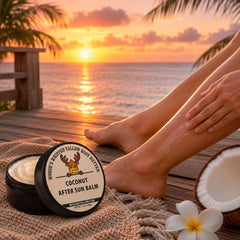
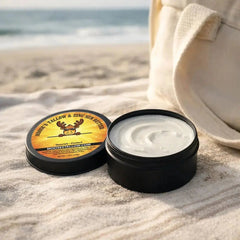


Yes, tallow can help mild sunburn. Apply a thin layer of properly rendered beef tallow once your skin has cooled and first-aid steps are complete. It works as a barrier-and-moisture step, not a medical treatment. Merck Manual and Mayo Clinic both emphasize cooling and gentle moisturization first. Tallow fits naturally into that second step, once the heat is gone.
Beef suet tallow’s fatty-acid profile is close to your skin’s own sebum. That similarity supports barrier repair and helps slow moisture loss while sunburned skin recovers. Moose’s Tallow small-batch balms are built on that principle: few ingredients, every one chosen on purpose.
When to skip topical balms entirely: Do not apply tallow or any balm if you have widespread blistering, fever, severe pain, dizziness, or signs of infection. Those are red flags that need medical attention, not skincare.
Tallow is appropriate when:
- The burn is mild (redness, tightness, no open blisters)
- Skin has cooled to normal temperature
- You have completed basic first-aid steps
- There are no signs of systemic symptoms
Key Takeaways
Tallow supports the skin barrier on mild sunburn, but only after cooling and basic first-aid are complete.
| Point | Details |
|---|---|
| Cool skin first | Complete cooling and hydration before applying any balm or moisturizer. |
| Tallow after cool-down | Apply a thin layer once skin temperature is normal to support barrier repair and moisture retention. |
| Avoid on blisters | Never apply tallow to open blisters, infected areas, or skin that is still hot to the touch. |
| Pair with aloe | Use a cooled aloe gel immediately post-sun, then layer tallow once the gel absorbs and skin cools. |
| Moose’s Tallow option | The small-batch Tallow Balm and Vanilla Beef Tallow Lip Balm are clean, grass-fed after-sun options backed by a 60-day guarantee. |
What should you do first after getting sunburned?
Follow these steps in order:
- Get out of the sun immediately. Cover up or move indoors.
- Cool the skin with tepid water or cool compresses. A cool shower works well. Do this for 10–20 minutes.
- Pat dry gently. No rubbing. Sunburned skin is fragile.
- Drink water. Sunburn draws fluid toward the skin surface. Hydration matters.
- Take an oral NSAID (ibuprofen or aspirin) if pain is significant and you have no contraindications.
- Wait until skin temperature normalizes before applying a richer balm like tallow.
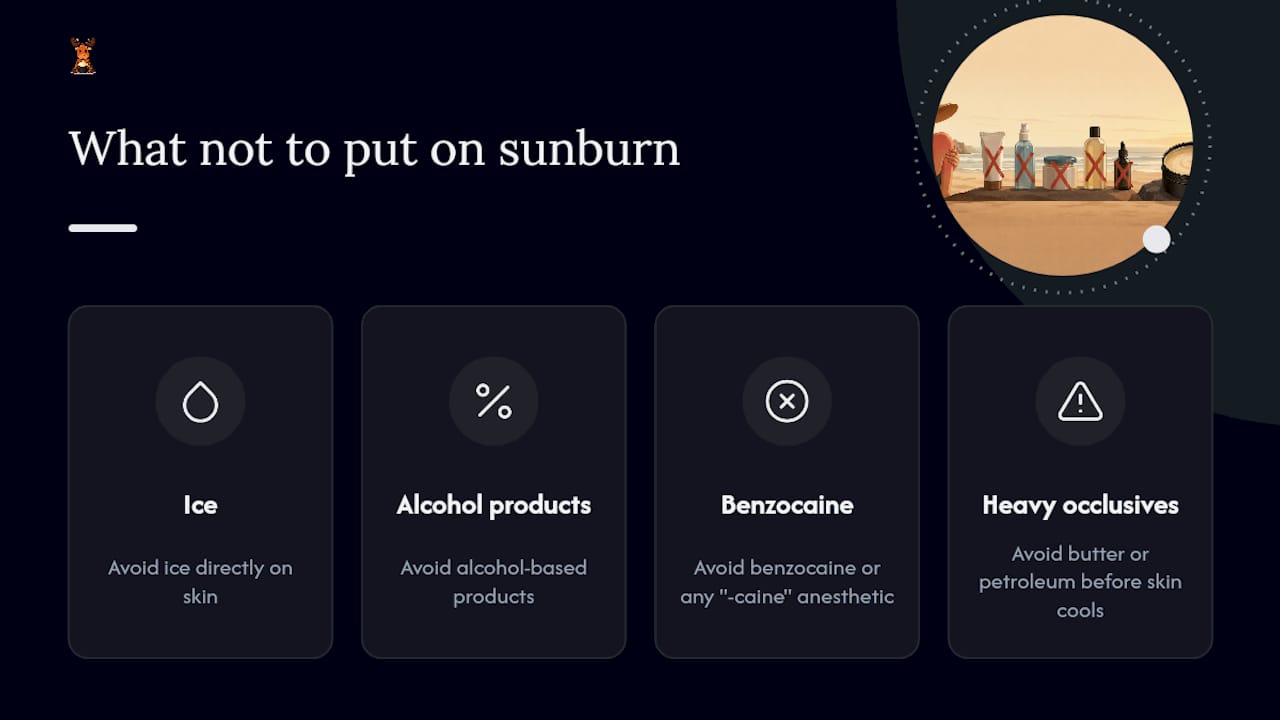
Do not use any of these on a sunburn:
- Ice directly on skin (causes tissue damage)
- Alcohol-based products (dry and irritate)
- Benzocaine or any “-caine” topical anesthetic (can cause allergic reactions and mask worsening symptoms; clinical guidance warns against them)
- Heavy occlusives on very hot skin (trap heat and slow cooling)
Seek urgent care if you notice blistering over a large area, fever, chills, severe pain, or confusion. Those symptoms point beyond a mild burn.
How does tallow actually help sunburned skin?
Sunburn does more than redden skin. UV radiation disrupts the stratum corneum, the outermost barrier layer, causing lipid disorganization and transepidermal water loss. The skin loses its ability to hold moisture and becomes more permeable. That tightness and peeling you feel is barrier breakdown in progress.
Solar exposure also lowers natural moisturizing factors and free fatty acids that normally keep the barrier intact. Replenishing those lipids from the outside supports the skin’s own repair process.
This is where beef suet tallow fits. Its fatty-acid composition mirrors skin sebum more closely than most vegetable oils do. That similarity means it integrates with the skin’s own lipid layers rather than sitting on top as a pure occlusive. The result is barrier support and moisture retention, not just a surface coating.
What tallow can do for mild sunburn (cosmetic framing):
- Support the skin barrier while it recovers
- Help reduce moisture loss from disrupted skin
- Provide a light, breathable layer without heavy occlusion
- Deliver vitamin E (tocopherols) and other naturally occurring fatty acids
What tallow cannot do:
- Reduce fever or systemic inflammation
- Treat blisters or open skin
- Replace cooling or oral pain relief
- Substitute for medical care on moderate-to-severe burns
After-sun formulation research favors barrier-rebuilding lipids combined with anti-inflammatory actives for acute photodamage. Tallow covers the lipid-barrier side of that equation well.
Pro Tip: Apply tallow only after skin temperature has returned to normal. On still-hot skin, any occlusive product can trap heat and make discomfort worse.
How to apply tallow safely to mild sunburn
Timing and technique matter. Done right, a tallow balm supports recovery. Done too early or too heavily, it can trap heat or introduce contamination to compromised skin.
Step-by-step application:
- Complete the cooling phase first. Skin should feel comfortable to the touch, not hot.
- Wash your hands before touching the burn or the product.
- Pat the area dry with a clean, soft cloth. Leave skin slightly damp.
- Patch test first if this is your first time using tallow. Apply a small amount to an unaffected area and wait 15–20 minutes. Sensitive and eczema-prone skin can react to new ingredients.
- Use a thin layer. A little goes a long way. Tallow is concentrated and water-free.
- Apply gently with clean fingertips. No rubbing or pressing on tender skin.
- Reapply as needed when skin feels tight or dry, not on a fixed schedule.
Hygiene rules to follow:
- Use clean hands or a spatula every time. No double-dipping.
- Keep the container closed when not in use.
- Do not apply to open blisters, weeping skin, or areas that look infected.
Pairing tallow with other after-sun ingredients makes sense for the first 24–72 hours. Aloe vera, panthenol, and barrier lipids are well-supported in after-sun formulations for soothing and hydration. A practical approach: use a cooled aloe gel immediately after cooling, then layer a thin tallow balm once the gel has absorbed and skin temperature is stable.
Fractionated coconut oil is the preferred carrier in Moose’s Tallow formulations. It absorbs easily, resists oxidation, and keeps the texture light, making it a better fit for post-sun skin than heavier, long-chain vegetable oils. You can read more about applying tallow balm for skin relief on the Moose’s Tallow blog.
Stop applying and reassess if:
- Redness or pain worsens after 24–48 hours
- Skin looks infected (yellow discharge, increasing swelling)
- Blisters form or break open
Why a small-batch tallow balm is worth choosing
Not all tallow products are equal. The rendering process, sourcing, and ingredient list all affect what ends up on your skin. For post-sun care, those details matter more than usual because the barrier is already compromised.
What to look for in a quality tallow balm:
- Grass-fed, locally rendered beef suet tallow as the primary ingredient
- A short, readable ingredient list with no fillers or synthetic additives
- Fractionated coconut oil as the carrier (stable, light, long shelf life)
- Supporting ingredients like beeswax, vitamin E (tocopherols), jojoba, castor, or egg yolk infused oil
- Clear sourcing and batch transparency
Moose’s Tallow products are handmade in small batches in Lebanon, PA, using locally rendered beef suet tallow. Every ingredient is chosen on purpose. The tallow product checklist on the Moose’s Tallow site walks through exactly what to look for when shopping.
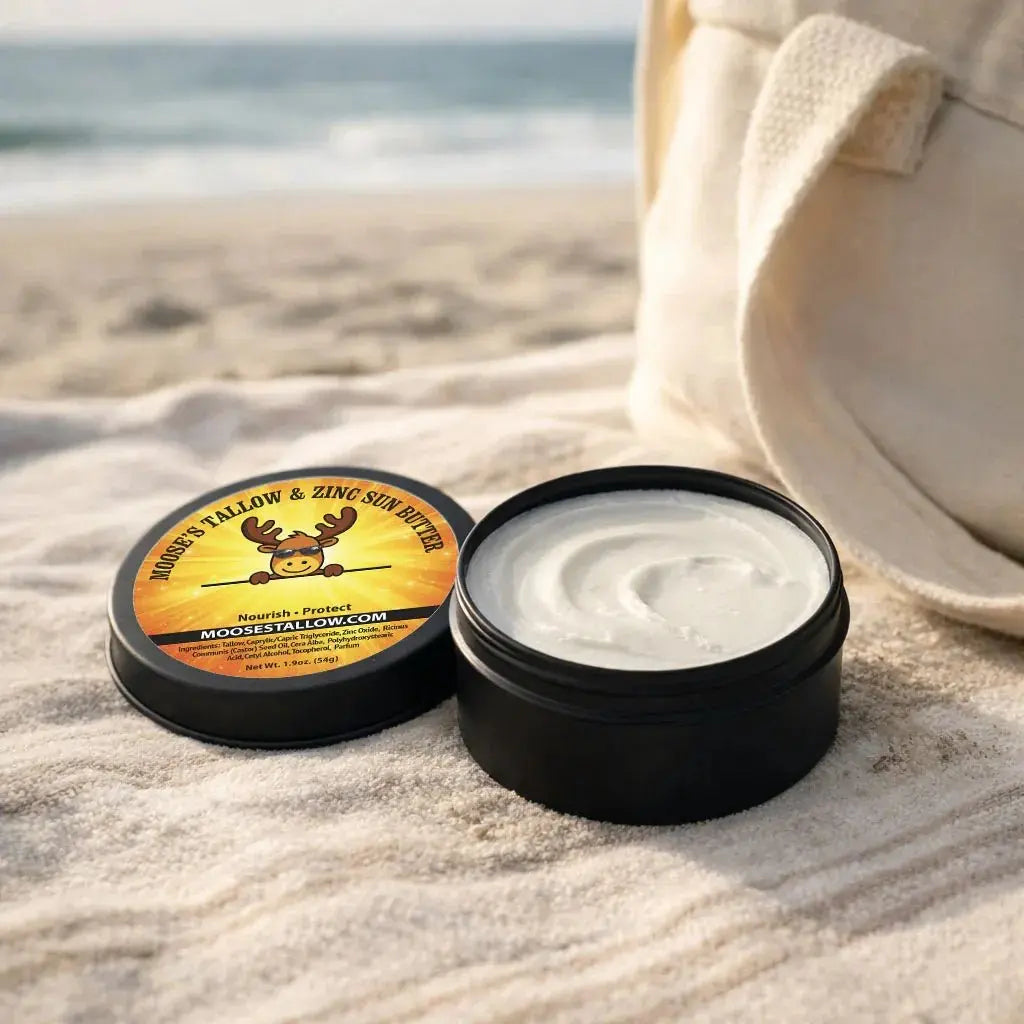
For after-sun use, two products stand out. The Vanilla Beef Tallow Lip Balm is a compact, pocket-sized option. It is ideal for testing tolerance on a small area, or for keeping in a bag after a day outdoors. The Moose’s Tallow Tallow Balm is the small-batch outdoor balm built for after-sun use. It carries the same core ingredients: beef suet tallow, fractionated coconut oil, beeswax, and vitamin E. No water, no fillers, nothing to hide. Browse the full range of Featured Beef Tallow Items to find the right fit.
The Moose’s Tallow standard: Every batch starts with properly rendered local beef suet tallow. The ingredient list is short because every item on it earns its place. If it does not support the skin barrier or improve the formula, it does not go in.
Every order comes with a 60-day satisfaction guarantee and real customer reviews. Grass-fed sourcing, handmade batches, and honest ingredient lists are not marketing language here. They are the whole point.
When should you see a doctor about a sunburn?
Mild sunburn resolves on its own with good home care. But some burns cross a line that topical products cannot address. Knowing the difference protects you.
Seek medical care immediately if you notice: widespread blistering, fever or chills, severe pain that does not respond to oral NSAIDs, dizziness or confusion, nausea, or any sign of infection (increasing redness, warmth, swelling, or discharge after 48 hours).
Sunburn inflammation peaks around 72 hours and then gradually resolves in mild cases. If your symptoms are worsening rather than improving after the first 24–48 hours, that is a signal to get professional input, not to apply more balm.
Common risks with topical products on sunburned skin:
- Allergic reactions to ingredients (patch test first, especially with new products)
- Contamination from unclean hands or containers introducing bacteria to broken skin
- Heat trapping from heavy occlusives applied before skin has fully cooled
Tallow is generally well-tolerated, but no ingredient is universally safe. People with beef or lanolin sensitivities should patch test carefully. If you have eczema-prone or highly reactive skin, start with a very small amount on an unaffected area before applying to the burn.
Why I keep tallow simple, even for after-sun care
There is a reason Moose’s Tallow formulas stay short. When Brian Smith flipped over a lotion bottle and counted 52 ingredients, the first being water, he did not see a product. He saw a list of things that had nothing to do with skin health.
Sunburned skin does not need a complex cocktail. It needs barrier support, moisture retention, and ingredients that do not interfere with recovery. Beef suet tallow delivers that. Its fatty acids are structurally similar to what your skin already makes. Fractionated coconut oil keeps the formula light and stable without the oxidation risk of heavier vegetable oils like olive or grapeseed. Beeswax adds structure. Vitamin E (tocopherols) supports the formula’s stability and the skin’s own defenses. That is the whole list.
The temptation in skincare is to add more. More actives, more botanicals, more claims. After-sun care is where that instinct does the most damage. Compromised skin absorbs more and tolerates less. A short, clean ingredient list is not a limitation. It is the right call.
What I have seen from customers is consistent: the people who get the most from tallow are the ones who use it correctly. Cool first. Thin layer. Clean hands. Give it time. The skin does the work. Tallow just gives it what it needs to do that.
Try a small-batch after-sun balm with a 60-day guarantee
Moose’s Tallow makes after-sun care straightforward. Start with the Vanilla Beef Tallow Lip Balm for a low-commitment way to test tallow on your skin. It is compact, clean, and built on the same grass-fed beef suet tallow as every other Moose’s Tallow product. For broader coverage, the Tallow Balm from the Featured Beef Tallow Items collection is the small-batch outdoor balm designed for exactly this kind of after-sun use.
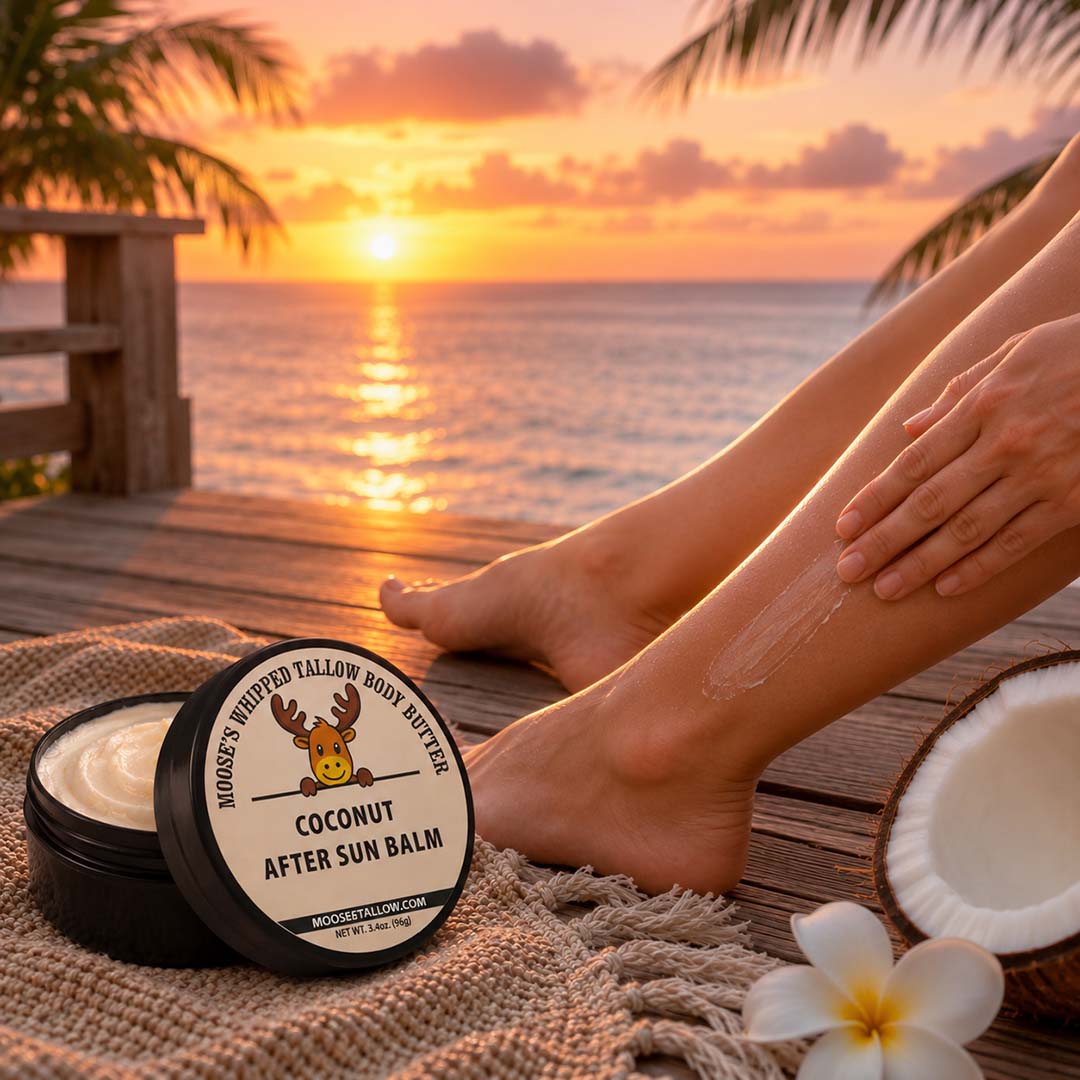
Every order ships from Lebanon, PA, and comes with a 60-day satisfaction guarantee. Ingredients are listed clearly. Nothing is hidden. If it does not work for your skin, you are covered.
Sources
These are the primary sources used for clinical first-aid guidance and barrier science in this article.
- Sunburn - Dermatology - Merck Manual Professional Edition
- Sunburn - Diagnosis and treatment - Mayo Clinic
- How to fight acute sun damage? Current skin care strategies | Photochemical & Photobiological Sciences | Springer Nature Link
- Multi-omics analysis to evaluate the effects of solar exposure and a broad-spectrum SPF50+ sunscreen on markers of skin barrier function in a skin ecosystem model.
- Herbal after-sun gels: formulation strategies and evaluation — International Journal of Pharmaceutical Sciences
This article is general information, not a substitute for advice from a qualified doctor. Consult a qualified healthcare professional about your own circumstances before acting on anything here.
FAQ
Is tallow better than aloe vera for sunburn?
They serve different roles. Aloe vera is best applied immediately after cooling for its soothing, hydrating effect. Tallow works better as a follow-up barrier step once skin has cooled and the aloe has absorbed. Using both in sequence covers more ground than either alone.
What heals a sunburn the fastest?
No topical product speeds healing on its own. Cooling the skin quickly, staying hydrated, taking an oral NSAID for inflammation, and keeping the barrier supported with a gentle moisturizer gives your skin the best conditions to recover. Tallow can support that barrier step once the skin has cooled.
What should you not put on a sunburn?
Avoid ice directly on skin, alcohol-based products, benzocaine or any “-caine” anesthetic, and heavy occlusives on skin that is still hot. Clinical guidance also cautions against butter or petroleum-based products applied before the skin has fully cooled, as they can trap heat.
Is fractionated coconut oil or tallow better for sunburn?
Both can support post-sun skin, and they work well together. Tallow provides fatty acids that closely mirror skin sebum for barrier support. Fractionated coconut oil is a lighter carrier that absorbs easily and resists oxidation. Moose’s Tallow formulas combine both, which is why fractionated coconut oil is the preferred carrier in every product.


0 comments