

Wash the bite with soap and water, then cool it with an ice pack for 10 to 20 minutes. Follow with a thin layer of hydrocortisone, calamine, or a soothing balm to calm the itch. Most mild reactions fade within a few days with this simple routine. If you see spreading redness, fever, or swelling that gets worse instead of better, call a doctor.
TL;DR:
- Applying a cold compress within the first 10 to 20 minutes of a bite significantly reduces swelling, pain, and itchiness.
- Using hydrocortisone, calamine, or antihistamine creams along with oral antihistamines can provide effective relief, especially for larger reactions or multiple bites.
- Natural remedies like cooled tea bags, aloe vera gel, and oatmeal paste support itch relief, while alcohol, vinegar, or toothpaste lack credible backing and may worsen irritation.
- Prevention through repellent use, clothing treatment, and eliminating standing water reduces the risk of bites, especially in high-infestation areas.
- Signs requiring medical attention include fever, spreading redness, pus, difficulty breathing, or a bullseye rash; prompt care can prevent complications.
Quick Relief Steps for the First 10 to 30 Minutes
Bug bite itch relief starts in the first half hour. What you do right after a bite matters more than any product you apply later.
- Wash the bite. Use soap and water. This lowers infection risk, and it’s the CDC’s first recommendation for any insect bite.
- Cool it down. Wrap ice in a cloth and hold it on the bite for 10 to 20 minutes. Cold reduces swelling, pain, and itch fast, according to Mayo Clinic.
- Tap instead of scratch. A firm press or light tap interrupts the itch signal without breaking skin.
- Apply a topical. Low-strength hydrocortisone, calamine, or a topical antihistamine can calm the area. Follow the label.
- Consider an oral antihistamine. For bigger welts or multiple bites, a non-drowsy option can help control the reaction from the inside.
The itch you feel is histamine, released because your immune system reacts to proteins in the bug’s saliva, per ColumbiaDoctors. That’s why cooling and antihistamines both target the same root cause.
Pro Tip: Keep a small ice pack in your freezer and a balm in your bag. Treating a bite in the first five minutes almost always beats treating it an hour later.
Over-the-Counter Options: What Each One Actually Does
Standing in the pharmacy aisle staring at anti-itch creams is its own kind of frustrating. Here’s what separates them.
- Hydrocortisone cream calms inflamed, itchy skin. Use it sparingly, and skip it on broken or bleeding skin.
- Calamine lotion dries oozing or weeping bites and adds a cooling feel.
- Topical antihistamine creams offer short-term itch relief but shouldn’t sit on a child’s skin or broken skin for long stretches.
- Oral non-drowsy antihistamines help with bigger allergic-style reactions, like large welts or several bites at once.
Mayo Clinic lists cold compresses, calamine, hydrocortisone, and oral antihistamines as the standard first-aid toolkit for mild bug bite reactions. That’s a strong signal these four options are where most people should start, not exotic remedies.
Check the age limits on every label. Kids’ skin reacts differently than adult skin. Stop use and check with a clinician if the bite looks worse a day or two after treatment starts.
Home Remedies That Actually Help
Not every home remedy for insect bites earns its reputation. These do, when used correctly.
- Oatmeal or baking soda paste. Mix with a small amount of water until it forms a paste. Apply for 10 minutes, rinse, and reapply up to twice a day.
- Cooled tea bags. Steep chamomile or black tea, chill the bag in the fridge, then hold it on the bite for a few minutes.
- Aloe vera gel. Pick pure aloe gel and chill it before applying for an extra cooling effect.
- Brief warm compress. Some people find short, controlled heat interrupts the itch signal, but keep it mild to avoid burns.
Skip rubbing alcohol and nail polish. Neither has real backing for insect bites, and both can irritate skin further. For ticks, resist folk removal tricks like hot matches or fingernail polish. StatPearls notes these methods can cause the tick to release more saliva into the wound, raising infection risk. Use fine-tipped tweezers instead, and pull with steady, upward pressure.
Pro Tip: A cooled tea bag works almost as well as a compress and takes zero prep beyond boiling water you already had for your own cup.
Prevention Steps Worth Building Into Your Routine
Treating a tick bite naturally or calming a mosquito welt is a lot less work than avoiding the bite altogether.
- Use an EPA-registered repellent with DEET, picaridin, or PMD on exposed skin.
- Treat clothing and gear with permethrin if you’re heading into heavy bug territory.
- Wear long sleeves and pants during peak mosquito hours, dawn and dusk.
- Dump standing water near your home. Mosquitoes breed in it within days.
The CDC points to repellents and treated clothing as two of the most reliable prevention tools available. Apply repellent before you head outside, and reapply as the label directs, especially after sweating or swimming.
Warning Signs That Need Prompt Medical Attention
Most bites resolve on their own. A few signs mean it’s time to stop treating it at home.
- Fever, spreading redness, or warmth around the bite site.
- Pus, increasing pain, or hives that show up hours or days later.
- Difficulty breathing or facial swelling, which needs emergency care immediately.
- A rash following a tick bite, especially a bullseye pattern, or flu-like symptoms afterward.
Harvard Health lists fever and spreading redness as clear reasons to see a doctor rather than wait it out. If you suspect infection, wash the area again and call a clinician. Antibiotics may be needed if bacteria have taken hold.
Why Moose’s Tallow Thinks About Skin Barrier First
I started this brand after reading my own lotion label. Fifty two ingredients, and water was first on the list. That bothered me enough to build something simpler.
- Every Moose’s Tallow formula starts with properly rendered local beef suet tallow, chosen because its fatty-acid profile sits close to your skin’s own oils.
- We pair tallow with fractionated coconut oil as our carrier of choice. It resists oxidation, absorbs cleanly, and holds up on the shelf, unlike heavier plant oils.
- We skip water, fillers, and long ingredient lists on purpose. Every jar lists what’s in it and why.
For more on how we approach calming irritated skin, read our step-by-step method for soothing skin.
— Brian Smith
Should You Take a Pain Reliever for a Bug Bite?
Most bug bites don’t need a pain reliever, but bigger reactions sometimes benefit from one. If a bite swells into a large welt or aches more than it itches, an over-the-counter pain reliever like ibuprofen or acetaminophen can help with discomfort.
Ibuprofen carries an added benefit here: it’s an anti-inflammatory, so it can reduce swelling around the bite site while also easing pain. Acetaminophen handles pain but does nothing for inflammation, so choose based on which symptom bothers you more.
Neither drug treats the itch directly. They’re for the ache, throbbing, or tenderness that sometimes comes with a larger reaction, especially bites from wasps, hornets, or multiple mosquito bites clustered in one spot. Pair a pain reliever with the cooling and topical steps above rather than using it alone.
Check labels for dosing limits, especially if you’re already taking other medications. Children need weight-based dosing, so check with a pharmacist or pediatrician before giving any pain reliever to a child under a certain age. If pain is severe, spreads, or comes with fever, that’s a signal to move past home care and get evaluated.
Do Natural Remedies for Bug Bites Really Work?
Some do, and the reason matters. Cold compresses work because cold slows nerve signals and reduces swelling, a mechanism Mayo Clinic backs directly. Oatmeal paste and aloe gel work similarly, by cooling and calming irritated skin rather than by any dramatic chemical action.
Cooled tea bags fall into the same category. The cold does most of the work, and mild tannins in black tea may add a slight astringent, drying effect on weepy bites, according to Cleveland Clinic.
What doesn’t hold up as well: rubbing alcohol, toothpaste, and vinegar soaks. None have solid backing, and alcohol especially can dry out and irritate already inflamed skin. Skip them.
The honest takeaway is that natural remedies for bug bites work best as support, not as a replacement for cleaning and cooling the site first. A soothing balm with real ingredients, applied after those two steps, tends to outperform a remedy pulled straight from the pantry with no real cooling effect behind it.
How Long Does Bug Bite Itching Actually Last?
Most mosquito bites peak in itch within the first 48 hours, then fade over three to four days. A mild bump might disappear within a day if you catch it early with a cold compress and topical.
Larger reactions, sometimes called skeeter syndrome, can swell for a week or longer before fully resolving. Flea bites often itch in clusters and can linger for several days if scratched repeatedly. Tick bites without disease transmission usually calm down within a few days, but any rash appearing one to two weeks later needs medical evaluation, not home care.
If a bite hasn’t improved at all after a week, or it’s getting worse rather than better, that’s outside the typical timeline and worth a call to your doctor.
Does the Itch Relief Strategy Change by Bug?
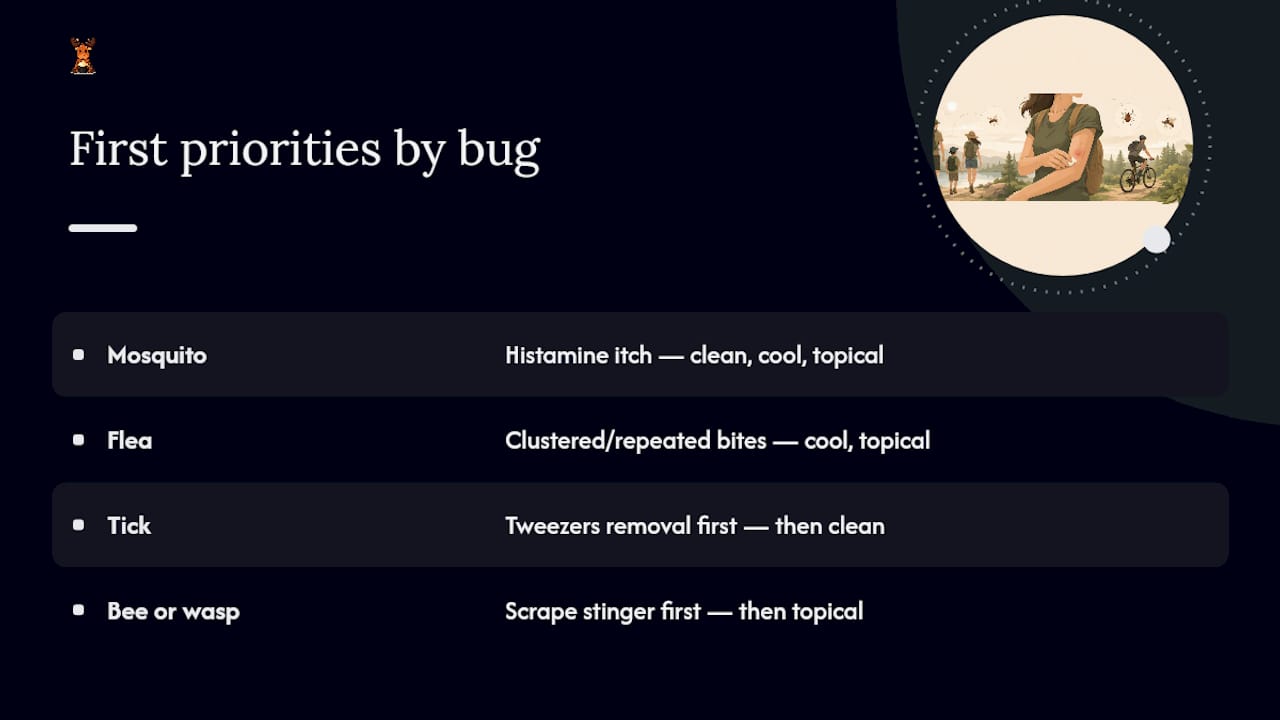
Yes, and knowing the difference helps you treat it faster. Mosquito bites respond well to the standard routine: clean, cool, topical. The itch is driven purely by histamine, so antihistamine creams and hydrocortisone work reliably.
Flea bites often show up in clusters, usually around the ankles, and carry a sharper, more persistent itch. The same cooling and topical steps apply, but expect the itch to last a bit longer since fleas tend to bite repeatedly in one visit.
Tick bite care natural methods look different because the priority isn’t itch first, it’s proper removal. Use fine-tipped tweezers, pull steadily upward, and clean the site afterward. Itch relief comes second, and any rash or flu-like symptoms in the following weeks change the situation from a skin issue to a medical one.
Bee and wasp stings need a different first step entirely. Scrape the stinger out with a blunt edge instead of squeezing it with tweezers, since squeezing can push more venom into the skin. After that, the cool and topical steps apply the same way.
Why Scratching Makes Everything Worse
Scratching feels like relief for about three seconds, then makes the itch louder. Here’s the mechanism: scratching releases more histamine at the bite site, which restarts the itch cycle and often makes it worse than before, according to StatPearls.
Broken skin from scratching also opens the door to infection. Bacteria that live harmlessly on the skin’s surface can get into a scratched, open bite and cause redness, swelling, and sometimes pus. That’s the difference between a bite that heals in three days and one that turns into a bigger problem needing antibiotics.
Kids scratch more than adults, mostly because they haven’t learned to tolerate the sensation. Keeping a child’s nails short and covering a bite with a light bandage can help break the habit during the worst itch window, usually the first day or two.
If you catch yourself scratching, press firmly on the bite instead. The pressure interrupts the itch signal without tearing skin, and it buys you time to grab a cold compress or topical.
A Founder’s Closing Checklist
My routine is simple: clean, cool, then support the skin barrier with something honest. That’s it.
Transparency matters most on sensitive skin. Every ingredient in a Moose’s Tallow balm is there on purpose, never as filler, so you know exactly what’s touching your skin.
Pro Tip: Pack a small bite kit before any outdoor trip: soap wipes, a compact ice pack, and a balm you trust.
The Two Products I’d Pack for Every Trail
Bug bite itch relief works best when you’ve got the right tools before you need them, not after.
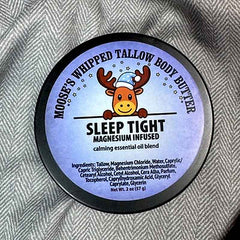
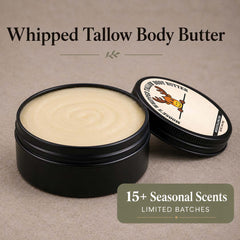
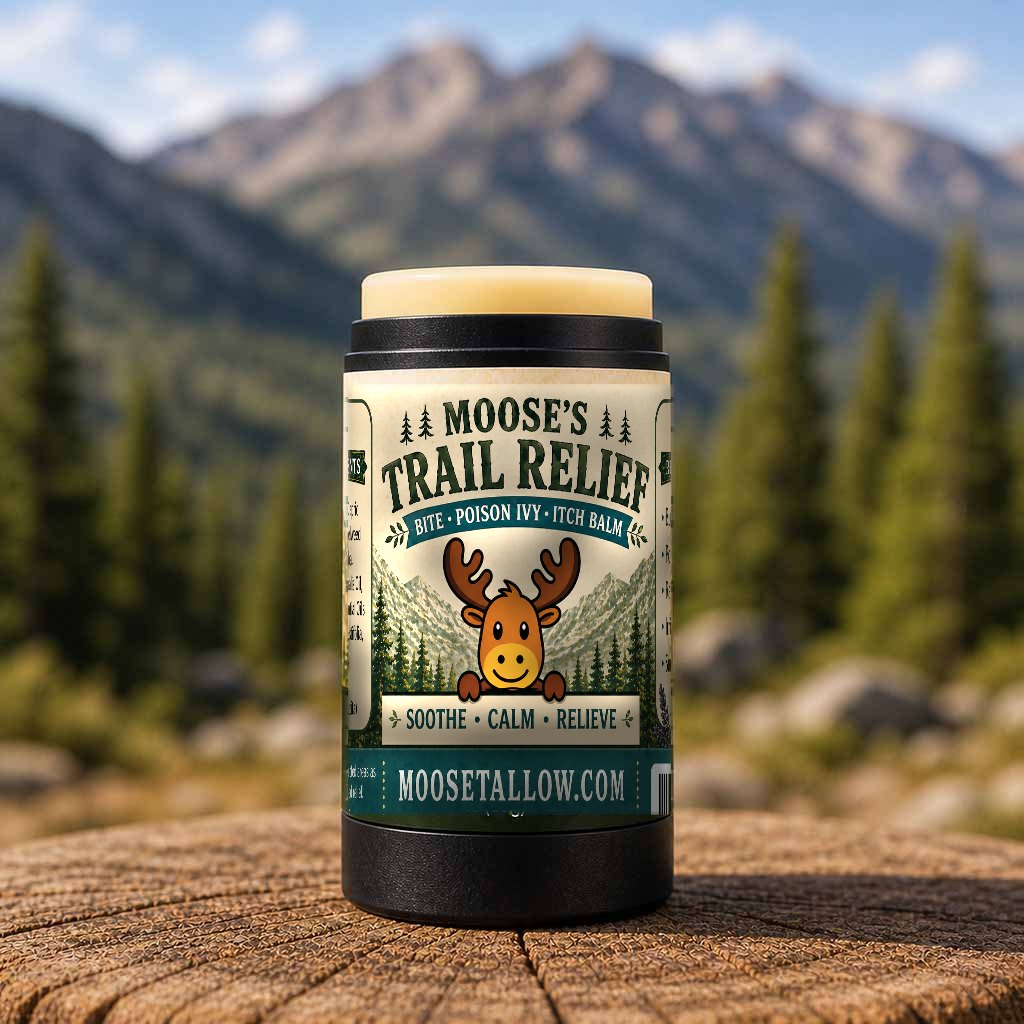
Our Trail Relief balm is built for exactly the moment after you’ve washed and cooled a bite. It’s water-free, built on our rendered beef suet tallow base, and carries fractionated coconut oil for a texture that absorbs cleanly instead of sitting greasy on skin. No fillers, no water first on the label, just ingredients chosen to support your skin barrier while it calms down. It runs $15.
Prevention beats treatment every time, which is where Hiker’s Friend comes in. It’s a skin-safe repellent formulated the same way as everything else we make: tallow-based, water-free, and honest about what’s in the jar. It’s also priced at $15.
If you want to browse the rest of what we make, from lip balm to hand cream, our full product collection covers whole-body care built the same way, one intentional ingredient at a time.
Sources
This guidance draws on established clinical and public-health sources, not guesswork.
- CDC — About mosquito bites
- Mayo Clinic — First aid: insect bites
- Harvard Health — When should I see a doctor about a bug bite?
- StatPearls — Insect bites
For anything beyond mild symptoms, talk to a clinician directly.
This article is general information, not a substitute for advice from a qualified doctor. Consult a qualified healthcare professional about your own circumstances before acting on anything here.
FAQ
How Do I Get Bug Bites to Stop Itching?
Wash the bite with soap and water, then apply a cold compress for 10 to 20 minutes. Follow with hydrocortisone, calamine, or a topical antihistamine, and take an oral antihistamine if the reaction is larger, per Mayo Clinic’s first-aid guidance.
How Do You Draw the Itch Out of a Bug Bite?
There’s no single method that pulls itch “out,” but cooling the area interrupts the histamine response that causes it. A cold compress, cooled aloe gel, or an oatmeal paste all work by calming the skin rather than drawing anything out physically.
What Kills Chiggers Immediately?
A hot, soapy shower right after exposure removes chiggers still on the skin before they bite. Once a bite has happened, the same clean, cool, and topical routine used for other insect bites applies, since the itch itself comes from your skin’s histamine response.
Does Rubbing Alcohol Help Bug Bites?
No. Rubbing alcohol has no real backing for insect bite relief and can dry out and irritate skin that’s already inflamed. Stick to soap and water for cleaning, then move to a cold compress and a proven topical option instead.
What’s the Best Anti-Itch Cream for a Bug Bite?
The right choice depends on the bite. Hydrocortisone works well for inflamed, itchy skin, calamine suits oozing bites, and a soothing balm like Trail Relief fits well into a routine once the area is clean and cooled.
0 comentarios