

The fastest method for soothing irritated skin is to stop what caused it, cool the area with a damp cloth, and apply a thin layer of a barrier-supporting balm. That sequence works whether the trigger was a harsh product, cold wind, or a post-procedure flush. Your skin barrier is already working to repair itself. Your job is to stop making things worse and give it the right support.
Do this right now:
- Stop using any new or suspect product immediately
- Hold a cool, damp cloth against the area for several minutes
- Rinse gently with lukewarm water if residue is present
- Pat dry, never rub
- Apply a thin layer of a fragrance-free, barrier-supporting balm (such as tallow-based formulations)
- Leave the skin alone; avoid irritation from scratching or picking
Avoid these completely: hot water, vigorous rubbing, exfoliants, new active ingredients (retinol, AHAs, BHAs), and fragranced products. Any of these will deepen the irritation and slow recovery.
What should you do in the first 24 hours after noticing irritation?
The first day sets the tone for how quickly your skin recovers. Keep the routine minimal and gentle.
- Stop the suspect product. If you added something new recently, that is your first suspect. Remove it from your routine entirely until the skin settles.
- Cool the area. A cool compress reduces swelling and briefly numbs the itch. Apply briefly multiple times during the first day.
- Rinse gently if needed. Use lukewarm water and your fingertips only. Skip the cleanser if the skin feels raw.
- Skip all actives. Retinol, vitamin C, AHAs, BHAs, and benzoyl peroxide all stress a compromised barrier. Set them aside for at least a week.
- Apply a thin barrier balm such as a fragrance-free occlusive. A small amount of a tallow-based balm, warmed between your fingers first, spreads easily and sits on the skin as a protective occlusive layer.
- Protect from the environment. Stay out of direct sun, wind, and dry air as much as possible.
Do not do any of these in the first 24 hours:
- Hot showers or baths
- Scrubbing or using a washcloth on the irritated area
- Applying exfoliating masks or toners
- Layering multiple new products to “fix” the problem faster
Pro Tip: Before applying any balm to your face, warm a pea-sized amount between your palms first. This thins the texture and makes it much easier to spread without dragging sensitive skin.
What causes skin irritation, and how do you recognize each type?
Knowing your trigger helps you stop it faster and choose the right next step. Check your skin sensitivity causes against the table below.
Common causes:
- Environmental: cold air, low humidity, wind, sun exposure
- Ingredient-triggered: fragrance, denatured alcohol, strong acids
- Allergic or contact dermatitis: reaction to a specific ingredient or material
- Post-procedure: redness and sensitivity after chemical peels, laser, or waxing
- Mechanical friction: tight clothing, rough fabrics, repeated rubbing
| Cause | Common signs | First action |
|---|---|---|
| Harsh ingredient or new product | Stinging, burning shortly after application | Stop product, rinse with cool water |
| Environmental (cold, wind, dry air) | Tightness, flaking, dull redness | Barrier balm, humidifier, protective clothing |
| Allergic or contact dermatitis | Hives, spreading redness, intense itch | Remove trigger, cool compress, see a clinician if spreading |
| Post-procedure inflammation | Uniform redness, heat, sensitivity to touch | Gentle care only, no actives, follow provider’s instructions |
| Mechanical friction | Linear redness, chafing, rawness | Remove friction source, apply thin occlusive layer |
Ingredient-triggered reactions often appear within minutes to an hour of application. Environmental and friction-related irritation tends to build more slowly over hours or days. That timing matters: a fast reaction after a new product points directly to that product; a gradual onset suggests a cumulative or environmental cause.
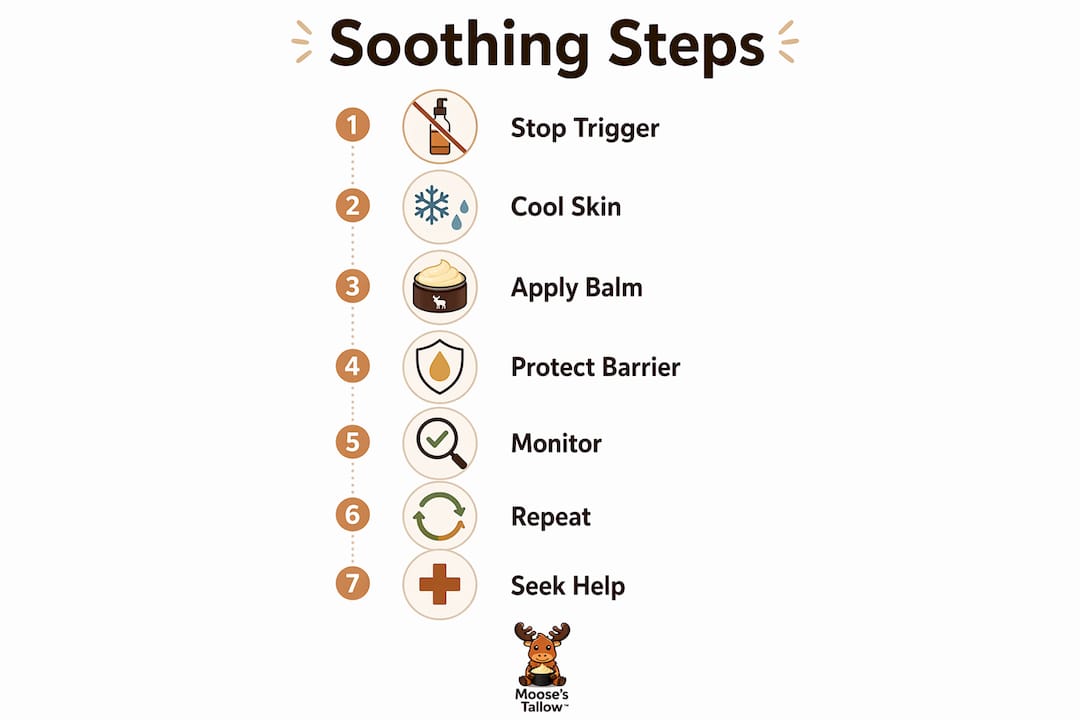
How do you follow a 7-step routine to calm and repair irritated skin?
A stepwise moisturizing process is one of the most reliable ways to support barrier repair. Follow these steps in order.
- Cool the skin. Start with a cool compress for 5 minutes to reduce heat and swelling.
- Cleanse gently. Use a fragrance-free, low-pH cleanser or plain lukewarm water. Avoid foaming formulas with sulfates.
- Apply a humectant on damp skin. A thin layer of glycerin or hyaluronic acid draws water into the upper layers of the skin. Apply while the skin is still slightly damp.
- Layer a tallow-based occlusive. Warm a small amount between your palms and press it gently over the humectant. This locks in moisture and forms a protective layer. For the body, a whipped body butter spreads more easily over larger areas.
- Skip all active ingredients. No retinol, no acids, no vitamin C until the skin is fully settled.
- Protect from sun and friction. Wear SPF 30 or higher on exposed areas. Choose soft, loose-fitting clothing over irritated skin.
- Monitor and wait. Check the area once or twice daily. Do not change products again until you see a clear trend.
Lotion vs. cream vs. ointment for irritated skin:
| Format | Water content | Occlusion level | Best for |
|---|---|---|---|
| Lotion | High | Low | Mild dryness, non-irritated skin |
| Cream | Medium | Moderate | General daily use on sensitive skin |
| Ointment / balm | None or very low | High | Actively irritated, cracked, or post-procedure skin |
For actively irritated skin, a water-free balm or ointment provides the most occlusion and the fewest potential irritants.
Over-the-counter options like 1% hydrocortisone cream or a colloidal oatmeal wash can help with itch and mild inflammation. Use hydrocortisone sparingly and for no more than seven days without clinician guidance, as prolonged use can thin the skin.
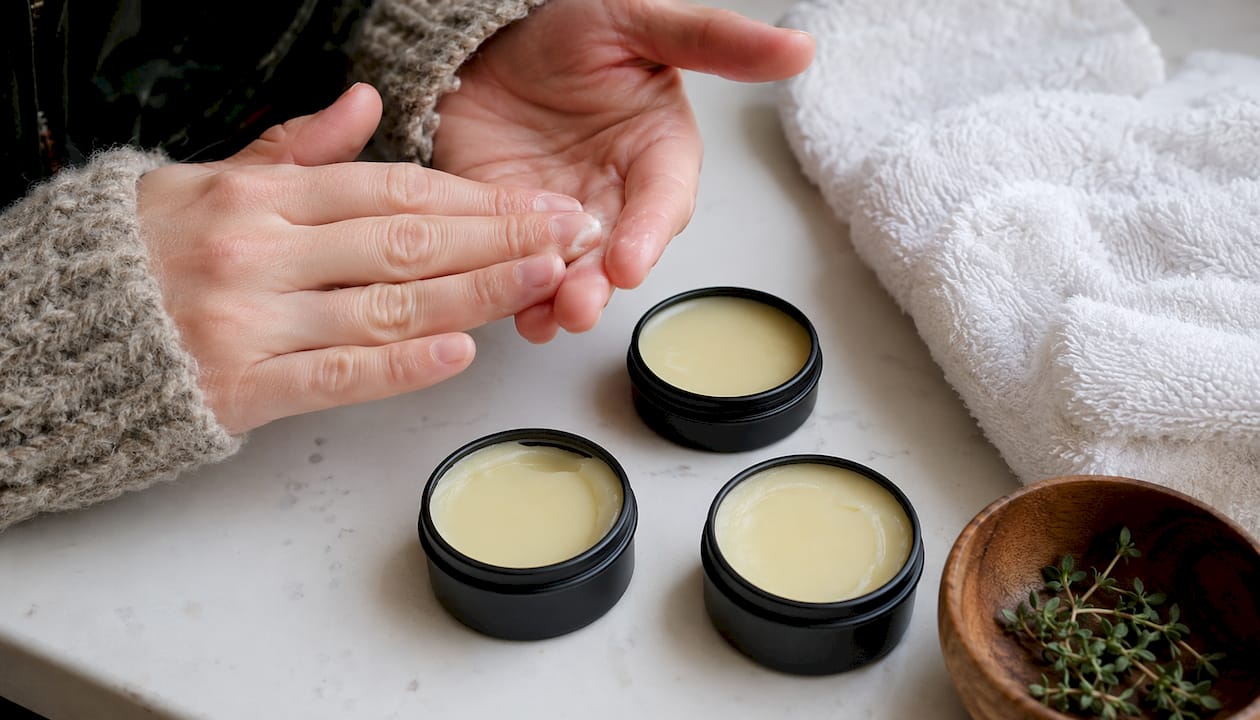
Pro Tip: Apply your occlusive balm within two minutes of rinsing. The window when skin is still slightly damp is when an occlusive locks in the most moisture.
How do you choose the right products for irritated or sensitive skin?
The skin barrier repairs itself most efficiently when you remove irritants and support it with the right ingredients. Product selection is where most people go wrong by adding more rather than less.
Product selection checklist:
- Fragrance-free (no “natural fragrance” either)
- Short ingredient list, five to ten ingredients when possible
- Water-free or low-water formulation for maximum barrier support
- Contains occlusives (tallow, petrolatum, beeswax), humectants (glycerin, hyaluronic acid), or both
- No denatured alcohol, no strong AHAs or BHAs, no synthetic preservative cocktails
Patch test before full application:
- Apply a small amount to your inner forearm or behind the ear and wait to check for redness, itching, or swelling before using on a larger area.
This step matters especially with animal-derived balms, since individual sensitivity varies and some people with acne-prone skin may experience comedogenic responses.
Ingredient watchlist to avoid:
- Fragrance (listed as “parfum” or “fragrance”)
- Denatured alcohol (SD alcohol, alcohol denat.)
- Strong alpha-hydroxy acids (glycolic, lactic above 5%)
- Synthetic preservatives in high concentrations
When it comes to carrier oils, fractionated coconut oil stands out for its stability, resistance to oxidation, easy absorption, and long shelf life. Many common vegetable oils (olive, avocado, grapeseed) oxidize faster and can introduce their own sensitizing compounds. For a deeper look at avoiding harsh ingredients, the ingredient watchlist matters as much as what you add. You can also explore the role of herbs in natural skin care as a complementary perspective on botanical additions.

Why water-free, tallow-based formulas can support sensitive skin
Water-free, tallow-rich balms support the skin barrier by delivering occlusive fats that closely mirror the skin’s own sebum. Tallow’s fatty-acid profile is similar to human skin lipids, which is why it absorbs cleanly rather than sitting on top like a film.
Every Moose’s Tallow product is built around a short, intentional list of ingredients:
- Beef suet tallow: the occlusive core, rich in fatty acids that support the skin surface
- Fractionated coconut oil: stable, oxidation-resistant carrier that absorbs easily and extends shelf life
- Beeswax: adds structure and a light protective layer without clogging
- Vitamin E (tocopherols): supports the skin surface and helps preserve the formula
- Jojoba and castor: emollients that smooth texture and improve spreadability
- Egg yolk infused oil: adds additional fat-soluble nutrients to the formula
Nothing is added as filler. Every ingredient earns its place.
The logic is simple: fewer ingredients means fewer potential triggers. When your skin is already irritated, the last thing it needs is a 30-ingredient formula where the second item is water and the rest are stabilizers.
Pro Tip: For reddened or post-procedure skin, use the smallest amount that covers the area. A thin layer of a tallow balm is enough. More product does not mean more protection.
Moose’s Tallow products are handmade in small batches in Lebanon, PA, from locally rendered, grass-fed beef suet tallow. Every order comes with a 60-day satisfaction guarantee.
When should you see a clinician instead of treating at home?
Home care works well for mild irritation. Some signs mean you need professional help, and waiting makes things worse.
See a clinician or go to urgent care if you notice:
- Redness that spreads beyond the original area
- Fever or chills alongside skin symptoms
- Increasing pain rather than gradual improvement
- Pus, drainage, or crusting that looks infected
- Blistering, especially after a product or chemical exposure
- Facial swelling with any difficulty breathing (call 911 immediately)
For non-severe irritation with no red flags, give home care 48–72 hours. If the skin is not improving by day three, or if it is getting worse at any point, contact a dermatologist or your primary care provider.
A caution on OTC steroids: 1% hydrocortisone cream can reduce inflammation quickly, but using it for more than seven consecutive days without clinician oversight can thin the skin and create rebound sensitivity. Use it as a short-term tool, not a daily routine.
This article is general information, not medical advice. For persistent, spreading, or severe skin reactions, consult a dermatologist or qualified healthcare provider.
Key Takeaways
A simple, barrier-first approach, stopping the trigger, cooling the skin, and applying a water-free occlusive, is the most reliable method for soothing irritated skin at home.
| Point | Details |
|---|---|
| Stop the trigger first | Remove any new or suspect product before adding anything else to the skin. |
| Cool, then protect | A cool compress reduces swelling; follow with a thin, water-free occlusive balm. |
| Follow the 7-step routine | Cleanse gently, apply humectant on damp skin, layer an occlusive, skip actives, and protect. |
| Know the red flags | Spreading redness, fever, pus, or blistering means home care is not enough. |
| Moose’s Tallow products | Water-free tallow balms with short ingredient lists fit the occlusive step for both spot and body use. |
Why simple ingredients are the honest answer
I started Moose’s Tallow after picking up a lotion bottle and reading 52 ingredients. The first one was water. That moment stuck with me. If water is the main ingredient, what exactly is the product doing for your skin?
Skin does not need a long list. It needs the right things in the right amounts. Beef suet tallow, properly rendered from local grass-fed cattle, has a fatty-acid profile that works with your skin rather than against it. We pair it with fractionated coconut oil because it is stable and absorbs cleanly, not because it is trendy. Beeswax, vitamin E, jojoba, castor, and egg yolk infused oil each have a specific job. Nothing is there to pad the formula or extend the bottle.
Our products are made in small batches in Lebanon, PA. The texture is rich but not greasy. The scent is mild and natural, nothing added to cover it up. Every order is backed by a 60-day guarantee because we stand behind what we make.
Moose’s Tallow fits directly into this routine
When your skin is irritated and you need a clean, water-free occlusive, Moose’s Tallow products are built for exactly that step.
The Beef Tallow Lip Balm is the right format for spot use: lips, nostrils, small dry patches, or any area where you need precise application without spreading product across a larger surface. It is compact, easy to control, and made from the same tallow-first formula.
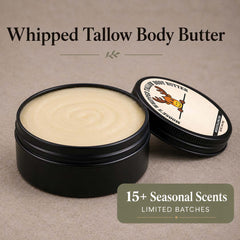
For larger areas, the Whipped Tallow Body Butter delivers heavier occlusion across elbows, knees, shins, and anywhere that needs extended barrier support. The whipped texture makes it easier to spread without dragging. Both products are water-free, fragrance-free, and built on a short, intentional ingredient list.
Browse the full catalog at moosestallow.com and find the format that fits your routine. Every order ships across the US and comes with a 60-day guarantee.
FAQ
How do you make irritated skin stop hurting fast?
Cool the area with a damp cloth for 5 minutes, stop any product you recently added, and apply a thin layer of a fragrance-free, water-free barrier balm. Avoid hot water, rubbing, or any active ingredient until the skin settles.
How long does it take for irritated skin to calm down?
Mild irritation from a product or environmental trigger usually improves within 24–72 hours with gentle care. Post-procedure redness can take several days to a week, depending on the procedure.
Should you moisturize irritated skin or let it breathe?
Moisturize with a gentle, water-free occlusive. Leaving irritated skin bare increases water loss and slows barrier repair. A thin layer of a tallow-based balm or petrolatum-based ointment protects without smothering.
How do you patch test a new balm before using it on your face?
Apply a small amount to your inner forearm or behind the ear and wait 24–48 hours. If no redness, itching, or swelling appears, it is generally safe to use on a larger area.
What ingredients should you avoid on irritated skin?
Avoid fragrance, denatured alcohol, strong AHAs and BHAs, and synthetic preservative blends. These are the most common triggers for contact irritation and can deepen an existing reaction.


0 comments