

En resumen:
- El cuidado de la piel apto para eccema usa productos suaves y sin fragancia, centrados en reparar la barrera, aliviar la picazón y apoyar el microbioma. Usar ingredientes como la avena coloidal, las ceramidas y agentes que favorecen el microbioma puede reducir los brotes y fortalecer la piel sensible. La aplicación constante, el formato correcto del producto y la introducción cuidadosa de remedios naturales son esenciales para manejar el eccema de forma eficaz.
El cuidado de la piel apto para eccema se define como cualquier rutina o fórmula de producto que alivia la picazón, repara la barrera cutánea y evita los irritantes conocidos sin provocar brotes. El término clínico para esta categoría es cuidado de la piel para el manejo de la dermatitis atópica, pero la mayoría de las personas que buscan alivio solo quieren productos suaves, honestos y eficaces. Las mejores fórmulas combinan ingredientes como la avena coloidal, las ceramidas y agentes que apoyan el microbioma con bases sin fragancia y sin colorantes. Los productos que llevan el Sello de Aceptación de la National Eczema Association cumplen con un estándar reconocido de seguridad para la piel sensible. El 84% de los usuarios reportan menos brotes cuando siguen un enfoque constante que aborda en conjunto el alivio de la picazón, la reparación de la barrera y el equilibrio del microbioma.
¿Qué ingredientes hacen que el cuidado de la piel sea seguro para la piel propensa al eccema?
Los productos de cuidado de la piel más eficaces y seguros para el eccema funcionan mediante tres mecanismos: alivio de la picazón, reparación de la barrera y apoyo al microbioma. Entender cada uno te ayuda a leer las etiquetas con confianza.
Alivio de la picazón e hidratación
La avena coloidal es el estándar de oro para aliviar la picazón. La FDA la reconoce como protector de la piel, y las cremas hidratantes con 1% de avena coloidal ofrecen hasta 48 horas de hidratación en piel seca y sensible. Ese tipo de duración importa cuando lidias con la sequedad a diario. Aveeno Eczema Therapy usa este ingrediente como base, y sigue siendo una de las opciones más estudiadas que existen.
Reparación de la barrera
Las ceramidas y la niacinamida fortalecen la barrera cutánea y reducen la gravedad del eccema. Las ceramidas son lípidos que tu piel ya produce. Reponerlas de forma tópica ayuda a sellar la humedad dentro y a mantener fuera los irritantes. Eucerin Eczema Relief Cream combina avena coloidal, ceramida NP y extracto de raíz de regaliz para lograr efectos terapéuticos en capas por menos de $15 las 8 oz. Esa combinación refleja lo que los expertos llaman un enfoque escalonado: trata el brote y luego mantén la barrera.
Apoyo al microbioma
El apoyo al microbioma ahora se reconoce como un tercer pilar en el manejo del eccema, junto con el alivio de la picazón y la reparación de la barrera. Los extractos patentados como Ad-Resyl, presente en Cetaphil PRO Eczema Soothing Moisturizer, están diseñados para promover la diversidad microbiana en la superficie de la piel. Un microbioma cutáneo equilibrado reduce las señales inflamatorias que provocan los brotes.
Ingredientes a evitar
Las fragancias, los colorantes, los alcoholes y los aditivos innecesarios son los desencadenantes de brotes más comunes en los productos de cuidado de la piel. Las listas de ingredientes más simples significan menos probabilidades de una reacción. Algunos aceites portadores también causan problemas. El aceite de coco fraccionado es un portador preferido para la piel sensible porque es estable, resiste la oxidación, se absorbe con facilidad y tiene una larga vida útil. Supera a muchos aceites más pesados que pueden tapar los folículos o ponerse rancios rápidamente.
Consejo pro: Lee las listas de ingredientes de abajo hacia arriba. Los irritantes como la fragancia y el alcohol suelen estar escondidos cerca del final, pero incluso en concentraciones pequeñas pueden provocar una reacción en la piel propensa al eccema.
¿Cómo apoyan los remedios naturales el cuidado de la piel con eccema?
Los remedios naturales para el eccema son populares, pero no todos son seguros para todas las personas. Esto es lo que la evidencia realmente respalda.
- Aceite de coco fraccionado. A diferencia del aceite de coco crudo, la forma fraccionada es ligera, no comedogénica y estable. Funciona bien como portador de otros ingredientes activos y se absorbe sin dejar un residuo pesado.
- Aloe vera. El aloe puede calmar el enrojecimiento y dar alivio a corto plazo. Sin embargo, los tópicos naturales como el aloe vera pueden causar irritación en algunas personas propensas al eccema. Hacer una prueba de parche antes de aplicarlo por completo no es negociable.
- Miel de grado médico. La miel de manuka tiene propiedades antimicrobianas documentadas. Funciona mejor como tratamiento localizado que como crema hidratante diaria.
- Probióticos. Los probióticos orales apoyan el equilibrio inmunitario y del microbioma, pero sus beneficios varían según la cepa y requieren de 8 a 12 semanas de uso constante antes de que puedas evaluar los resultados. No todas las cepas ayudan con el eccema. Busca evidencia clínica específica para la dermatitis atópica.
- Vitamina D y ácidos grasos omega-3. Ambos apoyan la regulación inmunitaria. Los niveles bajos de vitamina D se asocian de forma constante con síntomas de eccema más graves. Los omega-3 del aceite de pescado reducen la inflamación sistémica con el tiempo.
Introduce los remedios naturales de uno en uno y observa tu piel durante al menos dos semanas antes de agregar otro. Este enfoque facilita identificar qué ayuda y qué causa una reacción.
Consejo pro: Nunca reemplaces un tratamiento recetado con un remedio natural durante un brote activo. Las opciones naturales funcionan mejor como apoyo de mantenimiento, no como tratamiento de primera línea.
¿Qué tipos de producto funcionan mejor para la piel con eccema?
El formato de una crema hidratante importa tanto como sus ingredientes. Las pomadas, las cremas y las lociones se comportan de forma distinta en la piel dañada.
| Tipo de producto | Retención de humedad | Mejor para | Facilidad de uso |
|---|---|---|---|
| Pomada | La más alta | Sequedad severa, piel agrietada | Sensación más pesada |
| Crema | Alta | Manejo diario del eccema | Fácil de extender |
| Loción | Moderada | Sequedad leve, climas cálidos | Sensación más ligera |
Las cremas y las pomadas son los formatos preferidos para el eccema porque crean un sello oclusivo más fuerte. Las lociones contienen más agua y se evaporan más rápido, lo que puede dejar la piel más seca que antes. Para la mayoría de las personas que manejan el eccema a diario, la crema es el punto medio práctico.
El empaque también afecta la salud de la piel. Los envases con dosificador reducen el riesgo de contaminación y protegen la estabilidad del producto mejor que los frascos. Cada vez que metes los dedos en un frasco, introduces bacterias. En una piel con la barrera dañada, ese riesgo de contaminación es real.
Algunos hábitos que apoyan la salud diaria de la piel:
- Aplica la crema hidratante dentro de los tres minutos después de bañarte para retener la humedad
- Usa agua tibia, no caliente, para no eliminar los aceites naturales
- Seca la piel con toques suaves en lugar de frotar
- Vuelve a aplicar crema hidratante después de lavarte las manos a lo largo del día
Cómo crear una rutina de cuidado de la piel apta para eccema que sea eficaz
Una rutina diaria constante es la forma más confiable de reducir la frecuencia de los brotes. Así puedes crear una que funcione.
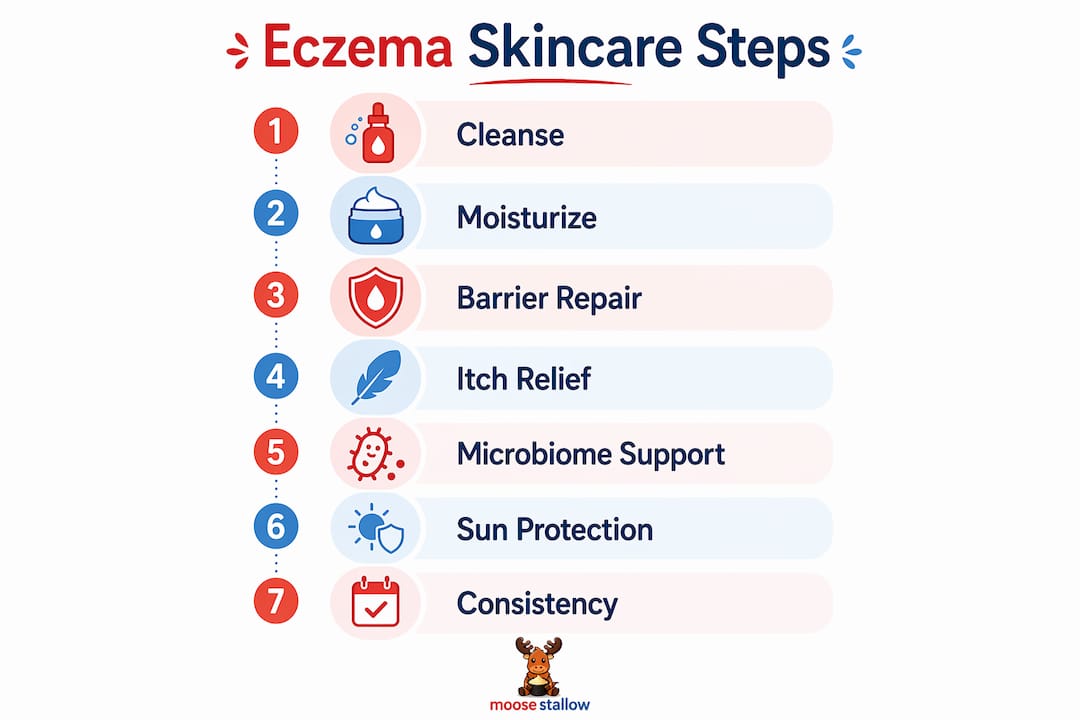
Paso 1: Limpia con suavidad. Elige un limpiador sin fragancia y sin sulfatos. Los limpiadores suaves para el eccema deben tener una lista corta de ingredientes y un pH ligeramente ácido para coincidir con la barrera natural de la piel. Los jabones agresivos eliminan el manto ácido y provocan inflamación.
Paso 2: Hidrata de inmediato. Aplica tu crema o pomada mientras la piel todavía está un poco húmeda. Esto sella el agua en la piel en lugar de dejar que se evapore. Busca ingredientes hidratantes que de verdad funcionan para la piel sensible, como las ceramidas, los tocoferoles y la jojoba.
Paso 3: Aplica en capas de forma estratégica. Si usas un producto reparador de la barrera y una crema hidratante que apoya el microbioma, aplica primero el producto más ligero. Deja que se absorba antes de agregar encima la fórmula más rica.
Paso 4: Protégete del sol. Los protectores solares minerales con óxido de zinc o dióxido de titanio son la opción más segura para la piel propensa al eccema. Los filtros UV químicos pueden irritar la piel sensible. Aplica el protector solar como último paso de tu rutina de la mañana.
Paso 5: Mantén la constancia. Reparar la barrera cutánea toma tiempo. Una rutina de cuidado de la piel con sebo para piel sensible basada en productos nutritivos y de pocos ingredientes funciona mejor cuando la sigues a diario, no solo durante los brotes.
Puntos clave
El cuidado de la piel apto para eccema funciona mejor cuando combina la reparación de la barrera, el alivio de la picazón y el apoyo al microbioma mediante fórmulas simples y sin fragancia aplicadas con constancia todos los días.
| Punto | Detalles |
|---|---|
| Empieza por la reparación de la barrera | Las ceramidas y la avena coloidal son los ingredientes con más evidencia para aliviar el eccema. |
| Evita los irritantes comunes | Las fragancias, los colorantes y los alcoholes son los principales desencadenantes de brotes que debes quitar de tu rutina. |
| Elige el formato correcto | Las cremas y las pomadas retienen más humedad que las lociones para la piel propensa al eccema. |
| Prueba los remedios naturales con cuidado | Introduce un producto natural a la vez y obsérvalo durante dos semanas antes de agregar otro. |
| La constancia supera a la intensidad | Hidratar a diario previene los brotes de forma más eficaz que tratarlos de forma reactiva durante los episodios. |
Lo que he aprendido de años observando cómo la gente cuida su piel sensible
He visto a muchas personas con eccema perseguir el ingrediente de moda, solo para terminar con un brote peor que el que tenían al principio. El patrón casi siempre es el mismo. Alguien lee que un aceite natural es “profundamente nutritivo”, lo aplica en abundancia y despierta con la piel roja e irritada. La verdad es que “natural” no significa automáticamente que sea seguro para una barrera dañada.
Lo que de verdad funciona es aburrido en comparación. Ingredientes limpios. Aplicación constante. Sin añadidos innecesarios. La barrera cutánea no es complicada. Quiere lípidos, humedad y protección contra los irritantes. El sebo de res, el aceite de coco fraccionado, la cera de abejas, los tocoferoles y la jojoba hacen justo eso sin adivinanzas.
También creo que la gente subestima lo mucho que importa el empaque. Una crema bien formulada guardada en un frasco se contamina cada vez que la abres. Esa contaminación va directo a una piel que ya está sufriendo. Los envases con dosificador no son un lujo. Son un estándar básico de calidad.
La otra cosa a la que sigo volviendo es el tema del microbioma. Es un terreno más nuevo, pero la investigación apunta en una dirección clara. La piel que sostiene una comunidad microbiana diversa es más resistente. Los productos que eliminan o alteran esa comunidad hacen que los brotes sean más probables, no menos. Por eso las fórmulas mínimas e intencionales importan más que las complejas cargadas de conservantes y aditivos sintéticos.
Si estás creando una rutina desde cero, empieza con una lista de verificación para el cuidado de la piel sensible y agrega un producto a la vez. Dale dos semanas a cada añadido antes de juzgarlo. Ir despacio y con constancia es el único enfoque que te da información real sobre lo que tu piel de verdad necesita.
Brian
Por qué Moosestallow está hecho para la piel propensa al eccema
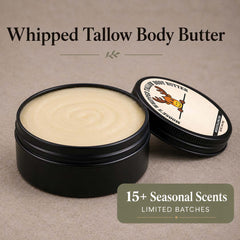
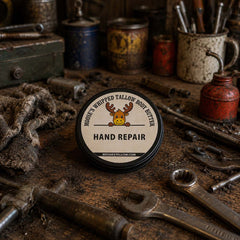
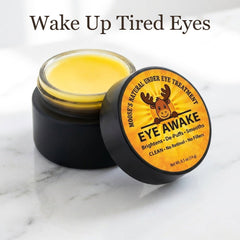
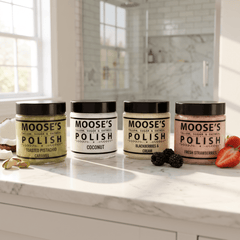
Moosestallow formula cada producto alrededor del sebo de res como base. El sebo es estructuralmente similar a los lípidos de la piel humana, lo que significa que se absorbe sin quedarse en la superficie. Lo combinamos con aceite de coco fraccionado para dar estabilidad y absorción, cera de abejas para proteger la barrera, tocoferoles para apoyo antioxidante, jojoba para una humedad ligera, ricino para acondicionar la piel e infusión de yema de huevo para más nutrición. Cada ingrediente se gana su lugar. No hay rellenos, ni fragancias sintéticas, ni aditivos innecesarios. Si estás listo para probar un bálsamo de sebo para aliviar el eccema, explora toda la colección de Moosestallow y encuentra la fórmula que le queda a tu piel.
Compra todos los productos de Moosestallow y descubre cómo se siente un cuidado de la piel honesto e intencional.
Preguntas frecuentes
¿Qué hace que un producto de cuidado de la piel sea apto para eccema?
Los productos aptos para eccema son sin fragancia, sin colorantes y están formulados con ingredientes que reparan la barrera, como las ceramidas y la avena coloidal. Evitan los alcoholes, los aditivos sintéticos y los irritantes conocidos que provocan brotes.
¿Con qué frecuencia debes hidratar la piel propensa al eccema?
Hidrata al menos dos veces al día, y siempre dentro de los tres minutos después de bañarte. La aplicación constante evita la pérdida de humedad que provoca los brotes.
¿Son seguras las cremas hidratantes naturales para el eccema?
Algunas cremas hidratantes naturales funcionan bien, pero natural no significa seguro para toda piel propensa al eccema. Haz una prueba de parche con cada producto nuevo e introdúcelos de uno en uno.
¿Cuál es el mejor formato de crema para el eccema?
Las cremas y las pomadas retienen más humedad que las lociones y son los formatos preferidos para manejar el eccema. Las pomadas ofrecen la mayor oclusión para la piel muy seca o agrietada.
¿Los probióticos ayudan con el eccema?
Los probióticos pueden apoyar el equilibrio del microbioma y del sistema inmunitario, pero los resultados dependen de la cepa específica. Deja pasar de 8 a 12 semanas de uso constante antes de evaluar si un probiótico está ayudando a tu piel.
Recomendado
- Cremas hidratantes naturales para la piel sensible: lo que de verdad funciona – Moose’s Tallow
- Cremas hidratantes naturales: cuidado de la piel más seguro y apto para la familia, explicado – Moose’s Tallow
- El cuidado de la piel natural, explicado: beneficios para la piel sensible – Moose’s Tallow
- Cambios ecológicos en el cuidado de la piel: tu guía natural para 2026 – Moose’s Tallow


0 comentarios