

Choose pomade for slick shine and a combed finish. Choose wax for everyday texture that still moves. Choose gel when you need maximum, lock-in hold and nothing else will do. Fine hair usually does better with a lighter wax or a clay-style product, since heavy pomade can weigh it down.
Here’s the short version: match the product to the finish you want, not the other way around.
If your first pick doesn’t work out, try these swaps:
- Style falling flat by noon? Swap pomade for wax, which grips better through the day.
- Hair looks greasy, not shiny? Switch from oil-based pomade to a water-based version.
- Gel feels stiff or flaky? Try an alcohol-free gel or drop down to a firm wax.
Key Takeaways
The best hair product depends on your hair type and the finish you want, not on which one is trendiest this year.
| Point | Details |
|---|---|
| Match product to finish | Pomade for shine, wax for texture, gel for maximum lock-in hold. |
| Fine hair needs lighter formulas | Skip heavy oil-based pomade; try wax or clay instead. |
| Wax is the safest first buy | It works across the widest range of hair types and textures. |
| Watch for buildup | Oil-based pomade needs the most frequent, thorough washing. |
| Try tallow hair clay | Moose’s Tallow’s water-free clay offers matte hold without alcohol or synthetic fillers. |
At-a-Glance Comparison of Hold, Finish, and Washability
Each product does one job best, and knowing that job saves you a lot of trial and error.
- Pomade: light to firm hold, low to high shine, and a range that runs from restylable water-based formulas to firmer oil-based ones that need more effort to wash out.
- Wax: medium to strong hold with a low, natural-looking shine, and it stays touchable for restyling most of the day, per this side-by-side product comparison.
- Gel: the strongest, most locked-in hold of the three, with a wet or glassy shine that traditional alcohol-based formulas hold longest.
Reworkability runs pomade and wax ahead of gel, which sets hard and resists restyling once dry. Modern formula trends are shifting things, too. Alcohol-free gels are cutting down on flaking, and water-based pomades are washing out easier than the oil-based originals ever did.
What Is Pomade, and Who Should Use It?
Pomade comes in two families: oil-based and water-based. Oil-based pomade delivers deep shine and a firmer set, and it’s the traditional barbershop staple. Water-based pomade gives a lighter version of that same shine, and it rinses out with just water. Within both types, you’ll find light pomades for movement and firm pomades for more control.
Pros:
- Real shine, from subtle to glassy
- Restylable through the day
- Works across a wide hold range
Cons:
- Oil-based versions can weigh down fine hair
- Heavy application builds up fast without proper washing
Apply pomade to slightly damp hair for the smoothest spread and the most natural finish. A dime-size amount goes further than you’d think.
Pro Tip: Warm the pomade between your palms first. It melts slightly and spreads evenly, so you use less and avoid clumping.
Traditional oil-based pomade recipes often lean on tallow and beeswax, since tallow provides a stable oil base that gives natural shine without the heavy residue some synthetic pomades leave behind. Moose’s Tallow builds its own formulas around that same idea, using fractionated coconut oil as the carrier since it resists oxidation and holds its texture on the shelf far longer than olive or almond oil would.
What Is Hair Wax, and Who Should Use It?
Hair wax is the workhorse of the group. Textures range from fibrous and pliable to smooth and paste-like, and hold typically lands in the medium to strong range with a natural, low-shine finish.
Pros:
- Versatile across most hair lengths
- Low to matte shine that looks natural
- Restylable most of the day
Cons:
- Too much product can feel heavy or greasy
- Washout varies by formula, and thicker waxes need a second shampoo pass
Short hair usually needs just a pea-size amount rubbed between fingertips before application. Longer hair can take a bit more, worked in from mid-length to ends rather than the roots.
Pro Tip: If wax starts feeling sticky by afternoon, don’t add more. Rub a tiny bit of water into your palms first, then run it back through your hair.
Wax is often the safer first purchase if you’re not sure what you need, since it flatters more hair types than pomade or gel on their own.
What Is Gel, and Who Should Use It?
Gel is built for hold above everything else, running from soft-control styling gels to hard-setting versions that lock hair exactly where you put it. Traditional gels lean on alcohol for that fast, firm set, but modern formulas increasingly skip the alcohol, cutting down on the stiffness and flaking that gave gel a bad reputation for years.
Pros:
- The strongest, most reliable hold of the three
- A clean, defined wet look
Cons:
- Can stiffen hair until it feels crunchy
- Older or alcohol-heavy formulas may dry out hair and scalp over time
Stylists are reporting a real comeback for gel, thanks largely to these alcohol-free reformulations. Use gel for styles that need to hold completely still, like a sharp side part, and save it for occasional wear rather than daily rotation.
Pro Tip: Rinse gel out with warm water before shampooing. It softens the set first, so your shampoo doesn’t have to fight through dried product.
How to Choose the Right Product for Your Hair
Run through this before you buy:
- Check your hair density. Fine hair needs lighter formulas; thick hair can handle firmer pomade or wax.
- Know your texture. Straight hair takes pomade well; wavy and curly hair usually looks better with wax or clay.
- Pick your finish first. Matte and natural point to wax; shine points to pomade; a wet, sculpted look points to gel.
- Think about how often you restyle. If you touch up your hair midday, skip gel and reach for wax or pomade instead.
A few red flags worth avoiding: heavy oil-based pomade on fine hair, hard-setting gel on curly hair that needs movement, and daily use of alcohol-heavy gel, which dries hair out over time.
Following the same step-by-step selection logic pros use: want volume? Reach for clay or wax. Want slick shine? Go pomade. Want maximum hold with no movement? That’s gel. Still unsure? Wax or clay is the safest starting point, and several style guides agree it works for the widest range of hair types.
How to Apply, Rework, and Remove Each Product
- Apply on the right hair state. Pomade goes on slightly damp hair; wax and gel both work best on towel-dried, mostly dry hair.
- Use less than you think you need. A dime for pomade, a pea for wax, a nickel-size dab for gel.
- Rework during the day by running damp fingers back through pomade or wax; gel is harder to restyle once set.
- Remove with a warm rinse first, then a gentle shampoo. Repeat the shampoo step once if you used an oil-based pomade.
Pro Tip: For heavy oil-based pomade, shampoo twice but skip the second full lather. A light second pass clears residue without stripping your scalp dry.
If You Prefer Natural, Water-Free Formulas
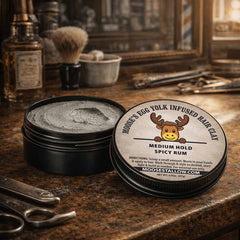
If gel’s alcohol and pomade’s synthetic fillers aren’t for you, Tallow Hair Clay infused with Egg Yolk Oil gives you matte texture and medium hold without either one. It fits the modern preference for natural-looking, textured styles instead of high shine.
The formula is simple, on purpose:
- Beef suet tallow as the base, chosen for how closely it matches your skin’s own oils
- Fractionated coconut oil, our preferred carrier for its stability and resistance to going stale on the shelf
- Beeswax for structure and hold
- Vitamin E (tocopherols) to help protect the formula itself
- Jojoba and castor oil for smooth application
- Egg yolk infused oil as the finishing touch
Everything is water-free, lightly diluted, and handmade in small batches by founder Brian Smith, who built Moose’s Tallow around one idea: fewer ingredients, all of them chosen on purpose. You can read more about the tallow versus traditional pomade difference if you want the full ingredient breakdown.
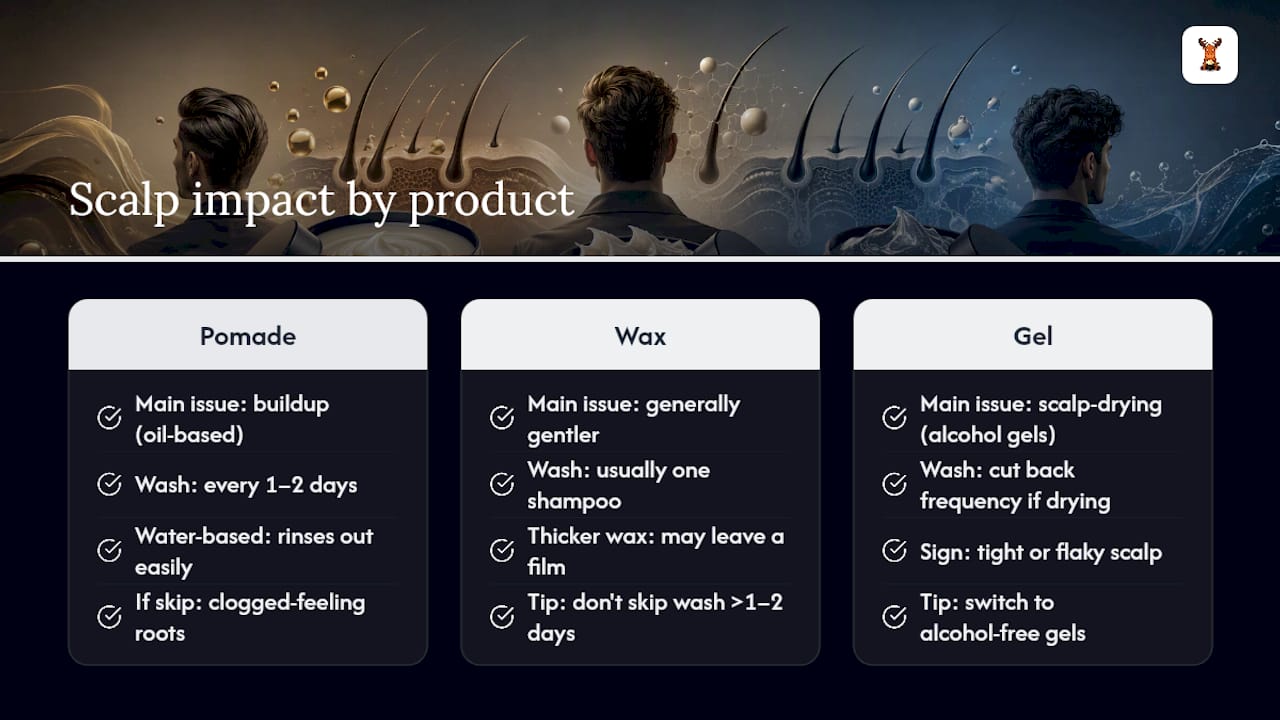
Potential Impact on Scalp and Hair Health
Pomade, wax, and gel each interact with your scalp differently, and the biggest factor is what’s actually in the formula, not the product category itself.
Oil-based pomades sit on the scalp longer than water-based ones, so buildup is the main concern. Wash it out fully every one to two days to avoid clogged-feeling roots. Water-based pomades rinse out easily, which lowers that buildup risk but can mean more frequent reapplication.
Wax tends to be gentler day-to-day, since most formulas are designed to wash out with a single shampoo. Thicker or stickier waxes can leave a film behind if you skip a wash, so don’t stretch more than a day or two between rinses.
Gel carries the most scalp-drying potential, especially older alcohol-based formulas that pull moisture out with repeated use. That’s part of why alcohol-free gels have gained ground. If your scalp feels tight or flaky after gel, that’s a sign to cut back frequency or switch formulas.
Across all three, the general rule holds: less product, applied further from the roots and closer to mid-lengths, keeps your scalp cleaner and your hair looking better longer. Water-free, natural formulas made with fewer synthetic ingredients tend to sit lighter on the scalp, which is part of why oil-based tallow formulas have stayed relevant for so long.
A Note From Moose’s Tallow’s Founder
I keep our ingredient lists short because skin and hair don’t need extras. Tallow works because it’s close to what your body already makes.
Try Tallow Hair Clay for a Natural Matte Hold
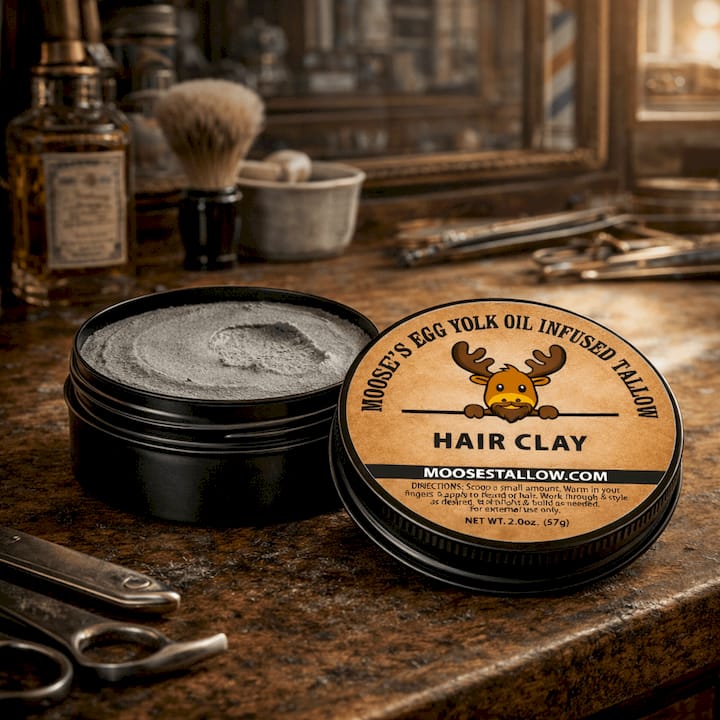
If you’re ready to skip the alcohol and synthetic fillers, Tallow Hair Clay infused with Egg Yolk Oil gives you medium hold and a matte finish without either one. It’s the alternative to alcohol-heavy gel or synthetic pomade for guys who want texture without the stiffness or the residue.
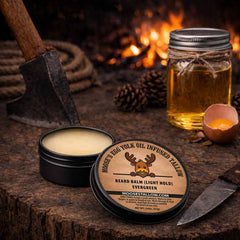
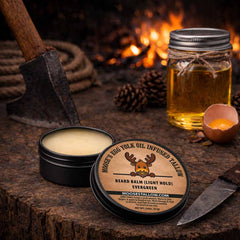
Every batch is handmade in small runs, water-free, and backed by a 30-day guarantee, so trying it costs you nothing but a little curiosity. Expect a gentle, workable clay that adds grip and volume without the tight, dry-scalp feeling strong gels can leave behind. If your beard needs the same treatment, the Tallow Beard Balm shares the same simple formula. Order the hair clay today and see how it holds up against whatever you’re using now.
Sources
- How to Choose the Right Styling Product For Your Hair - InsideHook
- Pomade vs Wax vs Gel vs Clay: Complete Styling Guide for Men (2026) | HairTrai
- Homemade Natural Pomade Recipe (Tallow & Beeswax for Men’s Hair) - Idie’s Farm
- How to Choose the Right Hair Styling Product for Your Hair Type and Goals - Fashion For Lunch
FAQ
Which Is Better, Hair Gel or Pomade?
Neither is better outright. Gel gives stronger, longer-lasting hold; pomade gives more shine and easier restyling through the day.
Is Pomade or Wax Better for Hair?
Wax tends to sit lighter on hair and scalp, while pomade offers more shine but can build up faster if you use an oil-based formula.
What Is the Healthiest Hair Styling Gel?
Alcohol-free gels are generally gentler on hair and scalp than traditional alcohol-based formulas, since they cause less dryness with repeated use.
Is Pomade Just Vaseline?
No. Pomade is formulated for styling with specific oils, waxes, and hold agents, while petroleum jelly alone lacks the hold and finish control real pomade offers.
What if I Want a Natural Alternative to Gel or Pomade?
Tallow Hair Clay infused with Egg Yolk Oil offers matte hold and volume as a water-free alternative, without alcohol or synthetic fillers.


0 comentarios