

TL;DR:
- Tallow pomade is made from animal fats and offers natural nourishment for scalp and hair.
- Traditional pomades are petroleum-based, providing high shine but lacking scalp health benefits.
- Tallow enhances scalp health and environmental compatibility, making it a growing natural grooming choice.
Most people assume pomade has always meant petroleum jelly and synthetic wax. The truth is, the earliest pomades were made from animal fats, including beef tallow, long before petroleum became the industry standard. That history matters, especially if you care about what goes on your scalp and hair every day. This article breaks down exactly how tallow pomade and traditional pomade differ, ingredient by ingredient, so you can make a confident, informed choice for your grooming routine.
Key Takeaways
| Point | Details |
|---|---|
| Natural grooming alternative | Tallow pomade offers a clean and nutrient-rich option that avoids synthetic chemicals. |
| Ingredient transparency | Tallow uses animal fat and simple oils, while traditional pomades often rely on petroleum and synthetics. |
| Performance similarities | Both provide medium to firm hold and natural shine but are harder to wash out than water-based pomades. |
| Scalp health impact | Tallow is more nourishing and less likely to cause buildup or irritation compared to petroleum pomades. |
| Best for natural seekers | Tallow pomade is a strong choice for those committed to sustainable, skin-friendly haircare routines. |
What is tallow pomade?
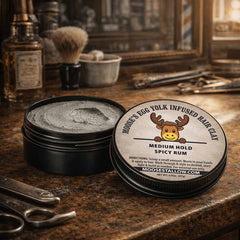
Tallow pomade puts grass-fed beef tallow at the center of the formula. Everything else, including beeswax, castor oil, jojoba oil, and sometimes clays, is added to support hold, shine, and nourishment. Tallow is always the star.
As a natural pomade base, tallow is combined with beeswax for structure, castor oil for grip and shine, and jojoba or fractionated coconut oil for easy spreadability. Some formulas also include egg yolk oil, a lesser-known ingredient that quietly supports hair softness and overall scalp health. Each ingredient earns its place.
Here is what a clean tallow pomade formula typically includes:
- Grass-fed beef tallow: Conditions hair and scalp, provides a natural fat base
- Beeswax: Delivers hold and structure without synthetic polymers
- Castor oil: Adds grip, shine, and helps the formula cling to hair
- Jojoba or fractionated coconut oil: Improves spreadability and softens texture
- Egg yolk oil: Supports hair softness and nourishment
- Clays (optional): Add texture and light matte finish
Tallow pomade is a natural alternative to synthetic pomades, deliberately avoiding petroleum, parabens, and artificial fragrances. This revival of animal-fat grooming aligns naturally with a tallow skincare routine built around biocompatible ingredients.
Because tallow shares a fatty acid profile similar to human skin, it absorbs well and supports the scalp’s natural barrier. That is a meaningful difference from petroleum-based options. If you have been exploring tallow vs. creams for your skin, the same logic applies here.

Pro Tip: Waterless formulas like tallow pomade deliver stronger, longer-lasting hold because there is no water diluting the active ingredients. You get more performance from less product.
What is traditional pomade?
Traditional pomade comes in two main forms: oil-based and water-based. Understanding both helps you see exactly what you are choosing between.
Oil-based traditional pomades are typically built on petrolatum, also known as petroleum jelly, along with mineral oils, lanolin, and synthetic waxes. These ingredients create a slick, high-shine finish with strong hold. They are effective for classic styles like slick-backs and pompadours.
Water-based pomades swap petroleum for water, emulsifiers, and polymers. They rinse out more easily and feel lighter, but they often contain a longer list of synthetic additives to replicate the performance of oil-based versions.
Here is what you will commonly find in traditional pomade formulas:
- Petrolatum (petroleum jelly): Primary hold and shine agent in oil-based versions
- Mineral oil: Adds slip and softness, derived from petroleum
- Lanolin: Animal-derived wax, adds moisture and texture
- Synthetic waxes: Provide structure and hold
- Emulsifiers and polymers: Found in water-based versions for texture and stability
“Early pomades were animal fat-based, including tallow. Modern traditional pomades shifted to petroleum for cost and stability, but tallow revives the biocompatibility those early formulas had.”
The shift from animal fat to petroleum happened largely in the 20th century, driven by cost and shelf stability. It was a practical decision, not a better one for your scalp. Checking a skincare product checklist before buying any grooming product is a smart habit.
Ingredient comparison: Tallow vs traditional pomade
With definitions clear, let’s break down the ingredient differences and what they mean practically.
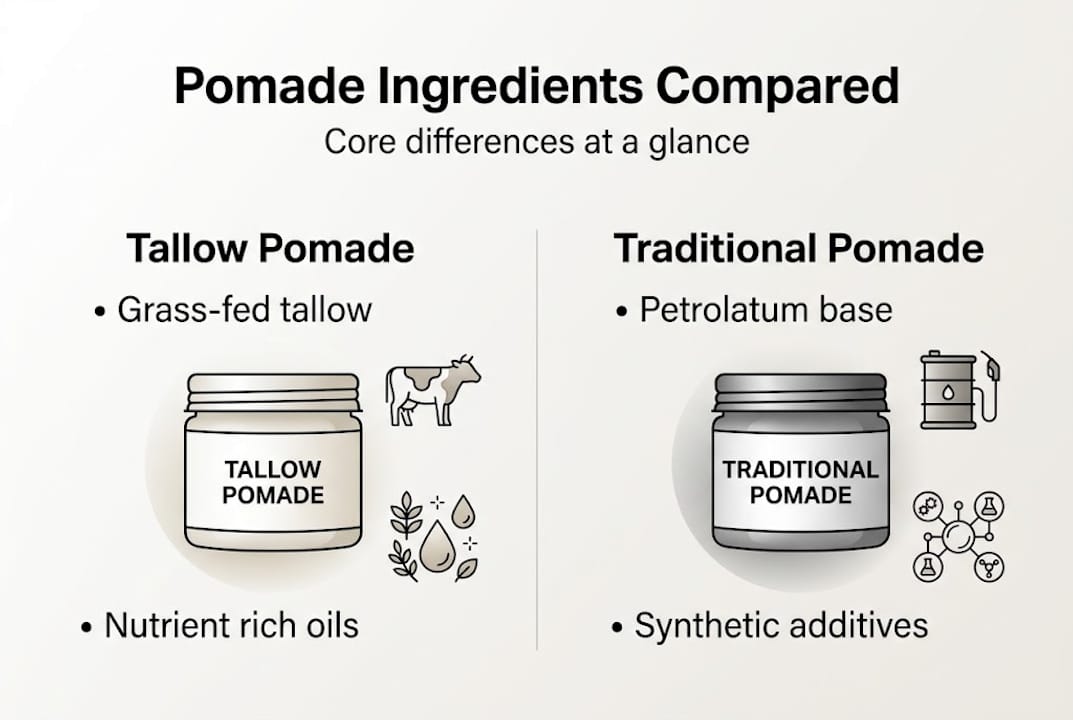
| Ingredient | Tallow pomade | Traditional pomade |
|---|---|---|
| Primary base | Grass-fed beef tallow | Petrolatum or water |
| Hold agent | Beeswax | Synthetic wax or polymers |
| Shine source | Castor oil | Mineral oil or petrolatum |
| Spreadability | Jojoba, fractionated coconut oil | Mineral oil or emulsifiers |
| Hair nourishment | Vitamins A, D, E, K via tallow | Minimal to none |
| Synthetic additives | None | Often present |
| Fragrance | Essential oils or none | Synthetic fragrance common |
| Scalp buildup risk | Low | Moderate to high |
Both oil-based tallow pomade and oil-based traditional pomade share similar styling mechanics: pliable hold, medium-to-firm control, natural shine, and the ability to restyle throughout the day. Neither rinses out as easily as water-based options.
The real difference shows up in what happens to your scalp over time. Petrolatum sits on the surface and can trap debris. Tallow, by contrast, absorbs and nourishes. Learning more about natural skincare benefits makes this distinction even clearer.
For those comparing oil-based vs. water-based pomade performance overall, both oil-based versions offer comparable hold strength. The ingredient quality is where tallow pulls ahead.
Performance, scalp health, and user experience
Now, let’s see how these ingredient differences actually impact your hair styling and health.
Hold and shine are comparable between tallow and oil-based traditional pomades. Both give you that pliable, medium-to-firm control with a natural, healthy-looking shine. Neither is a slouch in the performance department.
Where tallow pomade separates itself is in what it does beyond styling. Tallow nourishes hair and scalp with vitamins A, D, E, and K, along with fatty acids that support hair strength and reduce frizz. Petroleum-based pomades offer no such benefit. Over time, petrolatum can clog follicles, cause buildup, and irritate sensitive scalps.
Here is a practical breakdown of what to expect from each:
- Hold strength: Both offer medium-to-firm hold; tallow is pliable and restylable
- Shine: Both produce natural shine; mineral oil can look greasier
- Scalp feel: Tallow absorbs; petrolatum sits on the surface
- Buildup: Tallow clears more naturally; petroleum may accumulate
- Washing out: Both require shampoo; neither rinses with water alone
- Nourishment: Tallow feeds the scalp; petroleum does not
If you have a sensitive scalp or deal with irritation, it is worth reading about choosing a tallow moisturizer and how tallow supports barrier health. Some people even find tallow helpful for conditions like dryness and flaking, similar to how tallow supports eczema relief.
Pro Tip: Apply tallow pomade to towel-dried hair rather than soaking wet hair. A small amount goes a long way, and starting with less helps you avoid that heavy, greasy feeling.
Who should choose tallow or traditional pomade?
Finally, let’s match each pomade to users’ unique needs and routines.
Tallow pomade is the right fit if you:
- Follow a natural or whole-foods lifestyle and want your grooming to match
- Have a sensitive scalp that reacts to synthetic fragrances or petroleum
- Prefer ingredients you can actually recognize and trust
- Want a product that conditions while it styles
- Are comfortable with storing tallow products properly in a cool, dry place
Traditional pomade may suit you better if you:
- Want maximum gloss or a very high-shine, slicked finish
- Need a budget-friendly option available anywhere
- Prefer a product that is less sensitive to temperature changes
One thing worth knowing: tallow pomade softens in heat and firms in cold, which means storage matters. Keep it away from direct sunlight and warm environments.
| Feature | Tallow pomade | Traditional pomade |
|---|---|---|
| Best for | Natural grooming, sensitive scalps | High-gloss styles, budget buyers |
| Ingredient quality | High, recognizable | Variable, often synthetic |
| Temperature sensitivity | Yes, heat-sensitive | More stable |
| Shelf life | About 1 year | 2 to 3 years |
| Scalp nourishment | Yes | Minimal |
Why the old-school approach to pomade is making a comeback
Most modern grooming guides treat tallow pomade as a novelty or a retro trend. We see it differently. Tallow is not making a comeback because it is old. It is making a comeback because it actually works with your body rather than just sitting on top of it.
The shift back to animal-fat formulas reflects something bigger: people are reading ingredient labels, asking harder questions, and choosing products that align with how they live. Traditional pomades often traded scalp health for convenience and cost savings. Tallow does not make that trade.
For anyone building a natural skincare routine for sensitive skin, tallow pomade fits naturally into that philosophy. Simple ingredients, honest performance, nothing you cannot account for.
Explore natural tallow grooming solutions
If you want to experience the difference first-hand, here is where to start. At Moose’s Tallow, we handcraft small-batch grooming products built on the same principles behind every great tallow formula: clean ingredients, honest formulations, and real nourishment. Whether you are curious about our tallow sun balm or ready to browse our full range of tallow-based products, our complete collection is a good place to explore. Every product is made with care and nothing you do not need.
Frequently asked questions
Is tallow pomade better for sensitive scalps?
Yes, tallow pomade is generally gentler because it delivers vitamins A, D, E, and K directly to the scalp while avoiding the synthetic allergens common in traditional formulas.
How easy is it to wash out tallow vs traditional pomade?
Both tallow and oil-based traditional pomades are harder to rinse than water-based versions and require a proper shampoo to remove fully.
Does tallow pomade have a scent?
Pure tallow pomade has a very neutral or faint natural scent; any fragrance comes from added essential oils, never synthetic fragrances like those found in most traditional pomades.
What is the shelf life of tallow pomade?
Tallow pomade lasts approximately one year when stored in a cool, dry place away from direct heat and sunlight.
Can tallow pomade feel greasy?
It can if you use too much; because tallow is rich in natural fats, a small amount applied to towel-dried hair gives you the best results without heaviness.


0 comments