

Los ingredientes intencionales son los que se eligen por una razón específica. Cada uno se gana su lugar. No hay rellenos, ni agua que abulte la fórmula, ni ingredientes añadidos solo para aumentar el volumen. Cuando un producto para la piel se hace así, cada gota que aplicas hace algo real por tu piel.
La diferencia entre un ingrediente intencional y uno de relleno está en el propósito. El relleno solo ocupa espacio. Un ingrediente intencional apoya tu barrera cutánea, mejora la textura, aporta estabilidad o brinda un beneficio funcional. Las fórmulas sin agua a base de sebo hacen visible esta diferencia: el cuidado sin agua obliga a cada ingrediente a justificar su lugar en la fórmula.
Así se ve en la práctica una formulación con propósito:
- Cada ingrediente tiene un papel definido, ya sea funcional o de rendimiento
- Sin agua no hacen falta conservadores fuertes ni emulsionantes para mantener unida una emulsión
- Los lípidos compatibles con la piel se absorben limpiamente y apoyan la barrera en lugar de quedarse encima
- Las listas mínimas de ingredientes reducen el riesgo de irritación en la piel seca o sensible
- La transparencia sobre qué hay en una fórmula y por qué genera una confianza real en el consumidor
¿Qué hacen en realidad los ingredientes intencionales para la piel?
Cada ingrediente clave de una fórmula natural bien hecha cumple una función clara. Entender lo que hacen te ayuda a leer cualquier etiqueta con confianza.
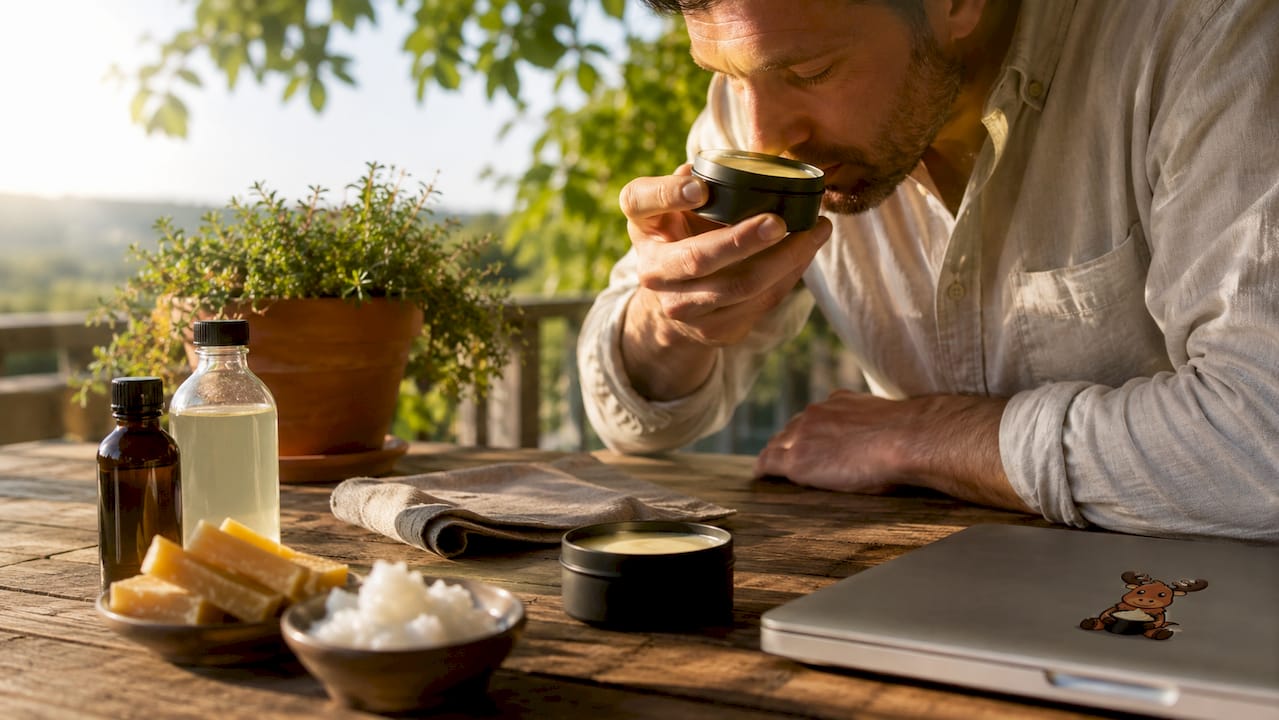
- El sebo de res es la base. Su perfil de ácidos grasos se parece mucho a los lípidos propios de tu piel, por eso se absorbe sin pelear con tu barrera. El sebo siempre es la estrella en las fórmulas de Moose’s Tallow. Conoce más sobre los beneficios del sebo de res para la piel y por qué importa la coincidencia de ácidos grasos.
- El aceite de coco fraccionado es el aceite portador preferido. Resiste la oxidación, se absorbe con facilidad y alarga la vida útil. Comparado con aceites vegetales menos estables como el de oliva o el de almendra, el aceite de coco fraccionado aguanta mucho mejor con el tiempo.
- La cera de abejas crea una capa protectora y transpirable sobre la piel. Retiene la humedad sin tapar los poros y da estructura a los bálsamos.
- La vitamina E (tocoferoles) actúa como antioxidante natural. Protege tanto la fórmula como tu piel del daño oxidativo.
- El aceite de jojoba es técnicamente una cera líquida. Imita el sebo de la piel y ayuda a equilibrar la humedad sin pesadez.
- El aceite de ricino aporta deslizamiento y espesor. Favorece la adhesión en los bálsamos y contribuye a una aplicación suave y pareja.
- El aceite infusionado con yema de huevo aporta una rica concentración de nutrientes liposolubles. Favorece la suavidad de la piel y complementa el perfil lipídico del sebo.
Ingredientes funcionales como estos están lejos de ser inactivos. Contribuyen a la textura, la estabilidad y la entrega de cada componente activo de la fórmula. Llamarlos “inactivos” tergiversa lo que en realidad hacen.
¿Cómo leer con intención la lista de ingredientes de un producto para la piel?
Leer una etiqueta con propósito requiere práctica. Estos pasos te ayudan a filtrar el ruido.
- Revisa el primer ingrediente. Si es agua (aparece como “Aqua”), el producto es en gran parte agua por volumen. Eso no está mal en sí mismo, pero te dice que la fórmula está diluida.
- Busca una base de lípidos o aceite. En una fórmula sin agua, el primer ingrediente debería ser un aceite, cera o grasa funcional. Eso indica concentración.
- Identifica el aceite portador. Pregúntate si es estable. El aceite de coco fraccionado resiste la oxidación y se absorbe bien. Los aceites menos estables pueden ponerse rancios e irritar la piel.
- Cuenta los ingredientes. Las listas más cortas son más fáciles de evaluar. Cada ingrediente debería tener un papel claro.
- Busca una declaración de transparencia. ¿La marca explica por qué está cada ingrediente? La transparencia en los ingredientes pasó de ser un plus de marketing a una expectativa básica del consumidor, sobre todo entre los compradores jóvenes que leen las etiquetas con atención.
- Marca lo que no puedas identificar. Si un ingrediente no tiene función clara ni explicación, puede ser un relleno o un conservador añadido solo porque hay agua en la fórmula.
Consejo: Revisa los últimos ingredientes de una etiqueta. Los que aparecen al final están presentes en cantidades mínimas. Si ves un aceite beneficioso escondido hasta abajo, seguramente está ahí por marketing, no por rendimiento.
¿Cómo armar una rutina en torno a ingredientes con propósito?
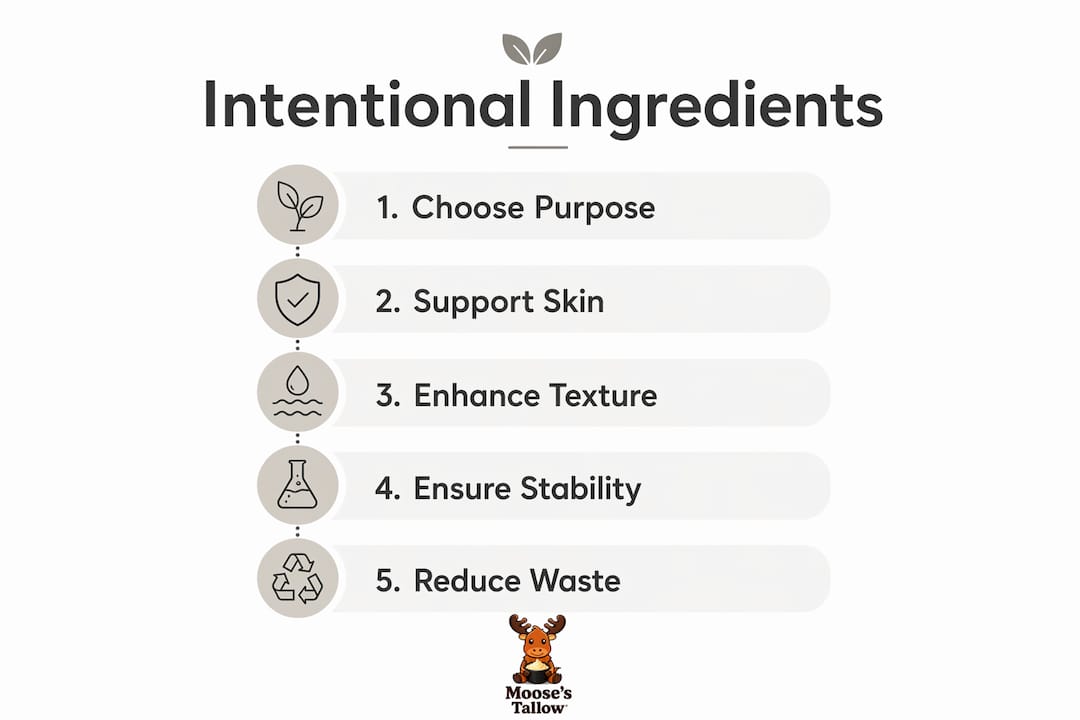
La simplicidad es la clave. Una rutina basada en ingredientes intencionales no necesita diez pasos.
- Aplica los bálsamos sin agua sobre la piel un poco húmeda. Los bálsamos sin agua aplicados sobre piel húmeda retienen la humedad de la superficie y trabajan con la barrera lipídica natural de tu piel en lugar de contra ella.
- Usa menos de lo que crees que necesitas. Las fórmulas concentradas rinden más. Una pequeña cantidad de bálsamo a base de sebo cubre más área que una loción cargada de agua.
- Evita superponer productos con ingredientes que se contradicen. Un bálsamo de sebo sencillo sobre piel limpia no necesita nada más para funcionar.
- Elige fórmulas que se ajusten a las necesidades de tu piel. La piel seca o sensible responde bien a los productos sin agua y ricos en lípidos que apoyan la barrera en lugar de resecarla.
- Fíjate en cómo se siente tu piel después de una semana, no solo tras un uso. Los ingredientes que apoyan la barrera dan resultados con el tiempo.
¿Por qué importan el origen y la ética al elegir ingredientes?
De dónde viene un ingrediente define lo que hace y lo que le cuesta al planeta.
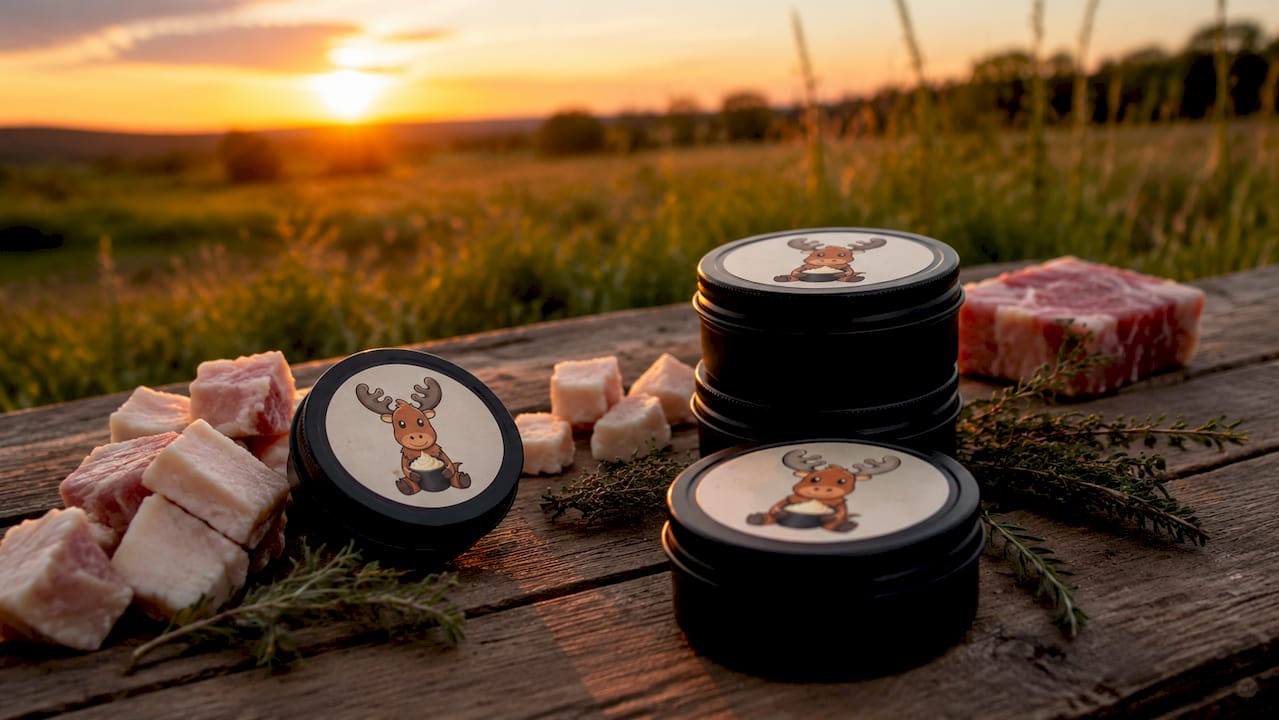
El sebo de res de origen local, obtenido de res alimentada con pasto, deja una huella ambiental menor que los ingredientes enviados de un continente a otro. Los ingredientes de origen ético influyen directamente en la lealtad a la marca y en la sostenibilidad, y los compradores conscientes prestan más atención a las cadenas de suministro.
Las fórmulas sin agua también reducen el impacto ambiental de forma práctica. Quitar el agua significa empaques más pequeños, menor peso de envío y menos conservadores para mantener estable el producto. Menos conservadores significa menos ingredientes que puedan irritar la piel o terminar arrastrados a los cuerpos de agua.
La transparencia sobre el origen es parte de una formulación honesta. Cuando una marca te dice de dónde viene el sebo y por qué eligió el aceite de coco fraccionado en lugar de una opción más barata, esa es una señal en la que vale la pena confiar.
Por qué el enfoque de Moose’s Tallow ejemplifica el cuidado intencional de la piel
Brian “Moose” Smith fundó Moose’s Tallow después de voltear un frasco de loción y leer 52 ingredientes, el primero de los cuales era agua. Quería algo honesto. Ese momento moldeó cada fórmula desde entonces.
Moose’s Tallow construye cada producto alrededor de sebo de res obtenido localmente, de res alimentada con pasto. El aceite de coco fraccionado lleva la fórmula y la mantiene estable. La cera de abejas, la vitamina E, la jojoba, el ricino y el aceite infusionado con yema de huevo cumplen cada uno un papel definido. Nada se añade para alargar la lista.
- Las fórmulas sin agua significan mayor concentración de ingredientes por aplicación
- La dilución mínima mantiene los lípidos del sebo compatibles con la piel a plena potencia
- Cada ingrediente se revela con una razón, no solo con un nombre
- La producción en lotes pequeños en Lebanon, PA significa control de calidad en cada paso
- Una garantía de 60 días respalda cada pedido
El bálsamo para barba y cabello infusionado con yema de huevo es un buen ejemplo de esta filosofía en acción. El aceite de yema de huevo y el sebo trabajan juntos para acondicionar sin aditivos sintéticos.
Consejo: Para los labios secos o partidos, aplica el bálsamo labial de sebo de Moose’s Tallow sobre labios un poco húmedos justo después de enjuagarlos. El sebo sella esa humedad de la superficie y la cera de abejas la mantiene ahí.
¿Qué dice la ciencia sobre elegir ingredientes con propósito?
Los productos para la piel más eficaces funcionan como sistemas integrados, no como colecciones de activos individuales. El rendimiento viene de cómo los ingredientes trabajan juntos para apoyar la barrera cutánea, no de un solo ingrediente estrella.
Los ingredientes a base de lípidos van en línea con la biología de la piel. El estrato córneo, tu capa más externa, está formado en gran parte por lípidos. Las ceramidas, por ejemplo, componen cerca del 50% de la composición lipídica del estrato córneo. Reponer lípidos de forma tópica apoya la restauración de la barrera y ayuda a reducir la pérdida de humedad. El perfil de ácidos grasos del sebo encaja de forma natural en este sistema.
La arquitectura de la fórmula importa tanto como la elección de ingredientes. Dos productos pueden compartir los mismos nombres de ingredientes y rendir de forma completamente distinta, según las proporciones, la estabilidad y cómo cada componente apoya a los demás. Por eso una lista corta y con propósito muchas veces supera a una larga llena de activos de moda.
¿Qué riesgos y alergias conviene conocer?
Natural no significa automáticamente seguro para todas las personas. Incluso los ingredientes elegidos con cuidado pueden causar reacciones en algunas personas.
La cera de abejas y la jojoba suelen tolerarse bien, pero quien tenga una sensibilidad conocida a los productos de las abejas debería hacer primero una prueba de parche con las fórmulas de cera de abejas. El aceite de ricino puede causar dermatitis de contacto en casos raros. El aceite infusionado con yema de huevo no es apropiado para nadie con una alergia confirmada al huevo. El sebo proviene de la res, así que quienes tengan sensibilidades relacionadas con la res deberían usarlo con cuidado.
La mejor práctica con cualquier producto nuevo es una prueba de parche: aplica una pequeña cantidad en la parte interna del brazo y espera 24 horas antes de usarlo por completo. Las fórmulas concentradas y sin agua son potentes, así que una reacción pequeña puede notarse más que en un producto diluido. Si tienes una afección de la piel conocida, consulta con un dermatólogo antes de añadir nuevos ingredientes a tu rutina.
Puntos clave
Los ingredientes intencionales son la base de un cuidado de la piel honesto y eficaz. Cada componente de una fórmula con propósito cumple un papel definido, desde apoyar la barrera cutánea hasta dar estabilidad.
| Punto | Detalles |
|---|---|
| Intencional vs. relleno | Cada ingrediente debería tener un propósito definido; el agua y el relleno suman volumen, no beneficio para la piel. |
| Concentración sin agua | Quitar el agua obliga a cada ingrediente a justificar su lugar y mantiene los activos a plena potencia. |
| Elección del aceite portador | El aceite de coco fraccionado resiste la oxidación, se absorbe con facilidad y dura más que los aceites vegetales menos estables. |
| Alineación con la barrera lipídica | El perfil de ácidos grasos del sebo refleja los lípidos propios de la piel, lo que apoya la función de barrera y una absorción limpia. |
| La transparencia genera confianza | El 82.5% de los encuestados de la generación Z prefirió productos con alta transparencia de ingredientes por encima del lenguaje de marketing genérico. |
Preguntas frecuentes
¿Qué significan los “ingredientes intencionales” en el cuidado de la piel?
Los ingredientes intencionales son los que se eligen con un propósito específico y definido dentro de una fórmula, ya sea para apoyar la barrera cutánea, mejorar la textura o aportar estabilidad. Ningún ingrediente se incluye como relleno ni para alargar la lista.
¿Por qué es importante saber qué contiene un producto para el cuidado de la piel?
Conocer tus ingredientes te ayuda a evitar alérgenos, identificar rellenos y elegir productos que de verdad cuidan tu piel. La transparencia en los ingredientes también indica que una marca es honesta sobre lo que vende.
¿Qué es un ingrediente funcional en el cuidado de la piel?
Un ingrediente funcional es el que apoya la estabilidad, la textura o la entrega de los componentes activos de la fórmula. La cera de abejas, el aceite de coco fraccionado y la vitamina E son ingredientes funcionales que además brindan beneficios directos a la piel, lo que los vuelve intencionales y no adiciones pasivas.
¿Los productos sin agua son mejores para la piel sensible?
Las fórmulas sin agua suelen necesitar menos conservadores, lo que reduce la exposición a irritantes comunes. Para la piel seca o sensible, los productos sin agua a base de lípidos pueden apoyar la barrera sin los aditivos que requieren las emulsiones con agua.
Recomendados
- ¿Qué es el cuidado de la piel con ingredientes simples? Una guía natural – Moose’s Tallow
- Ingredientes honestos: la clave para una piel más sana en 2026 – Moose’s Tallow
- Qué hace natural al cuidado de la piel: cualidades clave en 2026 – Moose’s Tallow
- Cómo elegir cuidado natural de la piel: ingredientes que funcionan – Moose’s Tallow


0 comentarios