




TL;DR:
- La producción en lotes pequeños consiste en fabricar cantidades limitadas para mejorar la calidad, la flexibilidad y la sostenibilidad, a la vez que reduce los riesgos financieros. Permite la detección temprana de defectos, la artesanía y una entrada al mercado más rápida, sobre todo con técnicas de CNC o impresión 3D adecuadas para tiradas pequeñas. Este enfoque reduce de forma notable el impacto ambiental al minimizar la sobreproducción y agilizar la fabricación impulsada por la demanda.
La producción en lotes pequeños es el proceso de fabricar cantidades limitadas, por lo general entre 10 y 1,000 unidades, para maximizar la flexibilidad, la calidad y la sostenibilidad, a la vez que minimizas los riesgos financieros y de inventario. Este enfoque está en el extremo opuesto de la producción masiva, que prioriza el volumen sobre la adaptabilidad. Para los dueños de pequeños negocios y los artesanos, el papel de la producción en lotes pequeños no es solo práctico. Es estratégico. Métodos como el mecanizado CNC, la impresión 3D y los principios de manufactura esbelta hacen que trabajar en lotes pequeños sea accesible y sólido en lo financiero. Ya sea que hagas productos para el cuidado de la piel, ropa o componentes de hardware, entender cómo funciona la producción en lotes pequeños te da una verdadera ventaja competitiva.
Cómo la producción en lotes pequeños mejora la calidad y la artesanía
Los lotes pequeños permiten una inspección minuciosa y la detección temprana de defectos antes de que los problemas se multipliquen en toda una tirada de producción. Esa es una ventaja estructural. Cuando produces 50 unidades en lugar de 5,000, un fallo detectado en la unidad 10 casi no cuesta nada de corregir. El mismo fallo en una producción masiva puede significar desechar miles de dólares en materiales.
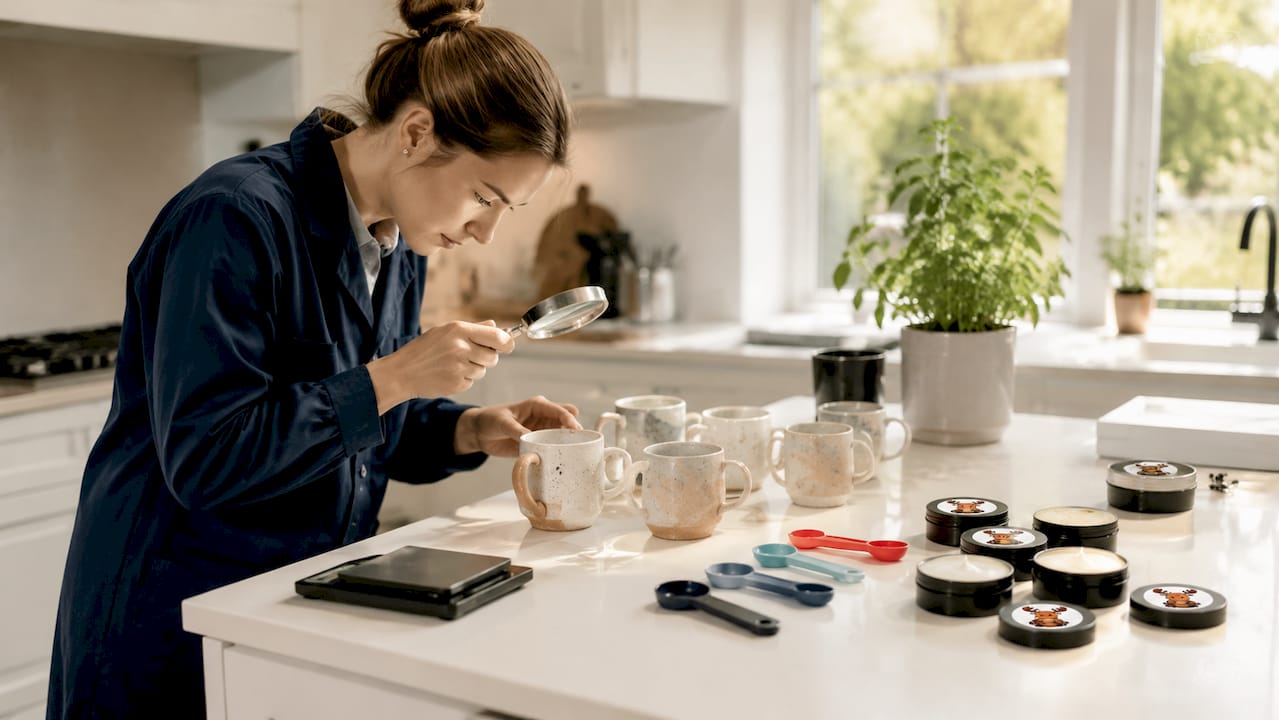
La artesanía mejora en lotes pequeños porque cada tirada exige atención. Cuando Moosestallow formula un lote de bálsamo de sebo de res con aceite de coco fraccionado, cera de abeja y tocoferoles, cada frasco recibe el mismo cuidado a mano. No hay una banda transportadora que apure el proceso. Ese cuidado se nota en el producto terminado.
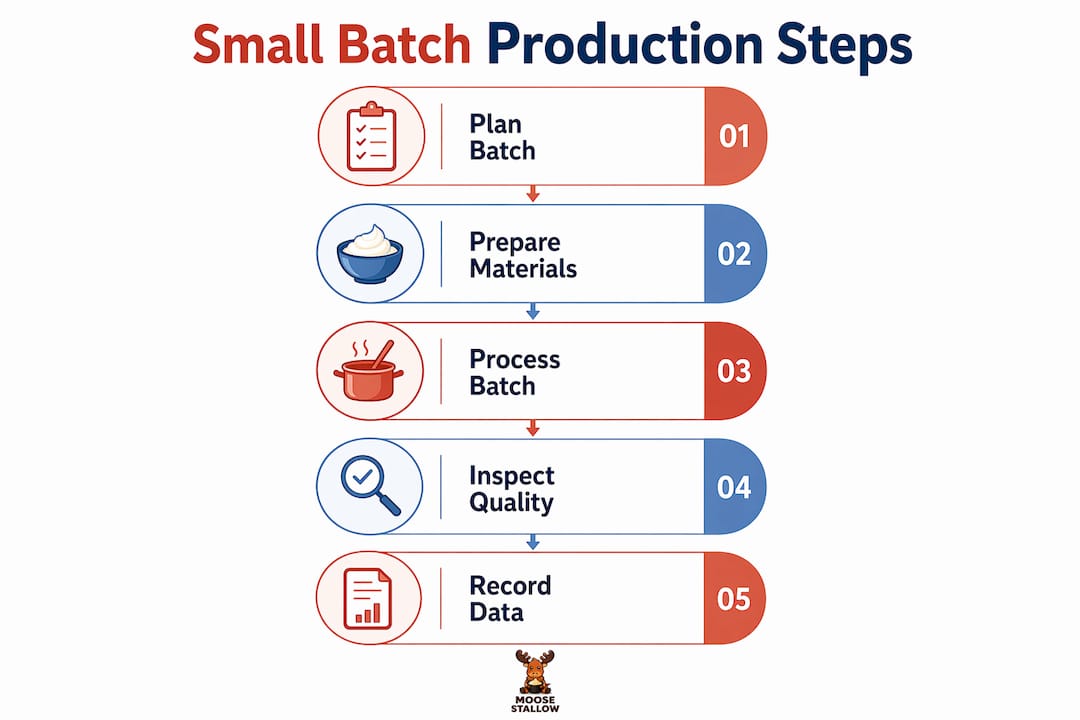
El registro de variaciones por paso captura las desviaciones del proceso en cada etapa de fabricación. Esto acelera el aprendizaje de calidad entre lotes. Los equipos pueden auditar tendencias con el tiempo y corregir problemas antes de que se vuelvan hábitos.
Los principales beneficios de calidad de la producción en lotes pequeños incluyen:
- Los defectos aparecen pronto y quedan contenidos en una tirada pequeña
- La inspección es minuciosa porque el volumen es manejable
- Las fórmulas y los procesos se pueden afinar entre lotes
- El cuidado artesanal es posible cuando la producción es intencional, no apurada
- La calidad de los ingredientes se mantiene constante cuando el abastecimiento se hace en cantidades específicas
Consejo pro: Lleva un registro sencillo de cada tirada de producción. Anota las temperaturas, los tiempos de mezcla y cualquier desviación. Después de cinco lotes, los patrones se vuelven visibles y la calidad mejora más rápido.
Beneficios financieros y operativos para los pequeños negocios
El argumento financiero a favor de la fabricación en lotes pequeños es claro y está bien documentado. Los costos de almacenamiento de inventario promedian entre el 18 y el 25 por ciento del valor del inventario al año. Reducir el stock con tiradas de producción más pequeñas libera capital de trabajo y recorta los costos de almacenamiento de forma directa. Para un pequeño negocio con $750,000 en inventario, una reducción del 20 por ciento ahorra $33,000 al año.
Así es como las ventajas de la producción en lotes pequeños se traducen en logros operativos:
- Menor riesgo inicial. Pruebas la demanda antes de comprometerte con grandes pedidos de herramientas o materiales.
- Entrada al mercado más rápida. Los ciclos iterativos en lotes pequeños llevan los productos al mercado entre un 30 y un 40 por ciento más rápido al reducir los rediseños de última etapa.
- Menos fricción en los cambios de configuración. Los métodos SMED (Single-Minute Exchange of Die) pueden reducir los tiempos de cambio entre un 30 y un 60 por ciento. Un caso documentado redujo el cambio de 73 minutos a 31 minutos.
- Opciones de herramientas flexibles. El mecanizado CNC y la impresión 3D manejan los primeros lotes sin las costosas herramientas del moldeo por inyección.
Consejo pro: Trata el tiempo de preparación y cambio como un costo aparte. Prepara tus herramientas y materiales antes de que empiece un lote. Este solo hábito puede reducir el costo real de tu lote más de lo que esperas.
La tabla siguiente muestra cómo la elección del proceso se ajusta al tamaño del lote y a la economía de las herramientas:
| Proceso | Rango típico de lote | Costo de herramientas |
|---|---|---|
| Impresión 3D | 1 a 500 unidades | Muy bajo |
| Mecanizado CNC | 1 a 5,000 unidades | Bajo a moderado |
| Moldeo por inyección | 500 unidades o más | Alto |
Para los pequeños negocios, empezar con CNC o impresión 3D mantiene bajos los costos iniciales. Pasas al moldeo por inyección solo cuando la demanda justifica la inversión en herramientas. Así es como las técnicas de fabricación en lotes pequeños protegen el flujo de caja en cada etapa.
Ventajas de sostenibilidad de la producción en lotes pequeños
El impacto de la producción en lotes pequeños en la huella ambiental es significativo. Las evaluaciones del ciclo de vida muestran que la producción en lotes pequeños, local e impulsada por la demanda, puede reducir el impacto climático de una camiseta de algodón de unos 5.5 a 7.1 kg de CO2 equivalente hasta 1.5 a 3.8 kg de CO2 equivalente. Esa reducción proviene de recortar la sobreproducción y acortar las distancias de transporte.
La producción en lotes pequeños reduce la sobreproducción desde el origen. Haces lo que necesitas, cuando lo necesitas. Eso significa menos desperdicio de materiales, menos energía gastada en producción excedente y menos producto sin vender terminando en vertederos.
“Las grandes mejoras en sostenibilidad provienen de ajustar la producción a la demanda y reducir la sobreproducción. La producción en lotes pequeños es el camino más directo hacia esa alineación.” Springer Life Cycle Assessment, 2026
La robótica y automatización esbeltas combinadas con métodos de lotes pequeños reducen aún más los residuos. Un caso de estudio de empaque de una pyme mostró una reducción de 3 a 4 veces en el tiempo de preparación y cerca de un 10 por ciento menos de desperdicio de adhesivo. Las mejoras en sostenibilidad son reales, pero provienen de la disciplina sistémica, no solo del oficio artesanal.
Para marcas de cuidado de la piel como Moosestallow, esto importa de forma directa. Abastecerse de sebo de res a nivel local, mezclarlo con aceite de coco fraccionado por su estabilidad y resistencia a la oxidación, y producir en tiradas pequeñas significa menos desperdicio y más control sobre cada ingrediente. Puedes leer más sobre cómo las prácticas de producción ecológicas se conectan con el cuidado de la piel en lotes pequeños.
¿Qué técnicas de fabricación en lotes pequeños funcionan mejor?
La selección del proceso depende de los costos de herramientas y del tamaño del lote. El mecanizado CNC se adapta a tiradas de 1 a 5,000 unidades. La impresión 3D maneja de 1 a 500 unidades casi sin costo de herramientas. El moldeo por inyección solo resulta rentable por encima de las 500 unidades, donde la inversión en herramientas se recupera gracias al volumen.
Para los productos hechos a mano, la técnica tiene menos que ver con la maquinaria y más con la disciplina de lote. Cada tirada debe tratarse como un mini piloto. Aprendes de ella, registras lo que pasó y aplicas ese conocimiento al siguiente lote.
Los principios SMED se aplican incluso en operaciones artesanales pequeñas. Preparar los ingredientes con antelación, limpiar el equipo entre lotes y organizar tu espacio de trabajo antes de empezar reducen el tiempo real de preparación. Estos hábitos son la base de la flexibilidad de producción.
Consejo pro: Integra tu registro de lotes con tus notas de calidad. Después de cada tirada, escribe una frase sobre qué harías diferente. Con el tiempo, esto se convierte en tu documento de proceso más valioso.
Conectar la gestión de lotes con los registros de calidad es lo que separa a los buenos productores en lotes pequeños de los excelentes. Convierte cada tirada en un aprendizaje estructurado.
Puntos clave
La producción en lotes pequeños ofrece ventajas de calidad, financieras y de sostenibilidad solo cuando se combina con una disciplina de proceso repetible y elecciones honestas de ingredientes.
| Punto | Detalles |
|---|---|
| Calidad mediante tiradas pequeñas | Los lotes pequeños detectan defectos pronto y permiten una inspección minuciosa antes de escalar. |
| Reducción del riesgo financiero | Los costos de almacenamiento del 18 al 25 por ciento anual hacen que un inventario más pequeño ahorre dinero de forma directa. |
| Entrada al mercado más rápida | Los ciclos iterativos en lotes pequeños reducen el tiempo de llegada al mercado entre un 30 y un 40 por ciento. |
| Sostenibilidad por diseño | Los lotes pequeños impulsados por la demanda recortan la sobreproducción y reducen las emisiones de CO2 de forma medible. |
| La disciplina de proceso importa | Los registros de variaciones por paso y las técnicas SMED convierten cada lote en un ciclo de aprendizaje. |
Por qué creo que los lotes pequeños son la forma honesta de hacer las cosas
Empecé a hacer los productos de Moosestallow en lotes pequeños porque no tenía otra opción. No tenía el capital para tiradas grandes y no estaba dispuesto a ceder en los ingredientes. Lo que descubrí es que la limitación se convirtió en la ventaja.
Cuando haces 50 frascos en lugar de 5,000, te das cuenta de todo. Notas cuando la proporción de cera de abeja se siente un poco desajustada. Notas cuando el aceite de jojoba o de ricino cambia la textura de un modo que hay que ajustar. No puedes esconderte detrás del volumen.
La parte que la mayoría pasa por alto es la de los datos. Llevé un registro sencillo desde el principio. Temperaturas, tiempos de lote, cualquier sustitución. Después de una docena de lotes, pude ver patrones que de otro modo nunca habría notado. Ese registro es ahora una de las herramientas más útiles que tengo.
También creo que el argumento de la sostenibilidad se subestima. La gente asume que los lotes pequeños son más ecológicos solo porque se sienten artesanales. No son más ecológicos de forma automática. Se vuelven más ecológicos cuando ajustas la producción a la demanda real y dejas de hacer cosas que se quedan en los estantes. Esa disciplina es una decisión, no un efecto secundario.
Si eres dueño de un pequeño negocio y estás considerando este camino, invierte en la documentación de tu proceso antes de invertir en equipo. El aprendizaje se acumula. El equipo es solo una herramienta.
Brian
Moosestallow: cuidado de la piel en lotes pequeños en el que puedes confiar
En Moosestallow, cada producto empieza con sebo de res correctamente derretido, mezclado con aceite de coco fraccionado por su estabilidad y absorción limpia, junto con cera de abeja, tocoferoles y otros ingredientes elegidos con cuidado. Nada gana un lugar en la fórmula sin una razón. Eso es lo que significa en la práctica el cuidado de la piel en lotes pequeños. Cada tirada se inspecciona, se registra y se hace con el mismo cuidado que la primera. Si quieres experimentar cómo se siente en tu piel una formulación honesta y hecha a mano, explora toda la colección de productos de Moosestallow y encuentra algo hecho de la forma correcta.
Preguntas frecuentes
¿Qué es la producción en lotes pequeños?
La producción en lotes pequeños es la fabricación de cantidades limitadas, por lo general de 10 a 1,000 unidades, para equilibrar la flexibilidad de diseño con el riesgo financiero. Prioriza el control de calidad y el aprendizaje iterativo sobre la producción de alto volumen.
¿Cuáles son los principales beneficios de la producción en lotes pequeños?
Los beneficios principales incluyen la detección temprana de defectos, menores costos de almacenamiento de inventario, un lanzamiento al mercado más rápido y menos residuos ambientales gracias a una producción ajustada a la demanda.
¿Cómo apoya la sostenibilidad la producción en lotes pequeños?
La producción en lotes pequeños impulsada por la demanda reduce la sobreproducción y acorta las cadenas de suministro. Los datos del ciclo de vida muestran que puede reducir la huella de CO2 de un producto en más de la mitad frente a la producción masiva convencional.
¿Qué técnicas de fabricación funcionan mejor para lotes pequeños?
El mecanizado CNC y la impresión 3D son las opciones más prácticas para lotes pequeños. Requieren poca inversión en herramientas y funcionan bien para tiradas de entre 1 y 5,000 unidades, antes de que el moldeo por inyección resulte rentable.
¿Cómo mejora la calidad del producto la producción en lotes pequeños?
Las tiradas más pequeñas permiten una inspección minuciosa en cada etapa. Los defectos se detectan antes de que se propaguen, y el registro de variaciones por paso ayuda a los equipos a mejorar la calidad de forma sistemática entre lotes.
Recomendados
- Por qué importa el cuidado de la piel hecho a mano: calma y nutre de forma natural – Moose’s Tallow
- Beneficios reales del cuidado de la piel hecho a mano para toda tu familia – Moose’s Tallow
- Crea una rutina de cuidado natural de la piel para resultados duraderos – Moose’s Tallow
- Cómo identificar ingredientes de sebo de calidad para el cuidado de la piel – Moose’s Tallow


0 comentarios