Best Hand Cream for Dry, Cracked Hands: What Works

The best hand cream for dry, cracked hands is a thick cream or ointment. Put it on within a minute of washing, while hands are still damp. Dermatologists name petrolatum, shea butter, glycerin and lanolin as ingredients to look for. Ours is a water-free shea and lanolin balm. It costs $11 an ounce and has a light scent.

Seven hand creams, side by side

Product / ProductoSize / TamañoPrice Oct 3, 2026Per ounceTypeKey ingredientsScent
Moose's Hand Repair2 oz$22.00$11.00Water-free balmArnica-infused tallow, shea, beeswax, lanolinCedarwood and eucalyptus oil
O'Keeffe's Working Hands (jar)3.4 oz$8.75$2.57CreamWater, glycerin, stearic acid, paraffinUnscented (per listing)
Neutrogena Norwegian Formula2 oz$5.49$2.75CreamGlycerinFragrance free (per listing)
CeraVe Therapeutic Hand Cream3 oz$10.99$3.66CreamHyaluronic acid, niacinamide, dimethiconeFragrance free (per listing)
Aquaphor Advanced Therapy7 oz$12.79$1.83OintmentPetrolatum baseNot listed
Vaseline Original Petroleum Jelly (3 jars)39 oz total$14.97$0.38OintmentPetrolatumNot listed
La Roche-Posay Cicaplast Hands1.7 fl oz$11.24$6.65 per fl ozCreamShea butter, niacinamide, glycerinNot listed

Prices are Amazon.com listings checked on October 3, 2026, with screenshots saved. Per-ounce prices use net weight. La Roche-Posay lists fluid ounces, so its figure is per fluid ounce. Hand Repair costs the most per ounce in this table. The cheaper creams are cheaper.

What a cream for cracked hands has to do

Hands lose water faster than most skin. They get washed, sanitized and chilled all day. A cream for cracked hands has one job: keep water in the skin between washes. Dermatologists agree on how.

  • Pick a cream or ointment, not a thin lotion. The American Academy of Dermatology says lotions do less.
  • Look for petrolatum, shea butter, glycerin, lanolin or dimethicone on the label.
  • Choose fragrance free if your skin is raw. The AAD says unscented is not the same thing.
  • Apply right after every wash, while hands are still damp.
  • Keep a small tin at the sink so the second step never gets skipped.

Which cream for which hands

No cream wins for every pair of hands. Here is how we would choose, using Amazon prices checked on October 3, 2026.

  • Tightest budget: Vaseline petroleum jelly or Aquaphor. Both are petrolatum-based, from $0.38 to $1.83 an ounce, and both feel heavy.
  • Everyday cream that clings through handwashing: O'Keeffe's Working Hands, $2.57 an ounce for the 3.4 oz jar.
  • Fragrance free and lighter: CeraVe Therapeutic Hand Cream at $3.66 an ounce, or Neutrogena Norwegian Formula at $2.75.
  • Small tube for a bag: La Roche-Posay Cicaplast Hands, $6.65 per fluid ounce.
  • Water-free balm for workshop, garden and kitchen hands: Hand Repair, $11 an ounce. It costs more, it is lightly scented, and we make it by hand in Lebanon, Pennsylvania.

How to use any cream so it holds up

The cream matters less than the routine. These steps come from the American Academy of Dermatology and Ohio State's Dr. Susan Massick.

  • Wash with lukewarm water and mild, unscented soap. Hot water strips oils.
  • Pat dry, then apply within a minute, while hands are still damp.
  • A pea-size amount covers both hands. More only sits on top.
  • At night, apply a thicker layer and cover with white cotton gloves or socks.
  • Wear rubber gloves for dishes and warm gloves in cold, dry air.
  • Hand sanitizer dries skin. Put cream on after sanitizing, not only after washing.
  • Aim for 40 to 50 percent humidity indoors if you can.

Greasy, sticky or slow to sink in?

Reddit threads about cracked hands keep returning to the same complaints. Here are straight answers.

  • Petroleum jelly and Aquaphor are the stickiest. Many people save them for nights under cotton gloves.
  • Water-based creams like O'Keeffe's and Neutrogena sink in fast but can wear off after a few washes.
  • Phone and tools: a pea of Hand Repair turns matte in about a minute. Arrowroot powder is why.
  • Too much of any cream feels slick. Start with a pea and add more only where skin is rough.
  • Scented creams can sting open cracks. Use a fragrance-free one until the skin closes.
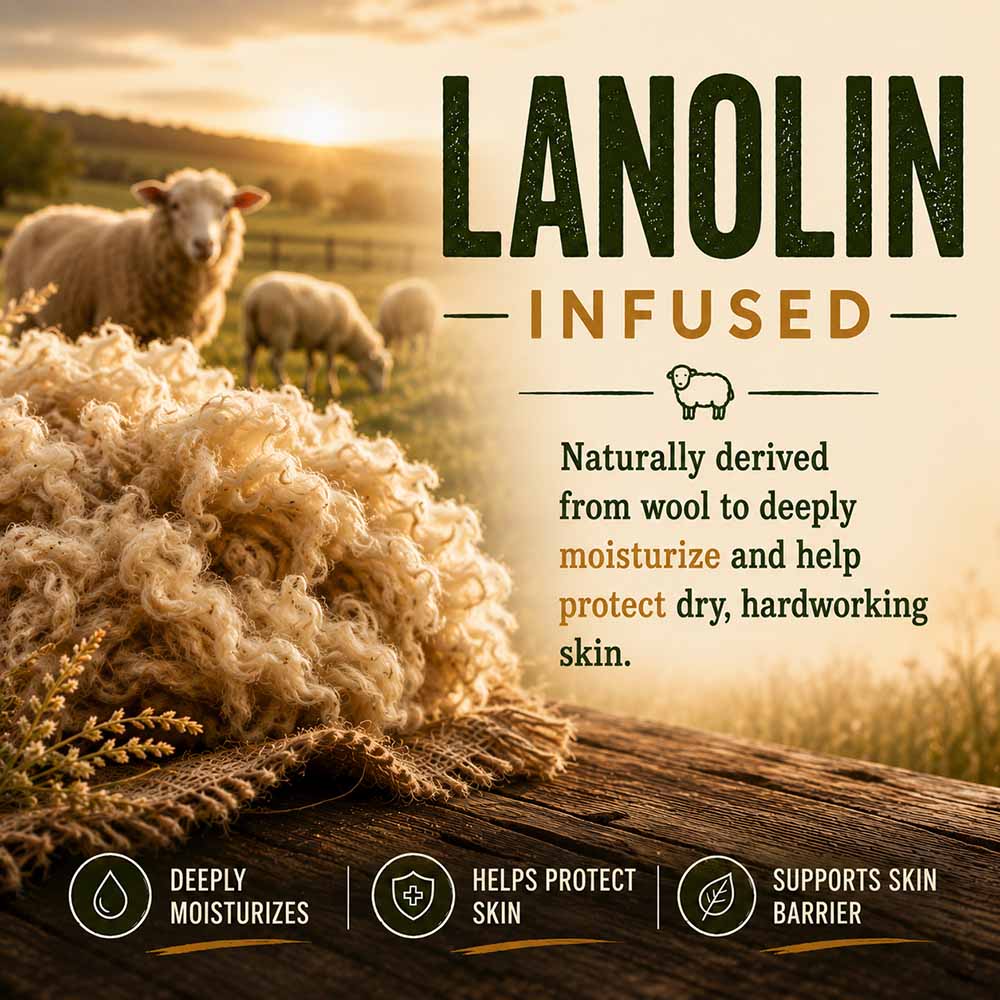
Lanolin from sheep's wool, one of the ingredients in Hand Repair balm

Why Hand Repair has no water

Water evaporates. A balm without water stays on the skin and slows the loss of what is already there. Hand Repair is arnica-infused beef tallow with shea butter, beeswax and lanolin. Cetyl alcohol and arrowroot keep it from feeling slick.

Petrolatum has the most research behind it for slowing water loss. We use tallow, beeswax and lanolin instead, and the tin lists no water, petroleum, mineral oil or silicones.

What is in Hand Repair, in plain words

The full list is on the product page. Here is what each part does.

  • Arnica-infused beef tallow is the base. It is close to the oils your skin makes.
  • Shea butter and raw beeswax soften the surface and seal it.
  • Lanolin is wool wax that slows water loss. Skip it if you are allergic to wool.
  • Calendula-infused oil and bisabolol are gentle plant extracts.
  • Cetyl alcohol and arrowroot give the smooth, matte feel.
  • Cedarwood and eucalyptus essential oils make the light scent.
  • Tocopherols and rosemary extract keep the oils fresh.
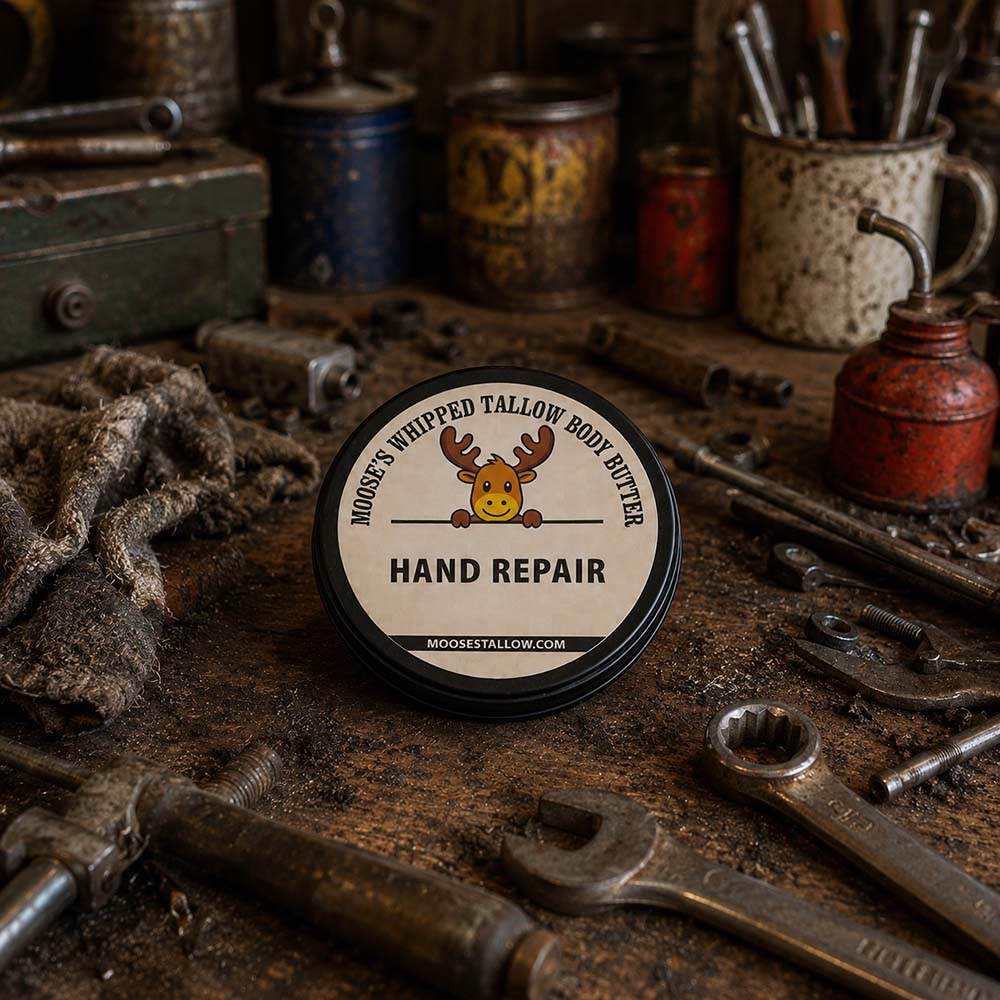
Hand Repair balm tin on a workbench beside greasy tools

What to expect from Hand Repair

Here is the routine, day by day. It is a routine, not a promise of results. Hands vary.

  • Day 1: a pea of balm melts in your palms. It feels waxy for about a minute, then matte.
  • Week 1: apply after every wash. Hands feel less tight between washes. Skip a day and the tightness returns.
  • Week 4: the tin lives by the sink. Winter brings the dryness back fast if you stop.
  • A note on scent: Hand Repair contains cedarwood and eucalyptus essential oils. If your cracks are open or raw, test a small spot on your inner arm first. Or use a fragrance-free cream until they close.

When a cream is not enough

Cream and a routine are for dry skin. Some cracks need a doctor. Ohio State's Dr. Susan Massick says to get care if hands crack, bleed or hurt despite self-care. Crusting or scabbing can be a sign of infection.

The American Academy of Dermatology adds that dryness that does not improve can point to another skin condition. Ask a dermatologist, and tell them every product you use.

What people ask

What is the best cream for really dry, cracked hands?

The best cream for really dry, cracked hands is a thick, fragrance-free cream or ointment. The American Academy of Dermatology says to choose creams or ointments over lotions. Petrolatum has the longest track record. Hand Repair is a water-free balm of tallow, shea, beeswax and lanolin. It carries a light cedarwood scent, so it is not fragrance-free.

What is the best hand cream for dry and cracked hands?

It depends on the job. Aquaphor and petroleum jelly cost the least, from $0.38 to $1.83 an ounce. O'Keeffe's Working Hands is a thick everyday cream at $2.57 an ounce. CeraVe and Neutrogena are fragrance free. For a water-free balm made without petroleum, ours costs $11 an ounce, and that price is the catch.

How to repair extremely dry, cracked hands?

Build a routine, not a one-time fix. Wash with lukewarm water and mild soap. Pat dry, then press a pea of thick cream into damp hands within a minute. At night, add a thicker layer under cotton gloves. Ohio State's Dr. Susan Massick says to see a doctor if hands crack, bleed or hurt despite this care.

Why does O'Keeffe's hand cream work so well?

Working Hands is thick and clings through handwashing. Its ingredient list shows water, glycerin, stearic acid and paraffin wax near the top. Glycerin pulls in water and the waxes slow its loss. It also costs about $2.57 an ounce. The skeptic is right that it is hard to beat on price. We chose a water-free balm instead.

Do dermatologists recommend O'Keeffe's Working Hands?

Some do. Elite Daily's dermatologist-sourced list of hand creams includes it. The American Academy of Dermatology names ingredients, not brands. It lists petrolatum, shea butter, glycerin, lanolin and dimethicone. Working Hands lists glycerin and paraffin, so it fits part of that advice. Read the label of any cream you buy, ours included.

What's better than O'Keeffe's Working Hands?

Better depends on what bothers you. If you dislike a water-based cream, try a water-free balm or an ointment. Aquaphor costs $1.83 an ounce and stays on longer at night. CeraVe adds ceramide-style ingredients without scent. Hand Repair is a tallow balm for workshop hands. It is pricier, so try O'Keeffe's first if budget matters.

What is the absolute best hand cream?

No single cream wins for every pair of hands. Allure's 2026 list of 13 hand creams runs from $7 to $62. The American Academy of Dermatology names no brand. The best one is the one you reapply after every wash. Pick by job: cheap and thick, fragrance free, or water free. For workshop and kitchen hands, we make Hand Repair.

Is O'Keeffe's Working Hands better than Aquaphor?

They do different jobs. Working Hands is a thick cream with water, glycerin and paraffin. It costs about $2.57 an ounce. Aquaphor is a petrolatum ointment at $1.83 an ounce for the 7 oz tube. It feels heavier and stays longer. Many people use cream by day and ointment at night.

What do dermatologists recommend for dry hands?

The American Academy of Dermatology says to use a cream or ointment, not lotion. Apply it right after washing. It names petrolatum, shea butter, glycerin, lanolin and dimethicone. It also says to choose fragrance free, not just unscented, and wear gloves for dishes and cold. Hand Repair follows most of this, but it is lightly scented.
Brian "Moose" Smith with his family and their dogs
A note from the maker

I make Hand Repair for hands that wash all day. Rendering tallow means hot water and long shifts at the sink. I will not tell you ours is the cheapest. It is not. I wanted a balm with no water and no petroleum that does not leave you slick. If it does not suit your hands, the 60-day guarantee covers it.

Brian "Moose" Smith, Lebanon, Pennsylvania

Read the whole story →