Skin that gets irritated by scrubs

Sugar Scrub for Sensitive Skin: How to Use It Gently

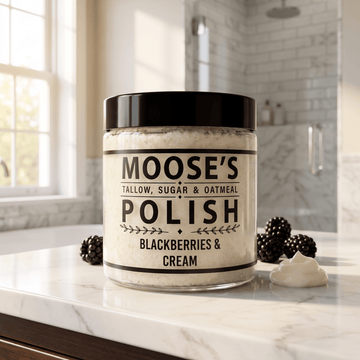
A fine sugar scrub can be a gentle fit for sensitive skin. Sugar dissolves in warm water, so the grit softens as you rub. Use light pressure on damp skin, once a week to start. Our Sugar Polish adds tallow and oat, so skin rinses off soft. Try one small patch first.

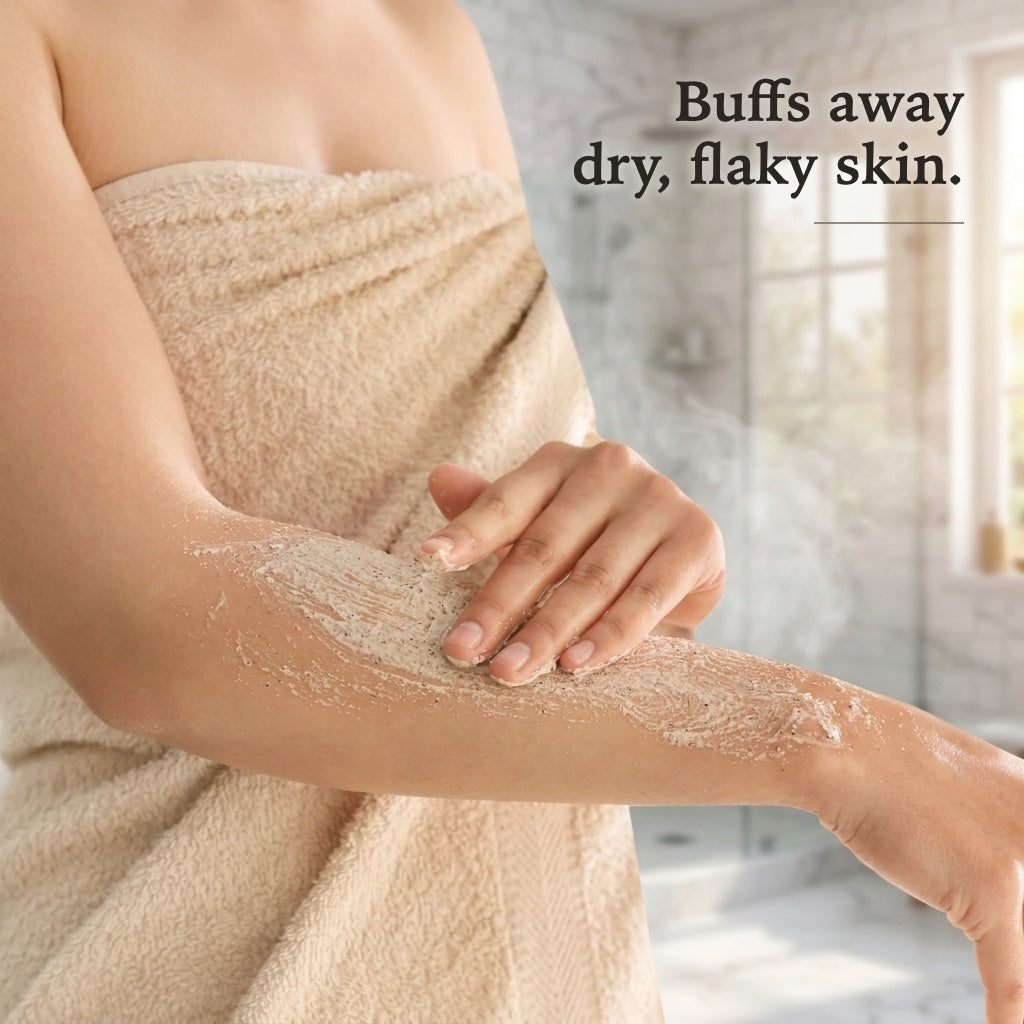
Woman gently rubbing Moose's tallow Sugar Polish sugar scrub onto her arm in a bright marble shower

What makes a scrub gentle: grit, pressure and timing

Sensitive skin doesn't have to skip scrubbing. Three things decide how a scrub feels: the grit, the pressure and how often you do it. Get those right and the scrub is a softer experience. We built Sugar Polish around all three.

  • Fine sugar melts as you rub, so the grit gets smaller the longer you scrub.
  • Cleveland Clinic says physical exfoliants can be rough, so use light pressure with little strokes.
  • Healthline's Dr. Debra Jaliman says sensitive skin should exfoliate once a week at most.
  • Cleveland Clinic says over-exfoliating can cause redness, irritation or cracked skin.
  • The AAD says to apply moisturizer right after you exfoliate.
  • Tallow, cocoa butter and squalane in Sugar Polish leave skin feeling soft after the rinse.
A gentle Sugar Polish routine

Think of it as a short, quiet routine. With sensitive skin, less is more. Do this once a week for the first month, then see how your skin feels.

  • Pick a calm day. The AAD says never to exfoliate cuts, wounds or sunburn.
  • Patch test first. Rub a small scoop on your inner forearm, rinse, and wait a day.
  • Wet your skin with warm water, not hot.
  • Scoop a small amount and rub small, light circles. Let the sugar do the work.
  • Spend a little longer on rough spots like elbows, knees and heels.
  • Rinse well and pat dry. Add moisturizer if your skin feels tight.
  • Start at once a week. Wait for the next day before you add a second scrub.
  • Keep it below the neck, since facial skin is thinner.
  • Wipe the shower floor afterward, because the oil can make it slick.
  • If your skin is very red, oozing or painful, ask your doctor before you scrub.

What is in Sugar Polish, and what to know

Here is the real label, one ingredient at a time. Check it against anything your skin has reacted to before.

IngredientWhat it doesGood to know
Sugar (sucrose)The only exfoliant, and it dissolves in warm waterAbout two-thirds of the jar by weight
Beef tallowA rich fat that leaves skin feeling softBeef-derived, so skip it if you avoid animal products
Cocoa butterA plant butter that adds softnessCheck it if you have reacted to cocoa butter
Fractionated coconut oil and squalaneLight oils that help the scrub spreadThe coconut oil is coconut-derived
BTMS-50 and cetyl alcoholEmulsifiers that help the jar rinse cleanThis is why it rinses creamy, not greasy
Colloidal oatVery fine oat flourSkip it if you react to oats
Pink clay (kaolin) and micaMineral colorsThey add a soft tint
Coconut-derived natural preservativeKeeps the jar fresh between usesWater is not on the label
FragranceGives each jar its scentScented. Patch test first, especially if fragrance has bothered you

Sugar is the only exfoliant. There are no plastic beads. We have not tested Sugar Polish for allergens. Ask your doctor if you have a skin condition.

From real customers
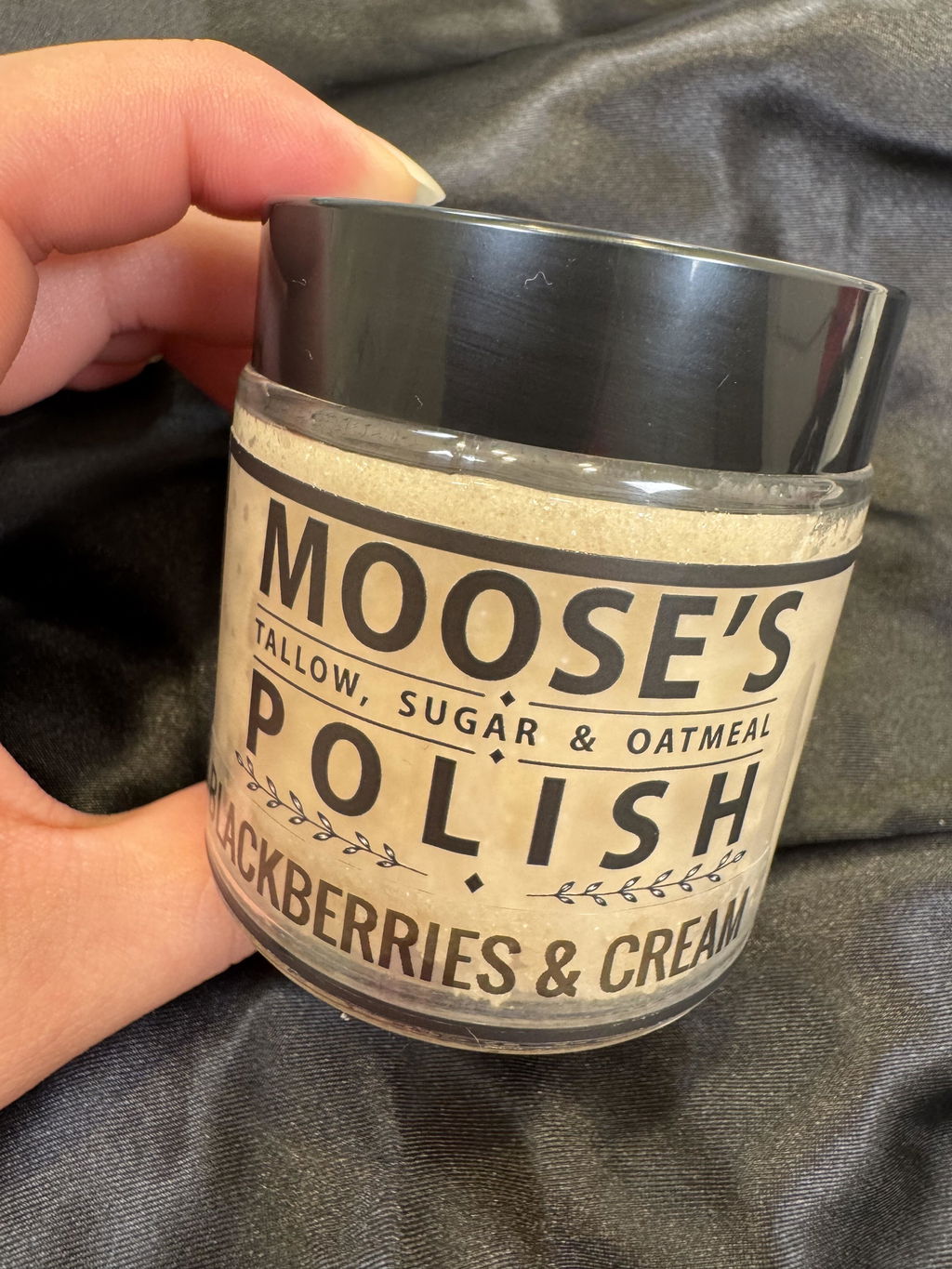
Review photo from Gabriela H.
★★★★★✓ Verified

Smells sooo good!!!!!

This blackberry and cream scrub smells amazing. It exfoliates really well without being too harsh and leaves my skin feeling soft and smooth after every use.
Gabriela H.

Read all the reviews on the product page →

The timeline

What to expect

  1. Tonight
    The sugar feels fine and melts as you rub. After the rinse, skin feels soft, not squeaky or tight. You may not need lotion afterward.
  2. Week 1
    Rough spots on elbows and knees feel smoother after a scrub or two. Skin should feel calm the next day. If it doesn't, wait longer between scrubs.
  3. Week 4
    Once a week becomes an easy habit. Skin feels smoother between scrubs, and the scent is a small pleasure. The 60-day guarantee covers you if it isn't for you.
What people ask

Is a sugar scrub good for sensitive skin?

It can be, if you keep it light. Sugar dissolves in water, so the grit shrinks as you rub. Healthline's Dr. Debra Jaliman says to dial exfoliation back to once a week at most. Our Sugar Polish adds tallow, cocoa butter and oat. Try a spot on your forearm first. Our 60-day guarantee covers you if it's not a match.

Do dermatologists recommend sugar scrubs?

Fair question. The American Academy of Dermatology says dry or sensitive skin may prefer a washcloth and mild exfoliator. It also says to use small, gentle circles. So start slow. Try one forearm spot, then once a week. We list every ingredient, so you can show the label to your dermatologist. Our 60-day guarantee covers the rest.

What type of scrub is best for sensitive skin?

Look for fine grit that dissolves and a short ingredient list. Cleveland Clinic says physical exfoliants can be rough, so use light pressure with little strokes. Sugar fits that. Sugar Polish has one exfoliant, cane sugar, and no plastic beads. It is scented, so patch test a small spot before you scrub your whole arm.

Which is better, salt scrub or sugar scrub?

For sensitive skin, most people reach for sugar. It dissolves in warm water, while salt scrubs tend to feel more abrasive. Healthline warns that large granules can damage skin, so grit size matters either way. Sugar Polish uses fine cane sugar and rinses off creamy. Go light, and stop if your skin stings or turns pink.

Are you supposed to rinse off a sugar scrub?

Yes. Rinse with warm water, then pat dry. Sugar dissolves, so it rinses away easily. Sugar Polish has tallow, so it rinses creamy, not greasy, and you can often skip lotion. The AAD says to moisturize right after exfoliating, so add some if skin feels tight. Wipe the shower floor, since oil can make it slick.

How often should you use a sugar scrub?

Start once a week. Healthline's Dr. Debra Jaliman says sensitive skin should exfoliate once a week at most. Our product page says one to two times a week, so begin at one. If skin feels tight or looks red, wait longer between scrubs. Moisturize right after, as the AAD advises. Skip it on cuts, sunburn or irritated skin.

How to use sugar scrub on face?

We make Sugar Polish for the body, so keep it below the neck. Facial skin is thinner, and a Cleveland Clinic aesthetician says sensitive skin may want to pare back. On your body, scoop onto damp skin and rub small, light circles. Do elbows, knees, hands and legs. Rinse well, and skip cuts and sunburn.

How do we render tallow?

It starts at a local butcher shop in farm country, where one cow yields about 12 pounds of suet. That suet is the fat around the cow's kidneys, rich in vitamins A, D, E and K. Its fatty acids are ones your skin loves, so we render it slowly, by hand.

  1. Ground beef suet in a box, ready to render into tallow

    Day 1 & 2

    Two renders of tallow over low heat, six hours each

  2. Golden tallow bubbling gently in a stainless pot during the dry render

    Day 3 & 4

    Dry render for eight hours, cool & dry render again for another eight hours

  3. Warm oil poured over dried herbs in a large glass jar for the infusion

    Day 5

    Infuse tallow and oil with organic herbs over low heat for 12-24 hours

  4. Whipped tallow being mixed with beaters in a steel bowl

    Day 6

    Add in beeswax and scent (if applicable), cool, whip and fill by hand

Brian "Moose" Smith with his family and their dogs
A note from the maker

Scrubs and sensitive skin don't always get along, so here's what I'd say at our booth. Go light, and start once a week. We make Sugar Polish in small batches and list every ingredient. My wife tests every batch. If it's not for you, the 60-day guarantee covers it.

Brian "Moose" Smith, Lebanon, Pennsylvania

Read the whole story →