

TL;DR:
- Bakuchiol is a plant-based alternative to retinol with fewer side effects.
- It benefits sensitive, pregnant, and beginner skin types effectively.
- Consistent use over 12 weeks can improve wrinkles, tone, and texture.
If retinol has left your skin red, flaky, or just plain unhappy, you’re not alone. Many people assume that irritation is simply the price of effective anti-aging. But bakuchiol, a plant-derived compound that matches retinol for wrinkle reduction while being significantly gentler, challenges that assumption entirely. This guide walks you through what bakuchiol actually is, how it compares to retinol, who it’s best suited for, and how to use it well. No hype. Just honest, evidence-backed guidance.
Table of Contents
- What is bakuchiol and how does it compare to retinol?
- The benefits of bakuchiol for skin
- Is bakuchiol right for everyone? Limitations and expert nuances
- How to use bakuchiol in your skin care routine
- Our take: the natural alternative that earns its place (with a caveat)
- Explore gentle powerhouse skincare options
- Frequently asked questions
Key Takeaways
| Point | Details |
|---|---|
| Gentle retinol alternative | Bakuchiol delivers similar skin benefits as retinol but with fewer side effects. |
| Safe for sensitive skin | Its non-irritating profile makes bakuchiol a top choice for those who can’t tolerate retinol. |
| Pregnancy and AM/PM safe | Bakuchiol is photostable and non-teratogenic, making it versatile and safe for daily routines. |
| Works best for irritants | Bakuchiol is ideal for individuals seeking anti-aging benefits without the harshness of retinoids. |
What is bakuchiol and how does it compare to retinol?
Bakuchiol (pronounced buh-KOO-chee-ol) is a naturally occurring compound extracted from the seeds and leaves of the babchi plant, Psoralea corylifolia, which has been used in Ayurvedic and traditional Chinese medicine for centuries. It’s not a retinoid, meaning it doesn’t share retinol’s chemical structure. Yet it appears to activate many of the same pathways in the skin, supporting collagen production and cell turnover.
Retinol has long been considered the gold standard in anti-aging skincare. It’s backed by decades of research and delivers real results. But it also comes with real drawbacks: sensitivity, peeling, redness, and the need to avoid sunlight after application. For many people, especially those with sensitive skin, these retinol risks in skin care make consistent use difficult.
A landmark 2019 clinical trial published in the British Journal of Dermatology found that bakuchiol and retinol performed comparably for reducing wrinkles and pigmentation over 12 weeks, with bakuchiol causing significantly fewer side effects. That’s a meaningful finding. Here’s how the two stack up:
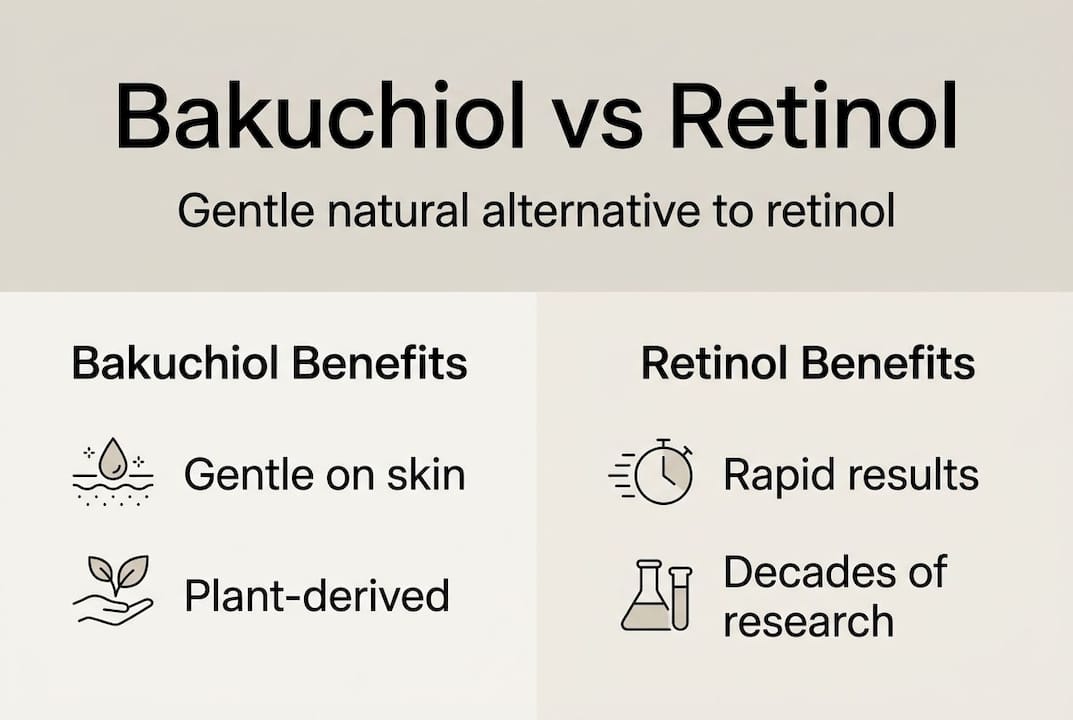
| Feature | Bakuchiol | Retinol |
|---|---|---|
| Source | Plant-derived (babchi seed) | Vitamin A derivative |
| Irritation risk | Low | Moderate to high |
| Photostability | Stable in sunlight | Degrades in UV light |
| Pregnancy safety | Considered safe | Not recommended |
| Evidence base | Growing | Extensive |
| Best for | Sensitive or pregnant skin | Maximum anti-aging efficacy |
Key takeaways at a glance:
- Bakuchiol works through similar cellular mechanisms as retinol
- It causes far less irritation, flaking, and redness
- It can be used morning and night without sun sensitivity concerns
- It’s a strong option for those who cannot tolerate retinoids
“Bakuchiol is a natural, plant-derived alternative to retinol that offers comparable anti-aging benefits with a gentler profile.” For a detailed bakuchiol comparison, the evidence is genuinely encouraging.
The benefits of bakuchiol for skin
Now that you understand what bakuchiol is, let’s explore exactly how it can benefit your skin routine.
The most immediate benefit people notice is comfort. Unlike retinol, which often requires a slow introduction period to avoid irritation, bakuchiol tends to be well tolerated from the start. That means fewer disruptions to your routine and less guesswork about whether your skin is reacting or adjusting.
Here’s what the research and clinical experience point to:
- Less irritation: Bakuchiol produces significantly less redness, dryness, and peeling than retinol
- Morning and evening use: Because it’s photostable and pregnancy-safe, you can apply it at any time of day without worrying about UV degradation
- Pregnancy and nursing safety: Unlike retinoids, bakuchiol is non-teratogenic and well tolerated, making it one of the few active ingredients considered appropriate during pregnancy. You can read more about retinol concerns during pregnancy to understand why this matters
- Antioxidant and anti-inflammatory action: Bakuchiol goes beyond surface-level results. It actively helps calm inflammation and fight oxidative stress, which are two key drivers of premature aging
- Improved texture and tone: Recent bakuchiol trials support its role in smoothing skin texture and reducing the appearance of dark spots
Bakuchiol supports the skin without demanding that your skin suffer through an adjustment phase first.
For anyone exploring pregnancy-safe skin care, bakuchiol fills a gap that very few active ingredients can.
Pro Tip: If you’re new to bakuchiol, start with a formula that pairs it with nourishing, skin-compatible fats like tallow or squalane. These help the active ingredient absorb more effectively while keeping the skin barrier intact.
Is bakuchiol right for everyone? Limitations and expert nuances
While the benefits are compelling, it’s crucial to understand bakuchiol’s real-world limitations and what experts actually say.
Bakuchiol is not a drop-in replacement for retinol in every situation. If you have resilient skin and are focused on maximum anti-aging results, retinol still holds the stronger evidence base. As one systematic review from 2024 notes, bakuchiol’s evidence is promising but not yet as robust as the decades of data behind retinol.
Here’s a realistic breakdown of who benefits most:
- Sensitive skin types who experience consistent irritation with retinol
- Pregnant or nursing individuals who need to avoid retinoids entirely
- Beginners who want to introduce an anti-aging active without a harsh adjustment phase
- Those seeking daytime use without the photosensitivity concern
Experts note that retinol remains superior for those who can tolerate it, particularly for more advanced signs of aging. Bakuchiol is ideal for those with retinol sensitivity, not necessarily a universal upgrade.
Long-term, high-concentration data on bakuchiol is still limited. Most studies use 0.5% concentrations over 12-week periods. We don’t yet have the same depth of longitudinal research that retinol benefits from. That’s not a reason to avoid bakuchiol. It’s a reason to stay curious and watch the science as it develops.
Pro Tip: If you’re looking for solutions for sensitive skin that go beyond single actives, pairing bakuchiol with a deeply nourishing base can make a real difference in both comfort and results.
For expert opinions on bakuchiol, the consensus is consistent: promising, gentle, and worth using for the right person.
How to use bakuchiol in your skin care routine
If you’ve decided bakuchiol aligns with your needs, here’s how to use it for optimal results.
The most studied concentration is 0.5%, used twice daily. The landmark clinical trial that compared bakuchiol to retinol used exactly this protocol: 0.5% bakuchiol applied morning and night for 12 weeks. That’s your benchmark.
| Routine step | Morning | Evening |
|---|---|---|
| Cleanse | Yes | Yes |
| Apply bakuchiol | Yes (0.5%) | Yes (0.5%) |
| Moisturize | Yes | Yes |
| SPF | Required | No |
Here’s a practical step-by-step approach:
- Patch test first: Apply a small amount to your inner arm for 48 hours before full facial use
- Apply to clean, dry skin: This improves absorption and reduces dilution
- Use morning and night: Bakuchiol’s photostability makes it uniquely suited to both
- Follow with a nourishing moisturizer: Especially one with skin-compatible fats or oils to support the barrier
- Be consistent for 12 weeks: Visible results take time. Don’t judge too early
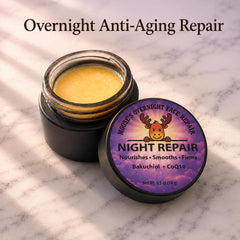
Bakuchiol pairs well with hyaluronic acid, niacinamide, vitamin C, and antioxidants like CoQ10 and astaxanthin. Rosehip oil is another excellent companion, adding additional fatty acids that support skin repair. For overnight eye routines, bakuchiol can be especially effective when delivered in a rich, targeted formula around the delicate eye area.
Avoid layering bakuchiol directly with high-strength exfoliating acids in the same application. Keep actives simple and introduce new ones one at a time.
Our take: the natural alternative that earns its place (with a caveat)
We believe bakuchiol is genuinely exciting, not because it’s trendy, but because it gives people with sensitive skin a real, evidence-backed option. For years, the message has been: tolerate retinol or miss out. Bakuchiol changes that narrative.
That said, we’d caution against overclaiming. Natural doesn’t automatically mean better. Context matters. Bakuchiol earns its place for the right person, in the right formula, used consistently. Pairing it with a thoughtfully crafted base, like tallow, squalane, and targeted antioxidants, is what turns a good ingredient into a genuinely effective routine. We also recommend keeping an eye on the emerging research. The science is moving fast. For a safe natural skincare checklist to help you evaluate what you’re putting on your skin, that’s always a good place to start.
Explore gentle powerhouse skincare options
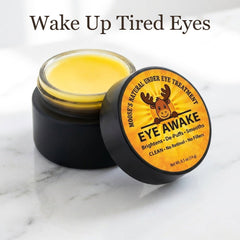
If this guide has you thinking about bakuchiol, we’d love to point you toward something we’re proud of. Our Eye Awake formula is built around bakuchiol as the active, delivered in a base of beef tallow and squalane for deep skin compatibility. It also includes rosehip oil, CoQ10, and astaxanthin to support overnight repair. It’s a small-batch formula made with intention, not shortcuts. You can shop gentle natural skin care across our full range, or go straight to our natural retinol alternative for eyes if the eye area is where you want to start.
Frequently asked questions
Can bakuchiol completely replace retinol for anti-aging?
Retinol remains the gold standard for maximum anti-aging results, but bakuchiol is an excellent alternative for those who experience irritation or cannot use retinoids safely.
Is bakuchiol safe during pregnancy and breastfeeding?
Yes. Bakuchiol is pregnancy-safe and non-teratogenic, making it one of the only anti-aging actives considered appropriate for use during pregnancy and nursing.
How long does bakuchiol take to show visible results?
The 12-week trial showed improvement in wrinkles and pigmentation when bakuchiol was used at 0.5% concentration twice daily. Consistency over time is key.
Can bakuchiol be used with other active ingredients?
Generally yes. Bakuchiol is more tolerable with fewer side effects than retinol, which makes combining it with other actives more manageable, though patch testing and gradual introduction are always smart practice.


0 comments