

Start with this: use a ketoconazole wash on treatment days, keep daily cleansing gentle, and switch your beard oil to something low in oleic acid like MCT or jojoba. Shaving usually is not required. What matters more is doing this routine on repeat, not searching for one miracle fix. Stick with it for a few weeks before judging results.
TL;DR:
- Using a ketoconazole wash two to three times per week with proper contact time is essential to control yeast growth behind beard dandruff.
- Applying low-oleic oils like MCT or jojoba immediately after each wash supports skin barrier health without feeding Malassezia yeast.
- Regularly exfoliating and keeping grooming tools clean help prevent buildup and recurrent flakes, especially with longer beards.
- Shaving does not resolve seborrheic dermatitis and can worsen skin irritation, making medicated routines the more effective approach.
- Consistency over several weeks is crucial, and seeking dermatologist advice is recommended if symptoms persist or worsen despite proper care.
What Causes Beard Dandruff, and How Do You Fix It?
Most beard dandruff traces back to seborrheic dermatitis, not simple dry skin. A yeast called Malassezia globosa lives on everyone’s skin, but it feeds on skin oil and breaks it down into oleic acid. That byproduct irritates the skin and speeds up how fast cells shed, which shows up as flakes caught in your facial hair.
This matters because it changes what actually helps. Dry skin responds to moisturizer alone. Seborrheic dermatitis needs something that controls the yeast, not just something that hydrates. The two conditions look similar at a glance but need different responses.
Dry skin flakes tend to be fine, white, and not very red underneath. Seborrheic dermatitis flakes are often greasier, yellowish, and sit on inflamed, reddish skin. If your beard itches badly, feels oily at the roots, and sheds flakes that look waxy rather than powdery, you are likely dealing with the yeast-driven kind.
The fix for that kind combines an antifungal wash with gentle daily care. Dermatologists point to a simple, repeatable routine, not a single product, as the most reliable path to calmer skin. A dermatologist’s top tips for a healthy beard back this up: consistency in cleansing and moisturizing beats sporadic effort every time.
Daily and Weekly Beard-Care Routine to Stop Flakes
Your beard needs two different rhythms: a light daily touch and a stronger weekly reset. Mixing them up, or skipping the second one, is why flakes keep coming back.
- Daily maintenance. Rinse your beard with lukewarm water, use a gentle cleanser, and pat dry. Add 3 to 5 drops of MCT or jojoba oil to a damp beard, then brush through to spread it and loosen surface flakes.
- Medicated wash days. Two to three times a week, apply a medicated wash directly to the skin under your beard, not just the hair. Leave it for 3 to 5 minutes before rinsing. That wait matters more than people think.
- Moisturize right after rinsing. Skin absorbs better while still slightly damp, so this is when a barrier-supporting balm does the most good.
Sequence counts here. Exfoliate gently before a medicated wash if you notice buildup, and always moisturize immediately after rinsing rather than letting skin air dry first. Clean your beard brush and comb weekly too. Dirty tools redistribute the same oil and debris you just washed out.
Pro Tip: Set a phone reminder for medicated wash days. The routine only works if the contact time actually happens, and it is easy to rinse too fast when you are in a hurry.
Medicated Options for Beard Seborrheic Dermatitis
Apply it so it reaches the skin underneath your beard, not just the surface hair, and leave it for 3 to 5 minutes before rinsing. That leave-on time is what gives the active ingredient a real chance to work against the yeast, and applying antifungal wash directly to skin with proper contact time is what clinicians point to as the difference between a wash that works and one that just cleans.
Other options exist, but they come with tradeoffs on facial skin:
- Selenium sulfide can control flaking but tends to dry out skin faster than ketoconazole, especially on the face.
- Zinc pyrithione works similarly and is common in dandruff shampoos, though it should be used sparingly on facial skin for the same reason. Antifungal actives like these are effective, but the drying effect means facial use calls for restraint.
- Products formulated for scalp strength are not automatically safe for the face. Dilute where possible and never use daily.
If two to three weeks of consistent use does not improve things, that is when a dermatologist may step in with prescription-strength ketoconazole, a short course of topical steroid, or a calcineurin inhibitor. Those are clinical tools that require supervision, not something to self-prescribe.
A few safety basics apply no matter which active you use. Patch-test on a small area first. Keep any medicated wash away from your eyes. Rinse fully so no residue sits on the skin overnight, and resist the urge to use these products daily. More is not better here.
What Beard Oils and Balms to Use, and What to Avoid
Not every oil helps a flaky beard, and some make it worse. The key factor is oleic acid content, since that same compound is what Malassezia produces when it breaks down skin oil.
- MCT oil (caprylic acid, or C8) is a strong first choice. It carries low oleic acid and has properties that make it less likely to feed the yeast driving your flakes.
- Jojoba oil is another solid pick, with a fatty-acid profile that mimics skin’s natural oil without adding fuel to the problem.
- Olive oil and castor oil, along with many high-oleic blends, are worth using with caution. Their oleic acid content can actually worsen flaking for people prone to seborrheic dermatitis.
Apply a few drops to a damp beard, massage it down to the skin rather than just coating the hair, then comb through to distribute evenly.
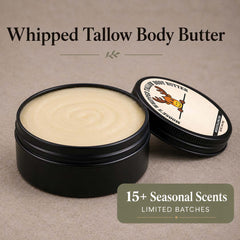
This is also where a tallow-based balm earns its place. Moose’s Tallow builds its beard balm with on properly rendered local beef suet tallow, blended with fractionated coconut oil rather than olive, avocado, or other high-oleic vegetable oils. Fractionated coconut oil resists oxidation and absorbs cleanly, which is part of why it works well as a carrier for daily use. The result supports a moisturized skin barrier without adding the oils that tend to aggravate flaking.
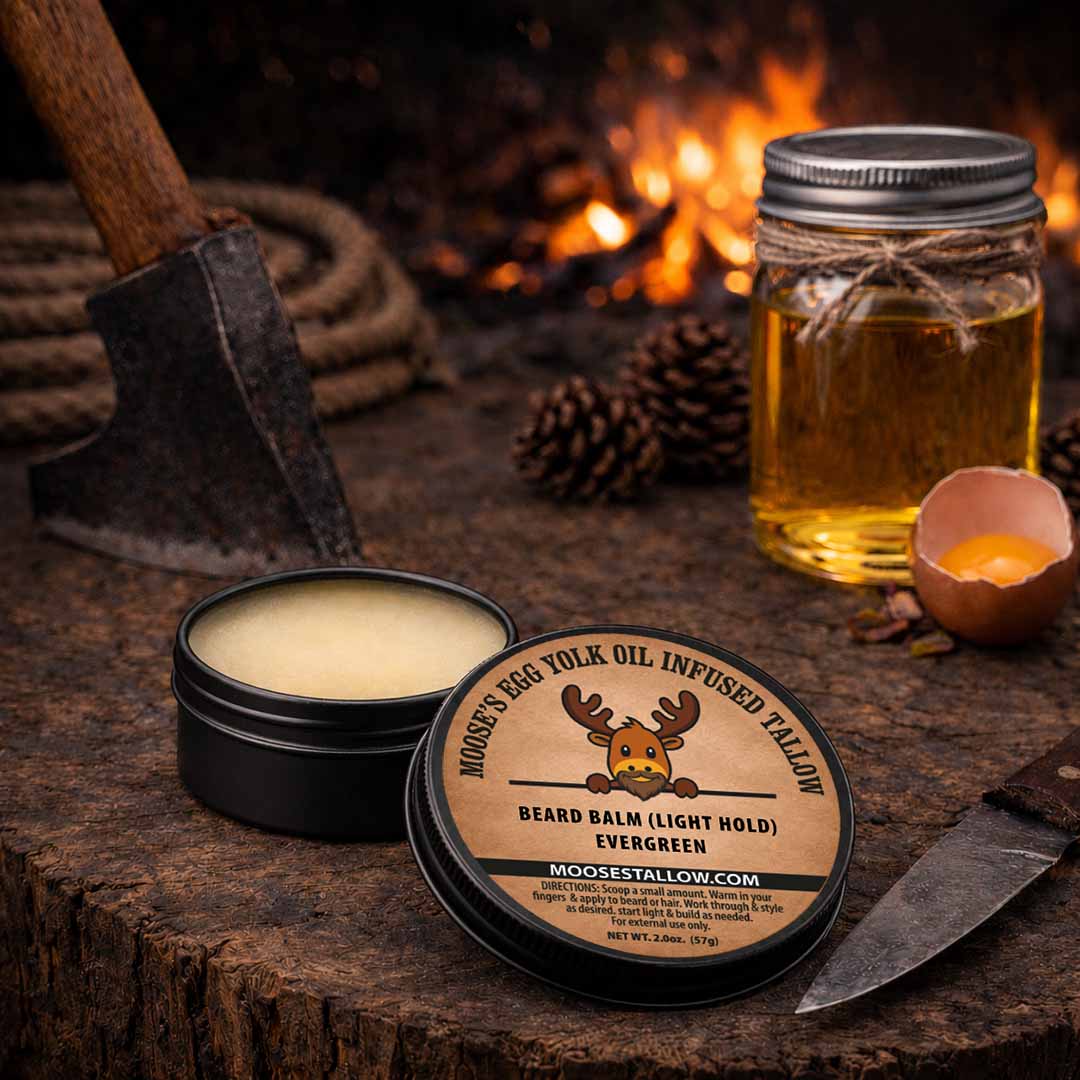
Pro Tip: If your beard oil feels heavy or greasy an hour after applying it, that is often a sign it is sitting on the surface rather than absorbing. A cleaner-absorbing oil should feel dry to the touch within minutes.
Safe Cleansing and Exfoliation for Flake Removal
Exfoliation clears the loose scales that a wash alone leaves behind, but the technique should match your beard length. Longer beards do better with a boar-bristle brush worked gently from skin outward. Shorter beards can handle a soft physical scrub or a mild chemical exfoliant with a low concentration of AHA or BHA.
- Exfoliate once or twice a week, not daily. Skin needs recovery time between sessions.
- Wash using your fingertips to massage cleanser down to the skin, not just across the hair surface.
- Skip hot water. It feels good but strips more oil than warm water and can worsen irritation.
- Pat dry with a towel instead of rubbing, which reduces friction on already inflamed skin.
Over-exfoliating backfires fast. Redness, tightness, or new irritation after a session usually means you pushed too hard or too often. Trim your beard regularly too, since trapped clippings and product buildup at the base of longer beards can make flaking look worse than it is.
When to See a Dermatologist and Realistic Expectations
Most beard dandruff responds to a consistent routine within a few weeks. See a dermatologist if you notice severe redness, bleeding, a spreading rash, or no improvement after several weeks of proper care. A clinician may offer prescription antifungals, a short steroid course, or a topical immunomodulator, all of which work better with medical guidance than guesswork.
Bring notes on what you have already tried. It speeds up diagnosis. And no, shaving is not a shortcut. It can irritate already inflamed skin and does nothing to address the yeast underneath.
Why Minimal, Tallow-Based Products Fit This Routine
Brian Smith started Moose’s Tallow after a health scare made him actually read his lotion label. It listed 52 ingredients, and water topped the list. That did not sit right with him, so he built something simpler.
Every Moose’s Tallow beard product starts with grass-fed, locally rendered beef suet tallow, chosen because its fatty-acid profile sits close to skin’s own oils. From there, the formulas stay short on purpose:
- Fractionated coconut oil as the carrier, valued for stability and clean absorption rather than the heaviness of olive or avocado oils.
- Beeswax for structure and a light seal without clogging pores.
- Vitamin E (tocopherols) to support the formula’s stability over time.
- Jojoba and egg yolk infused oil, added for their compatibility with skin and hair, never as filler.
Used after a medicated wash day, a balm built this way is meant to support a moisturized skin barrier in plain cosmetic terms, nothing more.
Diet and Lifestyle Factors Influencing Beard Dandruff
What you eat and how you live do not cause beard dandruff directly, but they can tip the scales. Diets high in sugar and refined carbs are commonly linked to more oil production, and oilier skin gives Malassezia more to feed on. Stress works the same way, often triggering flare-ups through its effect on oil glands and inflammation generally.
Sleep matters too. Poor sleep is tied to higher stress hormone levels, which can show up on your skin before you notice it anywhere else. Alcohol can dehydrate skin and, for some men, seems to coincide with worse flaking, though this varies person to person.
None of this replaces the wash-and-moisturize routine. Think of diet and lifestyle as supporting factors rather than a fix on their own. A man who eats well and sleeps enough but never touches an antifungal wash will still struggle with active seborrheic dermatitis. Conversely, someone doing the routine correctly but living on convenience food and five hours of sleep might see the routine work slower than it should.
If flares seem to line up with stretches of poor sleep, high stress, or heavy drinking, that is worth noting alongside your skin routine. It will not replace medicated care, but it can explain why some weeks are worse than others even when your product routine has not changed.

Tips for Preventing Dandruff Recurrence Post-Treatment
Getting flakes under control is one thing. Keeping them away is another, and it usually comes down to not abandoning the routine once skin looks better.
Do not stop medicated washes cold once symptoms clear. Taper down instead, moving from two or three times a week to once a week for maintenance, then adjust based on how your skin responds. Malassezia is a normal resident on skin, and it can flare up again if conditions favor it, so ongoing light management works better than an all-or-nothing approach.
Keep the low-oleic oil habit going even after flakes disappear. This is prevention, not just treatment. Switching back to a heavier, high-oleic oil the moment skin clears is one of the most common reasons dandruff returns within a month or two.
Watch the seasonal pattern too. Many men notice worse flaking in winter, when indoor heat dries out skin and pushes oil glands to overcompensate. Adjust your moisturizing step accordingly rather than waiting for flakes to show up again.
Finally, keep your grooming tools clean on an ongoing basis, not just when you remember. A brush loaded with old oil and skin cells works against everything the rest of your routine is doing.
A Founder’s Perspective on Consistency Over Quick Fixes
I built Moose’s Tallow because I got tired of long ingredient lists that promised everything and explained nothing. Beard care works the same way. There is no single product that erases seborrheic dermatitis overnight, and any routine promising that is overselling itself. What actually moves the needle is doing the simple things, washing right, moisturizing with the right oil, on a schedule you can keep up for months, not days. Try a gentle routine, give it real time, and if a product does not work for your skin, use the guarantee. That is what it is there for.
— Brian Smith
How Moose’s Tallow Fits Into Your Beard Routine
Once your medicated wash day is done and skin is rinsed clean, that is the moment to reach for the Tallow Beard Balm for Men, Infused with Egg Yolk Oil. Built on beef suet tallow with fractionated coconut oil as the carrier, it is meant to support a moisturized skin barrier right when your skin can use it most, with no olive oil, avocado, or shea butter filling out the formula.
If a specific patch under your jawline is driving you crazy between wash days, the Natural Bug Bite & Itch Relief Balm Moose’s Trail Relief works as a spot treatment for that localized itch, without needing to treat the whole beard again.
Dry patches often do not stop at the jawline either. If your neck or cheeks near the beard line feel tight and rough, the Beef Tallow Hand Cream for Dry, Cracked Hands is dense enough to handle stubborn dry skin nearby, even though it is built for hands.
Every formula stays short on purpose. Real tallow, a stable carrier oil, and a small list of ingredients that each earn their place. If you want to see the full lineup, visit the Moose’s Tallow shop and pick what fits your routine.
Sources
For deeper clinical background, the National Eczema Association’s guide to seborrheic dermatitis under beards and Dermatology Times on what causes seborrheic dermatitis offer clinician-informed detail beyond what fits here.
This article is general information, not a substitute for advice from a qualified doctor. Consult a qualified healthcare professional about your own circumstances before acting on anything here.
- A dermatologist’s top tips for a healthy beard
FAQ
What Causes Dandruff in a Man’s Beard?
Beard dandruff is most often seborrheic dermatitis, triggered when Malassezia globosa yeast breaks down skin oil into irritants like oleic acid, speeding up flaking.
Is a Flaky Beard a Fungus?
It is a reaction to a yeast, not a true fungal infection. Malassezia lives on everyone’s skin normally, but overgrowth can trigger the inflammation behind beard flakes.
How Do I Get Rid of Facial Dandruff?
Use a ketoconazole-based wash on the skin under your beard two to three times a week, leave it for 3 to 5 minutes, then follow with a low-oleic oil or balm like Moose’s Tallow’s beard balm for daily barrier support.
Will Beard Dandruff Go Away if I Shave?
Shaving does not address the yeast causing the flakes and can irritate already inflamed skin. A medicated wash routine works better than removing the beard entirely.
How Long Does a Beard Dandruff Remedy Take to Work?
Most men see improvement within a few weeks of consistent use. If nothing changes after several weeks of proper technique, see a dermatologist.
0 comments