

Use a small amount of pomade, warm it between your palms until it’s nearly invisible, and apply it to slightly damp hair starting at the back and working forward. Finish with a comb for a clean look or your fingers for texture. That’s the whole method. Everything else is detail.
Before you start, check these three things:
- Amount: start small, dime-sized or less. You can always add more.
- Hair dampness: towel-dried to slightly damp works better than soaking wet or bone dry.
- Warming: rub the product between your palms until it’s warm and spreadable, not clumpy.
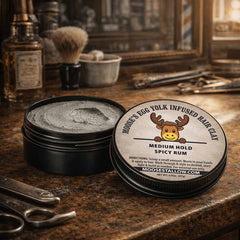
If you want a ready-made option that fits this exact routine, Tallow Hair Clay from Moose’s Tallow is built for it.
Key Takeaways
Reliable pomade styling comes down to a small amount, proper warming, damp hair, and a back-to-front application order every single time.
| Point | Details |
|---|---|
| Start small | Use a dime-sized amount and add more only if your hair needs it. |
| Warm before applying | Rub pomade in your palms until it’s nearly invisible to avoid clumping. |
| Apply back to front | Work from the back of your head forward, targeting roots first for control. |
| Match product to hair type | Choose water-based for fine hair and daily wear, oil-based for thick hair and stronger hold. |
| Consider ingredient-based options | Moose’s Tallow’s Tallow Hair Clay uses a water-free, tallow-based formula that follows this exact routine. |
How to Use Pomade for Men: Water-Based vs Oil-Based
Water-based pomades rinse out with plain shampoo and often set a bit firmer once your hair dries. Oil-based pomades stay pliable all day and give you sustained shine, but they take more work to wash out. That trade-off drives most of the decision.
Fine or thin hair usually does better with a lighter, water-based formula for hold without weighing hair down. Thick or coarse hair often benefits from a heavier grip product to achieve control.
Barbers commonly stock both types for this exact reason. Matching the product to a client’s hair texture cuts down on trial and error, and the same logic applies at home.
There’s a middle ground worth knowing about. Some water-based “unorthodox” formulas try to give you the restyle-ability of an oil-based product with the easy washout of a water-based one. It’s a reasonable compromise if you restyle midday but hate heavy cleanup at night.
Quick comparison:
- Water-based: easy washout, can set firmer, good for daily wear
- Oil-based: pliable all day, stronger shine, needs more cleaning effort
- Hybrid/water-based flexible formulas: easier washout with more restyle-ability than a straight water-based pomade
Prepping Your Hair and Getting the Amount Right
Slightly damp hair spreads pomade more evenly than dry hair does. Dry strands soak up product unevenly and leave patches that look greasy while other sections stay dry and stiff.
- Towel-dry your hair until it’s damp, not dripping.
- Scoop out a dime-sized amount of pomade. Starting small and layering more if needed beats overloading your hair from the start since excess product is hard to remove once it’s in.
- Rub the pomade between your palms and fingers until it warms up and turns nearly clear.
- If the pomade is firm or waxy, a few seconds of blow-dryer heat while it sits in your palms softens it fast. This trick works well on hard, wax-heavy formulas that resist warming from hand heat alone.
The two mistakes that ruin most application attempts: piling on too much product at once, and rubbing pomade straight onto the scalp instead of the hair itself. Scalp application just makes hair look oily at the roots without adding any hold where you need it.
Pro Tip: If your pomade still feels clumpy after warming it in your hands, it’s not warm enough yet. Keep rubbing for another 10 to 15 seconds before touching your hair.
Step-by-Step: How to Apply Pomade for a Reliable Style
This sequence works for short and medium lengths, and for most hair textures.
- Emulsify first. Warm the pomade in your palms until it’s spreadable and close to invisible. Rubbing it until nearly clear prevents the clumping that causes uneven patches.
- Start at the back, move forward. Apply to the back and sides of your head first, then work toward the front. This order keeps you from overloading the hairline, which is the spot most guys accidentally soak first.
- Hit the roots before the ends. Targeting your roots gives you control over the direction hair falls, which matters more than coating the tips.
- Distribute through to the ends. Run a comb through for a slick, defined finish, or use your fingers for a looser, textured result.
- Add heat if you want lift. A blow dryer while styling builds volume for a pompadour. Skip the heat and let hair air-dry for a softer, more natural finish.
If your style is falling flat by midday, don’t reach for a whole new handful. Rub a pea-sized amount between your fingers first, then work it only into the sections that lost shape. Adding cold pomade straight from the tin creates the same clumping problem you avoided during the first application.
- Short hair: less product, focus on roots for texture
- Medium to longer hair: more product needed through the mid-lengths and ends
- Thick or coarse hair: expect to use slightly more than the guides suggest for finer hair
Four Pomade Hairstyles You Can Build Today
Once the basic routine is second nature, the only thing that changes between styles is where you focus the product and which tool you finish with.
- Slick back: Use a medium to high hold pomade, comb thoroughly from back to front, and finish with a fine-tooth comb for a clean, glossy line.
- Side part: Comb your part in first while hair is damp, then apply pomade and comb the sections into place around that line.
- Pompadour: Blow-dry for lift while combing hair back and up, apply pomade at the roots first, then comb back and over for the signature swept shape.
- Textured messy look: Skip the comb entirely. Work pomade through with your fingers, concentrating product on the mid-lengths and tips rather than the roots. A matte, lower-shine formula usually looks more natural here than a glossy one.
A heavier oil-based pomade suits pompadours and slick backs because both styles need serious hold to survive the day. Lighter, water-based options fit daily office-ready looks where you want neat, not sculpted.
How to Wash Out Pomade Without Buildup
Water-based pomade rinses out with regular shampoo, no extra steps needed. Oil-based pomade is a different story. If it won’t fully wash out, work conditioner or a light oil through your hair first to break down the grease, then follow with shampoo. A degreasing shampoo works too, and it’s worth keeping one on hand if you use oil-based pomade often.
- Never apply pomade directly to your scalp. Keep it on the hair shafts and roots, not the skin.
- Wash out oil-based pomade every one to two days to avoid buildup that leaves hair looking flat and dull.
- If yesterday’s style still holds fine, you can restyle over it instead of washing. Buildup only becomes a problem after a few days without a wash.
Pro Tip: A greasy pillow or a dull, flat look by day two usually means it’s time to wash, not restyle.
Where Tallow Hair Clay and Beard Balm Fit This Routine
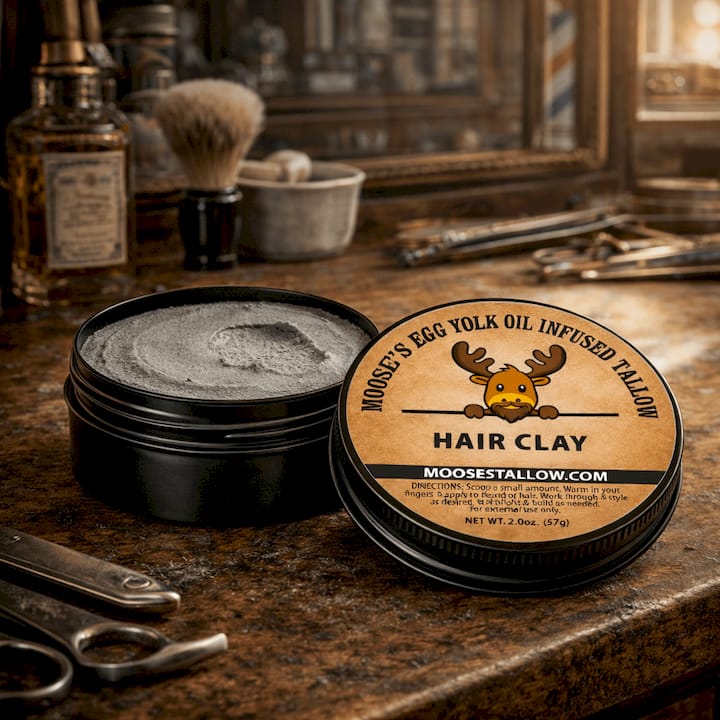
Moose’s Tallow builds its styling products the same way it builds everything else: water-free, with a short list of ingredients that all serve a purpose. Tallow Hair Clay uses a beef suet tallow base with egg yolk oil worked in, plus fractionated coconut oil as the carrier. No filler oils, no water diluting the formula.
The medium hold responds well to the exact routine above. Warm a small amount in your palms, apply it back to front, and it distributes without clumping the way a stiffer clay can.
- Tallow base for a formula close to your skin’s own oils
- Egg yolk oil infused for added ingredient depth
- Fractionated coconut oil as a stable, easy-absorbing carrier
- Small-batch, water-free formula with nothing added as filler
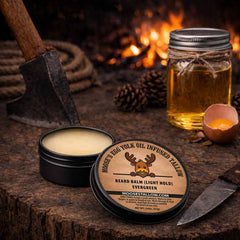
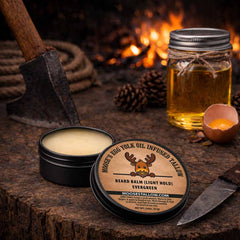
If your grooming routine includes beard care, the Tallow Beard Balm uses the same tallow-and-egg-yolk-oil approach, giving you one ingredient philosophy across your hair and beard.
Why Most Pomade Advice Overcomplicates a Simple Routine
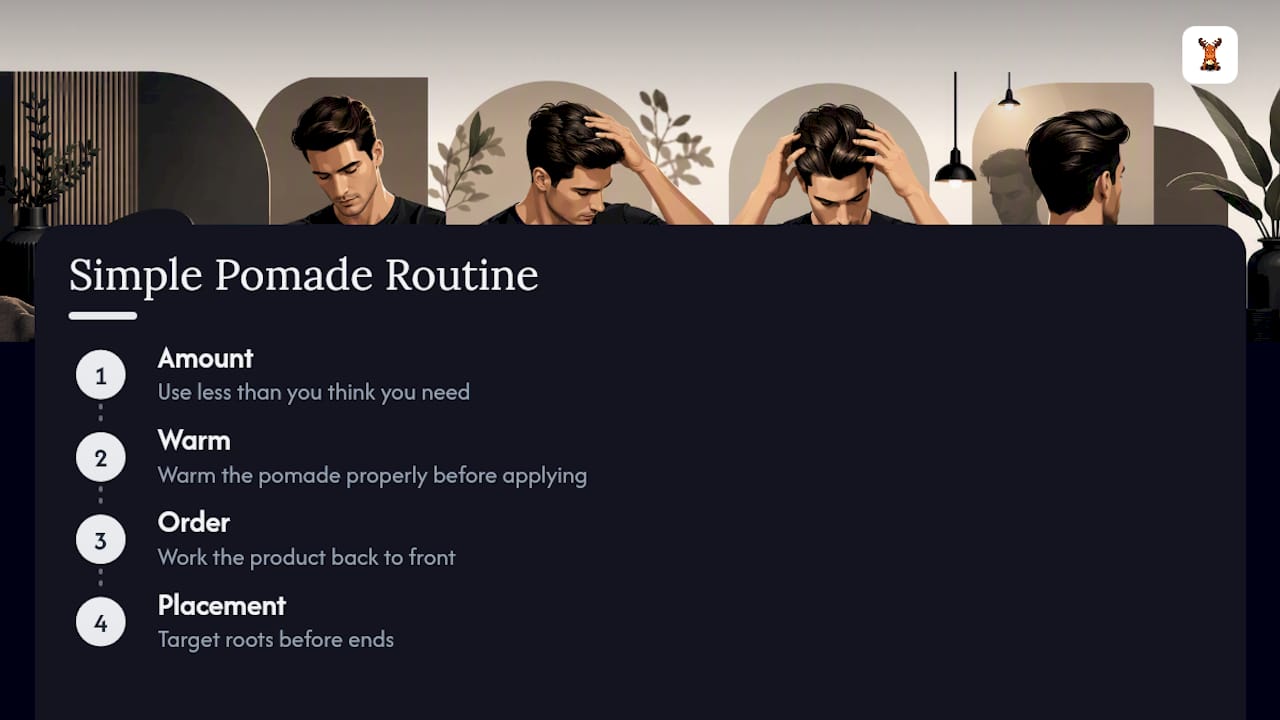
Most guides make pomade sound complicated. It isn’t. The whole routine comes down to four things: use less than you think you need, warm it properly, work back to front, and target roots before ends. Skip any one of those and the style falls apart by noon.
Where conventional advice falls short is ingredients. Guides talk endlessly about hold and shine but rarely mention what’s actually in the tin. A lot of pomades lean on synthetic waxes and petroleum bases that sit on hair rather than working with it.
If you care about what touches your scalp daily, that matters. Tallow-based formulas use a fatty-acid profile close to your skin’s own oils, so they tend to absorb cleanly instead of sitting on top. That’s not a hold claim. It’s a formula philosophy.
My take: prioritize the technique first. Get the amount, warmth, and application order right before you obsess over brand. Once the technique is solid, choose a product built on ingredients you can actually name.
Try a Tallow-Based Routine From Moose’s Tallow
If you’ve been using a petroleum-based or heavily synthetic pomade, switching to a tallow-based option changes what’s actually sitting in your hair all day, not just how it holds. Tallow Hair Clay follows the exact routine in this guide: a small amount, warmed in your palms, applied back to front. The formula is water-free and built on properly rendered local beef suet tallow, with fractionated coconut oil as the carrier instead of a vegetable oil that oxidizes faster on the shelf.
Every batch is handmade in Lebanon, Pennsylvania, in small runs, with a short, intentional ingredient list. Nothing sits in the formula as filler. If you want your beard routine to match, the Tallow Beard Balm uses the same base. Every order ships with a 30-day guarantee, so you can try the routine on your own hair with no risk.
Sources
- How to Use Pomade: 13 Steps (with Pictures) - wikiHow
- How to put pomade in hair | GQ
- Water Based vs Oil Based Pomade: Professional Styling Guide
- Water-Based vs Oil-Based Pomade: Everything you need to know - EatHealthy365
FAQ
What is the correct way to use pomade?
Warm a small, dime-sized amount in your palms until it’s spreadable, apply it to slightly damp hair starting at the back, and finish with a comb or your fingers depending on the look you want.
Should I apply pomade to wet or dry hair?
Slightly damp hair works best. It lets pomade spread evenly, while fully dry hair often leaves uneven, greasy patches.
Why isn’t my pomade holding my hairstyle?
Usually it’s one of three issues: too little product, hair that’s too wet or too dry, or a pomade with a hold level that’s too light for your hair type. Heavier oil-based formulas hold better for thick hair and structured styles like pompadours.
How do I get a textured, messy look with pomade?
Skip the comb and use your fingers instead. Focus the product on the mid-lengths and tips rather than the roots, and pick a matte, lower-shine pomade for a more natural finish.
What’s the difference between pomade and wax for styling?
Pomade generally offers more shine and flexibility for restyling throughout the day, while wax tends to give a stronger matte hold with less movement once it sets.


0 comments