


Whether tallow is ethical depends on sourcing, animal welfare, and how open a brand is about processing. Tallow usually starts as a byproduct of cattle raised for beef, so it can reduce waste. But it does not erase the welfare and environmental footprint of cattle farming. Check the sourcing details below before you decide for yourself.
TL;DR:
- If a brand explains its rendering process and sourcing locations, it indicates more transparency, especially regarding local suppliers and safety standards.
- Consumers should scrutinize how brands treat allocation, as different accounting methods significantly influence the environmental impact attributed to tallow.
- Ethical concerns about animal welfare depend more on the conditions of raising and slaughter, not solely on whether tallow is a byproduct.
- Rendering facilities in the US follow recognized safety standards, but claims of ethical sourcing require specific disclosures and verifiable certifications.
- Buying from brands that source locally and clearly identify partners supports responsible supply chains and community economies.
Ethical lenses people use to judge tallow
Most of the debate around tallow comes down to three ways of looking at it.
The first is the byproduct argument. Cattle are raised for beef and dairy. Fat is a leftover from that process. If the animal is already being processed, using the fat instead of throwing it away cuts waste. This view treats tallow as a form of recycling.
The second is the animal-rights view. Some people reject any product that comes from an animal, no matter how it was sourced. For them, the byproduct argument does not matter. The ethical line is drawn at animal use itself, not at how efficiently that use is handled.
The third is the allocation question. This one is more technical, but it matters a lot. When researchers measure the environmental impact of beef, they have to decide how much of that impact belongs to the meat and how much belongs to the fat, hide, and other byproducts. That decision is called allocation, and it changes the numbers significantly.
Here is what shifts depending on which lens you use:
- If you weigh waste reduction most heavily, tallow looks like a responsible choice.
- If you weigh animal use as the core issue, no sourcing detail will satisfy you.
- If you weigh environmental accounting, the answer depends entirely on how a brand calculates and discloses its numbers.
None of these views is wrong. They just start from different questions.
How tallow’s environmental footprint gets measured
Life-cycle assessments, often called LCAs, try to track every input and output tied to a product. For beef cattle, that means feed, water, land use, and methane from digestion and manure.
Cattle production is the dominant source of environmental impact in the beef system, according to EPA allocation guidance. Feed, enteric methane, and land use drive most of the footprint, long before an animal reaches a rendering plant.
Rendering itself is a separate step. It takes slaughterhouse material, including fat, and turns it into usable products through heat and processing, according to a USDA rendering overview. That process uses energy. Local rendering tends to use less transport energy than shipping raw material long distances before processing.
The real question is allocation. If a brand treats tallow as a free byproduct with zero environmental cost, that is a simplification. If a brand treats tallow as carrying a fair share of the beef system’s footprint, that is a more honest accounting method. The EPA’s own documentation notes that allocation choices directly affect how much impact gets assigned to byproducts like tallow.

This is why two brands can describe the same raw material in completely different ways. Neither is necessarily lying. They may just be using different accounting boundaries. A brand that explains its method is giving you more than a brand that just claims “low impact” with no explanation.
Welfare concerns and what to ask your supplier
Byproduct status does not answer every welfare question. How cattle are raised, transported, and slaughtered matters on its own.
Breeding conditions, transport length, and slaughter practices all affect animal welfare, separate from whether the fat gets used or wasted afterward. A brand can source a true byproduct and still work with suppliers who handle animals poorly. That is why sourcing transparency matters more than the byproduct label alone.
Ask suppliers these questions before you trust a tallow product:
- Where did the suet come from, and is that location named?
- Does the brand share audit reports or welfare certifications?
- Will the brand name its slaughter or rendering partner?
- Does the brand explain its rendering process in plain language?
Watch for red flags too. Vague language like “ethically sourced” with no detail behind it is a warning sign. So is a total lack of traceability, or a “natural” claim with nothing to back it up.
Pro Tip: Ask any tallow brand for the suet’s origin and the name of their rendering partner. A brand with nothing to hide will answer directly.
What rendering does and why safety standards matter
Rendering is the process that recovers usable fat and protein from animal byproducts instead of sending them to a landfill. It is not a new idea. It has been part of meat processing for generations.
In the United States, rendering follows established safety and quality standards. A USDA and APHIS industry report describes an industry that processes large volumes of material under a recognized Rendering Code of Practice, with many facilities exceeding baseline safety requirements.
Rendering does use meaningful energy, since it relies on heat to separate fat, protein, and water. Some researchers have studied alternatives like anaerobic digestion, which can lower greenhouse gas output compared to traditional rendering in some scenarios, according to a USDA Forest Service life-cycle study. Results depend heavily on how well methane leaks are controlled, so this is not a simple upgrade in every case.
When you check a supplier’s claims, look for:
- A named code of practice or safety standard the renderer follows.
- A clear description of where the suet is processed, not just where cattle were raised.
- Any mention of batch size, since smaller runs often mean closer oversight.
Rendering quality also affects the finished product, including scent and texture, something worth checking directly on notes about rendering quality.
A step-by-step checklist for judging tallow products
Use this checklist before buying any tallow-based product.
- Ask where the suet came from. A named farm or region beats a vague country label.
- Ask whether the brand will name its slaughter and rendering partners. Silence here is a red flag.
- Ask how the brand treats allocation. A brand that explains its reasoning is more trustworthy than one that just says “byproduct” and stops.
- Look at the packaging and batch size. Small-batch, water-free formulas often mean less filler and more oversight per batch.
Accept a brand’s claim when it comes with specifics: named locations, named partners, and plain explanations. Stay skeptical when a brand leans on broad words like “pure” or “natural” without backing them up. You can find more detail on evaluating these claims in this tallow sourcing checklist.
How Moose’s Tallow approaches sourcing
Brian Smith started Moose’s Tallow after a health scare led him to read his own lotion label. It listed 52 ingredients, with water listed first. That moment pushed him toward something simpler.
Every Moose’s Tallow product starts with properly rendered local beef suet tallow. Formulas stay water-free, with minimal dilution and no filler ingredients. Each ingredient, including fractionated coconut oil, beeswax, vitamin E, jojoba, castor, and egg yolk infused oil, is chosen on purpose. You can check sourcing details directly on product pages built around traceable, minimal ingredient lists.
Cultural and historical roots of tallow use
Tallow is not a new trend. People have rendered animal fat into soap, balm, and candles for centuries, long before synthetic alternatives existed.
Many cultures treated rendering as basic household skill, not a luxury. Families used nearly every part of an animal after slaughter, since waste was not an option in most historical economies. Fat became candles, soap, cooking medium, and skin balm, often within the same household.
This history matters for the ethics conversation. Tallow use was traditionally tied to using the whole animal, not adding extra demand for one. That nose-to-tail approach lines up closely with the modern byproduct argument. The same reasoning that made tallow practical generations ago is the reasoning brands use today when they describe it as a waste-reduction choice rather than a driver of new cattle farming.
Interest in tallow has grown again recently as more people look for simple, short ingredient lists instead of long synthetic formulas. That shift is less about novelty and more about returning to a practice that worked for a long time before it was replaced by manufactured alternatives.

Tallow versus alternative fats in ethical terms
Comparing fats fairly means looking at more than one factor at once.
| Factor | Beef tallow | Vegetable oils (e.g., olive, shea, avocado) |
|---|---|---|
| Waste reduction | Byproduct of existing beef production | Grown as a primary crop, not a byproduct |
| Land use driver | Tied to cattle farming already happening | Requires dedicated cropland |
| Processing stability | Stable fat structure, resists oxidation when handled well | Stability varies widely by oil type |
| Supply chain traceability | Traceable to a specific farm or region when a brand discloses it | Often blended from multiple growers across regions |
Tallow’s main ethical argument is that it uses material that already exists instead of creating new agricultural demand. Vegetable oils avoid animal use entirely, which matters most to readers for whom that is the deciding factor.
Among carrier oils used to dilute active ingredients, fractionated coconut oil stands out for stability, resistance to oxidation, easy absorption, and shelf life. That is why it remains the preferred carrier choice over heavier vegetable oils like olive or avocado, which can oxidize faster and feel greasier on skin.
Impact on local and indigenous communities
Tallow production touches communities beyond the farm itself.
Local and small-scale rendering can support regional economies, since fat processed near the farm keeps labor and revenue closer to the source. Communities with longstanding ties to cattle ranching, including many indigenous communities with historical ranching and hide-and-fat traditions, often have direct knowledge of responsible slaughter and rendering practices passed down over generations.
When rendering shifts to large centralized plants far from where cattle are raised, that local connection can fade. Material travels farther, oversight gets harder to trace, and communities near the original farm see less benefit from the byproduct’s value.
Buying from brands that work with named local suppliers supports a more traceable chain and can keep more value within the communities tied to that supply chain. It also makes it easier to ask direct questions about welfare and processing, since the chain is shorter.
Regulations and certifications worth knowing
In the United States, rendering operates under established oversight, not an unregulated gray market.
The USDA and APHIS rendering report documents an industry that follows a recognized Rendering Code of Practice, with safety performance that often exceeds baseline government requirements. This covers how slaughterhouse material is collected, processed, and turned into usable fat and protein products.
There is no single universal “ethical tallow” certification the way there is for some other goods. That means claims about ethical sourcing rely heavily on a brand’s willingness to disclose details voluntarily. When you evaluate a claim, look for named standards, named partners, and plain descriptions of process rather than a logo alone. The same scrutiny applies broadly to ethical claims across consumer goods, where disclosure matters more than marketing language.
Where honest trade-offs leave us
Some readers will reject any animal product, no matter how it is sourced, and that stance deserves respect. If you accept the byproduct argument, the honest move is to buy from brands that explain their sourcing rather than ones that simply claim to be clean.
— Brian Smith
How Moose’s Tallow products fit this checklist
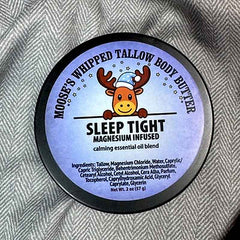
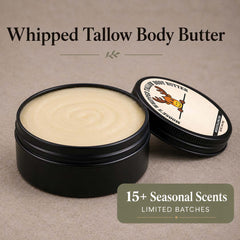
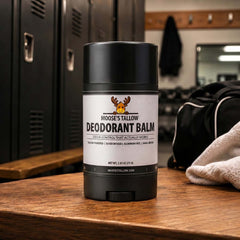
We offer whipped body butters, baby butters, and deodorants with water-free, minimal, intentional ingredients, no fillers. That transparency matches the sourcing checklist above. Try the Whipped Tallow Body Butter, Natural Tallow Baby Butter with Calendula & Chamomile, or Aluminum-Free Natural Deodorant, Tallow Balm, backed by a 30-day guarantee. Browse the full collection to compare.
FAQ
Can tallow be cruelty-free?
Tallow can come from cattle raised and slaughtered under careful welfare standards, but “cruelty-free” depends entirely on that specific farm and processor. Ask for named sourcing details rather than relying on the word alone.
Why do some people avoid beef tallow in skincare?
Some avoid it because it is an animal product, which conflicts with vegan or plant-based values regardless of sourcing. Others simply prefer plant-based textures or have sensitivities to animal fats.
Why might someone avoid beef tallow entirely?
People with strict animal-product objections avoid tallow because it always traces back to an animal, no matter how responsibly that animal was raised. Others avoid it due to personal skin sensitivity or scent preferences tied to poor rendering quality.
Is beef tallow skincare just a trend?
Tallow-based skincare has roots going back generations, long before it became popular again recently. Renewed interest reflects a return to simple ingredient lists rather than a brand-new invention.
Sources
- USDA ARS: rendering and byproducts overview
- EPA WARM documentation: beef production and allocation
- USDA/APHIS rendering industry report
- USDA Forest Service: life-cycle assessment of treating slaughterhouse waste
0 comments