


Milia under eyes are small, hard, white bumps caused by keratin trapped beneath the skin. They are harmless, and most clear up on their own within weeks to months. The safest next step is simple: don’t pick or squeeze them. Cleanse gently, skip heavy eye creams for now, and see a dermatologist if they bother you or stick around.
Here’s the short version for what to do next:
- Don’t squeeze, pop, or try a DIY needle removal.
- Do cleanse gently, twice a day, with a mild cleanser.
- Do watch and wait. Many milia clear on their own.
- Consider a dermatologist visit for extraction if they’re a cosmetic concern.
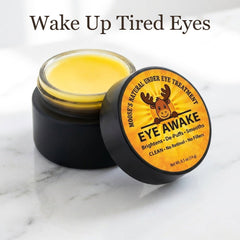
- Consider a gentle, retinol-free option like Eye Awake to support the skin around your eyes while you wait things out.
Key Takeaways
Milia under eyes are harmless keratin cysts that usually clear on their own, and gentle care beats aggressive removal every time.
| Point | Details |
|---|---|
| Never squeeze milia | Squeezing doesn’t work and risks scarring or infection on thin under-eye skin. |
| Watch and wait first | Many milia clear within weeks to months without any treatment at all. |
| Avoid heavy, occlusive creams | Thick formulas can trap keratin and contribute to milia forming under the eyes. |
| See a dermatologist if persistent | Extraction, peels, laser, or cryotherapy are options for lesions that won’t clear. |
| Support skin with gentle formulas | Moose’s Tallow’s Eye Awake offers a retinol-free, minimally diluted option for daily care. |
What Are Milia? How to Spot Them Under Your Eyes
Milia show up as tiny white or pale yellow bumps just under the skin’s surface. They feel firm, sit in a dome shape, and are usually quite small. Under the eyes, they cluster on the eyelids and the delicate skin just below the lash line, though they also show up on cheeks.
They’re easy to mix up with whiteheads. But milia don’t have the surrounding redness or the visible “head” that acne does, and they won’t respond to acne treatments. A dermatologist diagnoses milia just by looking, no biopsy needed in most cases. If a bump looks unusual, grows fast, or clusters oddly, that’s worth a second opinion rather than a guess.
What Causes Milia Around the Eyes?
Milia fall into two camps: primary and secondary. Primary milia form on their own, often for no clear reason, when dead skin cells and keratin get trapped instead of shedding normally. Secondary milia follow some kind of skin injury.
Common triggers and contributors include:
- Skin trauma, burns, or blistering in the eye area.
- Recovery after cosmetic procedures like dermabrasion or chemical peels.
- Heavy, oily eye creams that sit on the skin and trap debris.
- Chronic rubbing or tugging at thin under-eye skin.
- Long-term use of topical steroids on the face.
- Sun damage, which thickens skin and disrupts normal healing and shedding.
None of this means you did something wrong. Under-eye skin is thin, and it reacts more to product buildup and friction than skin anywhere else on your face.
Safe Home Care: What Helps and What to Avoid
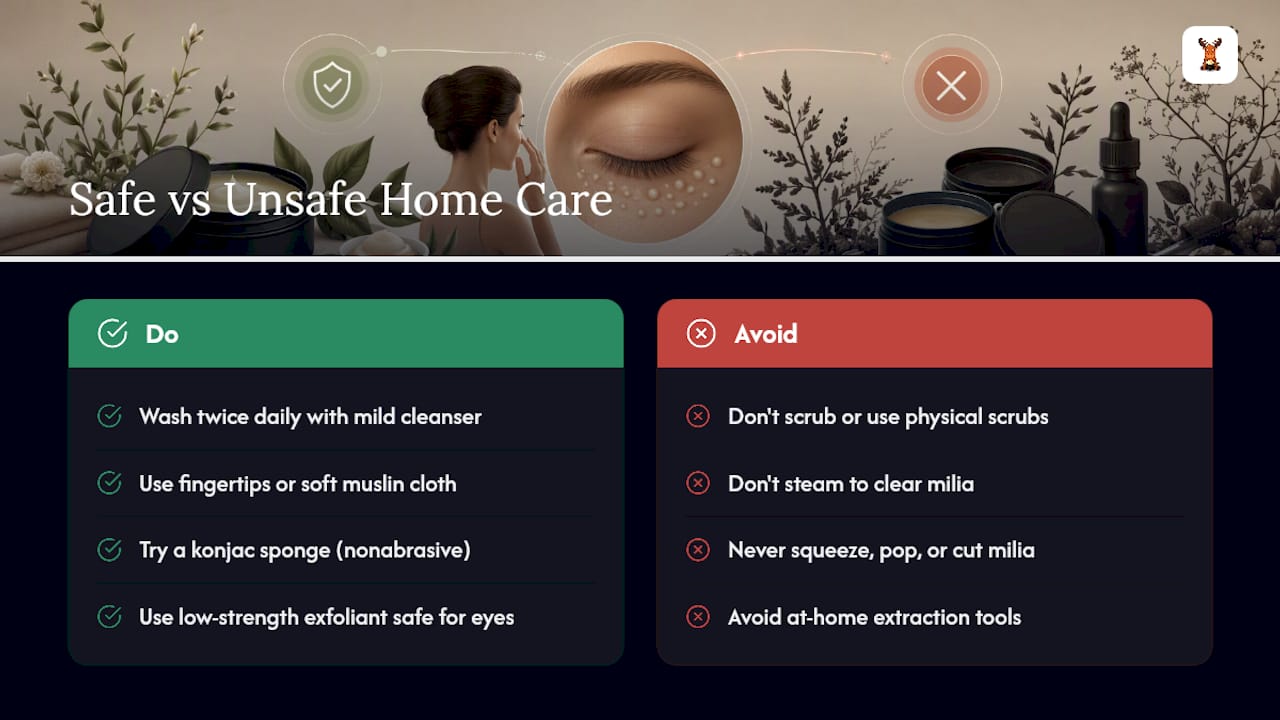
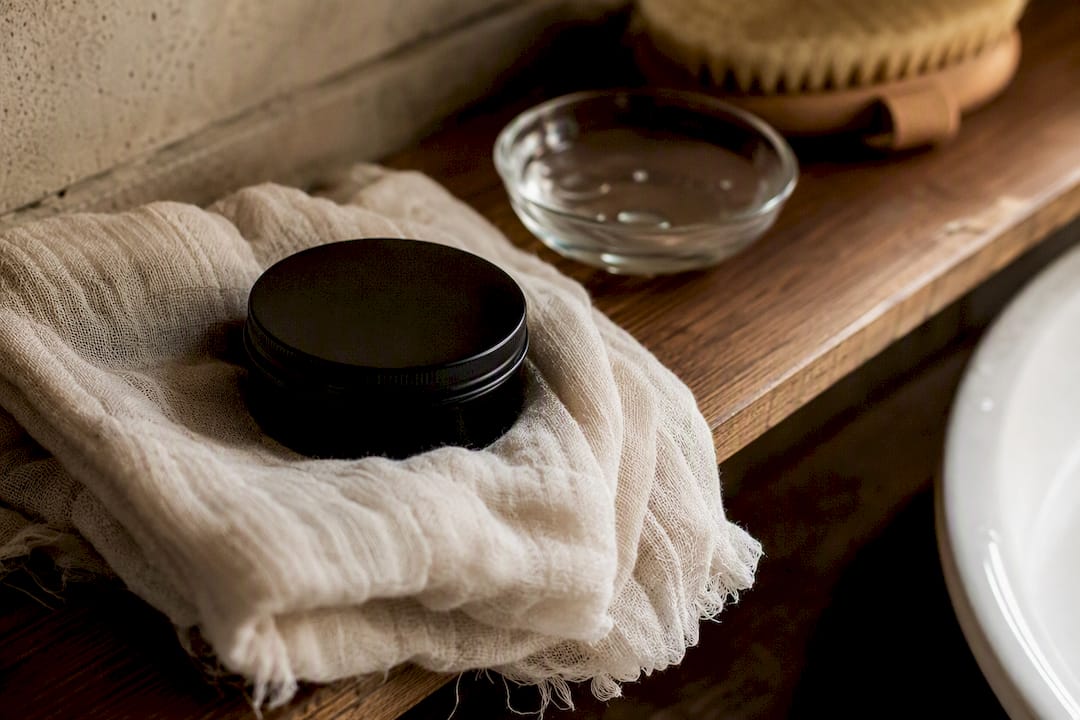
Gentle is the entire strategy here. Wash the eye area twice daily with a mild, non-stripping cleanser, using your fingertips or a soft muslin cloth. A konjac sponge works too, since it’s nonabrasive enough for skin this thin.
Skip harsh physical scrubs. Under-eye skin doesn’t have much room to absorb friction, and scrubbing rarely does much for keratin buildup anyway. Facial steaming has a similar story: it may soften skin slightly, but steaming alone won’t clear milia at home.
Mild chemical exfoliants (think low-strength lactic or glycolic acid) can help with cell turnover, but only where labeled safe for the eye area, and always followed by sunscreen during the day. Introduce anything new slowly.
Here’s the one rule that matters most: never squeeze, pop, or cut into milia yourself. Doing this at home risks scarring, infection, and irritation on skin that’s already fragile. Squeezing milia doesn’t work anyway since they don’t have a pore opening like a pimple does.
Topical retinoids can help clear multiple milia, but they need a doctor’s guidance. Our guide to gentle under-eye treatments breaks down what’s actually safe to try first.
Pro Tip: If you’re tempted to “just try” an at-home extraction tool, resist it. The skin under your eyes is thinner than anywhere else on your face, and one wrong move can leave a mark that lasts far longer than the milia would have.
Professional Removal Options for Persistent Milia
When milia won’t quit, or you just want them gone faster, a dermatologist has several tools. Extraction is the most direct: a sterile needle or tiny blade opens the cyst, and a comedone extractor lifts out the trapped keratin. It’s quick and precise in trained hands.
For widespread or recurring milia, other options include:
- Chemical peels to encourage gentle surface turnover.
- Laser ablation for stubborn or clustered lesions.
- Cryotherapy, which freezes the milia away.
Every one of these carries more risk near the eyes than elsewhere on the face. Bruising, temporary redness, and heightened sensitivity are all possible, which is exactly why this isn’t a job for a home kit or a well-meaning friend with tweezers. A qualified clinician knows how to work around the eye’s fine structures safely.
A dermatology visit for milia is usually brief. Expect a short exam, a quick history of your skincare products and any recent procedures, and a removal plan built around your skin and how many lesions you have.
Building a Prevention Routine for Under-Eye Skin
Preventing milia comes down to keeping the eye area clean, breathable, and free of buildup. A few habits go a long way:
- Cleanse gently, twice a day, and skip anything that leaves a heavy, occlusive film.
- Choose stable, lightweight carrier oils over thick, greasy formulas. Fractionated coconut oil resists oxidation and absorbs cleanly, which is why it works well in eye-area products.
- Patch-test any new product on your inner arm before it goes near your eyes, and introduce changes one at a time.
- Wear sunscreen daily, since sun damage contributes to secondary milia by disrupting normal skin healing.
- Exfoliate on a moderate schedule, not daily, so skin turnover stays steady without irritation.
Heavy creams built on thick vegetable oils can sit on delicate under-eye skin and trap the very debris that leads to milia. That’s a big part of why formula choice matters as much as the routine itself. Our dry under-eye skin guide walks through building a routine that supports skin without overloading it.
How Long Do Milia Under the Eyes Last?
Most milia clear up within a few weeks to a few months, no treatment required. Adult milia tend to linger longer than the milia babies get, sometimes for months. If yours stick around, multiply, or start bothering you, that’s your cue to see a dermatologist rather than waiting it out indefinitely. Sudden changes or symptoms like pain deserve a same-week appointment, not a wait-and-see approach.
Why We Built a Gentle Option for the Skin Around Your Eyes
I started Moose’s Tallow after flipping over a lotion bottle and counting 52 ingredients, with water listed first. That moment stuck with me, and it shaped everything we make now, including how we think about the eye area.
Our under-eye products are built on properly rendered, local beef suet tallow, and blended with fractionated coconut oil, beeswax, vitamin E (tocopherols), jojoba, castor oil, and egg yolk infused oil. Every one of those ingredients earns its place. Nothing is filler.
- No water, so nothing dilutes the formula down.
- Minimal dilution keeps the skin barrier supported instead of coated.
- Fractionated coconut oil resists oxidation and absorbs cleanly, unlike heavier oils.
- No olive, avocado, or shea butter. We build around tallow, on purpose.
If your under-eye skin is dry, sensitive, or recovering from irritation, a lightly formulated option like Eye Awake fits the “gentle first” approach dermatologists recommend for skin near the eyes.
Milia Guidance in Perspective
Most advice online treats milia like a problem to conquer fast, pushing scrubs, extraction tools, or aggressive retinol routines from day one. That’s backward. The research is clear that milia are benign, and the biggest risk isn’t the bump itself. It’s what people do trying to remove it themselves.
I think the conventional wisdom undersells patience. Watching and waiting isn’t a cop-out; it’s the medically supported first move for most cases. Where advice actually falls short is in what happens between diagnosis and dermatology. People fill that gap with harsh scrubs, steam sessions, or DIY needle attempts, none of which reliably work and all of which risk scarring thin under-eye skin.
What should come first is barrier support. Keep the skin calm, hydrated, and free of heavy, pore-clogging formulas while nature does most of the work. Save extraction and peels for a trained clinician if milia don’t resolve. That order of operations matters more than any single product you choose.
— Brian Smith
Get Gentle Under-Eye Support From Moose’s Tallow
If you’ve been eyeing a heavy retinol serum to “fix” milia fast, there’s a gentler route: skip the aggressive actives and support your skin instead. Moose’s Tallow makes that easier with water-free, minimally diluted formulas built on real rendered beef suet tallow rather than a long list of fillers.
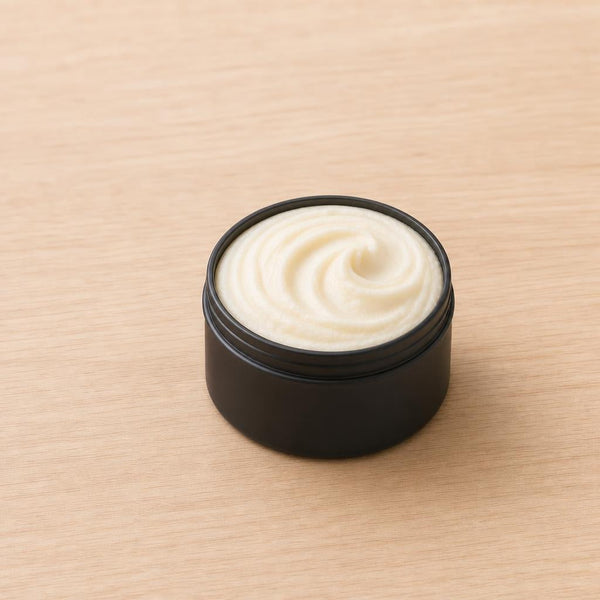
Eye Awake is our retinol-free option for the eye area, made for people who want their under-eye skin supported, not stripped or irritated. It skips the sun-sensitizing actives that require a doctor’s supervision, so it fits easily into a calm, patient routine while any milia clear on their own.
Ready to simplify your under-eye routine? Check out Eye Awake and see if it fits your skin.
Sources
- Milia - StatPearls - NCBI Bookshelf
- Milia (Milk Spots): Causes & Treatment - Cleveland Clinic
- Milia under eyes: Causes, diagnosis, and treatment - Medical News Today
- Milia: review article (PMC) - NCBI PMC
FAQ
How Do You Remove Milia Naturally?
There’s no reliable natural method to fully remove milia at home. Gentle cleansing and patience work best, since most milia clear on their own without any active treatment.
What Causes Milia Under the Eyes?
Milia form when keratin gets trapped under the skin, often triggered by heavy eye creams, skin trauma, or long-term steroid use. Sun damage and healing skin can also play a role.
Can Milia Be Squeezed Out?
No. Milia lack a pore opening like pimples do, so squeezing doesn’t remove them and can cause scarring or irritation instead.
Why Do Milia Suddenly Appear?
A sudden cluster of milia often follows a change in skincare products, sun exposure, or minor skin trauma. Switching to a heavy, occlusive cream or a new product without a patch test can trigger a flare.
Is There a Gentle Product Option for Under-Eye Skin?
Yes. Eye Awake from Moose’s Tallow is a retinol-free, water-free formula built for sensitive under-eye skin that wants support without aggressive actives.


0 comments