

Yes, you can moisturize during perioral dermatitis, but only with a minimal, bland, non-occlusive product, and only when your skin is tight or cracked. If it’s not, skip moisturizer entirely for a while. Most people see real improvement within 4 to 12 weeks of dropping the trigger product. The sections below walk through exact ingredient rules and how to bring products back safely.
TL;DR:
- Moisturize only with a simple, non-occlusive product when your skin feels tight or cracked; skip it entirely if the skin is not tight.
- Choose light, thin formulas with fewer than 15 ingredients, avoiding fragrances, essential oils, heavies like petrolatum, and strong actives.
- Reintroduce skincare products gradually over 4-week intervals, starting with cleanser, then moisturizer, sunscreen, and finally makeup, to identify triggers.
- Most perioral dermatitis cases improve within 4 to 12 weeks of removing the trigger product, but worsening redness, spreading, or pain warrant professional evaluation.
- Avoid heavy occlusive products like Aquaphor or thick shea butters, and never layer heavy products like sunscreens over moisturizer around the mouth during flare recovery.
What Makes a Moisturizer Safe for Perioral Dermatitis?
“Bland” means no fragrance, no essential oils, and no active ingredients like retinoids or acids. “Non-occlusive” means the product doesn’t form a heavy seal on skin. That seal is exactly the problem with a lot of standard moisturizers.
Perioral dermatitis often shows up after skin has been sealed under something too heavy for too long, whether that’s a topical steroid or a rich, occlusive cream. DermNet NZ notes that heavy occlusives like petrolatum, paraffin, and thick balms can keep the rash going instead of calming it. Clinicians generally point people toward bland emollients with short ingredient lists when moisturizer is truly needed.
Texture matters more than most people realize. A thin fluid, gel, or light lotion applied in two or three light passes beats one thick layer every time. Thick layers trap heat and moisture against skin that’s already inflamed. Thin layers let skin breathe while still calming tightness.
The carrier oil holding the formula together matters too. Some natural oils oxidize quickly once opened, and oxidized oil can irritate skin that’s already reactive. That’s one reason that fractionated coconut oil shows up in a lot of well-formulated lightweight balms. It resists oxidation and absorbs fast, which keeps a formula stable on the shelf and gentle on skin, according to DermNet NZ.
When you’re reading a label, here’s what to check:
- Count the ingredients. Fewer than 10 to 15 is a good sign.
- Scan for “fragrance” or “parfum” anywhere on the list.
- Look for essential oils by name (lavender, tea tree, citrus oils).
- Check where the main oil sits. If a heavy oil or petrolatum is near the top, it’s a bigger share of the formula.
- Skip anything marketed as “intensive,” “24 hour,” or “deep repair.” Those words usually mean heavier, more occlusive.
None of this means every ingredient is a threat. It means the formula’s whole approach, thin and simple, matters more than any single ingredient on its own.
Ingredients to Favor and Ingredients to Avoid
Some ingredients support a calmer face. Others tend to feed the cycle. Knowing the difference saves you from swapping one irritating product for another that just looks gentler on the label.
Favor these:
- Fractionated coconut oil. Stable, fast absorbing, low oxidation risk. It’s the carrier oil we lean on at Moose’s Tallow for exactly this reason.
- Beeswax in small amounts. Adds light structure without sealing skin the way petrolatum does.
- Vitamin E (tocopherols). Works as a natural stabilizer that helps keep a formula fresh.
- Tallow’s own fatty-acid profile. Beef suet tallow mirrors the fats your skin already makes, so well-rendered tallow tends to sit well on reactive skin.
Avoid these:
- Essential oils of any kind. Lavender, tea tree, citrus oils. All can irritate a compromised barrier.
- Shea butter and other thick vegetable butters. Heavy, occlusive, slow to absorb.
- Petrolatum in thick amounts. Useful for other things, but a known contributor to occlusion-driven flares.
- Fragrance, dyes, and strong actives. Retinoids, acids, and anything labeled “brightening” or “exfoliating.”
Pro Tip: “Natural” on a label means nothing on its own. Olive oil, avocado oil, and almond oil are all natural, and all can oxidize or sit heavy on inflamed skin. Judge an ingredient by how it behaves, not by whether it grew on a plant.
Grapeseed oil and other cold-pressed vegetable oils have a similar problem. They’re prone to going rancid faster than a fractionated oil, and rancid oil on broken skin is never a good combination.
How Should You Apply Moisturizer During a Flare?
Timing and amount matter as much as ingredients. Here’s a simple sequence to follow:
- Check your skin first. Only apply moisturizer if skin feels tight, dry, or cracked. If it doesn’t, leave it alone that day.
- Use a pea-sized amount for the whole face. More product doesn’t calm skin faster. It just adds more film for irritation to hide under.
- Stay just outside the vermilion border. That’s the line where lip meets skin. Rashes around the mouth are often worst right at that edge, so keep product a few millimeters clear of it.
- Pat, don’t rub. Light tapping with clean fingers spreads product without adding friction.
- Reapply thin layers rather than one thick coat. If skin still feels tight an hour later, add another light pass instead of piling on more the first time.
- Follow your provider’s instructions on prescribed topicals. If you’re using something a dermatologist prescribed, apply it as directed and avoid stacking a heavy moisturizer or sunscreen on top the same day.
The mistake most people make here is treating moisturizer like a fix for the whole flare. In practice, minimal reapplication of a light emollient works better than one heavy layer, and skipping simultaneous heavy layers of moisturizer, sunscreen, and makeup around the mouth tends to matter more than any single product choice. If you need sun protection, choose the lightest mineral option you have and apply it as its own thin step, not stacked on top of a moisturizer.
How Do You Reintroduce Products After a Flare?
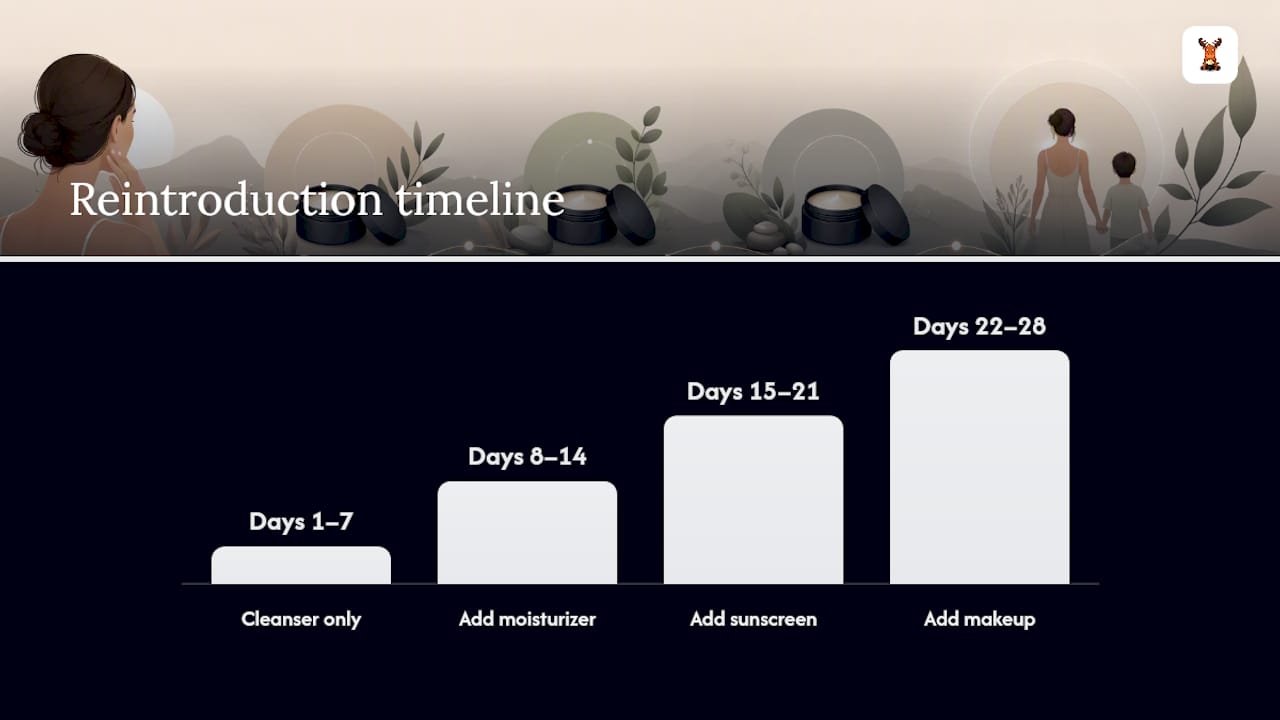
Once your skin has calmed down, resist the urge to bring your full routine back at once. A brief pause helps isolate exactly what triggered the flare in the first place, and rushing the comeback tends to trigger a repeat.
The most practical approach is a short reintroduction ladder, adding one product every 5 to 7 days:
- Days 1 to 7: cleanser only. A gentle, fragrance-free cleanser and nothing else. Watch for any redness or tightness.
- Days 8 to 14: add a bland moisturizer. Introduce your light, non-occlusive moisturizer if skin still feels dry. Watch the same week-long window.
- Days 15 to 21: add sunscreen. Choose a mineral formula and apply it as its own layer, separate from moisturizer where possible.
- Days 22 to 28: add makeup, if you wear it. Bring back one product at a time rather than your full routine at once.
This pace matches what many clinicians recommend as a practical way to spot triggers without dragging out a routine-free stretch longer than necessary. If a new product brings back redness, bumps, or tightness within that window, stop it immediately and give skin another few days before trying something else. Write down what you added and when. It sounds tedious, but it’s the fastest way to find your actual trigger instead of guessing at it for months.
When Should You See a Clinician for Perioral Dermatitis?
Most cases improve within 4 to 12 weeks of removing the trigger product. If that window passes with no real change, it’s time to get a professional opinion instead of cycling through more products on your own.
Watch for these signs that moisturizer and patience aren’t enough on their own:
- The rash is spreading past the mouth toward the nose or eyes.
- Bumps are becoming painful, not just itchy or tight.
- You’re seeing pus-filled spots instead of small red bumps.
- Any fever or feeling unwell alongside the skin symptoms.
Clinicians evaluating stubborn cases usually start by asking about topical steroid use, fluoride toothpaste, and heavy face creams, since those three show up again and again as culprits. When self-care isn’t cutting it, treatment options include topical antibiotics like metronidazole or erythromycin, and sometimes a short course of oral antibiotics, according to Merck Manuals. One thing clinicians agree on across the board: stopping topical steroids stays a core part of getting this under control, even though stopping them can cause a short rebound flare first.
Why I Built Moose’s Tallow Around One Rule: Fewer Ingredients, More Purpose
I started Moose’s Tallow after a health scare made me actually read my own lotion label. It listed 52 ingredients. The first one was water. That bothered me more than it probably should have, but it sent me down a path toward something simpler.
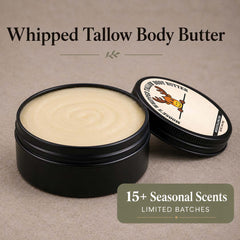
Skin doesn’t need a long list of ingredients. It needs the right few. Beef suet tallow has a fatty-acid profile close to what your own skin already produces, which is part of why it tends to absorb cleanly instead of sitting on top like a film. We render it locally, in small batches, and we build every formula water-free.
That approach happens to line up with what this article has been walking through:
- Short ingredient lists reduce the number of things that can go wrong on reactive skin.
- Fractionated coconut oil, our preferred carrier, resists oxidation and absorbs fast instead of sitting heavy.
- We skip heavy vegetable oils and butters like shea, olive, and avocado, the same ingredients this guide flags as harder for compromised skin to handle.
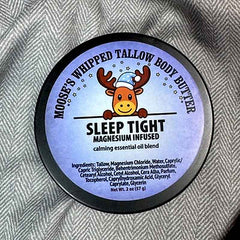
- Every ingredient we use, including beeswax, vitamin E, jojoba, castor, and egg yolk infused oil earns its place on purpose.
Ingredient transparency isn’t a marketing line for us. It’s the whole reason the brand exists.
Two Simple Products Worth Knowing About If You’re Rebuilding Your Routine
If you’re at the stage of your reintroduction ladder where lip care or sun protection comes back into the picture, two products in our lineup are worth a look.
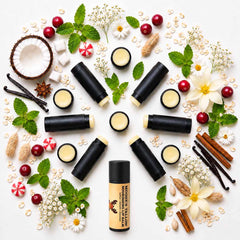
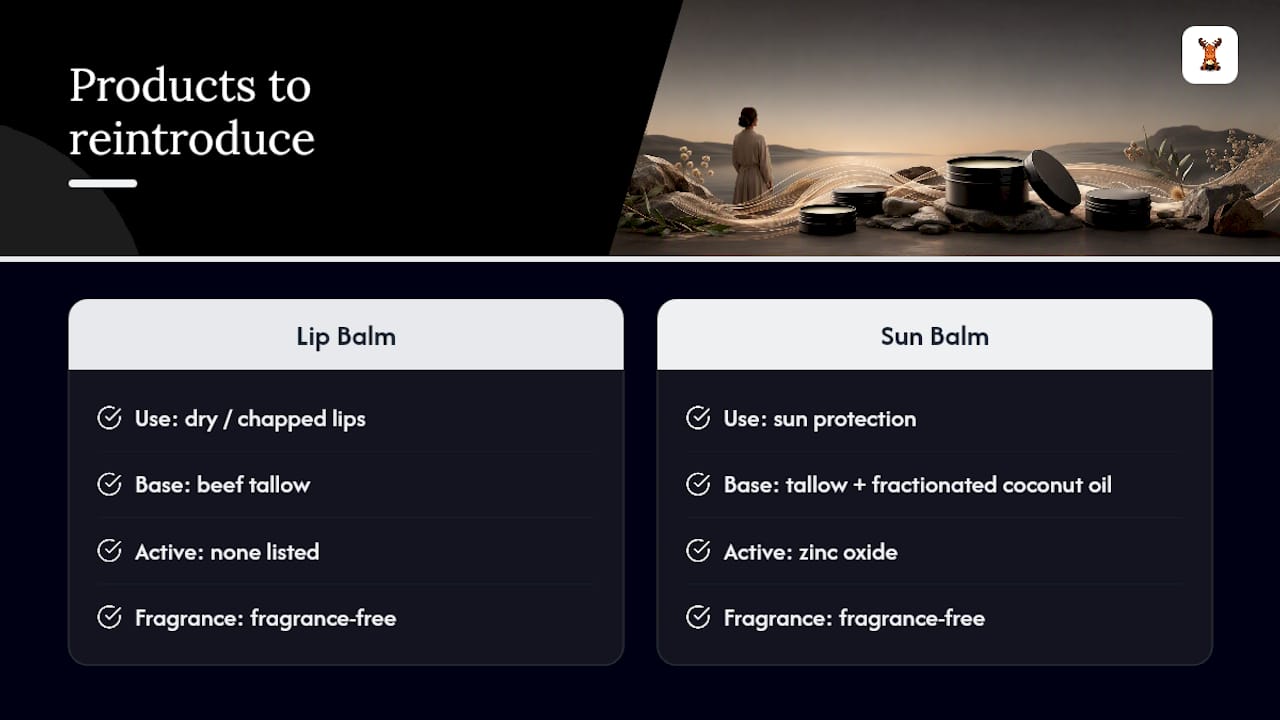
Our Beef Tallow Lip Balm for Dry & Chapped Lips is built water-free, with tallow as the base and a short list of supporting ingredients. Lips near the mouth are often part of a flare, so a fragrance-free, minimally diluted balm is a reasonable pick when you’re ready to test lip care again.
For sun protection, our Tallow & Zinc Outdoor Sun Balm pairs zinc oxide with tallow and fractionated coconut oil instead of a long list of chemical filters. Mineral sunscreens are already the lighter, more skin-friendly choice for reactive skin, and keeping the formula shortcuts down on ingredients that could complicate a flare-up.
Neither product treats or cures perioral dermatitis, and neither replaces a clinician’s advice. What they offer is a water-free, short-ingredient option to test during the sunscreen and lip-care steps of your reintroduction ladder, the same one-product-at-a-time approach covered above. Patch test first, wait your five to seven days, and watch how skin responds before folding either one into daily use. If you want to see the full lineup while you’re at it, our complete collection is all built on the same water-free, tallow-first approach.
A Short Daily Checklist Worth Keeping on Your Mirror
Perioral dermatitis recovery isn’t complicated, but it does ask for restraint. Here’s what actually moves the needle:
Pause heavy products first. That single step does more work than any new purchase. Use a bland, non-occlusive moisturizer only if skin is genuinely tight or cracked, not out of habit. Bring products back one at a time, waiting five to seven days between each. If a couple of months pass with no real change, see a clinician instead of trying yet another product.
My one habit worth stealing: when I pick up any skincare product, I flip it over before I flip it right side up. If the ingredient list runs longer than my forearm, I put it back. A short list isn’t a guarantee of anything, but it’s the fastest filter I know for spotting a formula that’s trying to do too much.
— Brian Smith
Sources
- Perioral dermatitis — Cleveland Clinic
- Periorificial dermatitis — DermNet NZ
- Perioral dermatitis: Symptoms, treatment, and prevention — Harvard Health
- Perioral dermatitis — Merck Manuals
FAQ
Should I moisturize my perioral dermatitis or let it dry out?
Moisturize only if skin feels tight or cracked, using a bland, non-occlusive product. If skin isn’t dry, skip moisturizer and let it rest.
Can I put Aquaphor on perioral dermatitis?
Aquaphor is heavily petrolatum based, and thick occlusives like it are commonly linked to worsening or prolonging the rash. A thin, non-occlusive alternative is a safer choice.
What is the best cream to treat perioral dermatitis?
No moisturizer treats the condition itself. Clinicians instead recommend a minimal therapy approach: stop irritating products, use a gentle cleanser, and add a bland moisturizer only if needed.
What should you not put on perioral dermatitis?
Avoid topical steroids, fragrance, essential oils, thick occlusive butters, and heavy sunscreens layered on top of moisturizer. Fluoride toothpaste is also a common overlooked trigger worth checking.
0 comments