

Most deodorants and antiperspirants are considered safe during pregnancy, including ones with aluminum. Major medical bodies have not found a link between topical aluminum and fetal harm, so the PMC review treats it as low risk. If your skin feels more sensitive or scents make you nauseous, switch to a fragrance-free, low-irritant formula. Patch test anything new, and ask your OB about specific concerns.
TL;DR:
- Most deodorants and antiperspirants, including those with aluminum, are considered safe during pregnancy, with no proven link to fetal harm.
- Gentle ingredients like magnesium hydroxide and zinc ricinoleate effectively control odor without irritating sensitive skin, unlike long ingredient lists or heavy fragrances.
- Fragrance, parabens, triclosan, baking soda, and concentrated essential oils are best avoided or patch tested, as they can cause irritation or nausea.
- Pregnancy-related hormonal changes increase underarm odor and skin sensitivity, making mild, fragrance-free, and baking-soda-free formulas preferable.
- Choosing between deodorant and antiperspirant depends on personal odor or sweat control preferences, with most safe options excluding aluminum, fragrances, and common irritants.
Which Ingredients Make a Pregnancy Safe Deodorant?
Reading a deodorant label during pregnancy comes down to a short list of ingredients that do their job without a fight. You want odor control that does not punish sensitive skin, and you want a formula that supports the skin barrier instead of stripping it—just like the best washable breast pads for sensitive skin that prioritize gentle, pregnancy-safe materials.
Magnesium hydroxide and zinc ricinoleate are two of the gentlest odor fighters on the market. Magnesium hydroxide neutralizes odor-causing bacteria without the high pH that irritates skin. Zinc ricinoleate binds odor molecules directly, so it works quietly instead of masking smell with fragrance.
Potassium alum, often called a mineral crystal, is another option worth knowing. It is a naturally occurring mineral salt that forms a thin layer on the skin to slow bacterial growth, and it appeals to shoppers who want the shortest possible ingredient list.
Odor control is only half the formula. The other half is what carries those active ingredients and how it feels on your skin all day. This is where a lot of “natural” deodorants quietly fall short, either drying skin out or leaving a greasy film.
- Beef suet tallow has a fatty-acid makeup close to your own skin oils, so it absorbs cleanly and helps support the skin barrier instead of sitting on top of it.
- Fractionated coconut oil is a stable, easily absorbed carrier oil that resists oxidation, which matters for shelf life and for how consistent a balm feels from the first use to the last.
- Beeswax gives a balm its structure and helps lock in moisture without feeling heavy.
- Vitamin E (tocopherols) helps protect the formula itself from breaking down over time.
- Niacinamide shows up in some formulas to calm skin and reduce the odds of redness from daily application.
Pro Tip: Skip formulas that lean on fragrance to “fix” odor. A short, purposeful ingredient list almost always beats a long one when your skin is already sensitive.
Aluminum-based antiperspirants work differently. They physically plug sweat ducts to reduce wetness, not just odor. Some pregnant women choose to skip them anyway, not because of proven risk, but because they would rather avoid anything that changes sweat function while their body is already adjusting. That is a personal call, not a safety mandate.
What Should You Avoid in a Pregnancy Deodorant?
Fragrance is the biggest blind spot on most labels. The word “fragrance” can legally hide dozens of unlisted chemicals, including phthalates. Public health researchers at Harvard T.H. Chan School flag phthalates as an exposure many pregnant people choose to limit because of endocrine concerns, even though a direct causal link to pregnancy harm has not been proven. The easiest fix is choosing fragrance-free products or ones with a full ingredient list you can actually read.
A few other ingredients deserve a second look before they go in your cart:
- Parabens and triclosan are preservatives some shoppers avoid during pregnancy out of caution, even without conclusive human data tying them to harm.
- Baking soda neutralizes odor well, but its alkalinity can irritate underarm skin that is already sensitive, and pregnancy skin often is. Baking-soda-free formulas exist for this exact reason.
- Concentrated essential oils like cinnamon, clove, rosemary, and clary sage can irritate skin or trigger nausea. Strength and dose matter here, so “essential oil” on a label is not automatically a red flag, but a heavy dose of the wrong oil can be.
Pro Tip: Don’t assume “natural” means gentle. Plenty of natural deodorants still use baking soda or strong essential oils, which can irritate skin just as much as synthetic ingredients.
If a deodorant burns, stings, or leaves a rash within a day or two, stop using it. A baking-soda-free option is often the simplest swap for underarms that react to alkaline formulas.
Why Does Pregnancy Change Underarm Odor and Sensitivity?
Hormones are the reason your usual deodorant might stop working the way it used to. Rising hormone levels during pregnancy change how much you sweat and how that sweat smells once it meets skin bacteria, according to physiology research on pregnancy. That is not something you are imagining. Your body chemistry is genuinely different for the next several months.
Skin sensitivity shifts too. Underarm skin gets more friction from tighter clothing, more moisture from increased sweat, and more reactivity in general, so ingredients that never bothered you before suddenly can. A fragrance you loved before pregnancy might now trigger nausea or a mild rash.
This combination explains a common complaint: deodorants that used to work fine now feel harsh or stop controlling odor at all. Alkaline ingredients like baking soda can feel worse against skin that is already more reactive. Fragrance can feel stronger, sometimes overwhelmingly so, when nausea is part of your daily routine. Healthline’s guidance on pregnancy body odor points to simple steps first: breathable fabrics, gentle cleansers, and non-irritating topical products, before reaching for anything stronger.
None of this means your body is doing something wrong. It means the product that made sense in month two might not make sense in month six.
How Do You Choose the Right Deodorant for Pregnancy?
Start with one question: are you trying to control odor, or control sweat? Deodorants target bacteria and smell. Antiperspirants, usually aluminum-based, physically reduce how much you sweat. Both are considered safe by major health bodies, so this is a preference decision, not a safety one.
- Decide odor control or sweat control. If sweat is manageable but smell bothers you, a deodorant is enough. If sweating is heavy and disruptive, you may want antiperspirant strength.
- Check the label for fragrance, baking soda, and emollients. Fragrance-free and baking-soda-free formulas cut two of the most common irritation triggers at once.
- Match the format to your skin. Balms suit sensitive, dry skin because they layer in emollients like tallow and fractionated coconut oil. Sticks and sprays suit those who want a quicker application with less residue.
- Patch test before daily use. Apply a small amount to your inner forearm or behind your ear and wait 48 hours, watching for redness, itching, or discomfort.
Pro Tip: If you deal with heavy sweating that disrupts sleep or daily life, a higher-strength aluminum chloride product applied at night can help. Talk to your OB before starting one, since some are prescription-strength.
For most readers, the choice narrows fast once fragrance and baking soda are off the table. What is left is usually a shorter list of genuinely gentle formulas.
What Are the Best Pregnancy-Friendly Deodorant Options?
Once you know what you are avoiding, picking a format gets simple. Sensitive, easily irritated skin usually does best with a balm, since balms carry emollients that cushion the active ingredients instead of applying them raw. Minimal-ingredient shoppers often gravitate toward mineral-based options. Odor-focused shoppers do well with magnesium-based formulas.
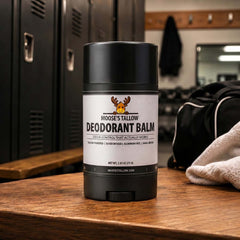
Moose’s Tallow builds its Aluminum-Free Natural Deodorant — Tallow Balm on rendered tallow, blended with fractionated coconut oil for stability and easy glide, beeswax for structure, and vitamin E to help protect the formula. There is no baking soda and no added fragrance load fighting your skin. It suits anyone whose underarms react to alkaline or heavily scented formulas, which describes a lot of pregnant skin.
For readers who want a scent without the harsh chemistry, Forest Falls Deodorant uses the same tallow-based foundation with a naturally derived scent profile, so you are not choosing between “safe” and “smells nice.”
A few things to keep in mind before you buy:
- Both formulas skip aluminum entirely, so they fall into the deodorant category, not antiperspirant.
- Tallow and fractionated coconut oil are chosen for barrier support, not as filler ingredients.
- Neither formula uses shea butter, avocado oil, or other vegetable oils. Fractionated coconut oil does the carrier work instead, because it resists oxidation better and stays consistent on the shelf.
Check the full deodorant collection for complete ingredient lists, and patch test before your first full application, especially in pregnancy when skin sensitivity can change week to week.
A Founder’s Note on Simple, Honest Deodorant
I started Moose’s Tallow after a health scare made me actually read my own lotion label. Fifty two ingredients, and water was first. That bothered me more than it should have.
I build every formula around beef suet tallow because its fatty-acid profile sits close to what your skin already makes. Fractionated coconut oil backs it up as a stable carrier that will not go rancid on your shelf. Nothing goes in as filler.
Every batch is handmade in small runs in Lebanon, PA. We back every order with a 30-day guarantee, because transparency should come with a safety net. If you are pregnant and trying something new, patch test first. Your skin will tell you what it needs.
— Brian Smith
Ready to Try a Simpler Deodorant?
Moose’s Tallow skips the long ingredient lists that make pregnancy skin flare up. There is no baking soda, no hidden fragrance chemicals, and no aluminum, just tallow, fractionated coconut oil, beeswax, and vitamin E doing real work. If your skin leans sensitive, start with the Aluminum-Free Natural Deodorant — Tallow Balm for its calm, unscented formula. If you want a light natural scent instead, Forest Falls Deodorant uses the same base. Patch test on your forearm for 48 hours first. Then browse the natural deodorant collection and pick the format that fits your skin.
This article is general information, not a substitute for advice from a qualified doctor. Consult a qualified healthcare professional about your own circumstances before acting on anything here.
Sources
FAQ
Is Dove 0% Aluminum Safe to Use During Pregnancy?
Aluminum-free formulas like this are generally considered safe in pregnancy. If it contains fragrance and your skin has become more reactive, watch for irritation and patch test first.
How Do You Get Rid of Smelly Armpits While Pregnant?
Shower regularly, wear breathable fabrics, and use a fragrance-free, non-irritating deodorant such as a tallow-based balm. Odor changes in pregnancy are hormonal, so gentle daily habits usually help more than a stronger product.
Is It Normal for Body Odor to Get Worse During Pregnancy?
Yes. Hormonal shifts change both sweat production and how that sweat smells, which is a documented part of pregnancy physiology, not a sign anything is wrong.
Is Lume Deodorant Safe to Use During Pregnancy?
There is no evidence that Lume’s active ingredients are unsafe in pregnancy, but check the label for fragrance and mandelic acid, since acid-based odor control can irritate sensitive pregnancy skin for some users.
Do I Need to Avoid Aluminum Antiperspirants While Pregnant?
No. Major medical organizations have not found evidence that topical aluminum causes fetal harm, so avoiding it is a personal preference, not a medical requirement.
0 comments