

Tallow works well for very dry, barrier-compromised skin that isn’t prone to breakouts, but it’s a poor match for oily or acne-prone skin. The fix is simple: patch-test first, start on the body, lips, or hands rather than the face, and choose a properly rendered, cosmetic-grade product. Tallow is an occlusive that seals in moisture. It’s not a treatment for eczema or any skin condition.
TL;DR:
- Tallow’s fatty-acid profile resembles human sebum, which helps it reduce water loss and support skin recovery, especially on thick, low-oil zones like lips and elbows.
- On oily or acne-prone facial skin, tallow’s moderate comedogenicity increases the risk of clogged pores and breakouts, requiring cautious patch testing before use.
- Proper rendering and minimal, fragrance-free ingredients are essential for safe, effective tallow skincare products that prevent rancidity and irritation.
- Starting with patch tests on inner forearm, then small body patches before facial application, minimizes the risk of reactions such as irritation, clogged pores, or fungal acne.
- Tallow is not a treatment for skin conditions like eczema but works as a supportive, moisture-sealing moisturizer for very dry, barrier-compromised skin.
How Tallow Works for Dry and Sensitive Skin
Tallow is an occlusive and an emollient at the same time. That’s rare. Most moisturizers pick one lane. An occlusive sits on top of skin and blocks moisture from escaping. An emollient fills in the rough gaps between skin cells to make the surface feel smoother. Rendered beef suet tallow does both, and the reason comes down to its fat structure.
Tallow’s fatty-acid mix, mainly oleic, palmitic, and stearic acids, resembles parts of human sebum. That overlap is why tallow can feel less “foreign” on skin than a lot of plant oils, and why it often absorbs without the greasy film you’d expect from a heavy balm. Your skin already knows what to do with those fats.
Here’s what that means in practice for dry or sensitive skin:
- Reduces water loss. A layer of tallow slows transepidermal water loss (TEWL), the process where moisture evaporates off bare skin. Less TEWL means skin stays hydrated longer between applications.
- Fills in rough patches. The fat structure smooths flaky or cracked areas, which is why tallow shows up so often on elbows, knees, and heels.
- Supports skin recovery after irritation. A compromised barrier, from cold weather, over-washing, or a mild reaction, loses moisture fast. An occlusive layer gives it a chance to recover on its own.
- Works well on thin, tough-skin zones. Lips and hands lose moisture quickly and benefit from a heavier occlusive than a face lotion.
A 2024 scoping review on topical tallow backs up the compositional logic. Its fatty-acid profile is consistent with barrier support, but the review is blunt about the evidence gap. Existing research is mechanistic, meaning it explains why tallow should work, without large human trials proving how well it actually does. That’s a meaningfully different claim than “clinically proven,” and it’s worth knowing before you buy.
Pro Tip: If your skin feels tight and flaky within an hour of moisturizing, you likely need more occlusion, not more hydration. Tallow addresses that gap better than a water-based lotion.
None of this makes tallow a treatment. It’s a cosmetic moisturizer, full stop. It won’t repair a damaged barrier by itself, and it won’t resolve an underlying skin condition. What it does well is hold moisture in and soften rough texture, which is exactly what dry, sensitive skin usually needs most: fewer irritating ingredients and more support for what the skin is already trying to do.
Where tallow tends to shine is on body zones with thick, tough skin and low oil production, think lips, hands, elbows, heels. These spots rarely have the acne-prone concerns that make tallow risky on the face, and they benefit the most from a heavy occlusive. If you’re new to tallow, that’s where to start.
Risks and Who Should Avoid Tallow
Tallow’s biggest risk on the face is comedogenicity, the tendency to clog pores. It’s rated as moderately comedogenic, which sits in a middle zone: not as risky as coconut oil, but heavier than a lot of lightweight facial oils. On the body, that risk rarely matters. On oily or acne-prone facial skin, it matters quite a bit.
If your T-zone gets shiny by midday or you break out easily along the jaw and forehead, be extra cautious applying tallow there. A thick occlusive layer on skin that already overproduces oil is a setup for clogged pores and new breakouts.
Fungal acne is a separate concern, and it gets confused with regular acne constantly. Fungal acne (technically pityrosporum folliculitis) is caused by yeast overgrowth, not bacteria, and it thrives on certain fats. Watch for:
- Small, uniform bumps that don’t respond to normal acne treatment.
- Itchiness alongside the bumps, which regular acne rarely causes.
- Flare-ups concentrated on the chest, back, or hairline instead of scattered across the face.
If that pattern sounds familiar, stop using any oil-heavy product, tallow included, and check with a dermatologist before restarting.
Rancidity is a quieter risk that gets overlooked. Tallow that’s poorly rendered or stored too long can oxidize, and oxidized fat can irritate skin instead of soothing it. The same scoping review flags rendering and storage quality as a real variable, not a minor detail. That’s part of why sourcing matters as much as the ingredient itself.
Allergy is rare but not impossible. A true beef allergy can trigger a reaction to tallow, and anyone with a known red-meat allergy should patch-test with extra care or skip it altogether.
Pro Tip: Redness that shows up within minutes points to irritation. Bumps that build over several days point to clogged pores or fungal acne. Knowing the difference tells you whether to keep going carefully or stop entirely.
Stop using tallow and check with a doctor if you notice spreading redness, swelling, hives, or bumps that get worse instead of better after a week. Dermatologists are on record urging real caution here: tallow can help very dry skin hold onto moisture, but it’s not the right call for skin that’s already oily or breakout-prone, and Scripps Health’s dermatology guidance says as much directly.
How to Choose Safe Tallow Products
Not all tallow is equal, and the gap between a well-made product and a sloppy one is bigger than most people assume. Rendering quality, dilution, and added ingredients decide whether a product supports your skin barrier or works against it.
Run through this checklist before you buy anything:
- Confirm it’s properly rendered. Cosmetic-grade tallow goes through a slow, controlled rendering process that removes impurities. A cloudy, strong-smelling product usually means shortcuts were taken.
- Check the ingredient count. A short list is a good sign. Long lists usually mean fillers, and fillers dilute the fats that actually help your skin.
- Look for fragrance-free. Scripps Health’s guidance specifically calls out added fragrance as an avoidable irritation risk for sensitive skin. Skip it.
- Favor small-batch and grass-fed sourcing. These aren’t dealbreakers on their own, but they usually track with better quality control and more careful rendering.
- Check what carrier oil is used, if any. This one matters more than people realize.
Tallow on its own can feel heavy for some skin types, so a lot of brands blend it with a lighter carrier oil to improve texture and spreadability. Here’s where the choice of oil genuinely changes the product.
Fractionated coconut oil is the stronger pick for this job. It’s stable, resists oxidation far better than most plant oils, absorbs cleanly, and holds up well on the shelf. Compare that to high-PUFA vegetable oils like grapeseed, olive, or avocado. They’re more prone to going rancid over time, and rancid oil is one of the more common causes of unexpected skin irritation in natural skincare. A blend of tallow and fractionated coconut oil keeps both the stability and the barrier-supportive fat profile intact.
Ingredient phrases worth avoiding entirely:
- Added essential oils. Nice smell, real irritation risk, especially on already-sensitive skin.
- High-PUFA vegetable oils as fillers. Oils like grapeseed, olive, avocado, almond, or shea butter oxidize faster and can undercut the stability of the whole product.
- Vague sourcing language. If a label won’t say where the tallow came from or how it was rendered, that’s a signal to look elsewhere.
- Long synthetic preservative lists. A water-free formula generally needs fewer preservatives in the first place, so a long list is often a sign the base formula isn’t water-free to begin with.
This tallow product checklist walks through the same criteria in more depth if you want a deeper read before your next purchase.
How to Use Tallow Safely (Step by Step)
Skipping the patch test is the single most common mistake with any new skincare ingredient, tallow included. Here’s a routine that catches problems before they show up on your face.
- Patch-test on your inner forearm first. Apply a small amount, about the size of a grain of rice, to a clean patch of skin on your inner arm.
- Wait 48 hours before judging the result. Some reactions show up in minutes; others take a day or two to build.
- Check for redness, itching, or small bumps. No reaction after 48 hours means you’re likely clear to try it elsewhere.
- Move to a body test zone next. Try an elbow or heel for another few days before bringing it anywhere near your face.
- Introduce facial use slowly, if at all. Start with a tiny amount on one cheek, not the whole face, and only if you’re not prone to acne or oiliness.
On amount: less is more, especially early on. A pea-sized amount covers the face. Body patches like elbows or hands can handle more, roughly a dime-sized amount per application, since the skin there is thicker and less reactive.
Frequency matters too. Once daily, usually at night, is plenty for most dry-skin use-cases. Twice daily can work for severely cracked hands or heels, but daily facial use should stay conservative until you know how your skin responds over a couple of weeks.
Layering changes how tallow performs. Applying it directly to bare, dry skin works, but applying it over slightly damp skin, or after a lightweight humectant like a hyaluronic serum, traps more moisture underneath. Tallow’s job is to seal that moisture in, so give it something to seal.
Pro Tip: Apply tallow within a few minutes of getting out of the shower, while skin is still slightly damp. You’ll lock in far more moisture than applying it to fully dry skin later in the day.
Storage is its own safety step. Keep tallow products in a cool, dry spot away from direct sunlight. Heat speeds up oxidation, and oxidized fat can irritate skin instead of helping it. Watch for a sour or “off” smell, a change in color, or a grainy texture. Any of those mean it’s time to toss the jar, even if it’s not empty. This tallow application guide covers the same routine with extra detail on timing and amounts if you want a longer walkthrough.
Practical Routine Examples for Dry or Sensitive Skin
Real routines beat abstract advice. Here are three that match common use-cases without overcomplicating things.
Routine A: body-only heavy support. This is the lowest-risk starting point for anyone new to tallow.
- Shower or bathe as usual, then pat skin mostly dry.
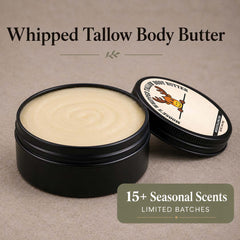
- Apply a dime-sized amount of whipped tallow body butter to elbows, knees, and hands while skin is still slightly damp.
- Repeat nightly for two weeks before judging results.
Routine B: cautious facial use. Only attempt this after a clean patch test and only if you’re not prone to acne.
- Apply a lightweight humectant serum first and let it sit for a minute.
- Dab a pea-sized amount of tallow onto dry cheek areas only, skipping the T-zone entirely if you run oily there.
- Watch for two weeks before deciding whether to expand use.
Routine C: lips and hands intensive care. This is where tallow earns its reputation, on tough, low-oil-production skin that rarely reacts badly.
- Keep a tallow lip balm in your pocket for reapplication throughout the day, especially in cold or windy weather.
- Use a tallow hand cream after every hand wash if your hands crack or split in dry months.
- Layer a thicker balm at night under cotton gloves for a deeper overnight repair session on rough, cracked hands.
Each routine follows the same underlying logic: start where the risk is lowest, expand only if your skin tolerates it, and never rush toward the face.
Why Moose’s Tallow Keeps Formulas Simple and Water-Free
I started this brand after flipping over a lotion bottle and counting 52 ingredients. Water was listed first. That struck me as backwards for a product meant to help skin, not dilute it.
Skin doesn’t need a long ingredient list. It needs the right one. That’s why our formulas skip water entirely and lean on beef suet tallow, fractionated coconut oil, beeswax, vitamin E (tocopherols), jojoba, castor, and egg yolk infused oil, nothing added just to bulk up a label.
Water-free formulas hold up better on the shelf and stay more concentrated in the fats that actually support your skin barrier. We render locally, keep batches small, and choose fractionated coconut oil as our carrier because it resists oxidation far better than plant oils like olive or grapeseed ever will.
Every order carries a 30-day guarantee, because if a formula this simple doesn’t work for your skin, you shouldn’t have to keep it.
— Brian Smith
Try Tallow Where It Works Best First
Moose’s Tallow builds every formula around properly rendered beef suet tallow with minimal dilution, which matters most on exactly the zones this guide flags as lowest-risk: lips, hands, and body patches. If your skin is dry, tight, or flaky in those spots, three products match those use-cases directly.
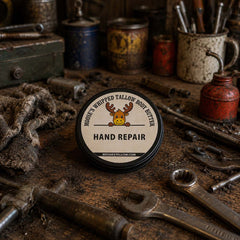
The Beef Tallow Lip Balm for Dry & Chapped Lips is built for thin, tough lip skin that loses moisture fast, especially in cold or windy weather. For patchy dry skin across elbows, knees, or shins, the Whipped Tallow Body Butter delivers the same barrier-supportive fats in a texture made for broader coverage. And if cracked, split hands are the real problem, the Beef Tallow Hand Cream for Dry, Cracked Hands is formulated specifically for that repeated washing and drying cycle.
Every product is handmade in small batches, water-free, and built on ingredient transparency instead of a long filler list. Ordering is simple: pick the product that matches your driest spot, patch-test on your forearm first, and give it two weeks on that one area before deciding if it’s a fit. Every order comes with a 30-day guarantee, so trying a small size carries little risk. Start with one product, not your whole routine, and let your own skin tell you what comes next.
Sources
The research on tallow for skin is honest about its own limits, and that’s worth respecting rather than glossing over. A 2024 scoping review lays out the compositional case for tallow supporting barrier function, its fatty-acid profile lines up with known barrier-supportive fats, while flagging a real shortage of controlled human trials. The evidence so far is mechanistic and small-scale, not the kind of large randomized trial that would let anyone call tallow “clinically proven.”
That gap doesn’t mean tallow doesn’t work. It means the confidence level should match the evidence: reasonable for certain dry-skin uses, not a substitute for dermatologic treatment of eczema, psoriasis, or other diagnosed skin conditions.
Dermatology-facing sources are consistent on caution. Scripps Health frames tallow as a heavy, effective occlusive for very dry skin, paired with a clear warning for acne-prone or oily skin types. Consumer health reporting lands in the same place: tallow carries hydrating lipids worth noting, but the comedogenic risk is real enough that patch testing isn’t optional, it’s the recommended first step.
Three practical takeaways sum up where the science actually stands:
- Beef Tallow in Skin Care: Safety, Benefits and Risks — Scripps Health
- Scoping review on topical tallow — PMC
- Beef Tallow in Skincare: Fatty Acid Profile, Plant-Oil Comparison, and Five Myths — WhollyKaw
FAQ
Is Tallow Good for Sensitive Skin?
Tallow can help sensitive, very dry skin by sealing in moisture and softening rough patches, but it’s not universally safe for every sensitive-skin type. Anyone prone to acne, oiliness, or fungal acne should patch-test carefully and start on the body, not the face.
Why Don’t Dermatologists Like Beef Tallow?
Most dermatology caution isn’t a blanket rejection, it’s about comedogenicity. Tallow is a moderately comedogenic occlusive, so dermatologists generally recommend it only for very dry skin and advise against it for acne-prone or oily skin types.
What Are the Negative Effects of Tallow on Skin?
The most common issues are clogged pores on oily or acne-prone skin, fungal acne flare-ups in susceptible people, and irritation from rancid or poorly rendered product. A rare beef allergy can also trigger a reaction.
What Is the Best Tallow Body Lotion for Sensitive Skin?
Look for a water-free, minimally dilated formula with a short ingredient list, fragrance-free, and blended with a stable carrier oil like fractionated coconut oil rather than a high-PUFA plant oil. Moose’s Tallow’s Whipped Tallow Body Butter is built around exactly that formula.
How Do I Introduce Tallow to My Skincare Routine Safely?
Patch-test on your inner forearm for 48 hours, then move to a small body area like an elbow before trying your face. Start with a pea-sized amount and increase only if your skin shows no reaction after two weeks.
0 comments