

What is cruelty free skincare?
Cruelty free skincare means no animal testing at any stage. That includes finished products, raw materials, and every ingredient in between. A brand cannot simply skip testing on the final bottle and call itself cruelty free if its ingredient suppliers still run animal tests.
The label sounds clear, but it covers a lot of ground:
- No animal testing on finished products at any point before or after sale
- No animal testing on raw materials used in formulas
- Third-party certification from programs like Leaping Bunny or PETA Cruelty-Free to verify claims
- Not a statement about ingredients — cruelty free is about testing, not whether a product contains animal-derived materials like beeswax or tallow
That last point trips people up constantly. Cruelty free tells you how a product was tested. It says nothing about what is inside it.
Why ethical skincare brands choose cruelty free
Animal welfare sits at the center of the cruelty free movement. Lab animals used in cosmetic testing can experience pain, distress, and lasting harm. Choosing cruelty free products reduces demand for that kind of testing.
The ethical case goes beyond individual animals, though. When you buy from a brand that refuses animal testing, you send a market signal. Brands respond to purchasing patterns. Consumer pressure has already pushed major markets toward reform.
Key ethical reasons people choose cruelty free beauty products:
- Animal welfare: reduces unnecessary suffering in cosmetic development
- Consumer values alignment: many shoppers want their purchases to reflect their beliefs about humane treatment
- Brand accountability: cruelty free commitments push companies toward transparency about their supply chains
- Industry momentum: growing consumer demand has encouraged more brands to adopt cruelty free practices across the board
Cruelty free vs vegan: how they differ
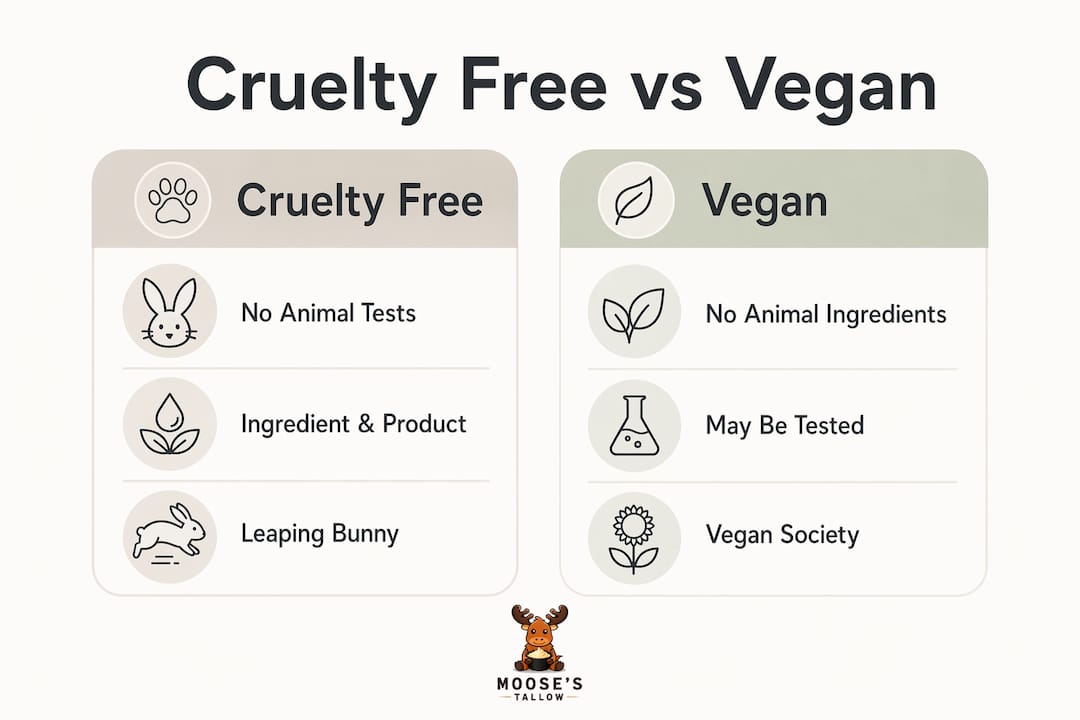
Cruelty free and vegan are not the same thing, even though they often appear together on labels. Understanding the difference saves you from buying something that does not match your values.
- Cruelty free means no animal testing. The product may still contain animal-derived ingredients.
- Vegan means no animal-derived ingredients at all. The product may or may not have been tested on animals.
A product can be cruelty free but not vegan if it contains beeswax, lanolin, collagen, or tallow. Conversely, a fully vegan formula could have been tested on animals at some point in development.
Certifications address each claim separately. Leaping Bunny covers cruelty free status. The Vegan Society’s trademark addresses animal-derived ingredients. Some products carry both. Many carry neither, even when the brand’s practices are genuinely ethical.
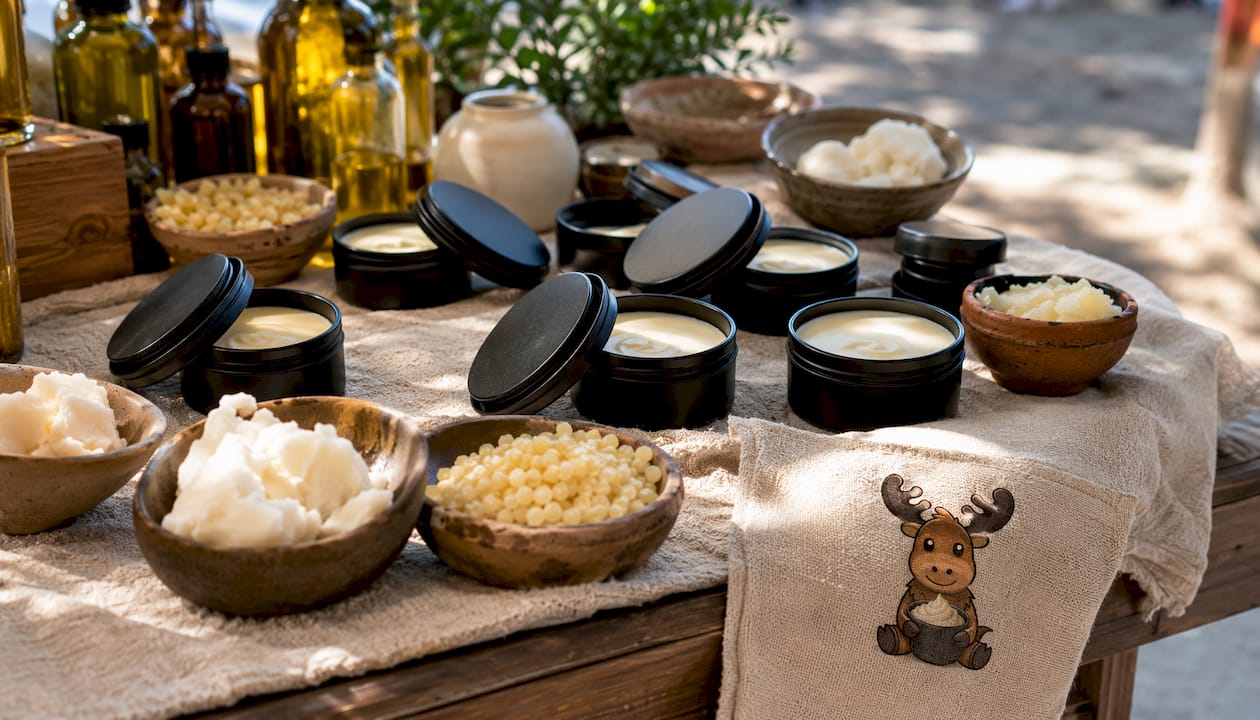
At Moose’s Tallow, our formulas include beef suet tallow, beeswax, and egg yolk infused oil. These are animal-derived ingredients, so our products are not vegan. They are, however, built on honest ingredient transparency and a commitment to knowing exactly what goes into every batch.
How cruelty free certifications and labels actually work
The two most recognized certifications in the US are Leaping Bunny and PETA Cruelty-Free. They are not equal in rigor.
- Leaping Bunny is widely considered the gold standard for cruelty free certification. It requires brands to maintain a supplier monitoring system and submit to independent audits of ingredient suppliers to confirm no animal testing occurs at any stage.
- PETA Cruelty-Free is meaningful but relies primarily on brand self-declarations. It does not guarantee supply chain audits the way Leaping Bunny does.
The FDA has no legal definition for “cruelty free.” Since 1995, the agency has held the term unregulated, meaning any cosmetic company can use it on a label without meeting a defined standard. Certification programs exist precisely to fill that gap.
This matters because a brand can print “not tested on animals” on its packaging without any third-party verification. The label alone is not proof.
How to identify genuine cruelty free products when you shop
Spotting a truly cruelty free product takes more than reading the front of the bottle. Here is what actually works:
- Look for Leaping Bunny or PETA logos on the label, then verify the brand appears in the official program directory
- Check parent company ownership. Brands owned by conglomerates that test on animals elsewhere financially support that testing, even if the sub-brand claims cruelty free
- Watch for China retail distribution. Selling in physical retail stores in China typically requires animal testing on imported cosmetics under local regulations
- Use third-party directories like Leaping Bunny’s searchable database, Cruelty-Free Kitty, or Logical Harmony to verify brand status and ownership
Pro Tip: A brand’s cruelty free claim is only as strong as its supply chain. Ask whether ingredient suppliers are audited, not just the finished product manufacturer. Leaping Bunny’s certification covers both.
The US regulatory landscape around cruelty free labeling
The FDA does not legally define or regulate “cruelty free” claims on cosmetic labels. That has been the agency’s position since 1995. No federal law requires cosmetic companies to test on animals, but no law prevents them from using the label loosely either.
Key regulatory facts:
- The FD&C Act does not require animal testing for cosmetic safety
- Cosmetic companies can use alternative methods including scientific literature, non-animal testing, and controlled human-use testing
- The FDA supports development of alternatives to animal testing but does not mandate them
- Voluntary certifications from Leaping Bunny and PETA fill the gap left by absent federal standards
The result is a labeling environment where “cruelty free” can mean almost anything. A brand might test only its finished product, not its ingredients. Another might rely on raw materials that were tested on animals years ago and claim cruelty free status because no current testing is happening. Without certification, you cannot know which situation you are in.
Common misconceptions about cruelty free skincare
“Natural or organic means cruelty free.” Not automatically. A product can use plant-based ingredients and still be tested on animals. Natural and cruelty free are separate claims.
“If it’s sold in the US, it must be cruelty free.” The US has no such requirement. Animal testing for cosmetics is legal here, and the FDA does not mandate cruelty free status for market access.
“Cruelty free means vegan.” As covered above, these are distinct. A cruelty free product may contain tallow, beeswax, lanolin, or other animal-derived materials.
“All cruelty free certifications are the same.” They are not. Self-declaration programs carry far less weight than Leaping Bunny’s audited supplier monitoring system.
How to verify cruelty free claims beyond the label
Labels are a starting point, not a finish line. Real verification goes deeper.
Company transparency is one of the clearest signals. Brands with nothing to hide publish their full ingredient sourcing policies, name their certification programs, and answer direct questions about supplier testing. Vague language like “we don’t believe in animal testing” without a named certification is a warning sign.
Third-party audits are the strongest form of verification. Leaping Bunny’s program requires brands to open their supply chains to independent review. That is a meaningful commitment, not a marketing checkbox.
You can also cross-reference a brand against cruelty free directories and look up parent company relationships. A brand that is genuinely committed to cruelty free practices will be easy to verify. One that is not will be difficult to pin down.
For shoppers who care about avoiding harsh or hidden ingredients, the same transparency principle applies across the board. Honest brands show their work.
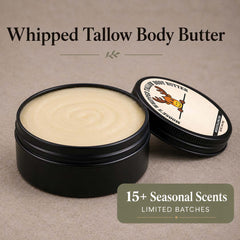
Moose’s Tallow is built on that same idea. Fewer ingredients. Every one chosen on purpose. Our whipped tallow body butter is made with properly rendered local beef suet tallow, fractionated coconut oil, and vitamin E. No fillers, no water, nothing to hide. If you want to know what is on your skin, you should be able to read the label and understand every word on it.
Key Takeaways
Cruelty free skincare means no animal testing at any stage of production, including ingredient sourcing, and no federal law in the US legally defines or enforces that claim.
| Point | Details |
|---|---|
| Cruelty free vs vegan | Cruelty free means no animal testing; vegan means no animal-derived ingredients. They are separate claims. |
| Leaping Bunny is the gold standard | It requires independent audits of ingredient suppliers, not just brand self-declaration. |
| FDA does not regulate the label | Since 1995, “cruelty free” has no legal definition in the US, making third-party certification the only reliable standard. |
| China retail complicates claims | Selling in physical Chinese retail stores typically requires animal testing under local regulations. |
| Parent company matters | A cruelty free sub-brand owned by a conglomerate that tests elsewhere still financially supports animal testing. |
FAQ
What does cruelty free skincare mean?
Cruelty free skincare means the product and its ingredients were not tested on animals at any stage of development. It does not mean the product is free of animal-derived ingredients.
Is cruelty free the same as vegan?
No. Cruelty free refers to testing practices, while vegan means no animal-derived ingredients. A product can be one without being the other.
Does the FDA regulate cruelty free claims on cosmetics?
The FDA has no legal definition for “cruelty free,” so companies can use the term without meeting any defined standard. Voluntary certifications like Leaping Bunny fill that regulatory gap.
Which cruelty free certification is most trustworthy?
Leaping Bunny is widely considered the most rigorous because it requires independent audits of ingredient suppliers, not just brand self-declarations.
Can a product be cruelty free if it contains tallow or beeswax?
Yes. Cruelty free is about testing, not ingredients. A product containing tallow, beeswax, or other animal-derived materials can still be cruelty free if no animal testing occurred at any stage of production.


0 comments