

En resumen:
- El cuidado de la piel seguro para bebés consiste en usar productos suaves y sin fragancia que protegen la piel delicada del bebé sin causar irritación.
- Los papás y cuidadores deben evitar ingredientes como fragancia, parabenos, sulfatos, aceite mineral y colorantes sintéticos, y leer bien las etiquetas en lugar de confiar en las promesas de marketing.
El cuidado de la piel seguro para bebés se define como usar productos suaves, sin fragancia y conscientes de los alérgenos que protegen la barrera cutánea en desarrollo del bebé sin causar irritación. La piel del recién nacido es más delgada que la de un adulto y pierde humedad más rápido. Eso significa que el producto equivocado puede alterar el equilibrio natural de la piel muy pronto. Las guías pediátricas y dermatológicas para 2026 coinciden en un principio central: menos es más. Una rutina simple, hecha con ingredientes no tóxicos y bien elegidos, protege a tu bebé mucho mejor que un estante lleno de productos.
¿Qué ingredientes debes evitar en el cuidado de la piel seguro para bebés?
El error más común que cometen los cuidadores es confiar en una etiqueta que dice “suave” o “natural” sin leer la lista de ingredientes. Entre los ingredientes dañinos que debes evitar en los productos para bebés están la fragancia, los parabenos, los ftalatos, los sulfatos, los compuestos PEG, los polisorbatos, el aceite mineral y los colorantes sintéticos. Cada uno de ellos puede irritar la piel delicada del bebé o provocar reacciones alérgicas.
Esto es lo que debes vigilar en cualquier etiqueta:
- Fragancia o parfum: Incluso la fragancia natural puede causar dermatitis de contacto en los bebés.
- Parabenos (metilparabeno, propilparabeno): Conservantes asociados a la sensibilización de la piel.
- Sulfatos (SLS, SLES): Limpiadores agresivos que dañan la barrera cutánea.
- Compuestos PEG y polisorbatos: Ingredientes etoxilados que pueden arrastrar contaminantes.
- Aceite mineral: Un derivado del petróleo que se queda sobre la piel sin apoyar la función de barrera.
- Colorantes sintéticos: Color añadido que no aporta ningún beneficio a la piel y sí un riesgo real de irritación.
Hay una diferencia que importa más de lo que la mayoría de los cuidadores cree. Sin fragancia significa que no se añadieron aromas para enmascarar. “Sin aroma” todavía puede contener químicos que enmascaran el olor. Elige siempre productos etiquetados como sin fragancia para tu bebé.
Consejo: Busca en cualquier etiqueta sufijos como “-eth” (como en laureth) o el prefijo “PEG-”. Estos indican ingredientes etoxilados, que es mejor evitar en la piel del bebé.
Saber qué evitar en el cuidado de la piel te da un filtro de verdad. Dejas de confiar en las promesas de marketing y empiezas a leer la lista real.
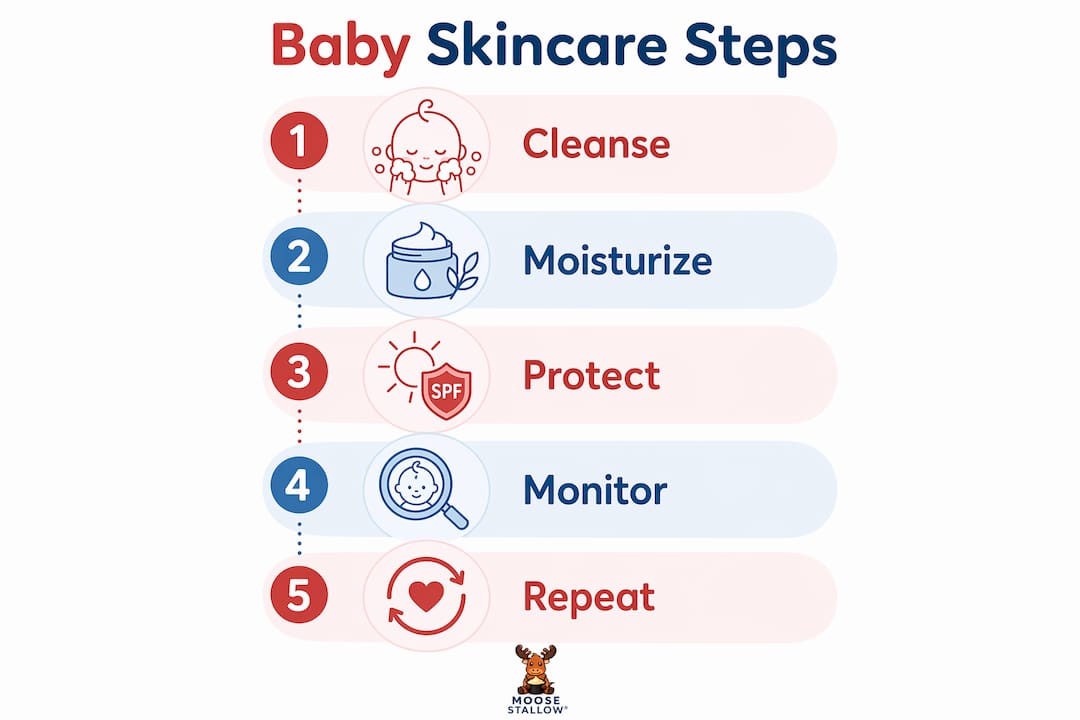
¿Qué productos e ingredientes forman una rutina de cuidado de la piel segura para el bebé?
Una rutina de cuidado de la piel segura y eficaz para el bebé solo necesita tres categorías de productos. Los expertos recomiendan un limpiador suave, un humectante sin fragancia y una crema de barrera con óxido de zinc para las rozaduras durante el primer año de vida. Eso es todo. Cada producto extra suma riesgo sin sumar beneficio.
En cada categoría, la elección de ingredientes importa:
- Limpiador suave: Sin fragancia, sin sulfatos y con pH equilibrado para la piel del bebé.
- Humectante diario: Busca ingredientes que apoyen la barrera cutánea sin aditivos sintéticos.
- Crema con óxido de zinc para rozaduras: La Academia Americana de Pediatría recomienda óxido de zinc en cada cambio de pañal, no solo cuando aparece el enrojecimiento.
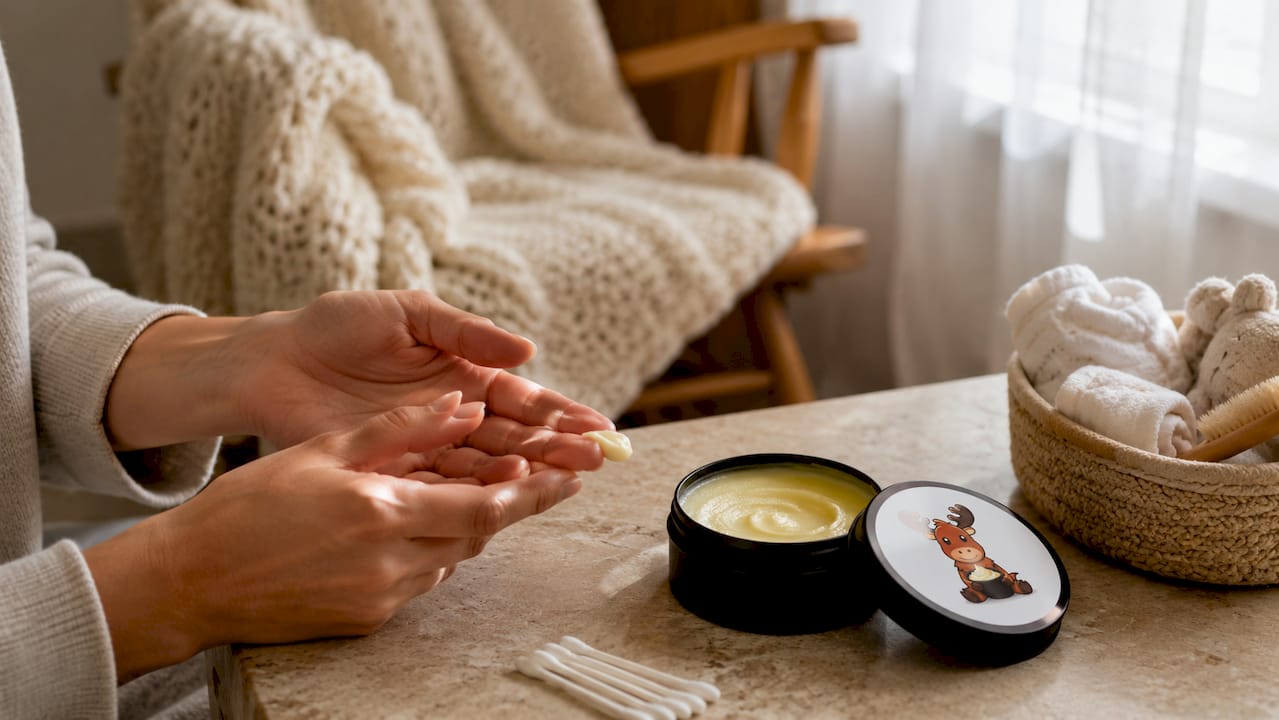
En los humectantes, la lista de ingredientes lo dice todo. Entre los ingredientes seguros y eficaces para la piel del bebé están el sebo de res, el aceite de coco fraccionado, la jojoba, la cera de abeja, los tocoferoles, el aceite de ricino y las fórmulas con aceite de yema de huevo. Estos ingredientes nutren sin rellenos innecesarios.
El aceite de coco fraccionado destaca como aceite base por su estabilidad, su resistencia a la oxidación, su rápida absorción y su larga vida útil. Supera a muchos aceites vegetales en estos aspectos, lo que lo convierte en una base confiable para las fórmulas de bebé. El sebo de res es compatible por naturaleza con la biología de la piel y se absorbe sin dejar una capa grasosa.
Consejo: El término “hipoalergénico” no tiene una definición regulatoria estricta. Confía en los respaldos probados por dermatólogos pediátricos y en tu propia prueba de parche, más que solo en lo que dice la etiqueta.
¿Con qué frecuencia debes seguir una rutina de cuidado de la piel del bebé?
La frecuencia del baño es una de las partes peor entendidas del cuidado del bebé. Lavar de más elimina los aceites naturales y altera el microbioma de la piel del bebé. Lo correcto es un enfoque mínimo y puntual.
Sigue estos pasos para una rutina saludable:
- Baña al bebé 2 a 3 veces por semana. Los baños completos más seguidos eliminan los aceites naturales que protegen la piel del bebé.
- Limpia por zonas a diario. Concéntrate en la cara, los pliegues del cuello y la zona del pañal entre baños.
- Usa un limpiador suave y sin fragancia solo cuando haga falta. El agua tibia simple cubre casi toda la limpieza diaria.
- Seca la piel dando toquecitos. Frotar con la toalla crea fricción que debilita la barrera cutánea.
- Aplica humectante solo cuando la piel se ve seca o después del baño. La piel del recién nacido pierde agua más rápido que la de un adulto, pero hidratar a diario solo hace falta cuando la resequedad es visible.
El microbioma de la piel del bebé todavía se está desarrollando en los primeros meses de vida. Alterarlo con demasiados productos o demasiados lavados crea justo los problemas que los cuidadores quieren evitar.
Consejo: Aplica el humectante dentro de los tres minutos después del baño, cuando la piel todavía está un poco húmeda. Así retiene la humedad mejor que si la aplicas sobre piel completamente seca.
¿Cuáles son las mejores prácticas de protección solar para la piel del bebé?
La protección solar para bebés sigue guías estrictas según la edad de la Academia Americana de Pediatría. Los bebés menores de 6 meses deben evitar por completo la exposición directa al sol. Para este grupo de edad, usa sombra, ropa protectora y sombreros de ala ancha en lugar de protector solar.
Para bebés de 6 meses en adelante, sigue estas prácticas:
- Usa protectores solares minerales con óxido de zinc o dióxido de titanio con SPF 30 o más.
- Aplica el protector solar 30 minutos antes de salir.
- Vuelve a aplicarlo cada dos horas, y después de nadar o sudar.
- Evita los protectores solares químicos con oxibenzona o avobenzona. Estos ingredientes de protector solar que debes evitar se absorben en la piel y tienen un mayor riesgo de sensibilización para los bebés.
- Viste a los bebés con mangas largas ligeras y transpirables y sombreros de ala ancha al aire libre.
| Edad | Método de protección solar |
|---|---|
| Menores de 6 meses | Solo sombra, ropa protectora y sombreros de ala ancha |
| 6 meses en adelante | Protector solar mineral SPF 30+, ropa y sombra |
Los protectores solares minerales se quedan sobre la piel y reflejan los rayos UV. No se absorben en el torrente sanguíneo como sí lo hacen los filtros químicos. Esa barrera física los hace la opción correcta para la piel del bebé.
Puntos clave
El cuidado de la piel seguro para bebés funciona mejor cuando se basa en una lista corta de ingredientes limpios y sin fragancia, y en una rutina mínima respaldada por las guías pediátricas.
| Punto | Detalles |
|---|---|
| Evita los ingredientes dañinos | Deja fuera la fragancia, los parabenos, los sulfatos, los compuestos PEG, el aceite mineral y los colorantes sintéticos. |
| Mantén la rutina mínima | Tres productos lo cubren todo: un limpiador suave, un humectante sin fragancia y una crema con óxido de zinc para rozaduras. |
| Baña menos, no más | Los baños completos 2 a 3 veces por semana protegen el microbioma de la piel y los aceites naturales. |
| Elige protección solar mineral | Usa óxido de zinc o dióxido de titanio SPF 30+ para bebés mayores de 6 meses. |
| Lee bien las etiquetas | “Sin fragancia” es más seguro que “sin aroma”, y “hipoalergénico” no tiene un significado regulado. |
Por qué confío en los ingredientes simples más que en las promesas de lo “natural”
La palabra “natural” en la etiqueta de un producto para bebé casi no te dice nada útil. He visto a cuidadores gastar dinero de verdad en productos vendidos como puros y de origen vegetal, para luego encontrar aceites naturales alergénicos como el de cacahuate o el de almendra en la lista de ingredientes. Natural no significa seguro para todos los bebés.
Lo que de verdad me ha funcionado es una lista de ingredientes corta y transparente, con un propósito claro detrás de cada uno. El sebo de res, el aceite de coco fraccionado, la cera de abeja y los tocoferoles no son ingredientes de moda. Están probados por el tiempo, son compatibles con la piel y no tienen los aditivos sintéticos que causan problemas. Siempre recomiendo hacer una prueba de parche con los productos nuevos en la parte interna del antebrazo o detrás de la rodilla durante 24 horas antes de usarlos por completo. Ese solo paso detecta las reacciones antes de que se vuelvan un problema.
Los cuidadores en los que más confío son los que preguntan qué hay dentro de un producto, no solo qué promete hacer.
Brian
Moosestallow: cuidado de la piel en el que puedes confiar para tu bebé
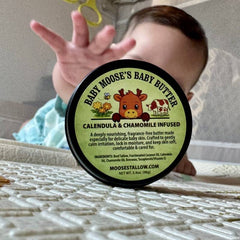
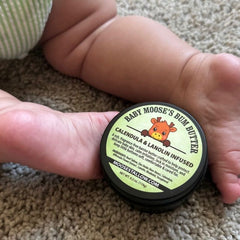
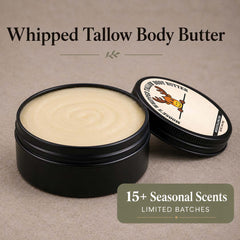
Moosestallow arma cada producto en torno a una lista de ingredientes corta y con propósito. El sebo de res es siempre la base. El aceite de coco fraccionado, la cera de abeja, la jojoba, los tocoferoles y el aceite de ricino completan las fórmulas. Nada se añade sin una razón. Sin rellenos sintéticos, sin fragancias ocultas, sin ingredientes que solo ocupan espacio en la etiqueta. Cada lote se hace a mano en cantidades pequeñas para que la calidad se mantenga constante. Si buscas productos naturales para el cuidado de la piel del bebé que sean honestos sobre lo que llevan dentro, la colección de Moosestallow es un buen lugar para empezar. Ingredientes simples. Elaboración honesta.
Preguntas frecuentes
¿Qué significa realmente el “cuidado de la piel seguro para bebés”?
El cuidado de la piel seguro para bebés significa usar productos sin fragancia y conscientes de los alérgenos que apoyan la barrera cutánea del bebé sin causar irritación. Prioriza fórmulas mínimas y probadas por dermatólogos por encima de las promesas de marketing.
¿Es seguro usar loción para bebé todos los días?
Hidratar a diario solo es necesario cuando la piel del bebé se ve seca o después del baño. La piel del recién nacido pierde agua más rápido que la de un adulto, pero hidratar de más no hace falta y puede alterar el equilibrio natural de la piel.
¿Qué hace que una loción suave para bebé sea segura para los más pequeños?
Una loción suave y segura para bebé es sin fragancia, libre de parabenos y sulfatos, y usa ingredientes compatibles con la piel como sebo de res, aceite de coco fraccionado, cera de abeja o tocoferoles. Evita cualquier producto con compuestos PEG o colorantes sintéticos.
¿Cómo sé si un producto natural para el cuidado de la piel del bebé es realmente seguro?
Revisa la lista completa de ingredientes en lugar de confiar en las etiquetas de “natural” o “hipoalergénico”. Haz una prueba de parche con cada producto nuevo en una zona pequeña de la piel durante 24 horas antes de usarlo en más partes.
¿Cuándo puedo empezar a usar protector solar en mi bebé?
La Academia Americana de Pediatría recomienda evitar el protector solar en bebés menores de 6 meses. Para bebés de 6 meses en adelante, usa un protector solar mineral con óxido de zinc o dióxido de titanio con SPF 30 o más.
Recomendado
- Tipos de lociones naturales para bebé: guía de piel segura para padres – Moose’s Tallow
- Humectantes naturales: cuidado de la piel más seguro y para toda la familia – Moose’s Tallow
- Rutinas de hidratación para bebés: una guía para padres – Moose’s Tallow
- Lista de verificación de productos de sebo 2026: elige un cuidado natural y seguro – Moose’s Tallow


0 comentarios