

TL;DR:
- Chemical sunscreens like oxybenzone are linked to hormonal disruption and systemic absorption.
- Mineral sunscreens with non-nano zinc oxide or titanium dioxide are safer and FDA-approved.
- Read ingredient labels carefully and use third-party safety guides for selecting truly safe sun protection.
Most people assume sunscreen is straightforward protection. Apply it, go outside, stay safe. But oxybenzone appears in 96.8% of urine samples tested, at levels that exceed FDA safety thresholds. That single fact stopped me in my tracks when I first read it. If you care about what goes on your skin and into your body, it’s worth knowing exactly which sunblock ingredients to avoid and what cleaner, simpler options actually look like.
Table of Contents
- Why ingredient safety matters in sunblock
- The worst sunblock ingredients to avoid (and why)
- Safer alternatives: mineral vs. chemical sunblocks
- How to choose truly safe sun protection
- A closer look: why most people get sunblock safety wrong
- Explore safer sun protection options from Moose’s Tallow
- Frequently asked questions
Key Takeaways
| Point | Details |
|---|---|
| Avoid chemical filters | Oxybenzone, octinoxate, and similar chemicals should be avoided due to health and environmental risks. |
| Safer alternatives | Non-nano zinc oxide and titanium dioxide are FDA-approved and safer for most users. |
| Read ingredient labels | Always check for fragrance, parabens, and non-GRASE chemicals on sunscreen product labels. |
| Sensitivity matters | Mineral sunblocks are recommended for sensitive skin because they cause fewer reactions. |
| DIY with caution | DIY sunblocks are less reliable than tested, broad-spectrum SPF mineral sunscreens. |
Why ingredient safety matters in sunblock
SPF numbers get all the attention. A higher number feels like better protection, and that’s where most people stop reading. But the formulation behind that number matters just as much as the rating itself.
Chemical sunscreens work by absorbing UV rays and converting them to heat. To do that, the active ingredients need to penetrate the skin. And once they penetrate, they don’t always stop there. Some disrupt hormones, trigger allergies, and harm coral reefs, raising real questions about long-term use.
This isn’t about fear. It’s about making informed choices. Consider what’s at stake:
- Systemic absorption: Some chemical filters enter the bloodstream within hours of application.
- Hormonal disruption: Certain ingredients mimic estrogen and may interfere with endocrine function.
- Skin sensitivity: Synthetic additives and fragrances are common triggers for reactions.
- Environmental damage: Chemicals like oxybenzone have been linked to coral bleaching in marine ecosystems.
“The question isn’t just whether sunscreen protects your skin from UV rays. It’s whether the formula itself is something your body can safely handle over years of regular use.”
When we look at tallow vs water-based sunscreens, the formulation philosophy becomes even clearer. Water-based products often require preservatives and emulsifiers that add complexity. Simpler, anhydrous formulas can sidestep many of those concerns entirely. Understanding ingredients to avoid in skincare is the first step toward building a routine you can actually trust.
The worst sunblock ingredients to avoid (and why)
Not all chemical sunscreen ingredients carry the same level of concern. But several have accumulated enough evidence to warrant real caution.
| Ingredient | Main risk | Prevalence | Known issues |
|---|---|---|---|
| Oxybenzone | Hormonal disruption | Very high | Not FDA GRASE, systemic absorption |
| Octinoxate | Endocrine disruption | High | Detected in breast milk, banned in some regions |
| Homosalate | Hormone interference | Common | Accumulates faster than body can eliminate |
| Octocrylene | Skin sensitization | Common | Degrades into benzophenone, a possible carcinogen |
| Avobenzone | Instability | High | Breaks down in sunlight, often paired with stabilizers |
| Retinyl palmitate | Photosensitivity | Moderate | May accelerate skin damage in UV exposure |
| Parabens | Hormonal mimicry | Common | Detected in tissue samples, broad use concerns |
| Synthetic fragrance | Allergic reactions | Very high | Catch-all term hiding dozens of untested chemicals |
Oxybenzone is not GRASE (generally recognized as safe and effective) according to the FDA, meaning it hasn’t cleared the bar for confirmed safety. The same applies to several other chemical filters. Understanding the mineral vs chemical sunscreen distinction is foundational here: chemical filters absorb into the skin while mineral filters stay on the surface.

The FDA sunscreen ingredient regulation framework is worth reviewing if you want the full picture. Many of these skincare ingredients to avoid are still widely used because they’re inexpensive and effective at UV absorption, not because they’ve been proven safe.
Pro Tip: Flip the bottle and read the “active ingredients” section first. If you see oxybenzone, octinoxate, or homosalate listed, that’s your signal to look for an alternative.
Safer alternatives: mineral vs. chemical sunblocks
Once you know what to avoid, the next question is simple: what actually works and won’t raise concerns?
Mineral sunscreens use zinc oxide or titanium dioxide as their active ingredients. These minerals sit on top of the skin and physically reflect UV rays rather than absorbing them. They don’t penetrate the skin in the same way chemical filters do, which means the absorption risk is dramatically lower.
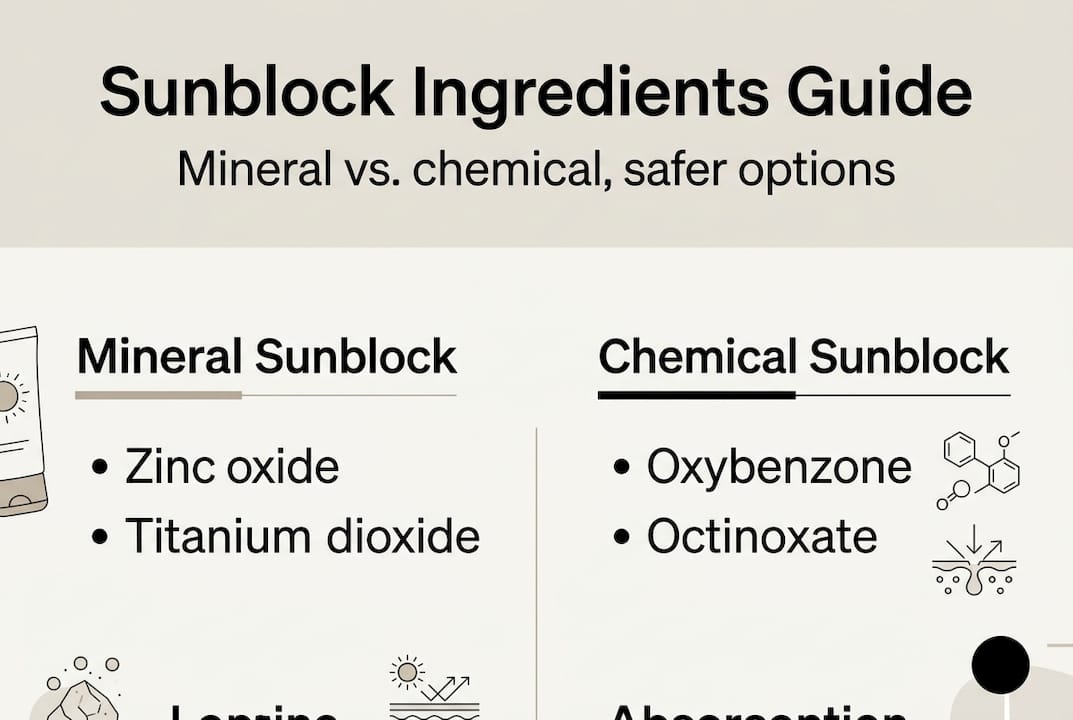
| Feature | Mineral sunblock | Chemical sunblock |
|---|---|---|
| Protection mechanism | Physical UV reflection | UV absorption and conversion |
| Safety profile | Strong, FDA GRASE | Variable, several not GRASE |
| Absorption risk | Very low | Moderate to high |
| Environmental harm | Minimal | Significant (oxybenzone, octinoxate) |
Only zinc oxide and titanium dioxide are currently recognized as GRASE by the FDA. That’s a meaningful distinction. Non-nano zinc oxide and titanium dioxide are safer for health-conscious users, reflecting UV light and causing less irritation, especially for sensitive skin.
The term “non-nano” matters. Nano-sized particles are small enough to potentially penetrate skin or be inhaled from spray formulas. Non-nano particles stay on the surface where they belong. When you’re shopping, look for that specific label on the mineral sunblocks guide.
For those with reactive or sensitive skin, the EWG sunscreen safety guide is a practical resource. It rates hundreds of products and flags problematic ingredients so you don’t have to decode every label yourself. Exploring natural skincare for sensitive skin can also help you build a routine that supports your skin barrier rather than stressing it.
Pro Tip: Look for “non-nano zinc oxide” specifically on the label. If a product just says “zinc oxide” without clarifying particle size, contact the brand directly before buying.
How to choose truly safe sun protection
Knowing the safest ingredients is only useful if you can identify them in the store. Here’s a practical process that actually works:
- Read active ingredients first. This section lists what’s doing the UV work. Zinc oxide or titanium dioxide should be the only actives.
- Check inactive ingredients for red flags. Parabens, synthetic fragrance, and oxybenzone sometimes appear here too.
- Look for broad-spectrum SPF 30 or higher. This ensures protection against both UVA and UVB rays.
- Prioritize fragrance-free formulas. “Fragrance” is a legal catch-all that can hide dozens of untested compounds.
- Verify non-nano status. Especially important for spray or powder formats.
- Check third-party safety certifications. EWG Verified or similar seals add an extra layer of accountability.
Only about 23% of sunscreens reviewed by EWG in 2025 met their safety standards. That means the majority of products on shelves have at least one ingredient worth questioning.
One more note: DIY sunscreen alternatives often underperform compared to tested commercial products. Oils like raspberry seed or carrot seed are sometimes marketed as natural SPF sources, but their protection is inconsistent and unverified. Stick with products that use tested, non-nano mineral actives. You can use the safe natural sunscreen checklist to vet what you’re buying before it reaches your skin.
Pro Tip: Use the EWG Skin Deep database before purchasing any sunscreen. Search by product name and get an instant safety score based on ingredient data.
A closer look: why most people get sunblock safety wrong
Here’s what I think gets missed in most conversations about sunscreen: the industry has trained us to evaluate protection by SPF alone. Higher number, better product. That framing is convenient for marketing and genuinely incomplete for safety.
Health-conscious people deserve transparent labeling and honest formulations. When science is still inconclusive on long-term hormone risk from chemical filters, the practical answer is to choose products with the cleanest, most evidence-backed profiles available. Dermatologists consistently stress that UV protection is non-negotiable, but many advocacy groups recommend precautionary avoidance of certain chemicals, especially for daily users. That’s a reasonable position. Exploring skincare ingredient myths can help you separate marketing language from what actually matters.
Explore safer sun protection options from Moose’s Tallow
If you want sun protection without the ingredient guesswork, our Tallow Zinc Sun Butter Balm was built exactly for that. It uses non-nano zinc oxide as the only active, combined with beef tallow, beeswax, fractionated coconut oil, lecithin, and tocopherols. No water means no preservatives needed. No synthetic fragrance. No unnecessary fillers. Just a small-batch, anhydrous formula designed for people who want honest sun protection they can actually feel good about. Browse our full natural sun protection collection to find what fits your routine.
Frequently asked questions
Why is oxybenzone considered unsafe in sunscreen?
Oxybenzone absorbs systemically and is not FDA-approved as generally recognized as safe and effective. It’s detected in most people tested and may disrupt hormonal function with repeated exposure.
What safer sunscreen ingredients should I look for?
Look for non-nano zinc oxide or titanium dioxide. Only these two ingredients are currently considered GRASE by the FDA, and they don’t absorb into the bloodstream the way chemical filters do.
Is a mineral or chemical sunscreen better for sensitive skin?
Mineral sunscreens are generally the better choice for sensitive skin. Mineral alternatives are less likely to cause irritation because they sit on the skin’s surface rather than penetrating it.
Are DIY sunscreens effective for everyday use?
Not reliably. DIY alternatives often underperform compared to tested SPF 50+ products. For consistent protection, choose a broad-spectrum mineral sunscreen with verified SPF ratings.
Recommended
- 6 Ingredients to Avoid in Skincare for Healthier Skin – Moose’s Tallow
- Mineral vs chemical sunscreen: which is best for you? – Moose’s Tallow
- Tallow vs water-based sunscreens: what your skin needs – Moose’s Tallow
- Tallow product checklist 2026: Choose safe natural skincare – Moose’s Tallow
- Skin Cancer - Expert Mohs Surgery | UK


0 comments