

TL;DR:
- Los bálsamos labiales efectivos usan lípidos compatibles con la piel como el sebo, la cera de abejas y la lanolina.
- La formulación adecuada y los ingredientes frescos son claves para una hidratación y protección duraderas.
- Las bases simples y tradicionales, apoyadas por ingredientes bioactivos, superan a los bálsamos de moda, sintéticos o cargados de ingredientes.
La mayoría de los bálsamos labiales prometen labios suaves y sanos, pero entregan algo mucho menos impresionante. Los aplicas con fe y, en una hora, tus labios vuelven a sentirse tensos y secos. El problema casi nunca son tus labios. Es lo que hay dentro del tubo. Muchos productos ‘naturales’ se apoyan en aceites de moda e ingredientes cargados de fragancia que lucen bien en la etiqueta, pero en realidad no reparan ni nutren. Los bálsamos que de verdad funcionan se construyen sobre una lista corta de ingredientes funcionales y compatibles con la piel que tus labios sí pueden aprovechar.
Puntos clave
| Punto | Detalles |
|---|---|
| Elige bases comprobadas | Opta por sebo, cera de abejas o lanolina para humedad y estabilidad duraderas. |
| Agrega botánicos funcionales | Los extractos poliherbales y la miel mejoran la hidratación y apoyan la cicatrización. |
| Formula pensando en la seguridad | Usa vitamina E para la vida útil y guarda los bálsamos lejos del calor y la luz solar. |
| Mantenlo simple | Los ingredientes simples y bien elegidos superan a las adiciones de moda pero sin comprobar. |
Por qué la elección de ingredientes importa para la eficacia del bálsamo labial
No todos los ingredientes naturales rinden igual. Algunos suenan impresionantes pero se evaporan rápido, dejando los labios sin protección ni humedad duradera. Otros son realmente bioactivos, es decir, interactúan con la biología de tu piel de formas que sí reparan y protegen.
Este es el problema de fondo: los labios no tienen glándulas sebáceas y su barrera protectora es muy delgada. Eso los hace especialmente vulnerables a la pérdida de humedad. Solucionarlo requiere lípidos específicos, no cualquier aceite, y antioxidantes que estabilicen la fórmula y apoyen la reparación. Puedes aprender más sobre por qué el bálsamo labial no funciona para ver a fondo cómo se quedan cortas las fórmulas.
Los ingredientes que vale la pena priorizar comparten algunas cualidades:
- Son estables y no se oxidan rápido
- Imitan o apoyan la estructura lipídica natural de la piel
- Aportan oclusión (sellan la humedad) o emoliencia (suavizan la piel)
- Cuentan con respaldo de evidencia clínica o de un uso tradicional prolongado
Los extractos poliherbales como la Perilla y la Emblica demostraron mejorar la hidratación y reducir la aspereza en un ensayo clínico, lo que refuerza que los botánicos respaldados por evidencia pueden marcar una diferencia medible en el desempeño del bálsamo labial.
Entender qué hace que un ingrediente sea realmente funcional es el primer paso. También por eso saber qué hace que el cuidado de la piel sea natural va más allá de solo leer la palabra ‘natural’ en una etiqueta.
Ingredientes base: la base para labios suaves y nutridos
La base lo es todo. Determina cómo se siente el bálsamo, cuánto dura y qué tan bien llegan a tu piel los ingredientes activos.
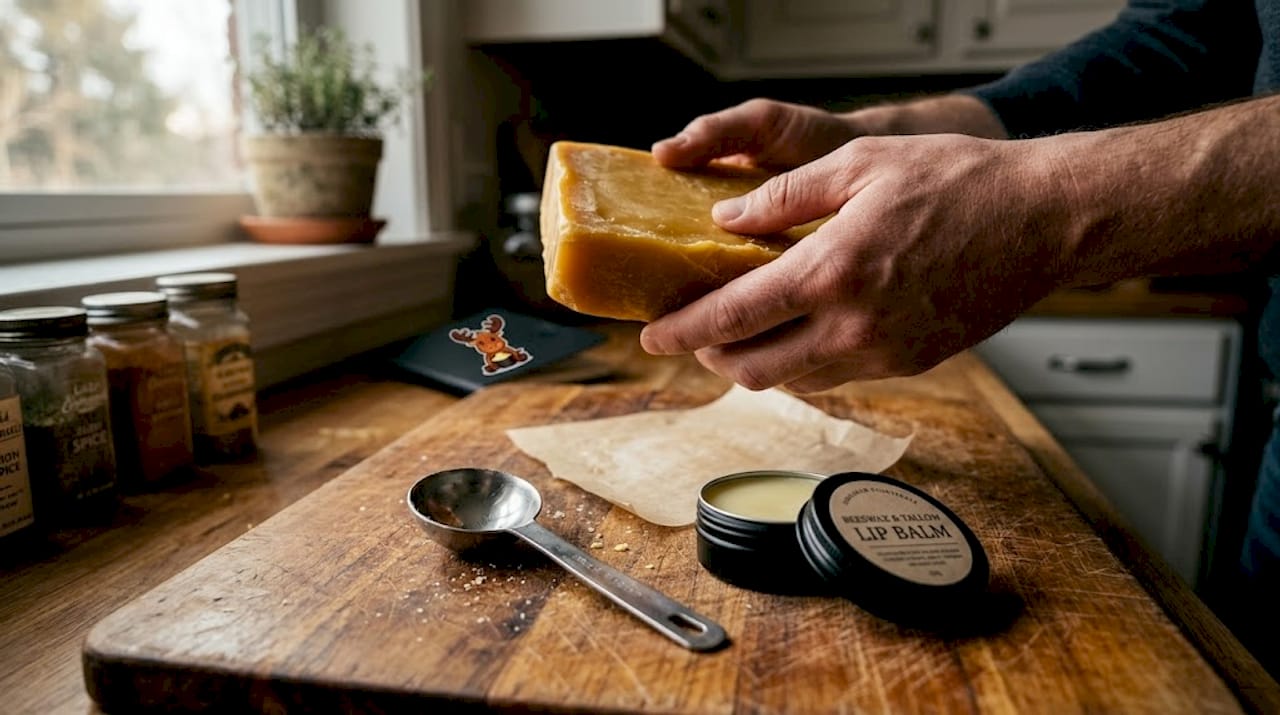
La cera de abejas es un clásico por una buena razón. Aporta estructura, crea un sello transpirable sobre los labios y resiste bien los cambios de temperatura. El sebo es menos popular pero difícil de superar en desempeño. El sebo de res fundido es rico en ácidos grasos como el oleico, el esteárico y el palmítico, que se parecen mucho a los lípidos que ya tiene la piel humana. Esa compatibilidad significa que se absorbe en lugar de solo quedarse encima. Mira cómo se compara en un análisis de sebo vs bálsamo regular. La lanolina completa el trío al atraer la humedad del aire y retenerla, lo que la convierte en uno de los humectantes-emolientes más efectivos que existen.
| Ingrediente | Hidratación | Apoyo a la barrera | Estabilidad | Sensación |
|---|---|---|---|---|
| Cera de abejas | Baja | Alto | Excelente | Protectora |
| Sebo | Alta | Alto | Muy buena | Absorbente |
| Lanolina | Alta | Medio | Buena | Emoliente |
| Aceite de coco | Media | Bajo | Moderada | Ligera |
| Aceite de ricino | Media | Bajo | Buena | Brillante |
Los aceites vegetales como el aceite de coco fraccionado y el aceite de ricino aportan deslizamiento y suavidad, lo que mejora la experiencia de aplicación. El aceite de ricino en particular da un brillo natural y ayuda a unir los demás ingredientes. Para ver a fondo cómo se comparan los lípidos de origen animal y vegetal para la piel, vale la pena leer la comparación de aceites vegetales vs sebo.
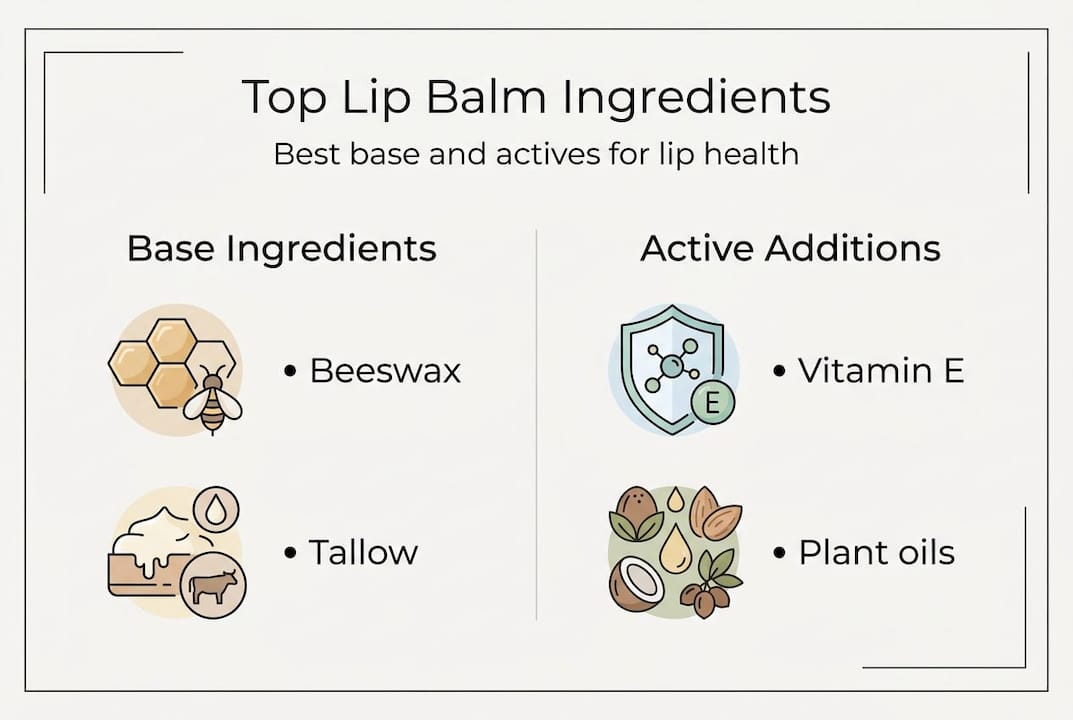
La investigación confirma que los bálsamos labiales caseros funcionan mejor con puntos de fusión de 62 a 68 °C y niveles de pH cercanos a 6 o 7, y la vitamina E juega un papel clave para prolongar la vida útil.
Consejo pro: si tu base se derrite muy rápido o se siente grasosa, sube un poco la proporción de cera de abejas. Una base más firme no hidrata menos. Solo entrega la humedad de forma más lenta y constante.
Ingredientes activos que de verdad marcan la diferencia
Una vez que tu base es sólida, los ingredientes activos son donde puedes marcar una verdadera diferencia en la salud de los labios con el tiempo. Son los componentes que van más allá de cubrir y realmente apoyan la reparación y el acondicionamiento.
La vitamina E no es negociable. Es un antioxidante que evita que otros aceites se pongan rancios y apoya la cicatrización de la piel. Los derivados de vitamina C pueden apoyar el colágeno en el borde de los labios cuando se usan en formas estables. La miel es un humectante natural con propiedades antimicrobianas, útil en pequeñas cantidades cuando se mezcla con bases ricas en lípidos.
Un ingrediente que vale la pena destacar es el aceite infusionado con yema de huevo. Cuando la yema de huevo se infusiona en un aceite portador, transfiere lecitina y vitaminas liposolubles a la base. La lecitina es un fosfolípido, es decir, se parece estructuralmente a las membranas de las células de tu piel. Eso convierte al aceite infusionado con yema de huevo en un potente agente acondicionador que apoya la suavidad de una forma muy directa y alineada con la biología.
- Miel: humectante, atrae la humedad a la superficie
- Vitamina E: antioxidante, estabilizador, apoyo a la cicatrización
- Aceite infusionado con yema de huevo: rico en lecitina, muy acondicionador
- Lanolina: retiene la humedad de forma efectiva sin recubrimiento sintético
- Extractos poliherbales: demostraron clínicamente hidratar y reducir la aspereza
Al agregar activos, menos es realmente más. Cada adición debe resolver un problema específico en lugar de solo añadir complejidad. Una lista para un cuidado de la piel seguro puede ayudarte a evaluar si cada ingrediente se gana su lugar.
Secretos de formulación: cómo mezclar y guardar para mejores resultados
Incluso con buenos ingredientes puedes obtener un bálsamo mediocre si el proceso es apresurado o descuidado. Así lo haces bien siempre.
- Derrite primero la cera de abejas a baño maría, manteniendo el calor bajo y constante
- Agrega después el sebo y cualquier manteca sólida, revolviendo hasta integrar por completo
- Retira del fuego antes de añadir los aceites líquidos y el aceite de ricino
- Deja que la mezcla se enfríe un poco (a unos 50 °C) antes de añadir la vitamina E y cualquier activo sensible al calor
- Vierte en latas o tubos de inmediato y deja que cuaje sin mover a temperatura ambiente
- Etiqueta con la fecha del lote y guarda lejos de la luz solar directa
La investigación muestra que la estabilidad del bálsamo labial depende en gran medida de mantener el rango correcto de punto de fusión y de pH, y la vitamina E se identifica de forma constante como el conservador natural más efectivo para prolongar la vida útil.
Consejo pro: los lotes pequeños no solo son prácticos. En realidad son mejores para la calidad. Los aceites del bálsamo labial pueden oxidarse con el tiempo. Un lote hecho fresco cada 4 a 6 semanas siempre superará a un lote grande que lleva meses guardado. Mira cómo se aplica la idea de los lotes pequeños en consejos de bálsamos artesanales para saber más sobre por qué importa este enfoque.
Lo que la mayoría de las guías pasa por alto al hacer bálsamos labiales efectivos
La mayoría de las guías de bálsamo labial persiguen la novedad. Añaden extractos de plantas exóticas o péptidos de moda sin nunca preguntarse si la fórmula base siquiera funciona. En nuestra experiencia, la frescura del ingrediente importa más que su prestigio.
Un aceite rancio en una fórmula ‘de lujo’ siempre rendirá peor que una mezcla simple y fresca de sebo, cera de abejas y aceite de ricino. Es pura química. La verdadera diferencia entre un bálsamo olvidable y uno que la gente usa todos los días está en los lípidos biocompatibles usados en proporciones honestas, no en cuántos nombres botánicos aparecen en la etiqueta.
La mejor base para la hidratación de la piel es una que tu piel ya reconoce. Los ingredientes probados por el tiempo como el sebo ganan porque trabajan con tu biología. Fórmulas simples, ingredientes frescos, lotes pequeños. Ese es el verdadero secreto.
Mejora tu cuidado labial con fórmulas naturales comprobadas
Si llegaste hasta aquí, ya sabes qué buscar: bases funcionales, lípidos biocompatibles y activos bien elegidos sin rellenos innecesarios. Esa es exactamente la filosofía detrás de todo lo que hacemos en Moose’s Tallow. Nuestros bálsamos labiales son fórmulas sin agua, lo que significa que cada ingrediente del tubo cumple una función. Nada está diluido. Nada está de adorno. Si te da curiosidad una opción lista para usar que pone en práctica estos principios, nuestro bálsamo solar de sebo con zinc es un gran punto de partida. Ingredientes reales. Resultados reales.
Preguntas frecuentes
¿Qué ingrediente natural hidrata los labios de forma más efectiva?
Los extractos poliherbales como la Perilla y la Emblica cuentan con respaldo clínico para mejorar la hidratación y reducir la aspereza, mientras que el sebo y la lanolina ofrecen humedad profunda y duradera gracias a lípidos compatibles con la piel.
¿Cómo puedo hacer que mi bálsamo labial casero dure más sin conservadores sintéticos?
Agrega vitamina E como antioxidante natural y guarda tu bálsamo en envases herméticos, lejos del calor y la luz solar. La investigación confirma que la vitamina E prolonga de forma confiable la vida útil de las fórmulas caseras.
¿Por qué algunos bálsamos labiales resecan más los labios con el tiempo?
Muchos bálsamos dependen de oclusivos sintéticos o ingredientes como la vaselina que cubren los labios sin aportar humedad real ni apoyar la barrera de la piel. Con el tiempo, los labios se vuelven dependientes de la reaplicación sin mejorar de verdad.
¿El sebo es seguro como base para bálsamo labial?
Sí. El sebo de buena procedencia y bien fundido es seguro, muy humectante y estructuralmente similar a los lípidos de tu propia piel, lo que lo convierte en una de las bases más biocompatibles para el cuidado labial.
Recomendado
- Por qué tu bálsamo labial no funciona y cómo solucionarlo – Moose’s Tallow
- Bálsamo labial de sebo vs bálsamo labial regular: qué funciona mejor – Moose’s Tallow
- Lanolina vs petróleo para labios: ¿cuál hidrata mejor? – Moose’s Tallow
- Bálsamos labiales reparadores con aceite infusionado con yema de huevo – Moose’s Tallow


0 comentarios