

TL;DR:
- Most commercial lip balms only provide temporary relief without addressing underlying dryness.
- Look for balms with nourishing ingredients like ceramides, shea butter, and beeswax for lasting healing.
- Simple, waterless, natural formulas with minimal ingredients outperform complex, trendy products.
You apply lip balm religiously, yet your lips feel dry again within the hour. Sound familiar? The problem usually isn’t your lips. It’s the product. Most commercial balms are built to provide quick, temporary relief rather than genuine healing. They coat the surface, you feel better for a moment, and then the cycle starts over. This guide breaks down exactly why that happens, which ingredients actually restore moisture, and how a smarter formula can end the constant reapplying for good.
Key Takeaways
| Point | Details |
|---|---|
| Addiction is a myth | Lip balm ‘addiction’ is behavioral, not chemical—look for real solutions instead of repeated reapplication. |
| Ingredients matter | Choosing balms with quality occlusives, emollients, and humectants leads to better, faster healing. |
| Natural balms can outperform | Well-formulated natural and herbal lip balms can be more effective than standard petroleum products. |
| Persistent dryness needs more attention | Ongoing problems may signal allergies or conditions that require professional help. |
Why most lip balms don’t deliver lasting results
Let’s clear something up right away. Lip balm addiction is a myth; there is no chemical dependency involved, but a behavioral cycle driven by temporary relief, appealing flavors, or low-grade irritation. Your lips feel dry, you apply balm, they feel better, then the feeling fades. So you reach for the tube again. That loop can go on indefinitely without your lips ever actually improving.
The real issue is what most balms are made of. Many rely heavily on occlusives, which are ingredients that form a physical barrier on the skin’s surface. Beeswax and paraffin are common examples. On their own, they seal in whatever moisture is already present, but they don’t add any. If your lips are already depleted, a wax-heavy balm is essentially locking in dryness.
Flavors and fragrances make things worse. Mint, citrus, and cinnamon might feel refreshing, but they are common irritants that trigger more dryness and peeling over time. Many people unknowingly keep buying products that are actively working against them.
Compare that to tallow balm vs regular options, and you’ll notice a clear difference in ingredient depth. A well-formulated balm doesn’t just sit on top of your lips. It works with the skin’s natural structure to restore and maintain moisture from within.
The key insight: A balm that only coats without nourishing is like putting a bandage over a wound without cleaning it first. You’ve addressed the surface, but not the source.
- Wax-only formulas seal in dryness rather than adding moisture
- Flavors and fragrances are common irritants that extend the dryness cycle
- Behavioral reapplication habits keep users locked into ineffective products
- Balms without emollients or humectants can’t restore the lip barrier
The ingredients that actually heal (and those to avoid)
Understanding the cycle is only one piece. For real results, it’s all about what goes into the balm. Dermatologists and the American Academy of Dermatology recommend looking for three types of ingredients: occlusives (barrier-forming), humectants (moisture-attracting), and emollients (softening and nourishing). Effective ingredients like ceramides, shea butter, and petrolatum are consistently recommended for chapped lips because they address all three functions.
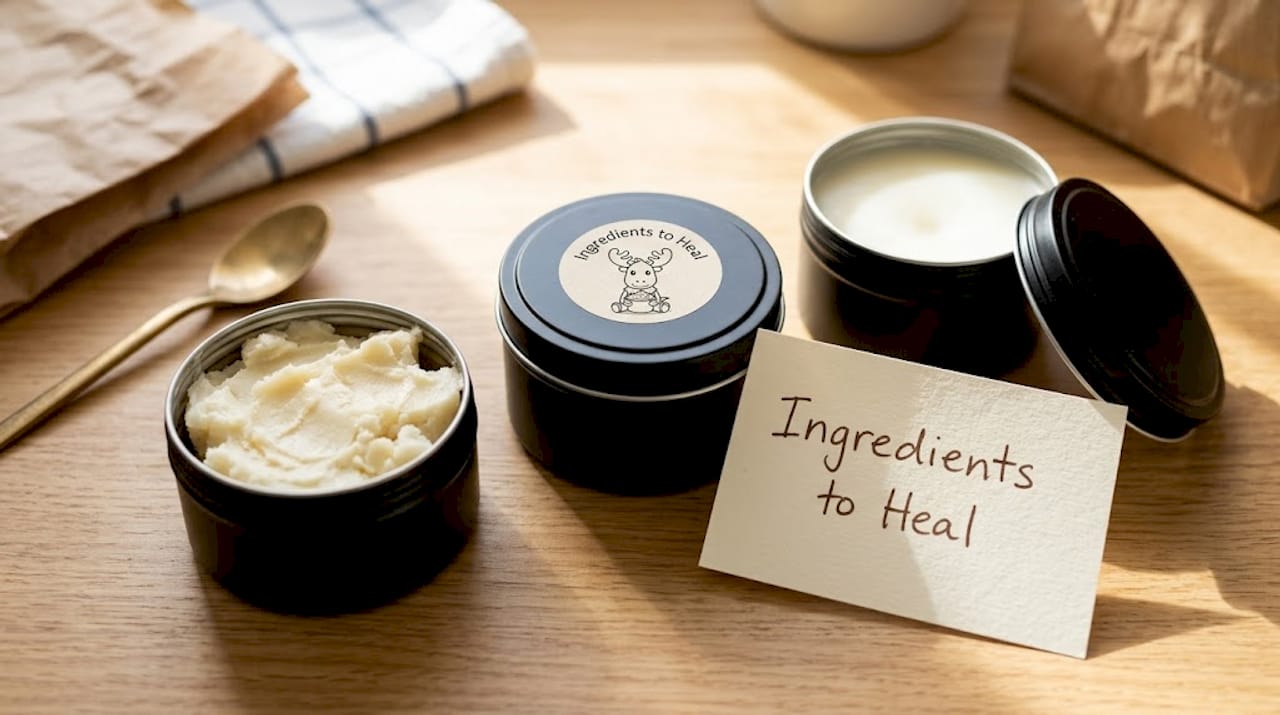
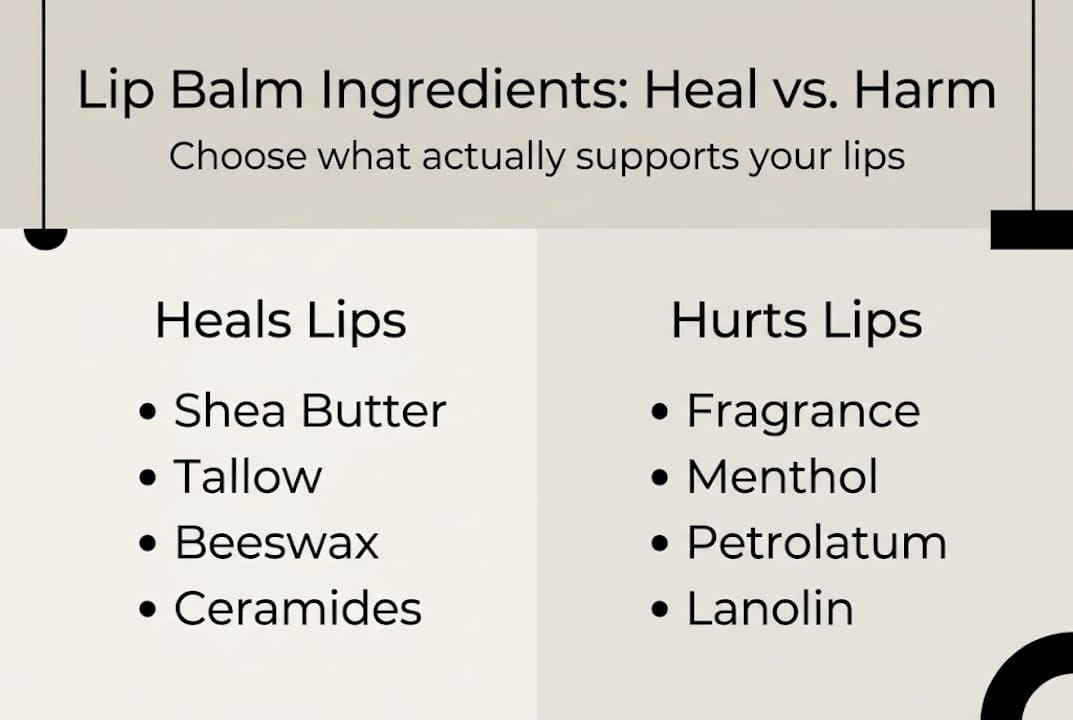
Here’s a quick breakdown of what to look for versus what to avoid:
| Ingredient | Type | Benefit |
|---|---|---|
| Beeswax | Occlusive | Seals and protects |
| Shea butter | Emollient | Softens and nourishes |
| Castor oil | Emollient | Adds slip and moisture |
| Lanolin | Occlusive + emollient | Mimics skin lipids |
| Tallow | Emollient + occlusive | Rich in fatty acids, skin-compatible |
| Tocopherols (Vitamin E) | Antioxidant | Supports skin repair |
| Petrolatum | Occlusive | Effective barrier, no nourishment |
| Fragrance / flavor | Irritant | Can worsen dryness |
| Camphor / menthol | Irritant | Temporary cool feeling, drying long-term |
Tallow deserves special attention here. When you compare tallow vs plant oils for skin hydration, tallow consistently stands out because its fatty acid profile closely mirrors human skin lipids. That compatibility means it absorbs well and supports the skin barrier rather than just sitting on top of it.
Ingredients like egg yolk infused oil and tocopherols add another layer of support. Egg yolk oil is rich in phospholipids and fatty acids that help reinforce the skin’s structure. Tocopherols, the active form of Vitamin E, protect against oxidative damage and assist in repair.
Pro Tip: Count the ingredients on the label. A shorter, recognizable list usually signals a cleaner, more intentional formula. If you can’t identify most of what’s listed, that’s a red flag.
Knowing how to maximize tallow hydration can also help you get more from every application, especially in dry or cold conditions.
Natural solutions: What works best and why
Equipped with ingredient know-how, let’s focus on which natural solutions truly deliver. The evidence is growing that natural, oil-rich formulas can outperform conventional petroleum-based products. In one clinical study, a polyherbal lip hydrant containing peppermint oil and perilla improved lip appearance from 54% to 82% over 28 days, outperforming petroleum gel. That’s a meaningful difference.
| Feature | Natural balm | Synthetic balm |
|---|---|---|
| Moisture source | Oils, butters, tallow | Petrolatum, silicones |
| Skin compatibility | High (fatty acid match) | Moderate |
| Nourishment | Yes | Minimal |
| Irritant risk | Low (when fragrance-free) | Moderate (additives) |
| Absorption | Good | Surface-level |
For the best results, look for natural brand alternatives that prioritize function over fragrance. You can also check trusted sources for natural balm recommendations when evaluating options.
What a good natural balm should contain:
- Beeswax for structure and protection
- Tallow or shea butter for deep nourishment
- Castor oil for moisture retention and texture
- Lanolin for its skin-mimicking lipid profile
- Tocopherols for antioxidant support
What it shouldn’t contain:
- Synthetic fragrances or flavors
- Camphor, menthol, or eucalyptus
- Unnecessary fillers or preservatives
- Long, unrecognizable ingredient lists
Small-batch, waterless formulations also matter. Without water, there’s no need for preservatives, and every ingredient in the formula is actively working. That means more concentrated care per application, which is exactly what handcrafted natural balms are designed to deliver.
What to do when your lip balm still isn’t working
Even with great products, sometimes lips just don’t heal. Here’s what might be happening.
- Check for allergens. Lanolin, fragrances, and certain preservatives are common culprits. If your lips feel more irritated after applying a balm, the formula may be triggering a reaction.
- Reduce application frequency. Overusing occlusives can make your lips dependent on external moisture rather than producing their own. Try spacing out applications.
- Switch products entirely. If you’ve been using the same balm for weeks without improvement, it may simply not be right for your skin.
- Examine your habits. Licking your lips, breathing through your mouth, and not drinking enough water all contribute to persistent dryness.
- See a dermatologist. Allergic reactions to balms or underlying conditions like eczema or nutritional deficiencies may require professional attention. Persistent problems that don’t respond to product changes are worth investigating.
Pro Tip: Before committing to a new balm, do a small patch test on the inside of your wrist. If you notice redness or irritation within 24 hours, skip it. Also consider troubleshooting your lip balm choice by reviewing the full ingredient list against known irritants.
Rotating between two clean, simple formulas can also help identify which ingredients work best for your specific skin.
Our take: Lip care requires simplicity and evidence, not more products
Here’s something the lip care industry doesn’t want you to focus on: most people don’t need more products. They need better ones. We’ve seen firsthand how a short, honest ingredient list outperforms a complex formula packed with trendy actives. Tallow, lanolin, beeswax, and a few carefully chosen oils. That’s it. No filler, no fragrance, no performance theater.
The brands pushing multi-step lip routines are often solving problems their own products created. When you switch to minimalist skin solutions built on proven ingredients, the constant reapplying tends to stop. Not because you forced yourself to use less, but because your lips are actually healing.
Simplicity isn’t a compromise. It’s the point.
Discover truly healing lip balms for lasting results
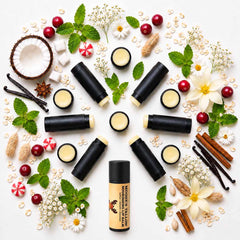
If you’re tired of balms that only work for an hour, it might be time to try something built differently. Our healing tallow lip balm combines beef tallow, lanolin, beeswax, castor oil, egg yolk infused oil, and tocopherols into a waterless, small-batch formula designed to nourish rather than just coat. Every ingredient earns its place. No fillers, no fragrance, no shortcuts. Browse our full product collection to find the right fit for your skin and start building a routine that actually works.
Frequently asked questions
Is lip balm actually addictive?
Lip balm is not chemically addictive, but irritants and temporary relief can create a behavioral cycle that makes you reapply more than necessary.
What ingredients should I look for in a healing lip balm?
Look for ceramides, shea butter, and beeswax as dermatologist-recommended options, and avoid fragrances, menthol, or anything you can’t identify on the label.
Can natural or herbal balms work better than petroleum jelly?
Yes. A polyherbal balm outperformed petroleum gel in a clinical study, improving lip condition significantly over 28 days.
What if my lips stay dry even with natural balm?
Persistent dryness may point to an allergy or underlying condition that a dermatologist should evaluate, especially if switching products hasn’t helped.


0 comments