

TL;DR:
- Los cambios de cuidado de la piel ecológicos consisten en reemplazar productos sintéticos por alternativas naturales y sostenibles para apoyar la salud de la piel y reducir el impacto ambiental.
- Cambiar los productos de forma gradual, priorizar la transparencia de los ingredientes y elegir protectores solares minerales y empaques reciclables puede dar lugar a rutinas eficaces y conscientes con el medio ambiente.
Los cambios de cuidado de la piel ecológicos se definen como reemplazar los productos sintéticos convencionales por alternativas naturales y sostenibles que apoyan la salud de la piel y reducen el daño ambiental. La industria de la belleza está cambiando rápido. Regulaciones como la prohibición de microplásticos de la UE y el Reglamento de Envases y Residuos de Envases 2025/40 de la UE están empujando a las marcas hacia formulaciones más limpias y empaques reciclables. Moosestallow construyó toda su línea de productos en torno a este principio: cada ingrediente se gana su lugar y nada entra como relleno. Hacer estos cambios de forma gradual protege tu piel de la irritación y mantiene bajo el desperdicio de producto.
1. Cambia los limpiadores espumosos agresivos por alternativas suaves que cuidan la barrera
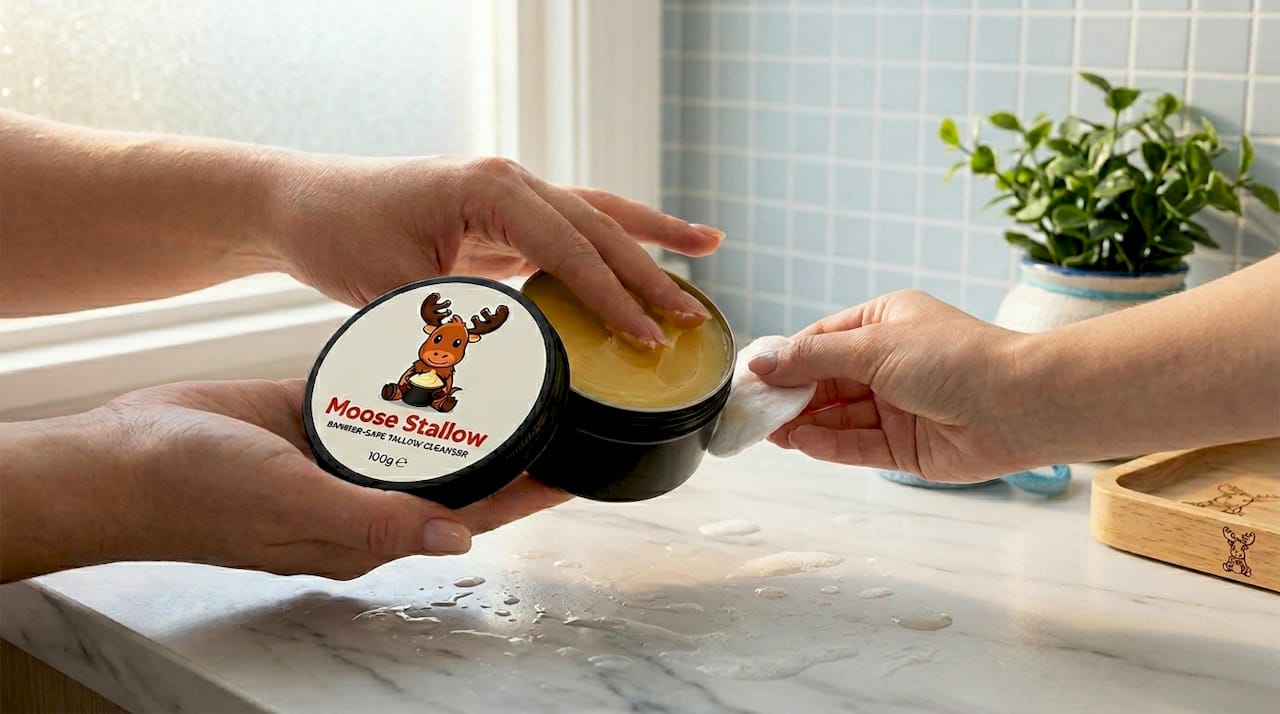
Los limpiadores espumosos a base de sulfatos eliminan los aceites naturales de la piel y dañan la barrera de humedad. Los limpiadores en aceite y en crema conservan esa barrera y aun así eliminan la suciedad y el maquillaje de forma eficaz. Esto importa porque una barrera dañada provoca sequedad, enrojecimiento y mayor sensibilidad con el tiempo.
Agentes de limpieza naturales que puedes buscar:
- Aceite de coco fraccionado como vehículo para la limpieza en aceite. Se absorbe de forma limpia, resiste la oxidación y tiene una larga vida útil.
- Jojoba como un aceite limpiador suave y compatible con la piel que imita el sebo natural de la piel.
- Fórmulas estilo Castilla que usan tensioactivos de origen vegetal en lugar de lauril sulfato de sodio.
Consejo: Introduce un limpiador nuevo a la vez y úsalo durante dos semanas completas antes de juzgar los resultados. Tu piel necesita tiempo para recalibrarse.
2. Reemplaza los humectantes sintéticos por alternativas naturales y nutritivas
Los humectantes convencionales suelen depender de aceite mineral, parabenos y fragancia sintética. Estos ingredientes se quedan sobre la piel o alteran su biología en lugar de apoyarla. Las alternativas naturales trabajan con la estructura de tu piel en vez de en su contra.
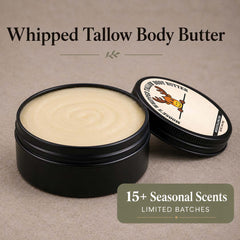
Moosestallow usa sebo de res como base de sus fórmulas porque el sebo es naturalmente compatible con la piel. Hidrata en profundidad, apoya la barrera y se absorbe sin dejar un acabado grasoso. El aceite de coco fraccionado es el vehículo preferido en las formulaciones naturales por su estabilidad, resistencia a la oxidación y fácil absorción. La jojoba y el ricino completan una mezcla humectante limpia y eficaz.
Ingredientes clave para priorizar en un humectante natural:
- Sebo de res para una nutrición profunda y apoyo de la barrera
- Aceite de coco fraccionado para una absorción ligera y estabilidad de conservación
- Tocoferoles (vitamina E) como antioxidante y conservante natural
- Cera de abejas para una oclusión protectora sin polímeros sintéticos
Consejo: Cambia tu humectante corporal antes que el facial. La piel del cuerpo es menos reactiva, lo que te da una forma de bajo riesgo para probar cómo responde tu piel a las fórmulas naturales.
3. Cambia a desodorantes naturales que se saltan los sintéticos
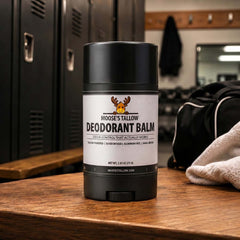
Los desodorantes y antitranspirantes convencionales dependen de compuestos de aluminio, fragancia sintética y parabenos. Los desodorantes naturales usan bicarbonato de sodio, polvo de arrurruz y aceite de coco fraccionado para absorber la humedad y neutralizar el olor sin bloquear las glándulas sudoríparas.
El periodo de transición es real. Tu cuerpo puede necesitar de dos a cuatro semanas para adaptarse después de dejar los productos con aluminio. Mantente firme. La mayoría de las personas nota que los desodorantes naturales funcionan bien una vez que pasa la fase de adaptación. Busca fórmulas que usen aceite de coco fraccionado como vehículo base. Es estable, no irritante y mucho más estable en el tiempo que muchos otros aceites naturales.
4. Elige protectores solares minerales seguros para los arrecifes en lugar de filtros UV químicos
Los filtros UV químicos como la oxibenzona y el octinoxato se relacionan con la alteración hormonal y el daño a los arrecifes de coral. Los protectores solares minerales que usan óxido de zinc no nano bloquean los rayos UV de forma física sin esos riesgos. Se quedan sobre la piel y reflejan la radiación UV en lugar de absorberla.
El óxido de zinc no nano con aceites botánicos representa el estándar actual de protección solar segura para los arrecifes y amigable con la piel. El Sheer Mineral Sunscreen SPF 40 2026 de OM Botanical combina óxido de zinc no nano con aceite de semilla de frambuesa y extractos botánicos fermentados para apoyar la barrera con antioxidantes. Esta combinación protege y nutre al mismo tiempo.
Los protectores solares minerales con óxido de zinc no nano son la opción más segura y más responsable con el medio ambiente para la protección UV de amplio espectro en 2026.
Para conocer más a fondo cómo se comparan los protectores solares minerales y químicos, la guía de protector solar mineral vs. químico de Moosestallow lo explica con claridad.
Consejo: Aplica el protector solar mineral como último paso de tu rutina matutina y reaplícalo cada dos horas bajo el sol directo. Un SPF de amplio espectro de 30 o más es el mínimo para una protección real.
5. Repiensa tu empaque con opciones recargables y reciclables
El empaque es una parte importante de la huella ambiental de un producto. El Reglamento de Envases y Residuos de Envases 2025/40 de la UE exige el diseño para el reciclaje y una clasificación de reciclabilidad para todos los empaques colocados en el mercado de la UE para 2030. Esta regulación está empujando a las marcas de todo el mundo a repensar cómo empacan sus productos.
Los sistemas de recarga suenan ideales, pero las recargas deben reutilizarse docenas de veces para compensar el costo ambiental de producir el propio envase de recarga. Elegir productos con un empaque mínimo y reciclable suele ser más práctico que invertir en un sistema de recarga que quizá no uses de forma constante.
| Tipo de empaque | Realidad ambiental |
|---|---|
| Frascos de vidrio | Reciclables pero pesados; más emisiones por transporte |
| Aluminio recargable | Eficaz solo con una reutilización frecuente y constante |
| Plástico reciclable | Práctico y con menor huella de transporte cuando se recicla |
| Cartón mínimo | Bajo impacto cuando no está blanqueado ni recubierto |
Consejo: Acompaña tu cambio de cuidado de la piel con discos de algodón reutilizables y una jabonera con drenaje. Estos pequeños cambios alargan la vida del producto y reducen el desperdicio de un solo uso sin exigir renovar toda tu rutina.
6. Cómo cambiar a un cuidado de la piel ecológico sin irritar tu piel
Cambiar todos los productos de una sola vez es el error más común que comete la gente. Hace imposible identificar qué producto causó una reacción. Un enfoque gradual protege tu piel y reduce el desperdicio de productos que abandonas antes de terminarlos.
Sigue este orden para la transición de menor riesgo:
- Empieza por tu limpiador. Toca tu piel poco tiempo y se enjuaga, lo que lo convierte en el primer cambio más seguro.
- Sigue con tu humectante. Una vez que tu piel se haya adaptado al nuevo limpiador, introduce un humectante natural.
- Cambia tu desodorante en tercer lugar. Deja de dos a cuatro semanas para que tu cuerpo se adapte.
- Reemplaza el protector solar después. Las fórmulas minerales pueden sentirse diferentes en la piel, así que date tiempo para encontrar la adecuada.
- Termina los productos que ya tienes antes de reemplazarlos. Esto reduce el desperdicio y le da a tu piel una base estable.
- Introduce un producto por semana o por mes. Ir más lento es mejor para los tipos de piel sensible.
Para un enfoque estructurado, la guía de flujo de trabajo para el cuidado natural de la piel de Moosestallow recorre un plan práctico, paso a paso, para lograr resultados duraderos.
7. Verifica las afirmaciones ecológicas antes de comprar
Las pautas de la FTC exigen que las marcas respalden las afirmaciones ecológicas con evidencia específica y medible. Términos amplios como “natural” o “ecológico” no tienen definición legal en Estados Unidos. Esto significa que un producto etiquetado como “verde” todavía puede contener polímeros sintéticos, derivados del petróleo o ingredientes obtenidos sin supervisión ética.
Hazte estas preguntas antes de comprar cualquier producto que se venda como una alternativa sostenible para el cuidado de la piel:
- ¿La marca revela cada ingrediente y su origen?
- ¿El empaque es reciclable o recargable con un sistema de reutilización claro?
- ¿La marca aborda el cumplimiento sobre microplásticos antes de la fecha límite de la UE de octubre de 2027?
- ¿Las afirmaciones ecológicas están respaldadas por certificación de terceros o datos de ciclo de vida?
Moosestallow publica su lista de ingredientes de forma abierta y no usa rellenos sintéticos. Ese nivel de transparencia es el mínimo que deberías esperar de cualquier marca que haga afirmaciones de sostenibilidad.
Puntos clave
Los cambios de cuidado de la piel ecológicos más eficaces reemplazan un producto a la vez, priorizan la transparencia de los ingredientes y eligen vehículos naturales como el aceite de coco fraccionado y el sebo de res por su desempeño comprobado.
| Punto | Detalles |
|---|---|
| Cambia de forma gradual | Reemplaza un producto por semana o por mes para evitar reacciones en la piel y reducir el desperdicio. |
| Prioriza la transparencia de los ingredientes | Elige marcas que revelen cada ingrediente y eviten los rellenos sintéticos. |
| Elige protector solar mineral | El óxido de zinc no nano es la protección UV más segura y amigable con los arrecifes disponible. |
| Evalúa el empaque de forma realista | Los sistemas de recarga solo compensan el costo ambiental cuando se usan de forma constante y frecuente. |
| Verifica las afirmaciones ecológicas | Las pautas de la FTC exigen pruebas medibles; “natural” y “ecológico” no tienen definición legal. |
Por qué creo que la mayoría complica esto de más
He probado muchos ingredientes naturales a lo largo de los años, y la verdad honesta es que las fórmulas más simples casi siempre superan a las complejas. Cuando empecé a trabajar con sebo de res, jojoba y aceite de coco fraccionado, me sorprendió lo poco que la piel realmente necesita. El aceite de coco fraccionado, en particular, pasa desapercibido porque no está de moda. Pero su estabilidad y su resistencia a la oxidación lo hacen mucho más confiable que muchos aceites que la gente persigue por su atractivo de marketing.
El problema del greenwashing es real, y entiendo por qué frustra a la gente. He visto marcas ponerle “limpio” a una etiqueta mientras esconden polímeros sintéticos en medio de una lista de ingredientes. Mi consejo es leer la lista completa de ingredientes cada vez. Si una marca no puede decirte exactamente qué hay en el producto y por qué, esa es tu respuesta.
La paciencia importa más que la perfección aquí. No necesitas renovar toda tu rutina esta semana. Elige un producto, haz el cambio con calma y dale a tu piel tiempo para responder. Así se forman los hábitos duraderos, y así evitas el ciclo de comprar y abandonar productos que nunca tuvieron una oportunidad justa. Para más orientación práctica, los consejos de cuidado natural de la piel para 2026 de Moosestallow abordan este enfoque en detalle.
Brian
Prueba Moosestallow para tu próximo cambio de cuidado natural de la piel
Moosestallow construye cada producto en torno al sebo de res, el aceite de coco fraccionado, la cera de abejas, la jojoba, el ricino, los tocoferoles y mezclas infusionadas con yema de huevo. Sin rellenos. Sin fragancias sintéticas. Sin derivados del petróleo. Cada ingrediente se elige por su desempeño y su compatibilidad con la piel. Si estás listo para hacer tu primer cambio, la All Natural Baby Butter es un punto de partida limpio y honesto. Funciona como humectante diario para manos secas, piel sensible y todo lo que hay en medio. Ingredientes simples, elaboración honesta y una comodidad que de verdad puedes sentir.
Preguntas frecuentes
¿Qué son los cambios de cuidado de la piel ecológicos?
Los cambios de cuidado de la piel ecológicos reemplazan los productos sintéticos convencionales por alternativas naturales y sostenibles que reducen el daño ambiental y apoyan la salud de la piel. Los cambios comunes incluyen limpiadores en aceite, humectantes a base de sebo, protectores solares minerales y desodorantes naturales.
¿Cómo cambio a un cuidado de la piel natural sin irritar mi piel?
Reemplaza un producto a la vez, comenzando por tu limpiador, luego el humectante y después el desodorante. Introducir los productos de forma gradual te permite identificar reacciones y le da tiempo a tu piel para adaptarse.
¿Los productos naturales para el cuidado de la piel son realmente mejores para el medio ambiente?
Pueden serlo, pero solo cuando las afirmaciones ecológicas están respaldadas por datos reales. Las pautas de la FTC exigen pruebas medibles para las afirmaciones de sostenibilidad, así que revisa siempre la lista de ingredientes y los detalles del empaque antes de comprar.
¿Cuál es el ingrediente de protección solar natural más seguro?
El óxido de zinc no nano es el filtro UV más seguro y más amigable con los arrecifes disponible. Ofrece protección de amplio espectro sin filtros químicos que alteran las hormonas, como la oxibenzona.
¿El aceite de coco fraccionado es bueno para la piel?
El aceite de coco fraccionado es uno de los vehículos naturales más estables y compatibles con la piel que existen. Se absorbe con facilidad, resiste la oxidación y tiene una larga vida útil, lo que lo convierte en una base confiable para las fórmulas naturales de cuidado de la piel.
Recomendados
- Los mejores consejos de cuidado natural de la piel para una piel más sana y calmada en 2026 – Moose’s Tallow
- Qué hace que el cuidado de la piel sea natural: cualidades clave en 2026 – Moose’s Tallow
- Crea un flujo de trabajo de cuidado natural de la piel para resultados duraderos – Moose’s Tallow
- Ingredientes honestos: la clave para una piel más sana en 2026 – Moose’s Tallow


0 comentarios