


TL;DR:
- Mineral sunscreens mainly absorb UV rays, with minimal reflection.
- They use zinc oxide and titanium dioxide, staying on the skin surface.
- Choosing a sunscreen depends on skin sensitivity, safety preferences, and daily habits.
Most people believe mineral sunscreens work by forming a physical shield that bounces UV rays off the skin. It’s a clean, satisfying image. The truth, though, is more nuanced. Mineral sunscreens actually absorb UV far more than they reflect it, which changes how we should think about both types. If you’re trying to make a smart, values-driven choice for your skin and your family, understanding what’s actually happening on your skin is the best place to start.
Table of Contents
- How mineral and chemical sunscreens actually work
- Comparing ingredients and safety: what matters most
- Real-world performance: feel, reapplication, and white cast
- Choosing the right sunscreen for your values and needs
- What most guides miss about sunscreen choices
- Safe, natural sun protection options you can trust
- Frequently asked questions
Key Takeaways
| Point | Details |
|---|---|
| Absorption myth busted | Mineral sunscreens primarily absorb UV rays, challenging the reflection myth. |
| Safety for sensitive skin | Mineral formulas are gentler and preferred for sensitive skin types, but both are generally safe. |
| Effective protection factors | SPF 30+, broad-spectrum labeling, and reapplication matter more than sunscreen type. |
| Ingredient transparency | Always check ingredient lists as some ‘mineral-only’ brands add chemicals for texture or SPF. |
| Best sunscreen routine | Consistency and comfort lead to the safest, healthiest sun protection—choose what you’ll use daily. |
How mineral and chemical sunscreens actually work
Let’s clear up the most common point of confusion first. Sunscreens fall into two categories based on their active ingredients.
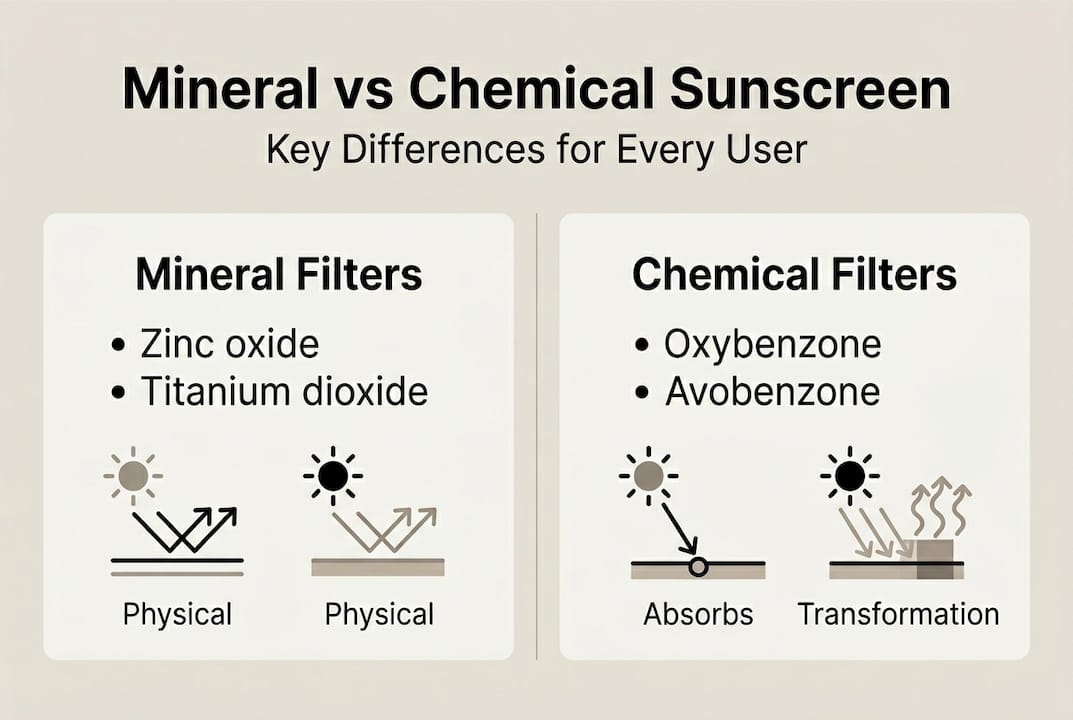
Mineral sunscreens use inorganic filters, most commonly zinc oxide and titanium dioxide. These sit on the surface of the skin and work primarily by absorbing UV radiation and converting it to a small amount of heat. The idea that they simply “reflect” UV like a mirror is mostly a myth. In reality, mineral sunscreens absorb 95% of UV, with reflection and scattering accounting for only 4 to 5 percent.
Chemical sunscreens use organic (carbon-based) filters like oxybenzone, avobenzone, octinoxate, and octisalate. These absorb into the upper skin layers and work by capturing UV energy and releasing it as heat. They don’t sit on top of the skin; they work within it.
Here’s a quick comparison of how each type interacts with your skin:
- Mineral: Sits on skin surface, absorbs and slightly scatters UV, works immediately on application
- Chemical: Absorbs into skin, converts UV to heat, requires 15 to 20 minutes before full activation
- Both: Can deliver effective broad-spectrum protection when properly formulated
Broad-spectrum simply means the sunscreen protects against both UVA rays (which age skin) and UVB rays (which burn). Any SPF 30 or higher labeled broad-spectrum covers both.
For those of us who care about what goes on our skin, understanding this distinction matters. It also connects to how you might pair sunscreen with a nourishing base, something we explore in our guide on tallow vs water-based sunscreens.
Comparing ingredients and safety: what matters most
Understanding how they work is key, but ingredient safety and skin compatibility matter just as much.
The active ingredients in mineral sunscreens, zinc oxide and titanium dioxide, have long safety records. When used in non-nano form, the particles are large enough that they stay on the skin’s surface and don’t penetrate into deeper layers. Mineral nanoparticles do not penetrate past the upper skin layer, which is reassuring for those with sensitive or reactive skin.
Chemical filters are a more mixed picture. Some, like oxybenzone, are absorbed systemically at levels above FDA thresholds. Chemical filters absorb systemically but no proven harm has been established in humans. Still, for people who prefer to minimize what their body absorbs, this is worth knowing.
Here’s a comparison of common concerns:
| Factor | Mineral | Chemical |
|---|---|---|
| Skin penetration | Stays on surface | Absorbed into skin |
| Irritation risk | Lower, gentler profile | Higher for sensitive skin |
| Hormone disruption concern | Minimal | Some filters flagged |
| Reef safety | Generally safer | Some filters restricted |
For sensitive skin types, mineral options tend to be the safer call. You can also check our full guide on ingredients to avoid in skincare for a broader look at what to watch for.
Pro Tip: If you’re scanning an ingredient label and see “zinc oxide” or “titanium dioxide” listed under “Active Ingredients,” that’s a mineral sunscreen. Chemical filters will list names ending in -one, -ate, or -inoxate.
The natural skincare benefits of choosing simpler formulas go beyond just avoiding irritants. They often mean fewer ingredients overall, which makes it easier to know exactly what you’re putting on your skin.
Real-world performance: feel, reapplication, and white cast
Once you’ve checked ingredients, the next concern is how sunscreen actually feels and performs every day.
This is where the two types genuinely differ in experience. Mineral sunscreens, especially those with high zinc oxide percentages, tend to go on thicker and can leave a white cast on deeper skin tones. Chemical sunscreens are typically lightweight and clear, which is why they’ve dominated the cosmetic market. Chemical sunscreens activate after 15 to 20 minutes and feel nearly invisible on skin, but they may irritate sensitive or reactive complexions.

Here’s a practical breakdown by use case:
| Use case | Better fit |
|---|---|
| Under makeup | Chemical (lighter texture) |
| Children and sensitive skin | Mineral (gentler actives) |
| Water sports | Both, if water-resistant rated |
| Darker skin tones | Tinted mineral or chemical |
For everyday reapplication, follow these steps:
- Apply sunscreen 15 to 30 minutes before sun exposure
- Use about a teaspoon for your face and a shot glass amount for your body
- Reapply every two hours, or immediately after swimming or sweating
- Don’t skip ears, the back of the neck, and hands
Pro Tip: A balm-style mineral sunscreen with a nourishing base, like beef tallow and beeswax, can actually make reapplication easier and more pleasant. The texture is rich but not greasy, and it doubles as a skin treatment.
For those building a tallow skincare routine for sensitive skin, pairing a mineral sunscreen with tallow-based moisturizers creates a simple, compatible routine without layering a lot of synthetic products.
Choosing the right sunscreen for your values and needs
Now let’s make those facts practical, using a framework to help you choose confidently for your unique skin and preferences.
Start with your values. If avoiding synthetic chemicals is important to you, mineral is the clear choice. Mineral aligns with natural preferences, and the best sunscreen is always the one you’ll actually use consistently.
Here’s a simple decision flow:
- Sensitive or reactive skin? Go mineral.
- Prefer a lightweight, invisible finish? Chemical may suit you better.
- Concerned about systemic absorption? Choose mineral with non-nano zinc oxide.
- Using it on children? Mineral is the gentler, more trusted option.
- Prioritizing clean, simple ingredients? Read the full label, not just the front.
That last point matters more than most people realize. Some “mineral-only” sunscreens contain extra UV-absorbing chemicals for better texture or SPF but don’t list them as actives. About a third of products marketed as mineral-only fall into this category.
Watch out for these common label traps:
- “Natural” doesn’t mean mineral or chemical-free
- SPF numbers above 50 offer minimal added protection
- “Water-resistant” doesn’t mean waterproof; reapplication still applies
Understanding what makes skincare natural helps cut through marketing noise. And if you want a checklist to guide your next purchase, our guide to safe natural skincare is a solid starting point.
What most guides miss about sunscreen choices
Here’s something I think gets lost in all the ingredient debates: the healthiest sunscreen habit isn’t about finding the “purest” formula. It’s about finding one you’ll actually reach for every morning without thinking twice.
We’ve seen people spend so much energy comparing labels that they end up using nothing consistently. That’s a real loss. Skin comfort, texture, and even scent matter because they determine whether you’ll keep using it. Choosing tallow for sensitive skin is one example of letting real-world feel guide your routine, not just theory. The studies back this up too. Consistent use of any well-formulated, broad-spectrum SPF 30 or higher protects far better than occasional use of a “perfect” formula.
Safe, natural sun protection options you can trust
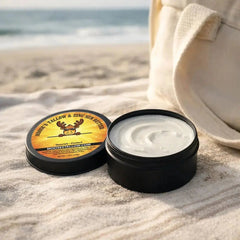
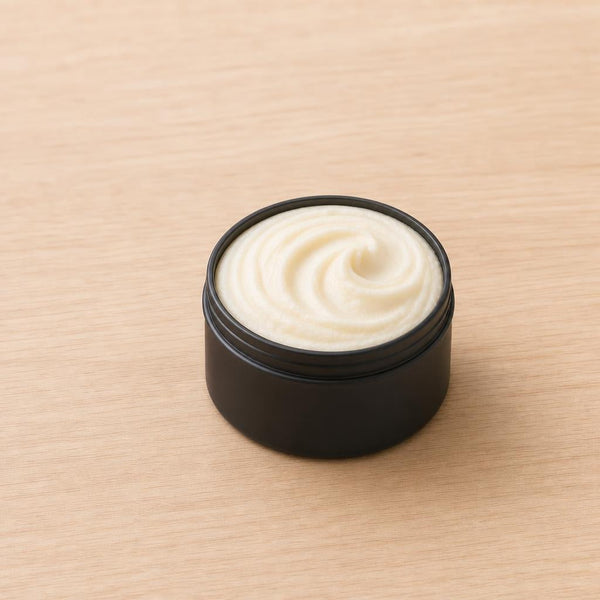
If you’ve been looking for a mineral sunscreen that actually feels good to use, our tallow zinc sun balm is worth a close look. It’s built around non-nano zinc oxide for broad-spectrum protection, with beef tallow for deep nourishment and beeswax and cetyl alcohol for staying power. No unnecessary fillers. No synthetic chemical filters. Just a clean, effective formula that works with your skin’s natural biology. Browse our full range of all natural skincare products to find options that fit your daily routine.
Frequently asked questions
Do mineral sunscreens really just reflect sunlight?
No. Mineral sunscreens absorb 95% of UV and reflect or scatter only 4 to 5 percent, so absorption is the primary mechanism, not reflection.
Are chemical sunscreens safe for daily use?
Most are considered safe for daily use. Chemical filters absorb systemically above FDA thresholds.
Which sunscreen is better for sensitive skin?
Mineral sunscreens are generally the gentler choice, with fewer organic chemicals and a lower risk of irritation for reactive or sensitive skin types.
Does SPF or sunscreen type matter more for protection?
Consistency matters most. The best option is the one you use every day with SPF 30 or higher and broad-spectrum coverage.
Are “mineral-only” sunscreens always free of chemical filters?
Not always. 34% of “mineral-only” sunscreens contain undisclosed UV-absorbing chemicals added for texture or SPF but not listed as active ingredients.


0 comments