

En resumen:
- Evaluar los ingredientes del cuidado de la piel es fundamental, porque el orden de los ingredientes revela la concentración y la eficacia del producto.
- Las bases de datos confiables y entender las tácticas de marketing te ayudan a distinguir los activos reales de las afirmaciones falsas, lo que te ahorra dinero y reacciones en la piel.
Saber cómo evaluar los ingredientes del cuidado de la piel es una de las habilidades más prácticas que puedes desarrollar para tu piel. La mayoría de la gente compra productos según las promesas del empaque o el nombre de un ingrediente de moda. Así es como terminas con una crema hidratante de $60 que es en su mayoría agua y fragancia. Esta guía va directo al grano. Aprenderás a leer las listas de ingredientes con confianza, a detectar trucos de marketing, a usar bases de datos confiables y a identificar lo que de verdad le conviene a tu piel.
Puntos clave
| Punto | Detalles |
|---|---|
| El orden de los ingredientes revela la concentración | Los primeros 5 a 7 ingredientes forman la mayor parte de cualquier fórmula y definen lo que un producto realmente hace. |
| Los trucos de marketing son comunes | Las mezclas patentadas y el sciencewashing esconden dosis bajas detrás de afirmaciones que suenan impresionantes. |
| Las bases de datos confiables verifican la seguridad | Herramientas como EWG Skin Deep y EU CosIng te ayudan a revisar los ingredientes antes de comprar. |
| Los ingredientes simples superan a los activos diluidos | Las fórmulas honestas con sebo de res y aceite de coco fraccionado suelen dar más que las mezclas complejas. |
| El seguimiento personal importa | Revisar las bases de datos y observar las reacciones de tu propia piel te dan la lectura más confiable de un producto. |
Cómo evaluar los ingredientes del cuidado de la piel: empieza por el orden
La lista de ingredientes de cualquier producto de cuidado de la piel no es aleatoria. Las regulaciones exigen que los ingredientes presentes en una concentración mayor al 1% se listen en orden descendente por peso. Eso significa que los primeros ingredientes de la lista definen lo que un producto realmente es y hace. Los primeros 5 a 7 ingredientes suelen formar la mayor parte de la concentración de la fórmula.
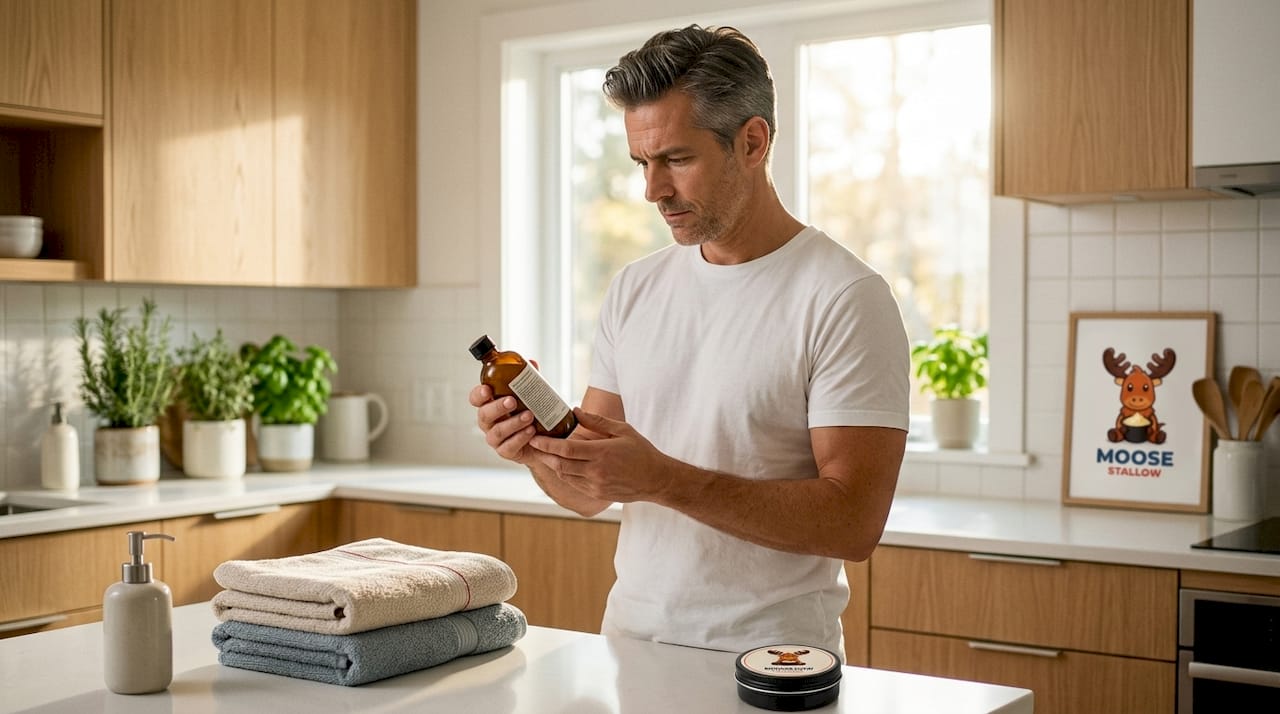
Por debajo del 1%, los fabricantes pueden listar los ingredientes en el orden que quieran. Aquí es donde la cosa se pone interesante y a menudo engañosa. Una marca puede colocar legalmente un extracto botánico codiciado cerca del inicio de la sección de menos del 1%, haciéndolo parecer más importante de lo que en realidad es.
Esto es lo que debes buscar en esos primeros ingredientes:
- Agua o un aceite portador (como el aceite de coco fraccionado) suele aparecer primero y define la textura y la base del producto.
- Los activos clave como los tocoferoles o los péptidos deben aparecer entre los primeros ingredientes para indicar una dosis significativa.
- Los conservantes y las fragancias suelen aparecer cerca del final, lo cual es apropiado ya que funcionan en concentraciones bajas.
- Los extractos botánicos listados en el último tercio a menudo están para decorar la etiqueta, no por una eficacia real.
Vale la pena entender el aceite de coco fraccionado como base. A diferencia de muchos aceites portadores, resiste la oxidación, se absorbe con facilidad y tiene una larga vida útil. Cuando lo ves listado en primer o segundo lugar, eso te dice que el producto está construido sobre una base estable y funcional.
Consejo: Voltea el frasco antes de leer cualquier otra cosa. Si el agua es el primer ingrediente y un activo beneficioso aparece en décimo lugar, el producto es en su mayoría agua con una pizca del ingrediente estrella.
Cómo distinguir los ingredientes eficaces de los trucos de marketing
No todos los ingredientes se ganan su lugar. Saber cuáles sí lo hacen es una parte esencial del análisis de ingredientes del cuidado de la piel. Estos son los ingredientes con un historial real y respaldado por la investigación:
- Sebo de res. Estructuralmente similar al sebo humano, se absorbe sin tapar los poros y apoya la función de la barrera de la piel de forma eficaz.
- Tocoferoles (vitamina E). Un antioxidante bien estudiado que protege la barrera de la piel y prolonga la estabilidad del producto.
- Niacinamida. Realmente eficaz para el tono y la reparación de la barrera, aunque los expertos advierten que las concentraciones altas pueden causar irritación en lugar de beneficios.
- Péptidos y ceramidas. Buenas opciones para apoyar la barrera y retener la humedad durante y después de las fases de sanación de la piel.
- Cera de abejas y jojoba. Ambas ofrecen una oclusión protectora y una textura compatible con la piel, sin rellenos sintéticos.
Ahora, el lado del marketing. Dos tácticas que verás con frecuencia:
Las mezclas patentadas son la forma más común en que las marcas ocultan las dosis de los ingredientes. Si una mezcla patentada aparece como un solo elemento, no tienes forma de saber cuánto contiene de cada ingrediente. Las marcas usan mezclas patentadas para proteger sus fórmulas, pero también ocultan si un ingrediente promocionado está presente en una cantidad significativa.
El sciencewashing es igual de común. Ocurre cuando una marca usa terminología científica compleja o afirma tener una “tecnología patentada” sin ninguna prueba verificable. Puedes revisar las patentes directamente en USPTO.gov. Si una marca afirma tener tecnología propia pero no tiene ninguna patente registrada, eso es una señal de alerta.
Muchos botánicos caen en una trampa parecida. Los extractos de plantas exóticas listados cerca del final de una fórmula suelen estar demasiado diluidos para hacer algo por tu piel. Están ahí para que la etiqueta se vea interesante, no para funcionar.
Cómo usar bases de datos confiables para la seguridad de los ingredientes
Una vez que sabes leer una etiqueta, necesitas herramientas para verificar lo que estás leyendo. Destacan algunos recursos:
| Base de datos | Qué abarca | Mejor uso |
|---|---|---|
| EWG Skin Deep | Puntuaciones de seguridad de miles de ingredientes | Revisión rápida de seguridad y señalización de riesgos |
| EU CosIng | Datos regulatorios de la UE sobre ingredientes cosméticos | Revisar el estado de prohibición y el uso autorizado |
| Diccionario de Paula's Choice | Datos de función y eficacia | Entender lo que un ingrediente realmente hace |
| App SkinGuard | Compara varias bases de datos entre sí | Escanear productos sobre la marcha |
Un dato que sorprende a mucha gente: las regulaciones de la UE prohíben más de 1,600 sustancias que siguen siendo legales en los cosméticos de EE. UU. La FDA de EE. UU. no exige una aprobación de seguridad previa a la venta para la mayoría de los productos de cuidado personal. Esto no significa que todos los productos de EE. UU. sean inseguros. Sí significa que no puedes suponer que “legal” equivale a “seguro” o “bien probado”.
Conocer las diferencias regulatorias entre regiones te ayuda a poner expectativas realistas. Un ingrediente que pasa la revisión de EWG todavía puede provocar una reacción en tu piel. Por eso, comparar las bases de datos con el seguimiento de tu propia piel te da la lectura más confiable. Ninguna puntuación por sí sola cuenta toda la historia.
Consejo: Usa la base de datos EU CosIng al evaluar un producto que se vende en EE. UU. Si un ingrediente está restringido o prohibido en la UE, esa es información útil aunque aquí se venda legalmente.
Método paso a paso para evaluar cualquier producto
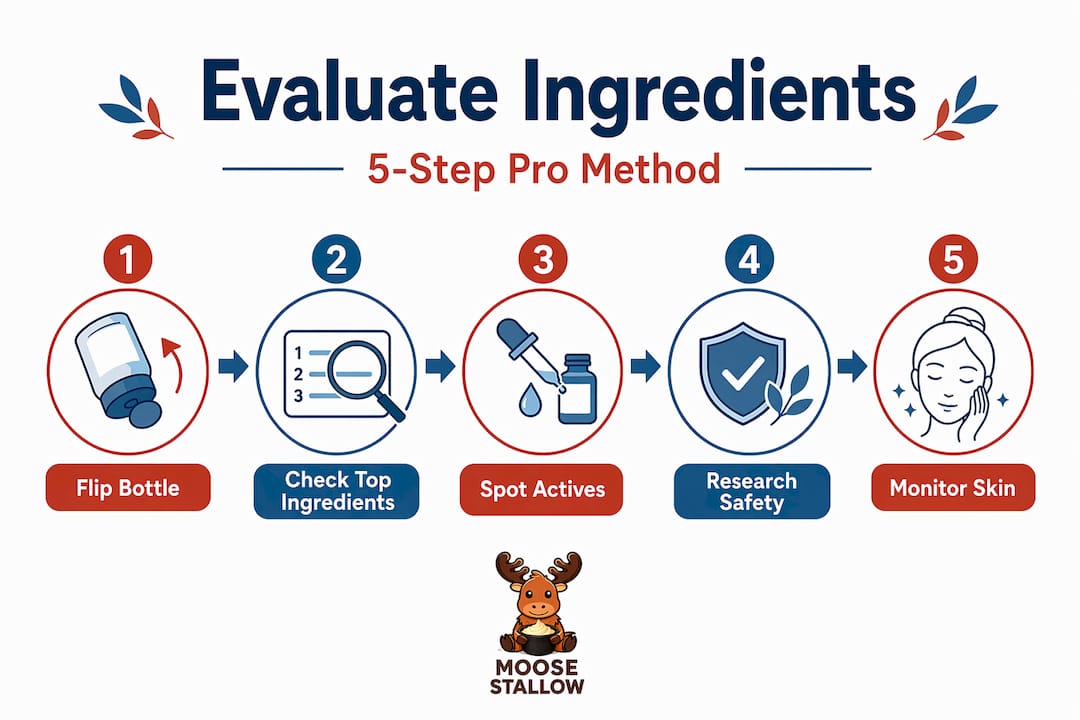
Puedes aplicar este proceso a cualquier producto de cuidado de la piel en unos cinco minutos.
- Lee la lista completa de ingredientes. No te saltes este paso. El texto de marketing y las listas de ingredientes a menudo cuentan historias completamente distintas.
- Identifica los primeros 5 a 7 ingredientes. Estos definen la base, la textura y la función principal del producto. Busca ingredientes honestos como sebo de res, aceite de coco fraccionado o cera de abejas cerca del inicio.
- Verifica que los activos eficaces estén en posiciones significativas. Si los tocoferoles o los péptidos aparecen en el primer tercio, es probable que estén presentes en niveles funcionales. Si están cerca del final, seguramente están ahí por marketing.
- Señala las mezclas patentadas y las afirmaciones de patentes sin respaldo. Si la etiqueta dice “complejo patentado” sin un número de patente verificable, trátalo como una afirmación de relleno.
- Pasa los ingredientes por una base de datos confiable. Revisa cualquier cosa desconocida con EWG, CosIng o la app SkinGuard. Fíjate en los ingredientes que debes evitar en el cuidado de la piel que se sabe que son irritantes.
- Ajusta el perfil de ingredientes a tu tipo de piel. Un producto con aceite de ricino y cera de abejas le va bien a la piel seca o dañada. Vale la pena saltarte una fórmula con mucha fragancia sintética cerca del inicio si tienes piel sensible.
Este proceso no toma mucho una vez que lo practicas unas cuantas veces. Y te ahorrará dinero, reacciones en la piel y frustración.
Mi opinión honesta sobre la evaluación de ingredientes
He pasado años observando de cerca lo que lleva el cuidado de la piel. Lo que he aprendido es que los productos más sobrevalorados suelen ser los que tienen las listas de ingredientes más largas. El rendimiento de muchos activos populares depende de su concentración y del contexto de la fórmula, no solo de que aparezcan en la etiqueta. Un ingrediente listado en niveles mínimos casi no hace nada.
Lo que he descubierto que sí funciona es priorizar las fórmulas donde cada ingrediente tiene un trabajo claro. Sebo de res, aceite de coco fraccionado, cera de abejas, tocoferoles. No están de moda. Son confiables. En mi experiencia, una lista corta de ingredientes honestos y bien elegidos supera cada vez a una lista larga de activos diluidos. El valor de la simplicidad en los ingredientes es algo contra lo que la mayoría del marketing del cuidado de la piel trabaja activamente. Confía en lo que puedes verificar, no en lo que suena bien en el frente del empaque.
– Brian
Productos en los que vale la pena confiar en Moosestallow
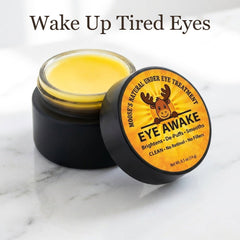
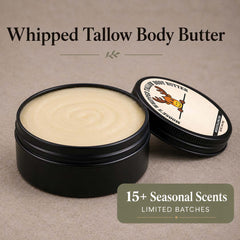
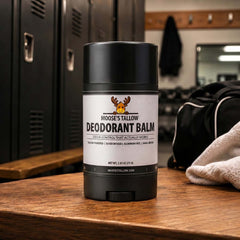
Si has hecho el trabajo de evaluar las listas de ingredientes, mereces productos que resistan ese escrutinio. Moosestallow construye cada fórmula en torno a sebo de res, aceite de coco fraccionado, cera de abejas, tocoferoles, jojoba, ricino y bases infusionadas con yema de huevo. Sin rellenos. Sin esconderse detrás de mezclas patentadas. Explora toda la gama de productos de Moosestallow y mira exactamente lo que lleva cada producto antes de comprar.
Preguntas frecuentes
¿Qué te dicen los primeros ingredientes de una etiqueta de cuidado de la piel?
Los primeros 5 a 7 ingredientes forman la mayor parte de la fórmula y revelan la base y la función principal del producto. Si los activos beneficiosos no aparecen en este grupo, es probable que estén presentes en cantidades mínimas.
¿Cómo sé si un ingrediente del cuidado de la piel es seguro?
Compara los ingredientes en bases de datos como EWG Skin Deep o EU CosIng, y luego observa cómo responde tu propia piel. Ninguna puntuación por sí sola da una imagen completa de la seguridad.
¿Qué es el sciencewashing en el cuidado de la piel?
El sciencewashing consiste en presentar ingredientes comunes con nombres complejos o afirmaciones de “tecnología propia” sin verificar, como si fueran avances científicos. Puedes revisar las patentes en USPTO.gov para verificarlas.
¿Por qué importa el orden de los ingredientes por debajo del 1% de concentración?
Por debajo del 1%, los ingredientes se pueden listar en cualquier orden. Esto permite que las marcas coloquen extractos atractivos cerca del inicio de la sección de menos del 1%, haciéndolos parecer más importantes de lo que su dosis real justifica.
¿Es el aceite de coco fraccionado un buen ingrediente base?
Sí. El aceite de coco fraccionado es estable, resiste la oxidación, se absorbe con facilidad y dura más que muchos otros aceites portadores. Verlo cerca del inicio de una lista de ingredientes es una buena señal de la calidad y el rendimiento del producto.
Recomendado
- Por qué la simplicidad en los ingredientes importa para un cuidado de la piel eficaz – Moose’s Tallow
- Ingredientes honestos: la clave para una piel más sana en 2026 – Moose’s Tallow
- Crea una rutina de cuidado natural de la piel para resultados duraderos – Moose’s Tallow
- ¿Qué es el cuidado de la piel con ingredientes simples? Una guía natural – Moose’s Tallow


0 comentarios