

TL;DR:
- Simplified skincare formulations improve absorption and reduce irritation risks.
- Short, recognizable ingredient lists help identify safer, more effective products.
- Minimalist routines support sensitive skin health and promote consistent, trustful use.
Most of us have been trained to think that a longer ingredient list signals a better product. More actives, more benefits, right? Not quite. The truth is, simpler formulations support better absorption of key actives without interference from unnecessary additives. This article walks you through what ingredient simplicity really means, why it matters for sensitive skin, and how parents, pet owners, and everyday users can make smarter, calmer choices about what they put on their skin.
Key Takeaways
| Point | Details |
|---|---|
| Fewer ingredients, healthier skin | Minimalist formulas lower the risk of irritation and improve skin barrier function. |
| Science supports simplicity | Experts and dermatologists recommend simple routines for best results, especially with sensitive skin. |
| Easy label decoding | Learning to read ingredient lists helps you quickly spot truly gentle, effective skincare solutions. |
| Apply simplicity in real life | Choose products with short, recognizable lists and adapt your routine for your family’s unique needs. |
Understanding ingredient simplicity in skincare
Ingredient simplicity means using only what genuinely serves your skin. No fillers. No synthetic fragrances added for marketing appeal. No ten-step processes that leave your skin confused. It is a philosophy built around restraint and intention.
For health-conscious shoppers, this matters more than ever. When you can read and recognize every ingredient on a label, you know exactly what you are putting on your body. That transparency builds trust. And for people with sensitive skin, it can be the difference between calm, healthy skin and a frustrating cycle of reactions.
The benefits of keeping things simple are real and well-documented. Ingredient simplicity prioritizes skin barrier health through a reduced irritant load, better absorption, and higher adherence to routines. In plain terms: fewer ingredients means less stress on your skin, better results from the ones that matter, and a routine you will actually stick to.
Here is what a simplified approach typically delivers:
- Lower irritation risk: Every added ingredient is another potential trigger for sensitive skin.
- Easier allergen tracking: When reactions happen, short lists make it simple to identify the cause.
- Higher effectiveness: Key ingredients work better without competing additives in the formula.
- More consistent routines: Simple routines are easier to follow every single day.
“The skin does not need a crowd of ingredients to thrive. It needs the right ones, carefully chosen and honestly used.”
If you want to understand why this matters on a deeper level, the natural skincare benefits of using fewer, cleaner ingredients are worth exploring before you choose your next product.
The science: What does your skin need (and what can harm it)?
Your skin is remarkably capable on its own. It regulates moisture, fights off environmental damage, and repairs itself constantly. What it genuinely needs from skincare is support, not interference.
Dermatologists recommend simple routines built around a cleanser, moisturizer, and SPF. That is it. Anything beyond that is often unnecessary and can actively cause irritation, especially for people with sensitive or reactive skin.
| Ingredient type | Purpose | Potential concern |
|---|---|---|
| Essential fatty acids | Barrier repair and hydration | Minimal, skin-compatible |
| Synthetic fragrance | Scent only | Common allergen and irritant |
| Parabens | Preservative | Hormone disruption concerns |
| Natural oils | Nourishment and moisture | Generally well tolerated |
| Artificial dyes | Color only | No skin benefit, irritation risk |
The problem is that many products pile on actives, preservatives, and fillers that interact unpredictably, especially on compromised or sensitive skin. Learning about ingredients to avoid is one of the most useful things you can do for your skin health. And if you are building a new routine around sensitive skin, a simple sensitive skin routine built on minimal ingredients is often the fastest path to real improvement.
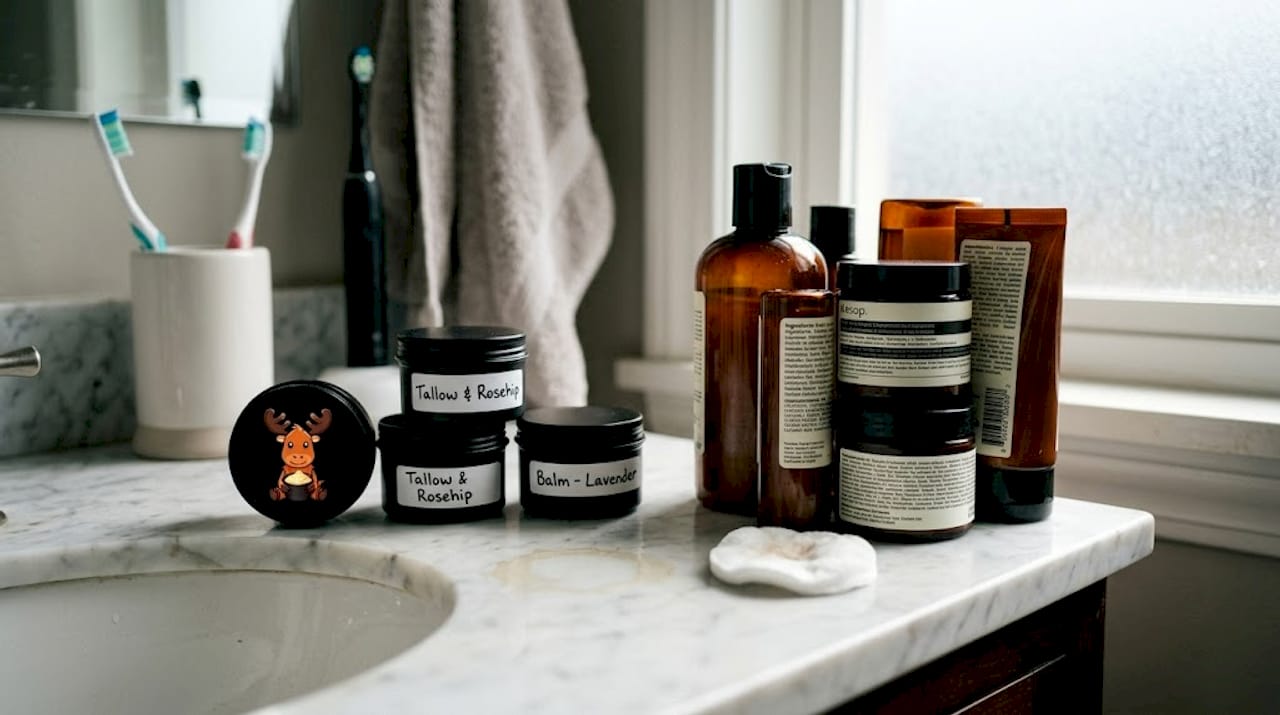
Pro Tip: When you start a new product, introduce it alone for two weeks before adding anything else. This way, if something bothers your skin, you know exactly what to blame.
Simple vs. complex: Ingredient list comparison
Seeing the difference side by side makes it easier to understand why simplicity wins. Here is what a real comparison looks like on product labels.
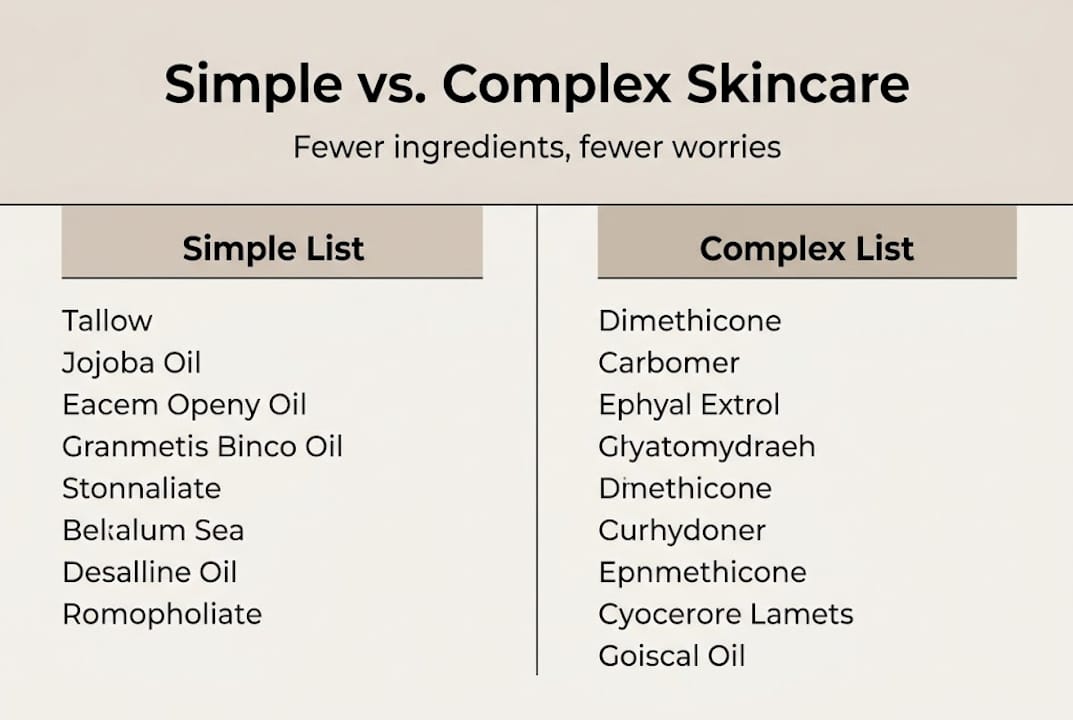
| Simple formula | Complex formula |
|---|---|
| Beef tallow, jojoba oil, vitamin E | Water, glycerin, dimethicone, carbomer, sodium laureth sulfate, fragrance, methylparaben, propylparaben, disodium EDTA, yellow 5 |
| 3 recognizable ingredients | 10+ ingredients, several unrecognizable |
| No synthetic additives | Multiple preservatives and synthetic compounds |
| Every ingredient serves a clear role | Several ingredients exist for texture or shelf appeal only |
Simpler formulations allow better absorption of key actives without interference from unnecessary additives. That is the core argument for keeping labels short. When you start reading labels critically, you start choosing better.
Here is how to decode a skincare label at home:
- Count the ingredients. If the list runs more than 10 to 12 items, ask why each one is there.
- Look for recognizable names. Ingredients you can pronounce and identify are usually safer bets.
- Check the first five. Products are listed by concentration, so what comes first matters most.
- Flag fragrance and dyes. These are common irritants with no functional skin benefit.
- Research one unfamiliar ingredient at a time. Start with the most prominent ones.
Understanding what makes skincare natural helps sharpen your eye for genuinely clean formulas. And if you are shopping for tallow-based options specifically, a tallow product checklist can help you make a confident choice.
Making simplicity practical: How to choose and use minimalist skincare
Knowing why simplicity matters is one thing. Making it part of your actual routine is another. The good news is that it does not require a complete overhaul overnight.
Dermatologists advocate a less-is-more approach for both efficacy and tolerance. This stands in direct contrast to the marketing pressure to add more products, more steps, and more complexity. Trust the clinical perspective here.
Here is how to make it work practically:
- Start with one product swap. Replace your most-used product with a minimal-ingredient alternative first.
- Keep a simple skin journal. Note how your skin looks and feels after any change, even a small one.
- Go especially simple for kids and pets. Their skin is more sensitive and absorbs more easily, so fewer ingredients is a non-negotiable.
- Choose multi-purpose products. One well-formulated balm that moisturizes, soothes, and protects beats three separate products with long labels.
- Reintroduce slowly if you strip back. Give your skin two to three weeks to adjust when you simplify.
For parents applying products to little ones, or pet owners using balms on paws and noses, this framework is especially valuable. The skin you are caring for may be more reactive or more absorbent than your own.
The beef tallow skincare approach is a strong example of minimalist effectiveness in practice. And when you combine that with handcrafted skincare made in small batches, you get transparency and quality that mass production simply cannot match.
Pro Tip: Patch test any new product on the inside of your wrist for 24 hours before applying it more broadly, especially if you have sensitive skin or are using it on a child.
Why the obsession with complex skincare misses the mark
Here is something the skincare industry does not want you to sit with: complexity is often a marketing strategy, not a skin health strategy. The more steps a brand can sell you, the more revenue it generates. That has nothing to do with what your skin actually needs.
We have seen this play out again and again. People simplify their routines and their skin improves. Not because they added something powerful, but because they stopped overwhelming it. Experts consistently back the less-is-more approach, yet the market keeps pushing more. That disconnect is worth paying attention to.
Simplicity is not a limitation. It is a standard. When you read about natural skincare perspective grounded in real ingredients and honest purpose, it becomes clear that less truly is more.
Discover truly simple, effective skincare
If this resonates with you, we think you will feel right at home with what we make at Moose’s Tallow. Every product starts with thoughtfully rendered beef tallow, blended with a small number of carefully chosen ingredients that each earn their place. No fillers. No synthetic fragrances. No confusion. Just honest, effective skincare you can trust on your skin, your kids’ skin, and even your pets. When you are ready to experience what ingredient simplicity feels like in practice, you can shop natural skincare and see exactly what goes into every batch.
Frequently asked questions
Why does ingredient simplicity lower the risk of irritation?
Fewer ingredients mean fewer opportunities for allergic or irritant reactions, which is especially important for sensitive skin. Simple routines reduce the overall irritant load your skin has to manage every day.
Can minimalist skincare still be effective?
Absolutely. Simpler formulations support skin health and allow active ingredients to work without interference from additives that dilute or compete with them.
How do I check if a skincare product is truly simple?
Look for short, recognizable ingredient lists and avoid formulas with long strings of synthetics. Ingredient simplicity prioritizes barrier health through a reduced irritant load, better absorption, and easier adherence.
Are natural products always safe for sensitive skin?
Natural products are generally less irritating than synthetic-heavy alternatives, but they are not automatically risk-free. Always do a patch test first, since some natural ingredients like essential oils can still trigger sensitivities in certain individuals.


0 comments