

TL;DR:
- La lanolina atrae activamente la humedad hacia los labios y ofrece una hidratación transpirable y duradera.
- El petrolato crea una barrera que sella la humedad existente, pero no nutre el tejido más profundo.
- Alternativas naturales como el sebo y la cera de abejas mejoran la hidratación y la protección sin rellenos.
La mayoría de la gente toma un bálsamo labial, se lo pone y da por hecho que, si sus labios se sienten mejor, el producto está cumpliendo su función. Pero no todos los bálsamos labiales hidratan igual, y la forma en que tus dos ingredientes más comunes actúan de verdad sobre tus labios seguramente no es la que imaginas. La lanolina y el petrolato dominan el mercado, aunque funcionan de maneras completamente distintas. Uno cubre la superficie; el otro actúa a un nivel más profundo. Si te importa lo que pones en tu piel y cómo funciona, entender esta diferencia vale la pena.
Puntos clave
| Punto | Detalles |
|---|---|
| La lanolina hidrata y penetra | La lanolina imita los lípidos de la piel, penetra y retiene la humedad. Ideal para un cuidado labial natural y transpirable. |
| El petrolato destaca en la protección de barrera | El petrolato forma una capa oclusiva fuerte que sella la humedad, pero no aporta hidratación. |
| Elige según tus necesidades | Usa petrolato para la resequedad aguda, lanolina para el cuidado natural continuo y considera el sebo como alternativa. |
| Revisa sensibilidades y tus valores | Haz una prueba de alergia a la lanolina y ten en cuenta tus preferencias por ingredientes naturales o sintéticos. |
Entender la lanolina y el petrolato: orígenes y capacidad de hidratación
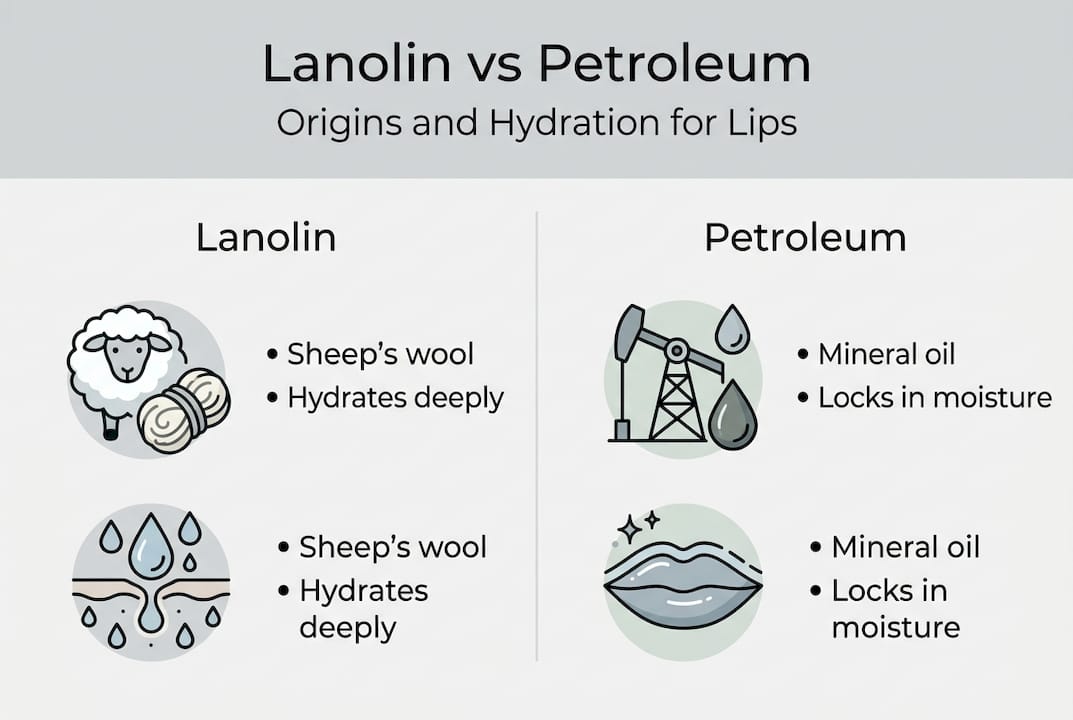
La lanolina y el petrolato vienen de lugares muy distintos. La lanolina es una sustancia natural y cerosa que proviene de la lana de oveja. No es grasa del animal en sí, sino una secreción que produce la lana para proteger la fibra de las inclemencias. El petrolato, o petrolatum, es un subproducto de la refinación del petróleo crudo. Se purifica para uso cosmético, pero en el fondo es un ingrediente sintético de origen mineral.
La forma en que cada uno hidrata es donde la cosa se pone interesante. La lanolina imita los lípidos de la piel y puede retener hasta el 400% de su peso en agua. Eso significa que no solo se queda sobre tus labios; atrae y retiene activamente la humedad dentro de la propia estructura de la piel. Funciona como humectante, emoliente y barrera semioclusiva, todo a la vez.
El petrolato funciona de otra manera. La vaselina reduce la TEWL (pérdida de agua transepidérmica) entre un 98 y un 99%, formando una barrera de superficie casi total. Es una oclusión impresionante, pero no nutre de forma activa el tejido de los labios. Piénsalo como sellar un recipiente en lugar de llenarlo.
| Propiedad | Lanolina | Petrolato |
|---|---|---|
| Origen | Lana de oveja (natural) | Petróleo crudo (mineral) |
| Función principal | Emoliente, humectante, semioclusiva | Solo barrera oclusiva |
| Retención de humedad | Retiene hasta el 400% de su peso | Sella la humedad existente |
| Penetración en la piel | Sí, imita los lípidos | No, solo en la superficie |
| Transpirabilidad | Sí | Limitada |
Ambos se usan mucho porque son eficaces y estables. Pero para quien busca un cuidado labial que de verdad nutra, vale la pena fijarse en la diferencia anterior. También puedes explorar una comparación de bálsamos labiales con sebo para ver cómo se comparan las grasas tradicionales con estos dos.
Cómo funciona cada ingrediente: oclusión, humedad y transpirabilidad
Entremos en la mecánica. El petrolato forma una película gruesa y oclusiva en la superficie de tus labios. Esa película frena muy bien la pérdida de agua. El petrolatum reduce la TEWL entre un 98 y un 99%, mientras que la lanolina llega a cerca del 90 a 92% como ingrediente semioclusivo. Sobre el papel, el petrolato gana en oclusión. En la práctica, el panorama es más matizado.
La lanolina actúa como humectante, emoliente y barrera semioclusiva en un solo ingrediente. Esa combinación significa que hace más trabajo por aplicación. Atrae la humedad hacia la piel, suaviza la textura del tejido de los labios y aun así ofrece una protección real frente a la exposición ambiental. El petrolato no puede hacer nada de eso. Simplemente sella la humedad que ya está presente.
La transpirabilidad también importa, sobre todo para el uso diario. La oclusión casi total del petrolato es genial en situaciones agudas, como labios muy partidos o agrietados en invierno. Pero el uso diario a largo plazo puede hacer que tus labios dependan del producto para sentirse cómodos, porque no se estimula a la piel de debajo a funcionar con normalidad. La lanolina permite una actividad más natural de la piel.
Para los labios muy partidos y en casos agudos, la vaselina ofrece la máxima protección de barrera. Para la nutrición diaria y una hidratación transpirable, la lanolina y las alternativas naturales ricas en lípidos suelen ser la mejor opción a largo plazo.
También puedes ver cómo se aplican estos principios en distintos hidratantes naturales comparados si quieres una visión más amplia de cómo se comportan de forma diferente los aceites vegetales y las grasas animales.
Consejo pro: Aplica una capa fina de bálsamo con lanolina durante el día cuando quieras humedad transpirable. Reserva los productos más espesos a base de petrolato para la noche, cuando la oclusión máxima puede actuar sin molestias.
Beneficios y desventajas: piel sensible, alergias y seguridad
Ambos ingredientes tienen un buen historial de seguridad, pero no son idénticos en el uso real.
Beneficios de la lanolina:
- De origen natural y biodegradable
- Muy compatible con los lípidos propios de la piel
- Funciona bien en labios secos, sensibles o partidos que necesitan nutrición de verdad
- Transpirable, lo que la hace ideal para el uso diario a largo plazo
Beneficios del petrolato:
- Prácticamente no alergénico
- Muy eficaz para la reparación de barrera a corto plazo
- Estable, de larga duración y fácil de encontrar
- Se considera seguro durante el embarazo y para uso pediátrico
Sobre el tema de las alergias: la alergia a la lanolina afecta a cerca del 1.2% de los usuarios cuando se usan grados purificados, y el petrolato se considera no alergénico para la mayoría de las personas. Dicho esto, el petrolato no siempre es ideal para la piel propensa al acné alrededor de los labios, porque sus propiedades oclusivas pueden atrapar impurezas.
La calidad de la lanolina importa mucho. La lanolina de baja calidad puede contener residuos de pesticidas del procesamiento de la lana, así que conviene elegir productos que usen lanolina de grado farmacéutico o muy purificada. Si nunca has usado un producto con lanolina, hacer una pequeña prueba de parche es un primer paso inteligente.
Para una mirada más amplia sobre cómo evaluar los ingredientes de tu cuidado labial y de la piel, esta lista de verificación para un cuidado natural y seguro de la piel es un recurso útil.
Consejo pro: Si tienes la piel sensible, busca bálsamos labiales que indiquen específicamente lanolina de grado USP o grado cosmético. El nivel de pureza marca una diferencia real en la tolerancia.
Cómo elegir lo mejor para ti: estilo de vida, resultados y alternativas
Aquí tienes una forma sencilla de pensar tu decisión:
- Si tienes los labios muy partidos o agrietados, el petrolato es mejor para los casos agudos, ya que ofrece una barrera rápida mientras la piel se recupera.
- Si quieres humedad diaria y una sensación más natural, la lanolina es la mejor opción para una hidratación transpirable a largo plazo.
- Si prefieres productos estrictamente veganos o sin ingredientes animales, puede que ni el petrolato ni la lanolina te sirvan. Fíjate mejor en ceras y aceites de origen vegetal.
- Si quieres la fórmula más compatible con la piel y más nutritiva, considera productos que combinen grasas naturales como el sebo o la lanolina con ceras protectoras y aceites acondicionadores.
Alternativas de ingredientes naturales a considerar:
- Sebo de res (rico en ácidos grasos compatibles con la piel)
- Cera de abejas (protección y estructura naturales)
- Aceite de jojoba (cera líquida muy parecida al sebo de la piel)
- Aceite de ricino (espeso, acondicionador y que forma película de forma natural)
- Tocoferoles, o vitamina E (acondicionamiento antioxidante)
Si estás tratando de elegir un humectante natural y no sabes muy bien por dónde empezar, la guía más simple es buscar ingredientes que tu piel ya reconozca. El sebo, por ejemplo, tiene un perfil de ácidos grasos muy parecido al sebo humano, por eso se absorbe con facilidad y no deja una película grasosa. Explora el análisis de sebo frente a bálsamo labial común para verlos lado a lado en detalle.
Nuestra opinión: por qué la hidratación ‘natural’ es más que una etiqueta de ingredientes
Esto es lo que la mayoría de las conversaciones sobre lanolina frente a petrolato dejan fuera. La gente se enfoca en un solo ingrediente y lo trata como si fuera toda la historia. Pero lo que pones junto a ese ingrediente lo cambia todo. Una fórmula que combina lanolina con sebo de res, cera de abejas, aceite infusionado con yema de huevo y tocoferoles no solo es más natural; es de verdad más capaz. Cada ingrediente tiene una función. La lanolina y el sebo nutren e hidratan a nivel de lípidos. La cera de abejas aporta estructura y protección. Los aceites mejoran la aplicación y el acondicionamiento. Los tocoferoles combaten el estrés oxidativo en la piel.
Eso es lo que ofrece de verdad una fórmula sin agua, hecha en lotes pequeños y sin rellenos innecesarios. No solo una etiqueta más limpia, sino un sistema de cuidado labial más completo. Puedes profundizar en cómo lo vemos en nuestras notas sobre ideas de sebo frente a cremas de origen vegetal.
Descubre un cuidado labial natural que hidrata en profundidad
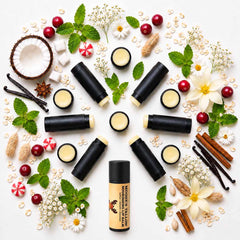
Si este análisis te hace replantearte lo que de verdad hace tu bálsamo labial, nos encantaría mostrarte una mejor opción. Nuestro bálsamo labial natural con sebo combina lanolina y sebo con cera de abejas, aceite infusionado con yema de huevo y tocoferoles en una fórmula sin agua, hecha en lotes pequeños y pensada para una hidratación real. Sin rellenos. Sin atajos. Solo ingredientes que se ganan su lugar. Explora nuestros productos de sebo totalmente naturales para encontrar el ideal para tu piel, y prueba una muestra para sentir la diferencia por ti mismo.
Preguntas frecuentes
¿Cuál es más seguro para labios sensibles: la lanolina o el petrolato?
El petrolato suele ser hipoalergénico y bien tolerado por casi todos los tipos de piel, mientras que la lanolina tiene un raro riesgo de alergia de cerca del 1.2% cuando se usan grados purificados. Ambos se consideran seguros para el uso diario.
¿El petrolato de verdad hidrata los labios o solo sella la humedad?
El petrolato no aporta humedad por sí solo. Reduce la TEWL entre un 98 y un 99% al formar una barrera en la superficie que frena la evaporación del agua que ya está en la piel.
¿Por qué algunas personas prefieren la lanolina para los labios?
La lanolina imita los lípidos de la piel y penetra su estructura, actuando como humectante, emoliente y barrera semioclusiva. Quienes buscan una alternativa natural y transpirable al petrolato suelen encontrar que es la opción más cómoda a largo plazo.
¿El sebo es una buena alternativa a la lanolina o al petrolato para los labios?
El sebo es una excelente opción natural. Es rico en ácidos grasos muy parecidos a la composición de la piel humana, se absorbe bien y apoya la barrera cutánea sin la pesadez de un oclusivo. Combinado con lanolina y cera de abejas, crea una fórmula completa para el cuidado de los labios.
Recomendado
- Bálsamo labial con sebo vs bálsamo labial común: qué funciona mejor – Moose’s Tallow
- Sebo vs aceites vegetales: 22% más hidratación para tu piel – Moose’s Tallow
- Sebo vs cremas de origen vegetal: 25% más hidratación en 2026 – Moose’s Tallow
- Mejores usos de la loción de sebo para 25% más hidratación de la piel en 2026 – Moose’s Tallow


0 comentarios