

Tallow works as a rich moisturizer for cracked, dry heels, and most people can try it safely. It sits closer to petroleum jelly than a light lotion, so it’s best for thick, rough skin, not acne-prone faces. If your heels are deeply split, bleeding, or look infected, skip the home routine and see a podiatrist first. For everyone else, the how-to below gets you started tonight.
TL;DR:
- Tallow’s fatty acids closely match the oils found in skin, making it effective as an occlusive moisturizer for thick, dry, cracked heels.
- Proper formulation, such as blending rendered tallow with coconut oil and beeswax and avoiding water, enhances absorption and reduces bacterial risk.
- Regular routines involving soaking, gentle exfoliation, and nightly application with occlusion are recommended, especially for deep or longstanding cracks.
- Safety concerns include pore clogging in acne-prone skin, contamination risks from poorly rendered tallow, and sensitivities, so patch testing and cautious use are advised.
- Sourcing high-quality, locally rendered, grass-fed tallow minimizes ethical and safety issues, with full repair taking several days to weeks depending on crack severity.
Why Tallow for Cracked Heels Actually Makes Sense
Tallow’s fatty acid profile is close to the fats already found in your skin. That’s the real reason it works on rough heels, not marketing spin.
Rendered beef suet tallow is rich in oleic, palmitic, and stearic acids. These are the same fat types your skin cells use to build and repair the outer barrier. A 2024 scoping review found tallow is biocompatible and plausibly hydrating because of this overlap, though the researchers were clear that human trials are still thin on the ground.
Here’s the simple science behind why that matters for heels specifically:
- Occlusives (like tallow) sit on top of skin and slow water loss. They don’t add water, they trap what’s already there.
- Humectants (glycerin, hyaluronic acid) pull water into the skin instead.
- Thick plantar skin on your heel loses moisture fast because it has fewer oil glands than the rest of your body.
- An occlusive layer holds moisture in place long enough for cracked skin to soften and knit back together.
Formulation matters just as much as the fat itself. Properly rendered tallow, blended with a light carrier like fractionated coconut oil and firmed up with a touch of beeswax, spreads easier and absorbs cleaner than tallow alone. Minimal dilution and no water in the formula both matter here. Water-free balms resist bacterial growth better and deliver more of the active fat to your skin instead of diluting it.
Pro Tip: Not all tallow is equal. Poorly rendered or improperly sourced tallow can carry contamination risk and go rancid fast, so ingredient sourcing is worth checking before you buy.
How to Use Tallow for Feet: A Step-by-Step Heel Routine
Tallow for cracked heels works best as part of a short, repeatable routine, not a one-time slap-on fix. Here’s how to do it right.
- Soak first. Warm water for 10 to 15 minutes softens dead skin and callus edges, making everything that follows more effective.
- Exfoliate gently. Use a pumice stone or foot file on rough callus only. Don’t scrub healthy skin or dig at deep cracks, since that can tear skin further.
- Dry with skin still slightly warm. Pat feet dry but don’t let them fully cool. Warm skin absorbs balm faster.
- Warm the tallow between your palms. A pea to marble-sized amount softens from solid to a light oil in seconds from body heat alone.
- Massage into heels and crack edges. Work it into the thickest, driest patches first, then spread outward. Spend extra time right on crack lines.
- Lock it in overnight. Slip on a pair of cotton socks after applying. The occlusion holds moisture against skin for hours while you sleep.
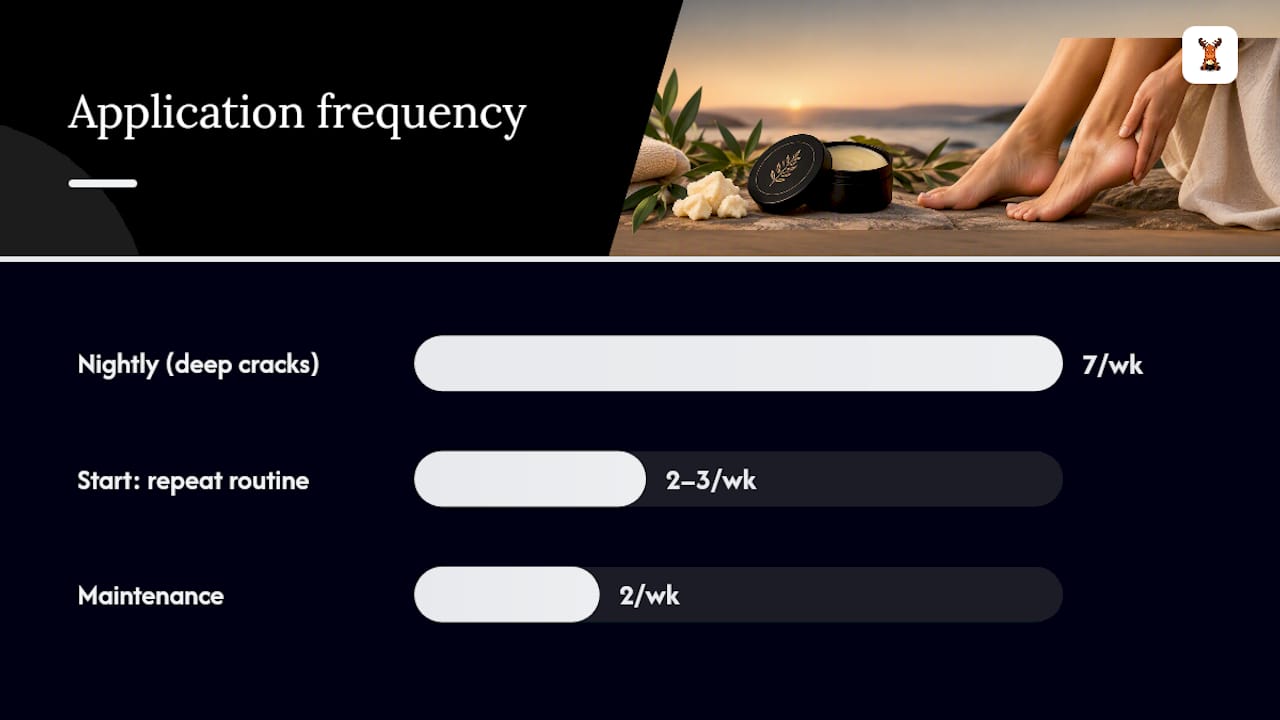
- Repeat 2 to 3 nights a week to start. Once skin responds, adjust up to nightly during dry seasons or down to twice weekly for maintenance.
Frequency depends on how cracked your heels are right now. Deep, long-standing cracks respond better to nightly use for the first two weeks. Mild dryness usually only needs a few applications a week to stay soft.
When to skip the home routine entirely: if a crack is deep enough to bleed, looks infected (redness, swelling, discharge), or you have diabetes with any foot wound, see a podiatrist before trying any balm. Mayo Clinic’s guidance on cracked heels backs gentle debriding and professional referral for anything beyond surface dryness.
A few practical notes worth knowing before you start. Unscented formulas are the safer starting point if you have sensitive skin or allergies, since scented balms add another variable if irritation shows up. Always patch test a small area first, especially the first time you try a new brand. And keep a lip balm or small tin in your bag. It’s not just for lips. A tallow-based lip balm doubles as a travel-friendly spot treatment for a cracked heel edge or a rough cuticle when you’re away from your full jar.
What the Research Actually Says About Safety
Tallow isn’t a miracle fix, and the honest evidence reflects that. The 2024 scoping review found tallow is biocompatible and behaves like a plausible hydrating occlusive, but the researchers were upfront that human clinical trials remain limited and safety data is mixed across the small studies that do exist.
Cleveland Clinic’s overview of tallow for skin raises real cautions worth taking seriously: tallow can clog pores in acne-prone skin, cause irritation in sensitive people, and quality varies a lot between brands since the space isn’t tightly regulated. Dermatology commentary from MD Anderson echoes this: start small and watch for reactions rather than assuming it works for everyone.
Before you commit to a nightly routine, run through this safety checklist:
- Patch test on a small area of skin for 24 to 48 hours before full use.
- Avoid using tallow on your face if you’re prone to acne or clogged pores.
- Watch for allergic reactions, including alpha-gal syndrome, a rare red meat allergy that can also react to tallow.
- Store your balm in a cool, dry spot and stop using it if it smells off or looks separated.
- Discontinue immediately if you notice redness, itching, or bumps.
As for timeline, most people notice softer skin within a few days of consistent nightly use. Full repair of deep, long-standing cracks takes longer and depends on how severe they were to start and how consistently you keep up the routine.
Storing Tallow Balm So It Actually Lasts
Tallow products last a long time when you store them right, but they’re not immortal. Heat, light, and moisture are the three things that shorten shelf life fastest.
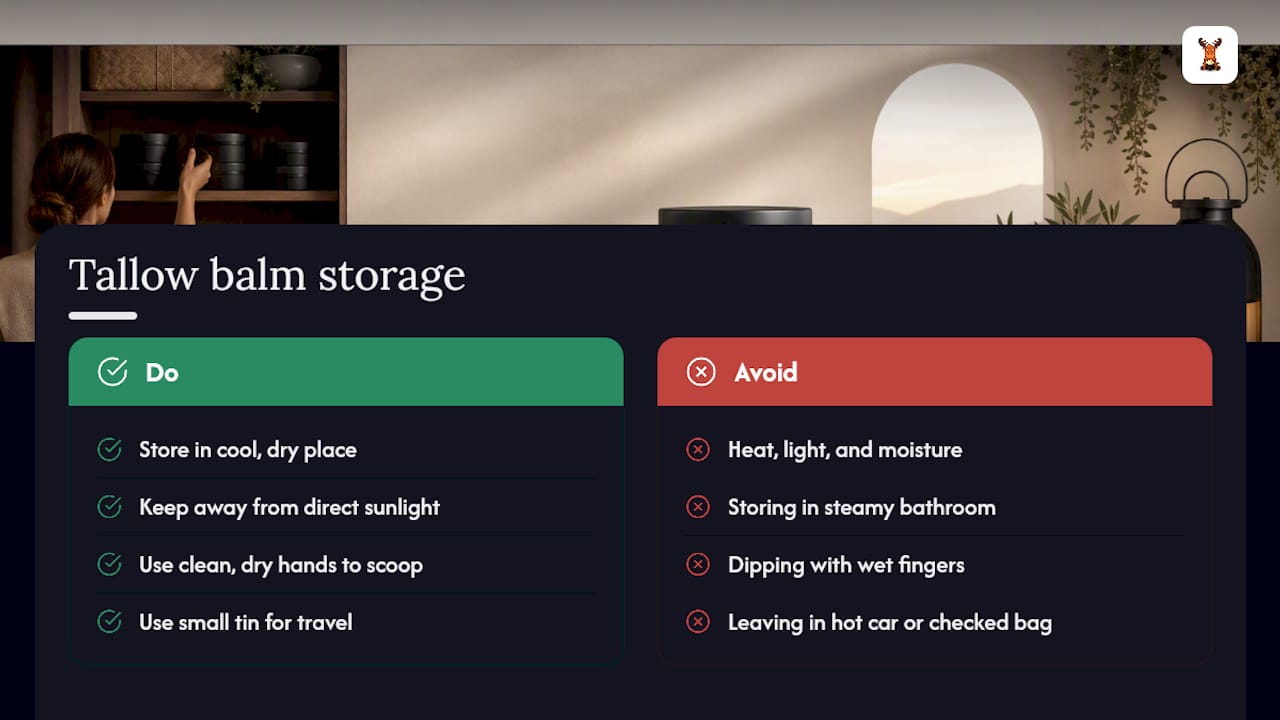
Keep your balm in a cool, dry place, away from direct sunlight and away from your bathroom shower steam if possible. A bedroom drawer or medicine cabinet away from the shower works better than a steamy windowsill. Because tallow-based balms are water-free, they naturally resist the bacterial growth that shortens the life of water-based lotions. That’s one advantage of skipping water in the formula altogether: there’s simply less for bacteria to feed on.
Most well-made tallow balms hold up well for months at room temperature. If a jar starts to smell sour, look grainy, or separate into layers, that’s your sign it’s past its prime and time to toss it. Vitamin E, known on labels as tocopherols, is often added specifically to slow this oxidation process and extend usable life, which is one reason it shows up in well-formulated balms rather than as filler.
A small jar you use daily will naturally get used up before it has a chance to go bad. Larger tubs benefit from being scooped with clean, dry hands rather than dipped into repeatedly with wet fingers, which introduces moisture and bacteria over time. If you travel, a smaller tin or balm stick avoids the temperature swings a full-size jar might see in a hot car or checked bag.
Is Tallow Skincare Ethical? What to Know Before You Buy
Using an animal-derived product for skincare raises fair questions, and they deserve a straight answer rather than a dodge.
Tallow itself is a byproduct of beef production, rendered from suet that would otherwise often go to waste. Choosing a tallow balm made from properly rendered, locally sourced suet means less waste from an already-existing food supply chain, rather than driving demand for a new agricultural input. That’s a different footprint than, say, a vegetable oil grown, harvested, and shipped specifically for cosmetics.
Sourcing quality varies a lot between brands, and this is where the ethical and safety questions overlap. Grass-fed, locally rendered tallow tends to come from smaller supply chains with more visibility into how animals were raised. Mass-produced tallow sourced from unclear origins carries more uncertainty on both the animal welfare and quality-control fronts.
For readers who avoid animal products entirely, tallow won’t fit your routine, and that’s a personal call worth respecting. For everyone else, asking where a brand sources its suet and how it’s rendered is a reasonable question to ask before buying, the same way you’d ask about sourcing for any animal-derived food or product.
A Founder’s Take: Why Water-Free Tallow Balm Makes Sense for Heels
I started Moose’s Tallow after reading my own lotion label and counting fifty-two ingredients, with water listed first. That’s not skincare. That’s mostly water with a little bit of cream added in.
Cracked heels don’t need water. They need fat that matches what your skin already makes, applied without dilution getting in the way. That’s why every batch we render skips water entirely and leans on fractionated coconut oil as the carrier, because it stays stable, resists going rancid, and absorbs cleanly instead of sitting greasy on skin.
We make our tallow in small batches and share what’s in each jar. If a formula doesn’t work for your skin, a satisfaction guarantee lets you try without risk.
— Brian Smith
Which Moose’s Tallow Product Fits Your Cracked Heels
Moose’s Tallow gives you a water-free option built specifically around the fat your skin already recognizes, with no filler oils diluting the jar. Here’s how our lineup matches different heel needs.
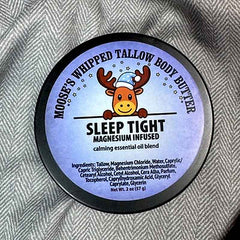
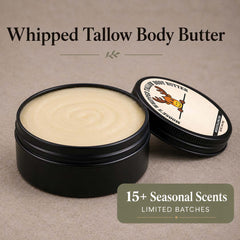
For daily upkeep on both heels, start with the Whipped Tallow Body Butter. It’s whipped to a light, fluffy texture that covers larger areas fast, so your whole foot and lower leg get coverage without feeling greasy. This is the jar to reach for most nights.
If your cracks are deep or concentrated in one spot, the Beef Tallow Hand Cream for Dry, Cracked Hands has a firmer texture built for exactly that kind of targeted, stubborn dry patch. It was made for cracked hands, but the same firm hold works well massaged straight into a heel crack edge.
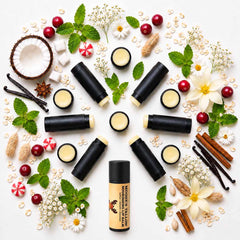
For travel or quick spot treatment, keep our Beef Tallow Lip Balm for Dry & Chapped Lips in your bag. Beyond lips, a small tin like this handles cuticles, tiny heel cracks, or any rough patch that needs attention when you’re away from your full-size jar.
Every product is built on properly rendered local beef suet tallow, with fractionated coconut oil, beeswax, vitamin E, jojoba, and castor oil chosen with intention, never as filler. If a formula doesn’t suit your skin, our 30-day guarantee has you covered. Browse the full collection to find the fit that matches your routine.
Where to Read More on Tallow and Skin Safety
For readers who want to dig deeper into the research behind tallow skincare, these three sources cover different angles worth knowing.
- The 2024 scoping review on topical tallow covers the clinical detail: composition, biocompatibility, and where research gaps remain.
- National Geographic’s reporting on the tallow trend offers dermatologist commentary and trend context.
- The Cleveland Clinic’s overview is the go-to for plain-language safety cautions.
Sources
- A scoping review on topical tallow: composition, uses, and safety (PMC)
- Beef tallow as skin care? Experts explain what’s truth—and myth | National Geographic
- Is beef tallow good for your skin? | Cleveland Clinic
FAQ
Why Don’t Some Dermatologists Recommend Beef Tallow?
Some dermatologists are cautious because human clinical research on tallow remains limited, and it can clog pores in acne-prone skin. The Cleveland Clinic notes the evidence hasn’t caught up with the trend’s popularity, so caution rather than outright rejection is the common stance.
How Do I Get Rid of Cracked Heels for Good?
There’s no permanent fix, since heel skin naturally thickens and dries again over time, especially with dry air or a lot of standing. Consistent exfoliation plus nightly moisturizing with an occlusive like tallow keeps cracks from returning, and daily upkeep matters more than any single treatment.
Is Tallow Actually Good for Your Feet?
Yes, tallow works well on feet because its fatty acid profile resembles your skin’s own oils, and its thick, occlusive texture suits rough, thick heel skin better than lighter lotions. It’s a strong fit for maintenance and mild to moderate dryness, though severe cracks may need a podiatrist’s attention first.
What’s the Best Cream for Badly Cracked Heels?
For badly cracked heels, look for a rich, occlusive formula rather than a light, water-based lotion, since occlusives hold moisture in thick, dry skin longer. A firmer tallow-based cream applied nightly under cotton socks, like Moose’s Tallow’s Hand Repair Cream used on heel cracks, targets the same stubborn dryness it was built for.
Can I Use Tallow on Cracked Hands Too?
Yes, tallow works the same way on cracked hands as it does on heels, since both areas deal with thick, dry skin that benefits from occlusive moisture. A firmer cream applied to crack edges and locked in overnight helps hands the same way it helps feet.
0 comentarios