


The most reliable cracked heels treatment is a short soak, gentle dead-skin removal, a concentrated water-free occlusive applied while skin is still damp, and protection while it absorbs. According to the American Academy of Dermatology, consistent home care built around softening, gentle exfoliation, and a strong occlusive supports the skin barrier and helps heels recover. Most people see visible improvement within one to two weeks of nightly consistency.
Quick routine you can start tonight:
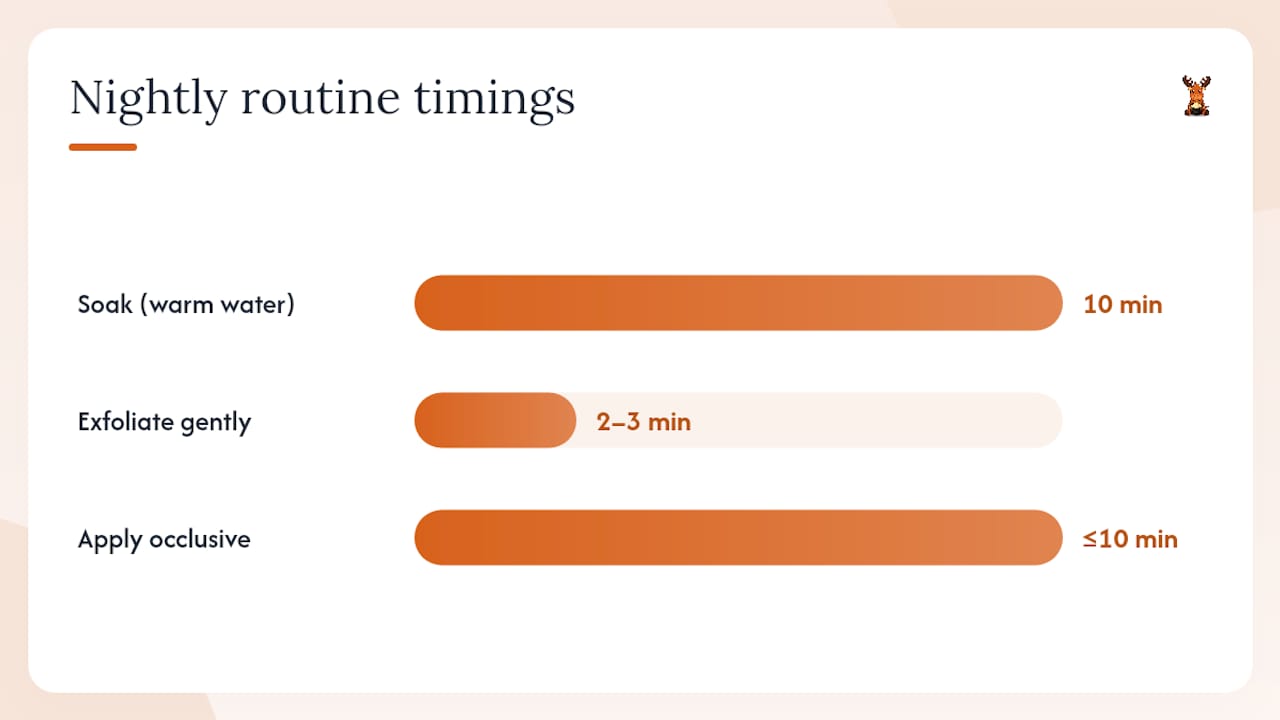
- Soak feet in warm (not hot) water for 10 minutes
- Gently file softened skin with a pumice stone or soft foot file
- Apply a concentrated occlusive immediately while skin is still damp
- Pull on cotton socks to protect and hold moisture overnight
See a clinician if you notice: bleeding fissures, warmth or swelling, drainage, fever, or no improvement after two weeks of consistent care.
Key Takeaways
Consistent nightly care — soak, gentle exfoliation, and an immediate water-free occlusive sealed with socks — is the most reliable way to heal and prevent cracked heels at home.
| Point | Details |
|---|---|
| Core routine | Soak 10 minutes, file gently, apply occlusive while skin is damp, cover with socks. |
| Apply within 10 minutes | Delayed application lets moisture evaporate and reduces the occlusive’s effect. |
| Red flags | Bleeding, drainage, warmth, swelling, or no improvement after two weeks means see a clinician. |
| Special populations | Diabetes, poor circulation, or neuropathy require earlier professional review and daily foot inspection. |
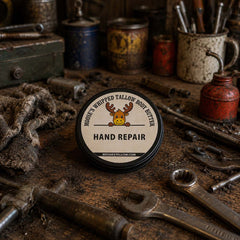
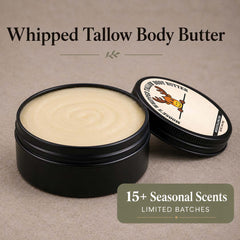
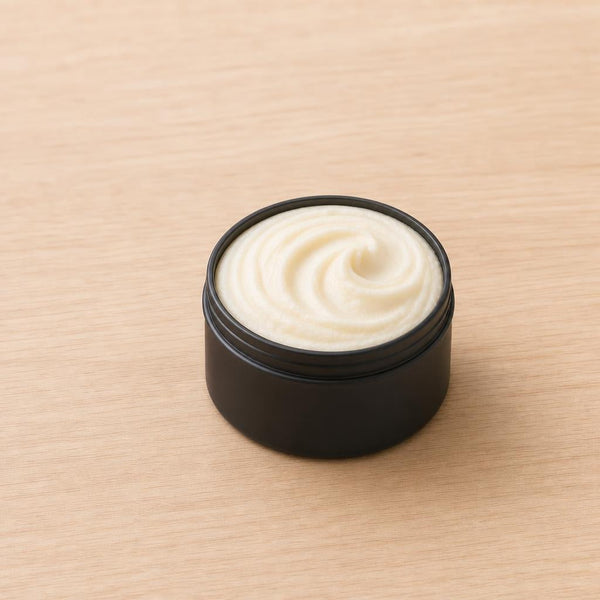
| Moose’s Tallow | Whipped Tallow Body Butter is a water-free, tallow-based occlusive built for consistent nightly heel care. |
Why your heels crack and who is at higher risk
Heel skin is thick by design. It handles pressure all day. But when that skin dries out and loses elasticity, the fat pad beneath the heel spreads under body weight and the rigid skin splits. The Mayo Clinic describes this clearly: hardened skin around the heel rim loses flexibility, and pressure causes the splits.
Common risk factors include:
- Open-backed shoes and sandals — the heel fat pad splays outward with no support
- Standing on hard floors for long periods
- Dry indoor air, especially in winter months
- Obesity, which increases downward pressure on the heel pad
- Diabetes — neuropathy and poor circulation slow healing and raise infection risk
- Hypothyroidism — can reduce the skin’s ability to regulate moisture
- Eczema or psoriasis — compromise the skin barrier directly
- Fungal infection — can mimic or worsen dry, cracked skin
Systemic conditions like diabetes and hypothyroidism impair how skin holds moisture and repairs itself. If you have any of these, your dry cracked heels care needs to be more consistent and more cautious.
How to treat cracked heels at home, step by step
This routine works best done nightly. For very deep fissures, do it every night for the first two weeks, then drop to three or four times per week for maintenance.
- Soak (10 minutes). Use warm water, not hot. Hot water strips skin oils. Plain warm water is enough; you do not need soaking salts or additives.
- Exfoliate gently (2–3 minutes). Use a pumice stone or soft foot file. Short, light passes only. Achilles Foot and Ankle Center notes that softening skin first and using gentle filing reduces bleeding and infection risk.
- Pat dry, then apply your occlusive immediately. Apply within about ten minutes of bathing. Skin is still slightly damp and the occlusive locks that moisture in. Waiting longer lets water evaporate and reduces the benefit.
- Protect with socks. Cotton socks hold the product against skin overnight. For deep fissures, a liquid bandage or hydrocolloid pad can hold the edges together while new skin forms, per Mayo Clinic expert guidance.
Timeline: Mild dryness often softens within three to five days. Deeper heel fissures typically need two full weeks of nightly care before the skin visibly closes. If you see no change after two weeks, re-evaluate.
Pro Tip: Never use a metal scraper or razor blade on heel skin. These tools remove too much at once and create open wounds. A pumice stone or soft file used after soaking is safer and just as effective.
What to apply: ingredients that help and what to skip
Three ingredient categories do the real work in dry cracked heels care.
| Ingredient type | What it does | Safety note |
|---|---|---|
| Occlusives (tallow, beeswax, petrolatum) | Form a physical barrier that traps moisture in skin | Apply to heel and sole only; avoid between toes |
| Humectants (urea, glycerin) | Draw water into the upper skin layers | Use lower concentrations daily to avoid irritation |
| Keratolytics (urea, salicylic acid) | Soften and loosen thickened dead skin | Use sparingly; avoid on broken skin |
Pair a humectant with a strong occlusive for best overnight results. The humectant draws moisture in; the occlusive seals it there. This pairing is standard in podiatry practice, as Achilles Foot and Ankle Center describes.
What to avoid:
- Harsh soaps that strip natural skin oils
- Razor blades or metal scrapers on heel skin
- Applying heavy moisturizers between the toes — trapped moisture there promotes fungal growth, per Diabetes
- Long, hot soaks that dry skin further after you step out
Tallow-based, water-free balms work well as occlusives because their fatty-acid profile is close to skin’s own lipids. Fractionated coconut oil, used as a carrier, adds stability and absorbs cleanly without leaving a heavy residue. Both ingredients are intentional choices, not filler. For a deeper look at choosing safe natural skincare, a clear ingredient checklist helps.
When to see a healthcare professional
Home care handles most cases of dry, cracked heels. Some signs mean you need a clinician sooner rather than later.
See a doctor or podiatrist if you notice:
- Fissures that bleed or show drainage
- Increasing pain, warmth, or swelling around the heel
- Fever alongside foot symptoms
- No improvement after two consistent weeks of home care
- A crack that keeps reopening despite protective dressings
If routine moisturizing brings no improvement at all, a fungal infection may be the underlying cause, not simple dryness. Harvard Health notes that fungal infections can present with cracking and require a different approach entirely.
Special populations who should seek care sooner: People with diabetes, poor circulation, neuropathy, or immune suppression face higher risk of infection and slower healing. Diabetes.org recommends daily foot inspection and early care for any sores or non-healing cracks. The IWGDF 2023 practical guidelines reinforce that reducing mechanical pressure is a core principle for plantar wound care — footwear and offloading are not optional for this group.
Clinicians may use prescription-strength keratolytics, professional debridement, or offloading devices. These are not home substitutes.
Daily habits that prevent cracked heels from coming back
Prevention is simpler than treatment. A short daily routine keeps the skin barrier intact.
Daily care checklist:
- Moisturize heels every morning and every night
- Apply your occlusive within 10 minutes of bathing, before skin fully dries
- Inspect feet for new cracks, redness, or sores — CDC foot hygiene guidance recommends daily washing, careful drying, and early attention to any cuts
- Cleanse gently with a mild soap; avoid long, hot baths
- Never skip socks with closed shoes in dry or cold months
Footwear choices matter more than most people realize. Open-backed sandals let the heel fat pad splay outward with every step, increasing mechanical stress. Closed-heel shoes with cushioned insoles reduce that pressure. Rotate your footwear so no single pair wears down unevenly.
At home: Run a humidifier during dry winter months. Dry indoor air pulls moisture from skin continuously, including the soles of your feet. If you stand on hard floors all day, a cushioned anti-fatigue mat reduces the constant downward load on your heel pad.
A simple maintenance schedule: apply a light occlusive in the morning, check feet at midday if you are prone to cracking, and do the full soak-and-seal routine at night.
Why water-free occlusives support dry heels
An occlusive works by sitting on the skin surface and slowing water loss. Water-free formulations do this without diluting the active ingredients. When a product’s first ingredient is water, the occlusive concentration is lower and the barrier effect is weaker.
Tallow’s fatty-acid composition is close to the lipids your skin produces naturally. That similarity supports absorption and skin-barrier function. When blended with fractionated coconut oil — which is stable, resists oxidation, and absorbs cleanly — and anchored with beeswax, the result is a concentrated balm that stays on skin long enough to do its job. Vitamin E (tocopherols) adds antioxidant support to the formula. For a detailed look at beef tallow’s skin benefits, the fatty-acid match to skin lipids is the central reason it works as an occlusive.
When choosing a product for overnight heel care, look for: a concentrated occlusive as the primary ingredient, a humectant to pair with it, and a clean, short ingredient list with no water as the base.
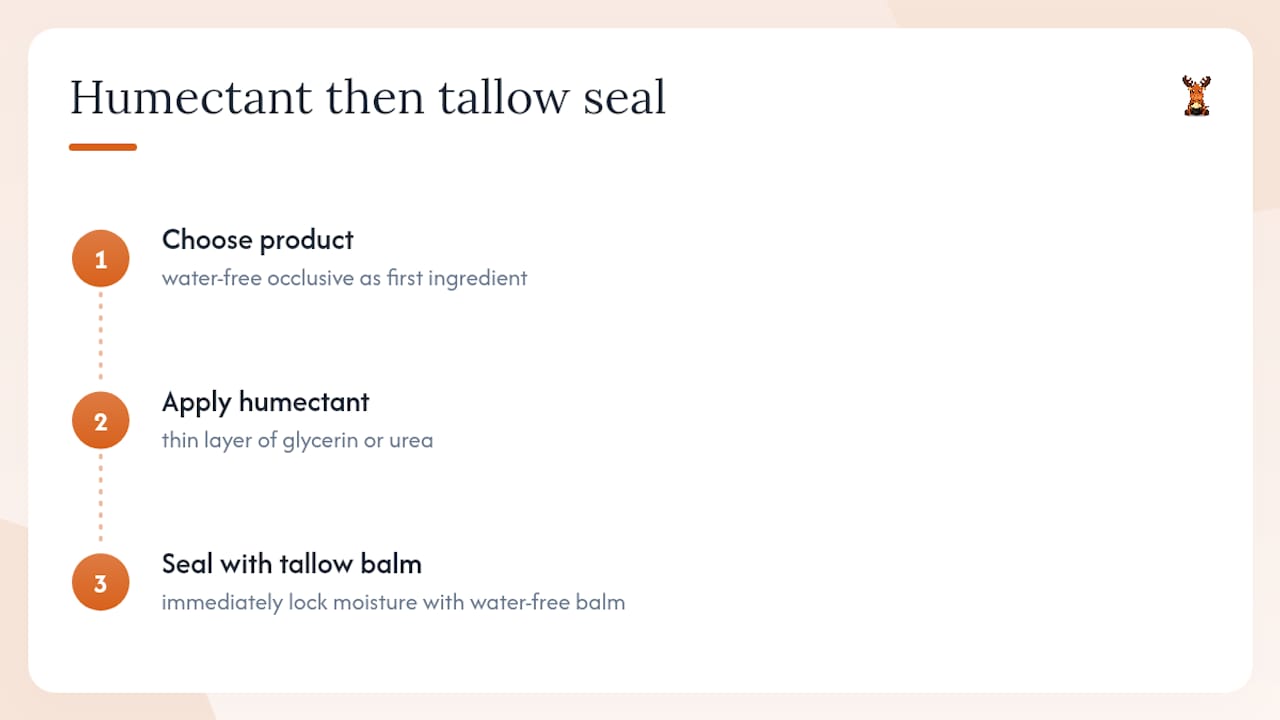
Pro Tip: Apply a thin layer of a humectant like glycerin or a urea lotion first, then immediately seal it with a tallow-based balm. The humectant draws moisture in; the occlusive locks it there. This two-step layer is what podiatrists recommend for deep fissures, per Achilles Foot and Ankle Center.
For practical guidance on applying tallow balm for skin relief, the layering approach maps directly to this nightly routine.
A founder’s honest take on water-free formulas
I started Moose’s Tallow after picking up a lotion bottle and reading 52 ingredients — water listed first. That bothered me. Water is a filler. It dilutes everything that follows it.
Every product we make starts with properly rendered local beef suet tallow. We add fractionated coconut oil for stability and clean absorption. Beeswax for texture and barrier strength. Vitamin E (tocopherols) for antioxidant support. Jojoba, castor, and egg yolk infused oil where the formula calls for them. Nothing is in there because it was cheap or easy to source. Every ingredient is chosen on purpose.
We make everything in small batches in Lebanon, PA. We back every order with a 60-day guarantee. If it does not work for you, we want to know.
Moose’s Tallow products for dry, cracked heels
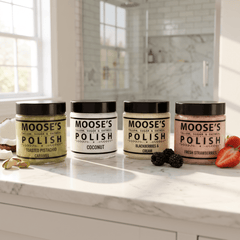
Dry heels need a concentrated, water-free occlusive applied consistently, and many find benefits using rich moisturizing options like whipped body butters to enhance skin hydration. Moose’s Tallow makes exactly that.
- Whipped Tallow Body Butter — the primary choice for cracked heels. Apply a generous amount to clean, damp heels at night, then cover with socks. Water-free, tallow-based, and built for barrier support.
- Beef Tallow Lip Balm — a compact, concentrated occlusive that works well on smaller fissures or as a spot treatment for a single deep crack.
- Dog Paw Balm with Calendula — built on the same tallow-based occlusive approach, formulated for paw pads that face the same dry, cracked-skin challenge your heels do.
All three products are handmade in small batches, shipped across the US, and backed by a 60-day guarantee. Browse the full product collection to find the right fit for your routine.
Sources
- Mayo Clinic Q and A: Take steps at home to manage dry, cracked heels
- American Academy of Dermatology: Dry heels
- How to treat cracked heels - Achilles Foot and Ankle Center
- Harvard Health: Why are my heels cracked?
- CDC: About foot hygiene
- Diabetes
- IWGDF 2023 practical guidelines (offloading and ulcer protection)
- How to treat cracked heels - Mayo Clinic expert answers
This article is general information, not a substitute for advice from a qualified doctor. Consult a qualified healthcare professional about your own circumstances before acting on anything here.
FAQ
What is the quickest way to heal cracked heels?
Soak feet in warm water for 10 minutes, gently file softened skin, then apply a concentrated occlusive immediately while skin is still damp and cover with cotton socks overnight. Mild cases often soften within three to five days of consistent nightly care.
What vitamin deficiency causes cracked heels?
No single vitamin deficiency is a confirmed direct cause of cracked heels. Dry skin, mechanical pressure, and conditions like diabetes or hypothyroidism are the most common drivers; if standard home care fails, a clinician can check for underlying causes.
What is the main cause of cracked heels?
The heel fat pad spreads under body weight, and when the surrounding skin is dry and has lost elasticity, it splits under that pressure. Open-backed shoes, dry indoor air, and long periods of standing all increase the risk.
Can I use coconut oil on cracked heels?
Fractionated coconut oil is a stable, well-absorbing carrier that pairs well with a concentrated occlusive like tallow or beeswax. On its own, it is lighter than a true occlusive and works best as part of a water-free balm rather than as a standalone heel treatment.


0 comments