



TL;DR:
- El cuidado de la piel del viejo mundo se basa en usar ingredientes naturales y sin refinar, como grasas animales, ceras y aceites botánicos, para nutrir la piel de forma efectiva. La investigación moderna respalda la compatibilidad y los beneficios de estos ingredientes tradicionales, en especial el sebo, que se parece mucho al sebo humano. Poner en práctica estos hábitos implica rutinas sencillas centradas en una limpieza suave, una hidratación específica y la elección de ingredientes de calidad para una piel más sana.
¿Qué es el cuidado de la piel del viejo mundo? No es una moda. Es un regreso a lo que funcionaba mucho antes de que existieran los emulsionantes sintéticos y las rutinas de 12 pasos. El cuidado de la piel del viejo mundo consiste en usar ingredientes enteros y sin refinar, como grasas animales fundidas, ceras naturales y aceites bien elegidos, para nutrir y proteger la piel. Estas son rutinas de cuidado de la piel históricas construidas en torno a fórmulas simples que respetaban la propia biología de la piel. Hoy, la gente está redescubriendo estas prácticas de belleza naturales porque los productos modernos muchas veces dan menos de lo que prometen. Si te da curiosidad de dónde vienen estas tradiciones y cómo usarlas hoy, este artículo lo cubre todo.
Puntos clave
| Punto | Detalles |
|---|---|
| El cuidado del viejo mundo prioriza los ingredientes | Los métodos tradicionales se basaban en grasas, ceras y hierbas enteras, no en rellenos sintéticos ni emulsiones cargadas de agua. |
| El sebo refleja la química de tu piel | El perfil de ácidos grasos del sebo de res se parece mucho al sebo humano, lo que lo hace naturalmente compatible con la barrera de tu piel. |
| La ciencia respalda las tradiciones | La investigación confirma beneficios medibles para la piel de ingredientes tradicionales y técnicas manuales usadas durante siglos. |
| No todos los métodos del viejo mundo le sirven a todos | El tipo de piel y la forma de aplicación importan. Lo que a una persona le funciona de maravilla puede no irle bien a otra. |
| La calidad y el origen definen los resultados | La pureza, la frescura y el proceso de fundido de los ingredientes tradicionales afectan directamente qué tan bien funcionan en la piel. |
Qué significa realmente el cuidado de la piel del viejo mundo
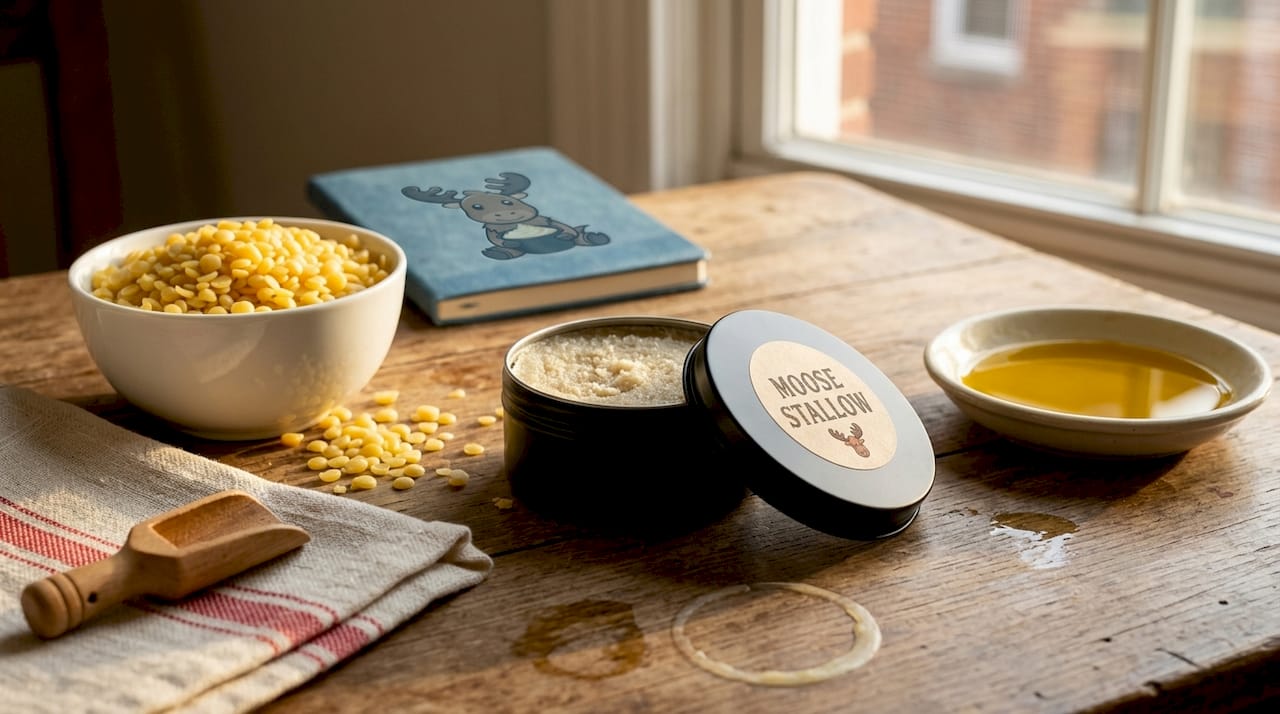
Los métodos tradicionales de cuidado de la piel se construyeron sobre un principio: usa lo que la tierra provee, y úsalo bien. Antes de que existieran los productos de belleza comerciales, la gente de todas las culturas dependía de una lista corta de ingredientes que estaban disponibles, eran estables y funcionaban. Las fórmulas casi siempre eran anhidras. Eso significa sin agua. Solo grasas, ceras, resinas y botánicos trabajando directamente sobre la piel.
Cada cultura desarrolló sus propias tradiciones de ingredientes según lo que era local y accesible:
- Las tradiciones mediterráneas se basaban en la limpieza con aceites. Los antiguos griegos usaban aceite como limpiador y como humectante, una práctica que refleja los principios de limpieza con aceite de hoy.
- Las tradiciones del norte de Europa se centraban en grasas animales fundidas. El sebo de res y de cordero se usaba mucho para proteger la piel del frío y la sequedad.
- Las tradiciones africanas usaban mantecas vegetales, arcillas y resinas con propiedades hidratantes y protectoras profundas.
- Las tradiciones de los nativos americanos incorporaban grasas animales, cera de abeja e infusiones de hierbas para el cuidado de heridas y la protección de la piel.
No eran solo decisiones cosméticas. En las culturas antiguas, el cuidado de la piel muchas veces tenía un valor espiritual y medicinal. El ritual en sí era parte del beneficio. El Global Wellness Institute señala que los elementos cuerpo-mente de las prácticas de belleza tradicionales pueden influir directamente en afecciones de la piel como el acné y el eczema, y conectan la experiencia sensorial de un ritual con resultados fisiológicos reales.
Consejo: Al conseguir ingredientes tradicionales, dale prioridad a la frescura y al mínimo procesamiento. Las grasas oxidadas o mal almacenadas pueden irritar la piel en vez de repararla.
Qué dice la ciencia sobre estos ingredientes
Aquí es donde el cuidado de la piel del viejo mundo se gana su credibilidad más allá de la nostalgia. La investigación moderna ha vuelto a poner a prueba muchos de estos ingredientes tradicionales. Vale la pena conocer los resultados.
| Ingrediente o técnica | Beneficio medido | Tipo de fuente |
|---|---|---|
| Sebo de res | Se parece mucho al perfil de ácidos grasos del propio sebo de la piel | Análisis bioquímico |
| Cera de abeja | Forma una barrera emoliente y reduce la pérdida de agua | Investigación de formulación |
| Gua sha (técnica manual) | Reduce síntomas en 8 semanas en ensayos clínicos | Ensayo controlado aleatorizado |
| Mantecas botánicas tradicionales | Mejora significativa en la función de barrera | Estudios de piel in vitro |
Toma el gua sha como un ejemplo claro. Un ensayo controlado aleatorizado con 80 mujeres demostró una reducción significativa de los síntomas y una mejor calidad de vida tras 8 semanas de tratamiento. Eso no es una anécdota. Son datos clínicos.
El sebo es otro caso sólido. Su composición de ácidos grasos es tan parecida al sebo humano que la piel lo reconoce y lo absorbe sin la resistencia que verías con moléculas más ajenas. Por eso el sebo hidrata la piel en profundidad sin tapar los poros en la mayoría de las personas. La piel no tiene que pelear con algo que ya conoce.
“Los ingredientes tradicionales del cuidado de la piel están resurgiendo porque sus perfiles moleculares muchas veces se alinean estrechamente con la fisiología de la piel humana.” Wild Faith Acres
Una advertencia importante: la evidencia sobre la limpieza con aceite sigue siendo limitada para la piel propensa al acné. La evidencia clínica todavía va detrás de los reportes anecdóticos. El tipo de piel y la técnica de cada persona importan más de lo que la gente cree.
Consejo: La calidad de los emolientes tradicionales, es decir, el tamaño de partícula, la pureza y la oxidación, moldea directamente cómo responde tu piel. Elige siempre ingredientes con un origen claro.
Cuidado de la piel del viejo mundo frente a las rutinas modernas
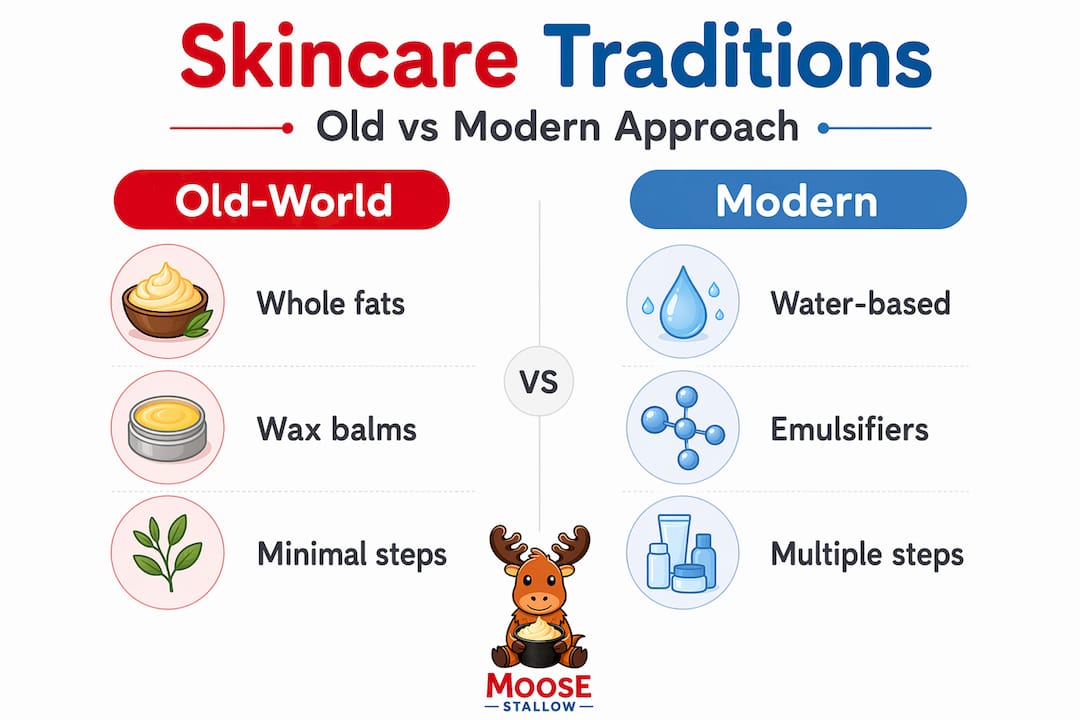
La mayor diferencia entre el cuidado del viejo mundo y el moderno se reduce a un ingrediente: el agua. Las fórmulas modernas son en gran parte a base de agua. Eso significa que necesitan conservadores, emulsionantes y estabilizadores solo para mantener la fórmula unida. Terminas aplicando un producto que es casi todo agua, con los ingredientes activos bastante diluidos.
Las fórmulas del viejo mundo eran distintas. Se construían en torno a grasas y ceras que se asentaban directamente sobre la piel. Las cold creams, una de las formas comerciales de cuidado de la piel más antiguas, son emulsiones de agua en aceite con cera de abeja que reducen la pérdida de agua transepidérmica al formar una verdadera barrera emoliente. La sensación fresca que les da nombre viene del agua que se evapora lentamente de la piel. Esa es la técnica clásica de cuidado de la piel haciendo justo lo que fue diseñada para hacer.
Aquí tienes una comparación práctica:
| Enfoque | Base | ¿Necesita conservadores? | Apoyo a la barrera de la piel |
|---|---|---|---|
| Anhidro del viejo mundo | Grasas y ceras | Rara vez | Fuerte y directo |
| Crema moderna a base de agua | Agua con emulsionantes | Sí, necesarios | Variable según la fórmula |
| Vehículo de coco fraccionado | A base de aceite, estable | No | Buena absorción, resistente a la oxidación |
El aceite de coco fraccionado destaca como un vehículo compatible con lo moderno que respeta los principios del viejo mundo. Es estable, resiste la oxidación, se absorbe con facilidad y alarga la vida útil. Eso lo hace una opción más inteligente que las alternativas más pesadas o menos estables.
Hay retos reales de formulación con ingredientes tradicionales en productos comerciales. Los ingredientes de origen animal como el sebo requieren una purificación adecuada y documentación de seguridad para cumplir con las normas regulatorias. Las marcas responsables se toman esto en serio.
Cómo usar el cuidado de la piel del viejo mundo hoy
Aprender a usar el cuidado de la piel del viejo mundo no requiere darle un giro total a tu rutina. Empieza con una base sencilla y construye desde ahí.
- Limpia con suavidad. Usa un limpiador a base de aceite o un poco de bálsamo a base de sebo para quitar el maquillaje y la suciedad del día. Masajéalo y luego retíralo con un paño tibio y húmedo. Evita todo lo que reseque o deje tu piel tirante.
- Exfolia con moderación. Una rutina base de cuidado natural recomienda exfoliar de una a tres veces por semana. Los métodos manuales, como un paño suave o una herramienta delicada, son suficientes. Exfoliar de más daña la barrera de la piel.
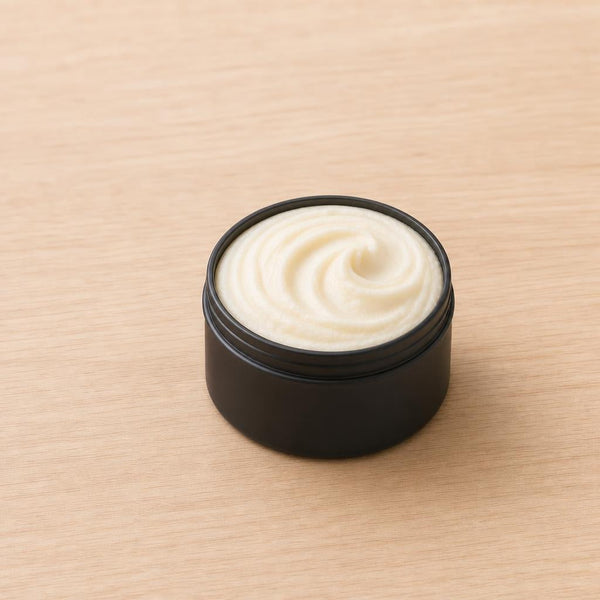
- Hidrata con intención. Aplica un bálsamo a base de sebo o anhidro con la piel un poco húmeda. Con una capa fina y pareja es suficiente. Estás alimentando la barrera de la piel, no cubriéndola.
- Protege a diario. Usa protección solar cada mañana. Los métodos tradicionales no contemplaban la exposición a los rayos UV de hoy, y esta es un área donde las prácticas nuevas sí mejoran a las antiguas.
- Elige un buen origen. Los resultados que obtienes del cuidado de la piel con sebo de res dependen mucho de la calidad del fundido y de la pureza del ingrediente. El sebo bien fundido a partir de sebo crudo local y de calidad se comporta muy distinto que las alternativas mal procesadas.
Consejo: Busca productos que enumeren cada ingrediente con un propósito claro. Si no entiendes por qué algo está en la fórmula, vale la pena preguntar.
Mi opinión honesta sobre los métodos del viejo mundo
He pasado mucho tiempo pensando en por qué los ingredientes antiguos están teniendo un momento tan fuerte ahora mismo. Mi experiencia me ha enseñado que no es solo nostalgia. Cuando quitas el marketing y miras lo que de verdad ayuda a una piel sana, la lista del viejo mundo se vuelve corta muy rápido.
El sebo siempre es la estrella para mí. Lo he visto funcionar en piel que ha batallado con resequedad, sensibilidad y daño en la barrera cuando nada más ayudaba. La razón tiene sentido una vez que entiendes que el perfil de ácidos grasos del sebo refleja lo que tu piel ya produce. No es ajeno. Tu piel sabe qué hacer con él.
Lo que he aprendido sobre la calidad de los ingredientes no se puede exagerar. El proceso de fundido, el origen del sebo crudo, la frescura del lote. Estos detalles separan un producto que de verdad funciona de uno que solo suena bien en papel. También he aprendido a ser honesto: el cuidado de la piel del viejo mundo no es una solución universal. El tipo de piel, el clima y el estilo de vida influyen. Lo que ofrece esta tradición es un mejor punto de partida, ingredientes con un historial comprobado y una compatibilidad molecular que las alternativas sintéticas rara vez igualan.
El ritual y la experiencia sensorial también importan. Una rutina constante que de verdad disfrutas vale más que un producto sofisticado que te saltas. Eso es algo que el viejo mundo entendía de forma intuitiva.
Brian
Moosestallow: cuidado del viejo mundo para la piel moderna
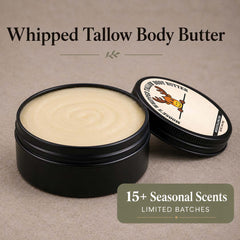
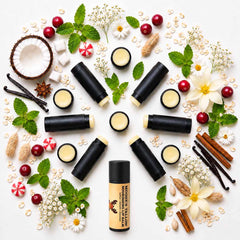
Si te ha dado curiosidad probar los métodos tradicionales de cuidado de la piel, Moosestallow lo hace sencillo. Cada producto parte de sebo de res local bien fundido como base. Nada se agrega sin una razón. Las fórmulas también incluyen aceite de coco fraccionado para la estabilidad y la absorción, cera de abeja para proteger la barrera y tocoferoles para conservar la frescura. La meta es la mínima dilución y la máxima compatibilidad con la piel. Puedes explorar toda la línea de productos de sebo hechos a mano y encontrar el indicado para tu piel. Si es tu primera vez con el cuidado a base de sebo, empieza con un producto y presta atención a cómo responde tu piel. Moosestallow también ofrece una útil lista de verificación de productos de sebo para ayudarte a elegir con confianza.
Preguntas frecuentes
¿Qué es el cuidado de la piel del viejo mundo en términos simples?
El cuidado de la piel del viejo mundo se refiere a las prácticas de belleza naturales y tradicionales que usan ingredientes enteros y sin refinar, como grasas animales, ceras y aceites botánicos. Estas rutinas de cuidado de la piel históricas se centraban en proteger y nutrir la barrera de la piel sin aditivos sintéticos ni fórmulas cargadas de agua.
¿Por qué se considera el sebo un ingrediente del cuidado de la piel del viejo mundo?
El sebo se ha usado en el cuidado de la piel durante siglos en las tradiciones europeas y de los nativos americanos porque refleja de cerca el perfil de ácidos grasos del sebo humano. Esa compatibilidad biológica lo hace efectivo para hidratar y apoyar la barrera de la piel.
¿Es seguro el cuidado de la piel del viejo mundo para la piel sensible?
La mayoría de los ingredientes tradicionales se toleran bien, pero el tipo de piel y la técnica de aplicación de cada persona importan. Empezar con un solo producto sencillo y observar la respuesta de tu piel es el enfoque más seguro, sobre todo para la piel sensible.
¿En qué se diferencia el cuidado de la piel del viejo mundo del cuidado moderno?
El cuidado de la piel moderno suele ser a base de agua y requiere conservadores y emulsionantes. El cuidado de la piel del viejo mundo es en gran parte anhidro, es decir, usa grasas y ceras directamente sin diluir en agua, lo que significa menos aditivos y un apoyo más directo a la barrera.
¿Se pueden usar los métodos del cuidado de la piel del viejo mundo todos los días?
Sí. Una rutina diaria sencilla de limpieza a base de aceite y un humectante de sebo o cera de abeja es lo bastante suave para el uso diario. La exfoliación debe limitarse a una a tres veces por semana para no alterar la barrera de la piel.
Recomendado
- Por qué usar cuidado de la piel tradicional para una piel más sana – Moose’s Tallow
- Beneficios reales del cuidado de la piel hecho a mano para toda tu familia – Moose’s Tallow
- Crea un flujo de cuidado natural para resultados duraderos – Moose’s Tallow
- ¿Qué es el cuidado de la piel de ingredientes simples? Una guía natural – Moose’s Tallow


0 comentarios