

El cuidado de la piel confiable se define como productos con ingredientes transparentes, seguros y con un propósito, que apoyan la salud de la piel sin aditivos dañinos ni rellenos innecesarios. El término “cuidado de la piel confiable” no es una categoría legal. Es un estándar del consumidor, uno que se basa en la transparencia de los ingredientes, el etiquetado honesto y fórmulas donde cada componente se gana su lugar. Los marcos regulatorios como la Ley de Modernización de la Regulación de Cosméticos (MoCRA) establecen un mínimo legal de seguridad, pero no garantizan que un producto sea simple, limpio o adecuado para tu piel. En ese vacío es donde los consumidores informados tienen que hacer su propia tarea. Marcas como Moose's Tallow llenan ese vacío al hacer que cada ingrediente sea visible e intencional, empezando por el sebo de res correctamente procesado como base.
¿Qué es el cuidado de la piel confiable y qué estándares lo respaldan?
El cuidado de la piel confiable empieza por saber quién es responsable de la seguridad del producto. Según la MoCRA, las empresas de cosméticos tienen la responsabilidad legal de la seguridad de sus productos. La FDA no aprueba de antemano la mayoría de los cosméticos antes de que lleguen a los estantes. Eso significa que la carga de comprobar la seguridad recae en la marca, no en un revisor del gobierno.
No existe una definición legal en EE. UU. para términos como “limpio”, “natural” o “confiable”. Son afirmaciones de marketing, no categorías reguladas. Un producto etiquetado como “belleza limpia” todavía puede contener fragancias, conservantes sintéticos o ingredientes que provocan reacciones en la piel sensible.
Las certificaciones de terceros llenan parte de ese vacío. Programas como EWG Verified, NSF/ANSI 305 y el Credo Clean Standard aplican cada uno una revisión independiente de ingredientes. Son voluntarios, y ninguna certificación por sí sola cubre todas las preocupaciones, pero le dan al consumidor un punto de partida más allá de las afirmaciones de la etiqueta frontal.
Esto es lo que realmente cubre el panorama de certificaciones:
- EWG Verified: Filtra según la lista de ingredientes restringidos del Environmental Working Group y exige la divulgación completa de ingredientes.
- NSF/ANSI 305: Se aplica a productos de cuidado personal con contenido orgánico y fija umbrales mínimos de ingredientes orgánicos certificados.
- Credo Clean Standard: Un estándar impulsado por minoristas que restringe más de 2,700 ingredientes y exige transparencia sobre el origen y la fabricación.
- Made Safe: Certifica que los productos no contienen sustancias químicas dañinas conocidas, mediante un proceso de análisis basado en la ciencia.
Entender estos marcos te ayuda a identificar marcas que van más allá del mínimo legal. Una marca que no puede compartir su lista completa de ingredientes ni justificar por qué está presente cada ingrediente merece cautela.
Cómo leer las listas de ingredientes para identificar fórmulas seguras
La lista de ingredientes, redactada con nombres INCI (Nomenclatura Internacional de Ingredientes Cosméticos), revela lo que un producto realmente contiene. Las afirmaciones de la etiqueta frontal te dicen lo que una marca quiere que creas. La lista de ingredientes te dice la verdad.
Los primeros cinco ingredientes forman la mayor parte de cualquier fórmula. Si el agua aparece primero, el producto es principalmente agua. Eso no es malo en sí mismo, pero significa que los ingredientes activos o nutritivos aparecen en concentraciones más pequeñas más abajo en la lista. Para las personas con piel seca o sensible, una base con mucha agua suele significar que el producto se evapora rápido y aporta menos apoyo a la barrera.
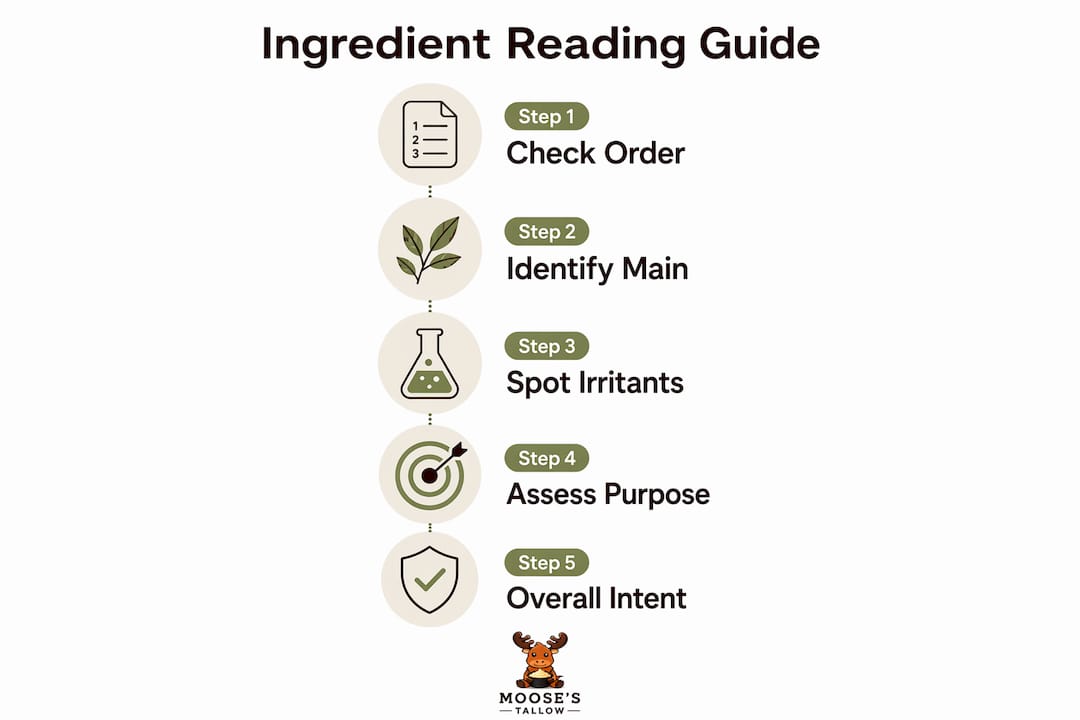
Leer la lista completa importa por lo que está al final. La “línea del 1 %” marca el punto donde el orden de los ingredientes ya no se basa en la concentración. Por debajo de esa línea, los conservantes, las fragancias, los colorantes y ciertos activos pueden aparecer en concentraciones menores al 1 %. Esas concentraciones bajas aún pueden provocar reacciones en la piel sensible. La fragancia y los aceites esenciales son los culpables más comunes, a menudo listados como “parfum” o “aroma” para ocultar sus componentes reales.
Sigue estos pasos al evaluar cualquier producto:
- Lee los primeros cinco ingredientes. Conforman la mayor parte de la fórmula. Si no los reconoces ni puedes investigarlos, es una señal para indagar más.
- Identifica las entradas de fragancia. “Parfum”, “fragrance” o “aroma” pueden representar docenas de sustancias químicas no reveladas. Para la piel sensible, sin fragancia es la opción más segura.
- Busca los conservantes. Algunos comunes son el fenoxietanol, el metilparabeno y el etilhexilglicerina. Algunos se toleran bien; otros son irritantes frecuentes. Aprende cuáles afectan tu piel.
- Cuenta el total de ingredientes. Las fórmulas más simples reducen el riesgo y son más fáciles de analizar si ocurre una reacción. Un producto con seis ingredientes es mucho más fácil de evaluar que uno con 52.
- Fíjate en las afirmaciones “hipoalergénico” y “probado por dermatólogos”. Estos términos carecen de definiciones estrictas y no garantizan la seguridad para tu piel específica.
Consejo: Concéntrate en la intención general de la fórmula en lugar de buscar una sola palabra de ingrediente que dé “miedo”. Una lista corta de ingredientes reconocibles y funcionales es una señal de seguridad más fuerte que una lista larga con algunos añadidos orgánicos certificados.
¿Los ingredientes naturales hacen que el cuidado de la piel sea más confiable?
Los ingredientes naturales no son automáticamente más seguros que los sintéticos. Muchos aceites esenciales causan reacciones alérgicas, y los ingredientes botánicos a menudo se procesan de maneras que concentran los alérgenos. Los nombres INCI en latín pueden ocultar lo que realmente es un ingrediente de origen vegetal, lo que dificulta detectar un desencadenante conocido.
Los ingredientes sintéticos, cuando están bien estudiados y se usan con un propósito, pueden ser estables, eficaces y bien tolerados. El origen de un ingrediente importa menos que su función, su concentración y su compatibilidad con tu piel. El cuidado de la piel confiable se fija en ambas cosas.
La comparación siguiente muestra cómo interactúan el origen y la función de los ingredientes en fórmulas reales:
| Tipo de ingrediente | Ejemplo | Consideración clave |
|---|---|---|
| De origen animal | Sebo de res | Perfil de ácidos grasos parecido a los aceites de la propia piel; apoya la barrera con mínima dilución |
| Aceite portador preferido | Aceite de coco fraccionado | Estable, resiste la oxidación, se absorbe con facilidad, larga vida útil |
| Cera de origen vegetal | Cera de abeja | Crea una capa protectora; bien tolerada por la mayoría de los tipos de piel |
| Antioxidante | Vitamina E (tocoferoles) | Protege la estabilidad de la fórmula y cuida la superficie de la piel |
| Conservante sintético | Fenoxietanol | Eficaz en concentraciones bajas; puede irritar algunas pieles sensibles |
| Aceite esencial | Aceite de lavanda | Alérgeno común; “natural” no significa universalmente seguro |
El sebo de res destaca porque su perfil de ácidos grasos apoya la barrera cutánea de una manera muy parecida a la composición lipídica de la propia piel. Combinado con aceite de coco fraccionado como portador, aporta nutrición sin el riesgo de oxidación que traen muchos aceites vegetales. El aceite de coco fraccionado es el portador preferido en Moose's Tallow precisamente por su estabilidad, su fácil absorción y sus ventajas de vida útil frente a alternativas como el aceite de oliva, aguacate o semilla de uva.
La conclusión es sencilla. No confíes en una etiqueta “natural” al pie de la letra. Evalúa los ingredientes reales, sus concentraciones y sus perfiles de seguridad conocidos. Un producto basado en la simplicidad y la transparencia de los ingredientes es más confiable que uno que se esconde detrás del lenguaje de marketing botánico.
Consejos prácticos para elegir productos de cuidado de la piel en los que puedes confiar
Las buenas decisiones de cuidado de la piel dependen de un proceso de evaluación constante, no de la lealtad a una marca ni del precio. Las siguientes prácticas sirven tanto si compras por primera vez como si estás revisando una rutina que no está funcionando.
- Exige la divulgación completa de ingredientes. Cualquier marca que no pueda o no quiera compartir su lista completa de ingredientes no es una fuente confiable. La transparencia total es lo básico, no un extra.
- Prioriza fórmulas mínimas y con un propósito. Las fórmulas minimalistas donde cada ingrediente cumple una función clara reducen el riesgo de irritación y facilitan identificar y atender las reacciones.
- Introduce los productos nuevos uno por uno. Agregar varios productos nuevos al mismo tiempo hace imposible identificar cuál causó una reacción. Dale a cada producto de dos a cuatro semanas antes de añadir otro.
- Conoce tus desencadenantes personales. La fragancia, ciertos conservantes y algunos extractos botánicos son los irritantes más comunes para la piel sensible. Una vez que identifiques los tuyos, revisar productos nuevos se vuelve más rápido y confiable.
- La constancia importa más que la variedad. Amontonar demasiados productos no mejora los resultados. Una rutina corta con los ingredientes correctos supera a una compleja con activos redundantes o en conflicto.
- Verifica las certificaciones por tu cuenta. Investiga qué exige realmente una certificación antes de tratarla como una garantía de seguridad. No todas las certificaciones tienen el mismo rigor.
Consejo: Cuando reacciones a un producto, anota la lista completa de ingredientes y compárala con los productos que toleras bien. Los patrones aparecen rápido, y ese conocimiento es más útil que cualquier afirmación de la etiqueta frontal.
La constancia y la introducción gradual de productos nuevos mejora la tolerancia de la piel con el tiempo. La piel responde a la rutina. Cambiar con frecuencia te impide saber qué está funcionando de verdad.
Puntos clave
El cuidado de la piel confiable se define por la transparencia total de los ingredientes, fórmulas mínimas y con un propósito, y afirmaciones honestas que se sostienen cuando lees la lista real de ingredientes.
| Punto | Detalles |
|---|---|
| No existe una definición legal | Términos como “limpio” y “natural” son afirmaciones de marketing; evalúa directamente la lista de ingredientes. |
| Los primeros cinco ingredientes son los que más importan | Forman la mayor parte de cualquier fórmula y revelan la verdadera base e intención del producto. |
| Natural no significa seguro | Los aceites esenciales y los botánicos pueden causar reacciones; la función del ingrediente importa más que el origen. |
| Las fórmulas más simples reducen el riesgo | Menos ingredientes significan menos desencadenantes potenciales y un análisis más fácil para la piel sensible. |
| Sebo y aceite de coco fraccionado | El sebo de res apoya la barrera cutánea; el aceite de coco fraccionado añade estabilidad y absorción. |
Por qué creo que el cuidado de la piel “confiable” tiene que empezar por la etiqueta
Empecé Moose's Tallow porque tomé una loción que había usado durante años y de verdad leí la etiqueta. Tenía 52 ingredientes. El primero era agua. No tengo nada contra el agua, pero quería saber qué me ponía en la piel todos los días, y no podía responder esa pregunta con una lista tan larga.
Lo que he aprendido desde entonces es que la mayoría de la gente nunca lee más allá del frente del envase. El marketing hace su trabajo. Palabras como “natural”, “limpio” y “probado por dermatólogos” dan tranquilidad. Están diseñadas para eso. Pero ninguna tiene una definición legal, y ninguna te dice qué contiene realmente el producto.
La confianza real viene de la lista de ingredientes. Cada ingrediente en un producto de Moose's Tallow está ahí por una razón. El sebo de res siempre es la base porque su perfil de ácidos grasos trabaja con tu piel, no en su contra. El aceite de coco fraccionado lo transporta de forma limpia y se mantiene estable en el estante. La cera de abeja, la vitamina E, la jojoba, el ricino y el aceite infusionado con yema de huevo cumplen cada uno una función específica. Nada es relleno.
También creo que la industria del cuidado de la piel ha complicado las cosas a propósito. Una rutina de 12 pasos con 30 ingredientes en total es difícil de evaluar y fácil de vender. Una fórmula de cuatro ingredientes es fácil de evaluar y más difícil de adornar. Elegimos el camino más difícil porque es el honesto. Si quieres armar una rutina en la que de verdad puedas confiar, empieza por leer las etiquetas y preguntar por qué está cada ingrediente. Si una marca no puede responder esa pregunta, sigue buscando.
Brian Smith
Productos de Moose's Tallow hechos con fórmulas transparentes
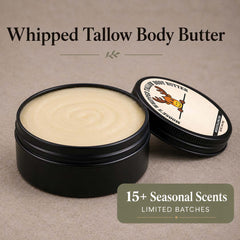
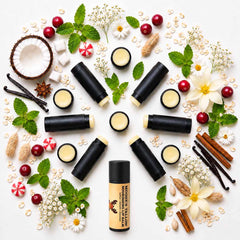
Moose's Tallow crea cada producto sobre sebo de res correctamente procesado, con una lista de ingredientes corta y totalmente revelada. El bálsamo labial de sebo usa sebo, cera de abeja y aceite de coco fraccionado para nutrir los labios secos sin fragancia ni rellenos. La manteca corporal batida de sebo ofrece apoyo a la barrera de todo el cuerpo en una fórmula sin agua que se absorbe sin grasa. Para las manos secas y agrietadas, la crema de manos de sebo aplica el mismo enfoque de ingredientes mínimos a la reparación puntual. Cada producto viene con una garantía de 60 días y reseñas reales de clientes. Si lees las etiquetas y quieres saber exactamente qué te pones en la piel, Moose's Tallow está hecho para ti.
Preguntas frecuentes
¿Qué significa realmente el “cuidado de la piel confiable”?
El cuidado de la piel confiable se refiere a productos con ingredientes completamente revelados y con un propósito, que apoyan la salud de la piel sin aditivos innecesarios. El término no tiene una definición legal, así que se evalúa leyendo directamente la lista de ingredientes.
¿Las etiquetas de cuidado de la piel “natural” y “limpio” están reguladas en EE. UU.?
No. Términos como “natural”, “limpio” e “hipoalergénico” son afirmaciones de marketing sin regulación y sin una definición legal estandarizada en EE. UU. Las certificaciones de terceros como EWG Verified ofrecen una revisión independiente más confiable.
¿Cómo sé si mi producto de cuidado de la piel es seguro para la piel sensible?
Lee la lista completa de ingredientes e identifica irritantes conocidos como la fragancia, ciertos conservantes y los aceites esenciales. Las fórmulas más simples con menos ingredientes son más fáciles de evaluar y tienen menos probabilidad de provocar reacciones.
¿Qué hace del sebo de res un ingrediente confiable para el cuidado de la piel?
El sebo de res tiene un perfil de ácidos grasos muy parecido a la composición lipídica de la propia piel. Apoya la barrera cutánea y se absorbe de forma limpia, sobre todo cuando se combina con aceite de coco fraccionado como portador estable.
¿Qué es la “línea del 1 %” en una lista de ingredientes de cuidado de la piel?
La línea del 1 % marca el punto de la lista de ingredientes donde el orden por concentración deja de aplicarse. Los ingredientes por debajo de esta línea, incluidas las fragancias y los conservantes, aparecen en concentraciones menores al 1 %, pero aún pueden causar reacciones en la piel sensible.
Recomendado
- ¿Qué es el cuidado de la piel limpio? Una guía clara y honesta – Moose's Tallow
- Ingredientes honestos: la clave para una piel más sana en 2026 – Moose's Tallow
- Cómo evaluar los ingredientes del cuidado de la piel como un profesional – Moose's Tallow
- Cuidado de la piel seguro para bebés: guía para padres 2026


0 comentarios