

En resumen:
- Los ingredientes sintéticos en los productos de cuidado personal se relacionan con la alteración hormonal, la inflamación de la piel y la toxicidad a largo plazo. Evitar compuestos como los ftalatos, los bisfenoles, las fragancias sintéticas y los microplásticos reduce la exposición a riesgos conocidos para la salud. Hacer la transición poco a poco hacia alternativas naturales, reemplazando primero los productos que más permanecen en la piel, puede favorecer una piel más sana y tu bienestar general.
Los ingredientes sintéticos son compuestos químicos artificiales que se añaden a los productos de cuidado de la piel y cuidado personal como conservantes, fragancias, texturizantes o estabilizadores. La razón principal para evitar los ingredientes sintéticos es su vínculo documentado con la alteración endocrina, la inflamación de la piel y la toxicidad sistémica a largo plazo. Una revisión clínica de 2026 encontró que los bisfenoles aparecen en el 39% de los productos de cuidado personal, muchas veces filtrándose del empaque de plástico a la propia fórmula. Eso significa que casi cuatro de cada diez productos en tu estante podrían exponerte a un alterador hormonal conocido antes de que siquiera leas la etiqueta. Entender qué compuestos causan daño, y por qué, es el primer paso para tomar mejores decisiones para tu piel y tu salud.
Por qué evitar los ingredientes sintéticos en los productos de cuidado personal
Los riesgos para la salud de los aditivos sintéticos en el cuidado de la piel no son teóricos. Están documentados en la literatura clínica y en informes de seguridad para el consumidor. Los compuestos más preocupantes se agrupan en unas pocas categorías bien estudiadas.

Los alteradores endocrinos son la preocupación más seria. Los bisfenoles y los ftalatos alteran la función hormonal, afectando la salud reproductiva y la regulación metabólica. Los ftalatos se usan como disolventes y fijadores en las fragancias sintéticas, y estudios en humanos han medido niveles elevados de metabolitos en la orina de personas con exposición habitual a estos productos. Esto no es un riesgo mínimo. Es una respuesta biológica medible.
Los microplásticos y los polímeros derivados del plástico añaden otra capa de preocupación. Ingredientes como el carbómero y la dimeticona son derivados del plástico, y los microplásticos penetran las barreras de la piel, relacionándose con la inflamación, el envejecimiento prematuro de la piel y el potencial cancerígeno. La mayoría de los datos de seguridad de estos polímeros provienen de estudios financiados por la industria que no evalúan la carcinogenicidad a largo plazo. Ese es un vacío importante en la protección al consumidor.
Las fragancias sintéticas son la causa más común de alergia de contacto en la cosmética, y provocan sensibilización de la piel e irritación crónica. La palabra “fragancia” en una etiqueta puede representar legalmente decenas de compuestos químicos no revelados. No tienes forma de saber qué te estás aplicando en realidad.
Los contaminantes ocultos empeoran el panorama. Los productos pueden contener subproductos de plomo y benceno por la contaminación en la cadena de suministro. Estos no figuran como ingredientes. No son adiciones intencionales. Pero están presentes y suponen riesgos reales para la salud sobre los que ninguna etiqueta te va a advertir.
La supervisión regulatoria en EE. UU. no exige pruebas de seguridad previas a la comercialización para los ingredientes cosméticos. Eso pone la responsabilidad de la precaución directamente sobre ti como consumidor.
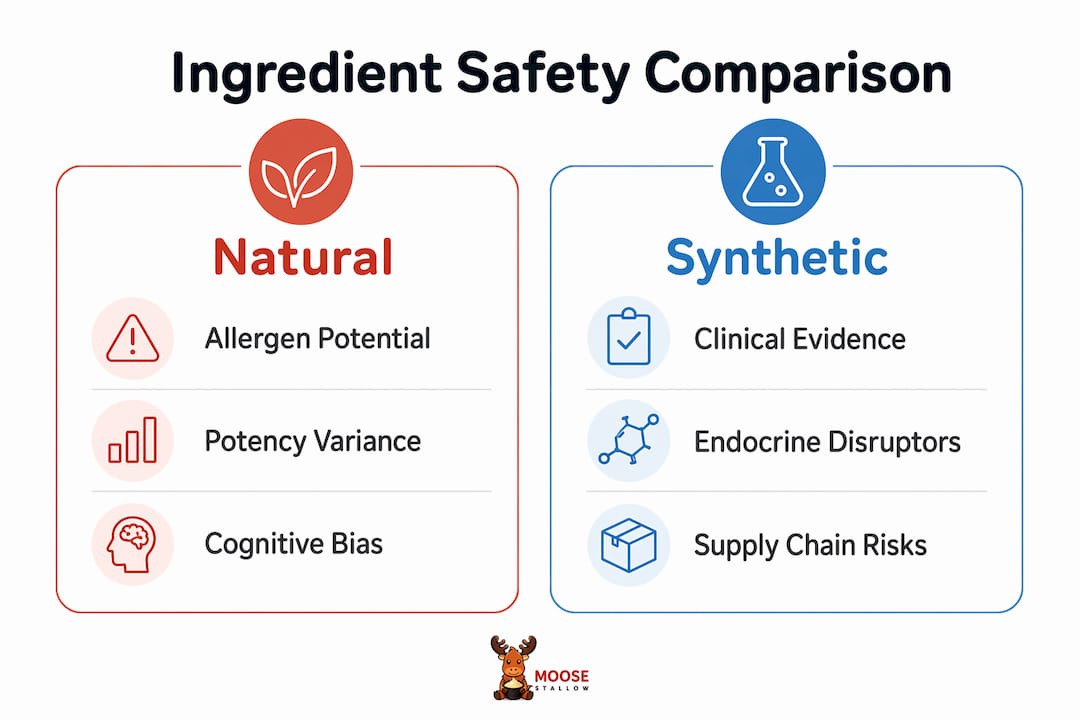
¿Cómo se comparan los ingredientes naturales y sintéticos en cuanto a seguridad?
La respuesta honesta es que ninguna de las dos categorías es segura de forma automática. La seguridad de un ingrediente depende de la concentración y la exposición, no del origen. Esta es la relación dosis-respuesta, y se aplica por igual a las sustancias naturales y sintéticas.
| Factor | Ingredientes naturales | Ingredientes sintéticos |
|---|---|---|
| Potencial alergénico | Alto en aceites esenciales y extractos vegetales | Alto en fragancias sintéticas y conservantes |
| Pruebas regulatorias | Requisitos mínimos previos a la comercialización | Requisitos mínimos previos a la comercialización |
| Evidencia de eficacia | Sólida para el apoyo de la barrera (sebo, cera de abejas, tocoferoles) | Sólida para activos específicos (retinoides, filtros solares) |
| Riesgo de contaminación | Menor cuando se obtienen con cuidado | Mayor por el empaque de plástico y los químicos de la cadena de suministro |
| Datos de seguridad a largo plazo | Limitados pero en general favorables | Limitados, sobre todo para los polímeros derivados del plástico |
Los aceites esenciales son sensibilizantes potentes de la piel, capaces de causar dermatitis alérgica de contacto en personas sensibles. La lavanda, el árbol de té y los aceites cítricos son culpables frecuentes. Natural no significa suave.
Del lado sintético, los retinoides siguen siendo el estándar de referencia para el cuidado antiedad de la piel, con décadas de evidencia clínica que respaldan su eficacia en las concentraciones recomendadas. Descartar todos los sintéticos sin datos no es una estrategia de salud. Es un sesgo.
El sesgo de naturalidad es una tendencia cognitiva bien documentada en la que los consumidores sobreestiman la seguridad de los productos naturales y subestiman los riesgos de los sintéticos. Este sesgo influye en las decisiones de compra más que la evidencia. El enfoque más inteligente es evaluar cada ingrediente por su perfil de seguridad documentado, no por su origen.
Consejo: Al leer una etiqueta, fíjate en los primeros cinco ingredientes. Conforman la mayor parte de la fórmula. Si ahí aparecen fragancia sintética, parabenos o polímeros derivados del plástico, el nivel de exposición es significativo.
¿Con qué ingredientes sintéticos debes tener más cuidado?
Algunos compuestos tienen suficiente riesgo documentado como para que evitarlos sea una decisión razonable y basada en la evidencia. Estos son los que vale la pena conocer por su nombre.
-
Ftalatos (ftalato de dietilo, ftalato de dibutilo): se encuentran en fragancias sintéticas y productos para uñas. Se relacionan con toxicidad reproductiva y alteración hormonal en estudios tanto en animales como en humanos.
-
Bisfenoles (BPA, BPS): entran a los productos principalmente a través del empaque de plástico. Están clasificados como alteradores endocrinos y se vinculan con la disfunción metabólica y enfermedades de la piel.
-
Parabenos (metilparabeno, propilparabeno): conservantes que imitan el estrógeno en el cuerpo. Se encuentran en una amplia gama de lociones, champús y cremas.
-
Fragancia sintética: una sola mención de “fragancia” puede representar más de 100 químicos no revelados, muchos de ellos alérgenos o irritantes conocidos.
-
Microplásticos y polímeros plásticos: el carbómero, la dimeticona y el polietileno son derivados del plástico. Se acumulan en los tejidos y se relacionan con la inflamación.
Más allá de estos ingredientes intencionales, presta atención a los contaminantes no declarados. Consumer Reports ha identificado productos que contienen subproductos de plomo y benceno provenientes de procesos de fabricación. Estos riesgos son invisibles en la etiqueta, y por eso el origen y la transparencia de la marca importan tanto.
Al leer las etiquetas, busca estas señales de alerta:
- La palabra “fragancia” o “parfum” sin más información
- Cualquier ingrediente que termine en “-parabeno”
- Polietileno, carbómero o dimeticona cerca del inicio de la lista
- Empaques con mucho plástico en fórmulas a base de agua
Aprender a evaluar los ingredientes del cuidado de la piel requiere práctica, pero pronto se vuelve algo natural.
Cómo pasar de un cuidado de la piel cargado de sintéticos a alternativas naturales
Reemplazar poco a poco las rutinas cargadas de sintéticos es el enfoque más efectivo. Cambiar todo de golpe aumenta la probabilidad de reacciones en la piel y dificulta identificar qué está funcionando. Empieza por los productos que permanecen más tiempo en tu piel, como las cremas hidratantes y los bálsamos corporales, ya que aportan la mayor exposición acumulada.
Esta es una secuencia práctica:
- Empieza por tu crema hidratante. Cubre la mayor superficie y permanece en la piel todo el día. Reemplázala primero.
- Sigue con los productos corporales. Las lociones y los bálsamos son los siguientes en volumen de exposición.
- Deja los limpiadores para el final. Se enjuagan, así que el tiempo de exposición es más corto.
- Revisa las certificaciones. Busca productos con listas de ingredientes transparentes y breves, en lugar de afirmaciones de marketing como “natural” o “clean”, que no tienen definición legal en EE. UU.
Ingredientes como el sebo de res, el aceite de coco fraccionado, la cera de abejas y los tocoferoles (vitamina E) son bien tolerados por la mayoría de los tipos de piel. El aceite de coco fraccionado es especialmente estable, resiste la oxidación y se absorbe sin dejar residuo. Estos son el tipo de ingredientes que se ganan su lugar en una fórmula. Para un enfoque estructurado, esta guía de cambios de cuidado de la piel ecológicos repasa el proceso paso a paso.
Consejo: Si tienes piel sensible, introduce un producto nuevo a la vez y espera dos semanas antes de añadir otro. Así es fácil detectar cualquier reacción e identificar la causa.
Puntos clave
Evitar los ingredientes sintéticos es una decisión que protege la salud, basada en evidencia clínica y no en tendencias de marketing. Los compuestos de mayor riesgo, entre ellos los ftalatos, los bisfenoles y las fragancias sintéticas, tienen vínculos documentados con la alteración hormonal, las enfermedades de la piel y la toxicidad sistémica.
| Punto | Detalles |
|---|---|
| Los alteradores endocrinos están muy extendidos | Los bisfenoles aparecen en el 39% de los productos de cuidado personal, muchas veces por el empaque de plástico. |
| La fragancia sintética es uno de los principales alérgenos | La palabra “fragancia” en una etiqueta puede ocultar más de 100 químicos no revelados, muchos de ellos irritantes. |
| Lo natural no es seguro de forma automática | Los aceites esenciales y los extractos vegetales pueden causar reacciones alérgicas en personas sensibles. |
| Los contaminantes ocultos añaden un riesgo no declarado | Los subproductos de plomo y benceno pueden aparecer en los productos sin figurar como ingredientes. |
| Los cambios graduales funcionan mejor | Reemplazar un producto a la vez reduce las alteraciones de la piel y mejora la constancia a largo plazo. |
Mi opinión honesta sobre los ingredientes sintéticos y la cosmética clean
Empecé Moosestallow porque quería saber exactamente qué le ponía a la piel de mi familia. No porque crea que todos los sintéticos son veneno, sino porque creo que cada ingrediente de una fórmula debe tener una razón clara para estar ahí.
La evidencia sobre los ftalatos, los bisfenoles y los microplásticos es lo bastante seria como para tomarla en serio. Pero también creo que la conversación sobre la belleza clean suele irse demasiado lejos en el otro sentido. El miedo generalizado a todo lo hecho en laboratorio no es una estrategia de salud. Es una estrategia de marketing que usan las marcas que quieren venderte algo. La verdadera pregunta siempre es: ¿qué hace este ingrediente en concreto, a esta concentración y con este nivel de exposición?
Lo que he descubierto es que las fórmulas simples construidas con ingredientes bien conocidos funcionan mejor para la mayoría de las personas que las complejas, cargadas de activos y estabilizadores. El sebo de res, el aceite de coco fraccionado, la cera de abejas y los tocoferoles no están de moda. Son efectivos, bien tolerados y honestos. El aceite de coco fraccionado, en particular, aguanta mejor que la mayoría de los aceites portadores porque resiste la oxidación y se absorbe de forma limpia sin ponerse rancio en el estante.
No te estoy pidiendo que desconfíes de toda la química moderna. Te estoy pidiendo que leas las etiquetas, hagas preguntas y elijas marcas que puedan decirte exactamente por qué está cada ingrediente en el frasco. Ese es el estándar que aplicamos en Moosestallow, y es el estándar que creo que toda marca de cuidado de la piel debería cumplir.
Brian
Moosestallow: cuidado de la piel en el que de verdad puedes confiar
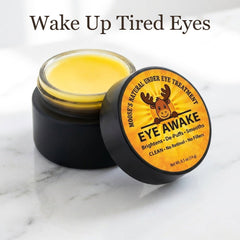
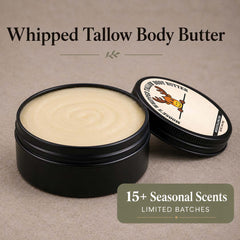
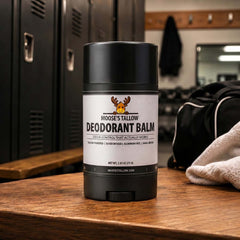
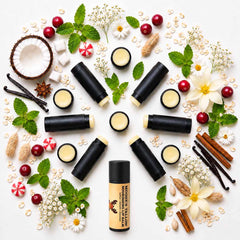
En Moosestallow, cada fórmula empieza con sebo de res bien procesado y se construye a partir de ahí. Añadimos aceite de coco fraccionado para dar estabilidad y una absorción limpia, cera de abejas para apoyar la barrera y tocoferoles para protección antioxidante. Sin fragancias sintéticas. Sin rellenos derivados del plástico. Sin ingredientes que necesiten un título en química para pronunciarse. Si estás listo para dejar atrás los productos cargados de sintéticos y acercarte a algo más simple y transparente, explora la colección completa de Moosestallow y encuentra una fórmula que le quede bien a tu piel. Cada lote se elabora a mano en cantidades pequeñas, así que sabes exactamente qué estás recibiendo.
Preguntas frecuentes
¿Cuáles son los principales peligros de los ingredientes sintéticos en el cuidado de la piel?
Los principales peligros incluyen la alteración endocrina por ftalatos y bisfenoles, la sensibilización de la piel por fragancias sintéticas y la inflamación relacionada con los microplásticos. Contaminantes ocultos como el plomo y el benceno también pueden aparecer en los productos sin figurar en la etiqueta.
¿Los ingredientes naturales siempre son más seguros que los sintéticos?
No. La seguridad depende de la concentración y la exposición, no del origen. Los aceites esenciales, por ejemplo, están entre los sensibilizantes de la piel más potentes en cosmética y pueden causar dermatitis alérgica de contacto. Evalúa ingredientes específicos en lugar de guiarte por la etiqueta de natural o sintético.
¿Qué ingredientes sintéticos debo evitar primero?
Empieza por evitar la fragancia sintética, los parabenos, los ftalatos y los polímeros derivados del plástico como el carbómero y la dimeticona. Estos tienen los riesgos para la salud mejor documentados y aparecen en una amplia gama de productos comunes.
¿Cómo hago la transición al cuidado natural de la piel sin alterarla?
Reemplaza un producto a la vez, empezando por tu crema hidratante diaria, ya que es la que pasa más tiempo en contacto con la piel. Espera dos semanas entre cambios para observar la respuesta de tu piel e identificar con claridad cualquier reacción.
¿Qué hace del sebo de res una buena alternativa natural?
El sebo de res es estructuralmente similar a los lípidos de la piel humana, por lo que se absorbe bien y apoya la barrera cutánea sin emulsionantes ni estabilizadores sintéticos. Se ha usado para el cuidado de la piel durante generaciones y funciona sin los riesgos para la salud asociados a los ingredientes derivados del plástico.
Recomendados
- 6 ingredientes que debes evitar en el cuidado de la piel para una piel más sana – Moose’s Tallow
- Por qué la simplicidad de los ingredientes importa para un cuidado de la piel efectivo – Moose’s Tallow
- Ingredientes honestos: la clave para una piel más sana en 2026 – Moose’s Tallow
- Cómo elegir cuidado natural de la piel: ingredientes que funcionan – Moose’s Tallow


0 comentarios