





Magnesium is a critical mineral that supports hundreds of body processes, yet many people unknowingly lack enough of it, leading to fragmented sleep and restless nights. Recent research reveals that magnesium supplementation improves sleep quality by 32% compared to placebo, making it one of the most effective natural alternatives to sedatives. If you struggle with falling asleep or staying asleep, understanding how magnesium works can transform your nights without harsh side effects.
Table of Contents
- How Magnesium Regulates Sleep Mechanisms
- Biological Mechanisms Of Magnesium In Sleep Regulation
- Comparison Of Magnesium Forms For Sleep Enhancement
- Clinical Evidence Of Magnesium Benefits On Sleep And Stress
- Optimal Dosage And Timing Of Magnesium For Sleep Improvement
- Who Benefits Most From Magnesium For Sleep?
- Common Misconceptions And Limitations In Magnesium And Sleep
- Conclusion And Practical Takeaways
- Enhance Your Sleep Naturally With Moose’s Tallow Magnesium Products
Key takeaways
| Point | Details |
|---|---|
| Magnesium calms the brain | It enhances GABA neurotransmitters and blocks excitatory glutamate, preparing your mind for rest. |
| Supports natural sleep hormones | Magnesium boosts melatonin production and lowers stress cortisol, regulating your internal sleep clock. |
| Form matters for effectiveness | Magnesium L-threonate crosses into the brain best, while citrate aids muscle relaxation. |
| Dosing and timing are key | Take 225 to 500 mg daily in the evening for optimal circadian alignment and sleep support. |
| Not a quick sedative | Magnesium enhances deep restorative sleep phases over weeks, not immediate knockout effects. |
How magnesium regulates sleep mechanisms
Your brain relies on a delicate balance of neurotransmitters to transition from wakefulness to sleep. Magnesium plays a starring role by regulating neurotransmitters like GABA and blocking glutamate receptors, promoting relaxation and deeper slow-wave sleep crucial for restoration. GABA is the brain’s primary inhibitory neurotransmitter, meaning it reduces neural excitability and calms mental chatter. Without enough magnesium, GABA receptors can’t function properly, leaving you wired and unable to wind down.
At the same time, magnesium inhibits excitatory glutamate receptors, which otherwise keep your brain alert and active. This dual action creates a physiological shift toward relaxation. Think of magnesium as the dimmer switch for your nervous system, gradually lowering stimulation so sleep can naturally follow.
Beyond the brain, magnesium facilitates muscle relaxation by controlling calcium flow in muscle cells. Calcium triggers muscle contraction, while magnesium promotes release and relaxation. If you experience muscle tension or restless legs at night, low magnesium might be the culprit. By balancing calcium, magnesium eases physical tension that can interfere with falling asleep.
Magnesium also supports slow-wave sleep, the deepest phase where your body repairs tissue, consolidates memories, and restores energy. Without sufficient slow-wave sleep, you wake feeling unrefreshed even after a full night in bed. Studies show magnesium supplementation increases time spent in this restorative phase, improving overall sleep architecture.
Pro Tip: Magnesium works best as part of a consistent bedtime routine. Pair your supplement with calming activities like reading or gentle stretching to reinforce the relaxation signal to your brain.
Key mechanisms at work:
- Enhances GABA activity to reduce mental excitability and promote calmness
- Blocks glutamate receptors that drive wakefulness and alertness
- Regulates calcium in muscle cells to prevent tension and spasms
- Increases slow-wave sleep duration for deeper physical and cognitive recovery
- Prepares both brain and body for seamless sleep onset
Biological mechanisms of magnesium in sleep regulation
Magnesium’s sleep benefits extend beyond neurotransmitters to the hormonal systems governing your circadian rhythm. Your body’s internal clock relies on cellular functions controlling circadian rhythms, and magnesium deficiency disrupts these clocks by affecting energy balance at the cellular level. This disruption can shift your natural sleep-wake cycle, making it harder to fall asleep at a consistent time.
Melatonin, often called the sleep hormone, signals to your body that it’s time to rest. Magnesium increases melatonin production and reduces cortisol, which supports better sleep preparation and reduces awakening at night. Without adequate magnesium, melatonin receptors become less sensitive, weakening the hormone’s sleep-inducing effects even if melatonin levels are normal.

Cortisol, the stress hormone, naturally peaks in the morning to wake you up and should decline by evening. Chronic stress or magnesium deficiency keeps cortisol elevated at night, creating a state of physiological arousal incompatible with sleep. By lowering cortisol, magnesium removes a major barrier to falling and staying asleep.
This hormonal regulation works hand in hand with neurotransmitter modulation. While GABA and glutamate calm the brain, melatonin and cortisol prepare the body’s systems for rest. Together, they improve sleep architecture, the pattern of sleep stages you cycle through each night. Better architecture means more time in restorative deep sleep and REM sleep, which are essential for physical health and emotional resilience.
Key hormonal effects:
- Supports cellular clocks that govern circadian rhythm timing and sleep-wake cycles
- Enhances melatonin production and receptor sensitivity for stronger sleep onset signals
- Reduces cortisol levels to eliminate stress-driven wakefulness and nighttime awakenings
- Balances hormonal pathways to improve overall sleep architecture and phase distribution
- Complements neurotransmitter effects for comprehensive sleep system support
Comparison of magnesium forms for sleep enhancement
Not all magnesium supplements are created equal. Absorption rates and brain bioavailability vary widely, directly impacting their effectiveness for sleep. Magnesium L-threonate stands out because it penetrates the blood-brain barrier most effectively, enhancing brain function and sleep quality. This form was specifically designed to raise magnesium levels in the brain, making it ideal for neurotransmitter regulation and cognitive support.
Magnesium citrate offers good overall absorption and supports muscle relaxation, aiding sleep without the high brain bioavailability of L-threonate. It’s a solid middle-ground option, especially if muscle tension or restless legs contribute to your sleep issues. Citrate also has a mild laxative effect at higher doses, which can be useful for digestive health but may be disruptive if overdone.
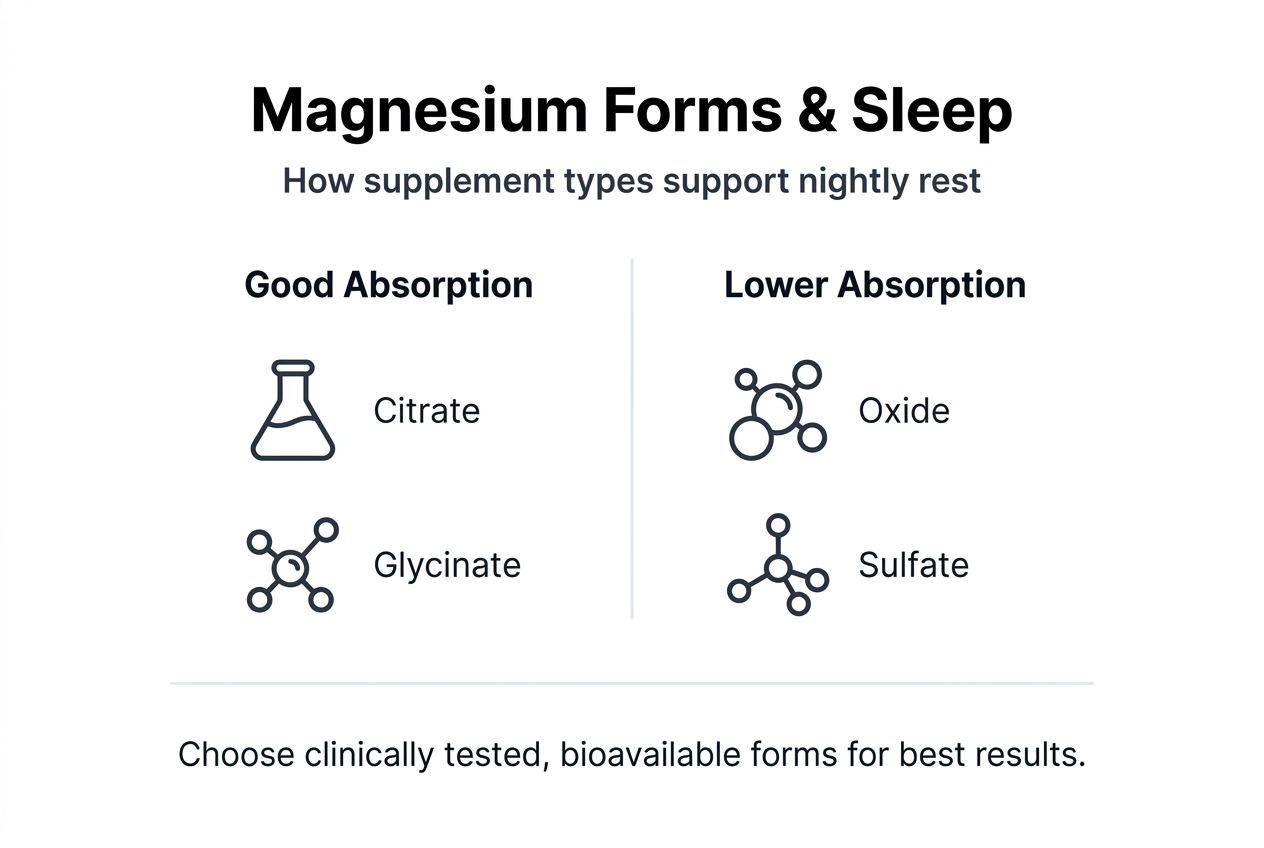
Magnesium oxide has low absorption and limited effects on sleep despite being inexpensive and widely available. Your body absorbs only about 4% of magnesium oxide, so most of it passes through your digestive system unused. While it might help with constipation, it’s not the best choice if your primary goal is better sleep.
Choosing supplements with proven brain bioavailability improves sleep outcomes. Look for third-party testing and transparent labeling to ensure you’re getting the form and dose stated on the bottle. Quality matters, as fillers and poor manufacturing can reduce effectiveness.
Topical magnesium products like magnesium-infused body butter can complement oral supplements by aiding muscle relaxation. Applying magnesium directly to tense areas allows localized absorption, which is particularly helpful for muscle-related sleep disturbances. Topical options also bypass digestive issues that some people experience with oral magnesium.
| Magnesium Form | Brain Bioavailability | Primary Sleep Benefit | Absorption Rate | Best For |
|---|---|---|---|---|
| L-threonate | High | Neurotransmitter regulation, deep sleep enhancement | Moderate | Cognitive support, brain-centered sleep issues |
| Citrate | Low to moderate | Muscle relaxation, general sleep support | High | Muscle tension, restless legs, digestive health |
| Oxide | Very low | Minimal sleep impact | Very low (4%) | Constipation relief, not recommended for sleep |
| Glycinate | Low to moderate | Calming effects, gentle on digestion | High | Sensitive stomachs, anxiety-related sleep issues |
| Topical | N/A (localized) | Muscle relaxation, localized tension relief | Variable | Complementing oral supplements, targeted muscle areas |
Pro Tip: Start with a moderate dose of L-threonate or citrate and track your sleep quality for three weeks. If you notice improvements, you’ve found your match. If not, consider adjusting the form or dose before giving up on magnesium entirely.
Clinical evidence of magnesium benefits on sleep and stress
The science backing magnesium for sleep is robust and growing. In a randomized controlled trial, participants taking magnesium supplements experienced a 32% improvement in sleep quality vs 16% placebo and reduced stress scores over eight weeks. This trial used validated sleep quality assessments, ensuring the improvements were objective and clinically meaningful, not just placebo effects or wishful thinking.
Beyond overall sleep quality, magnesium reduces sleep latency, the time it takes to fall asleep after getting into bed. Participants consistently fell asleep faster, shaving minutes off their nightly routine. Sleep efficiency also improved, meaning they spent more of their time in bed actually sleeping rather than tossing and turning. These gains add up to noticeably better rest and more energy during the day.
Stress levels, measured by validated psychological scores, significantly decreased alongside better sleep. This dual benefit is crucial because stress and poor sleep create a vicious cycle: stress disrupts sleep, and poor sleep increases stress. Magnesium breaks this cycle by addressing both hormonal stress pathways and sleep architecture simultaneously.
Benefits develop over weeks, not overnight. Most trials show meaningful improvements emerging after three to eight weeks of consistent supplementation. This timeline highlights the need for patience and regular intake rather than expecting instant results. Magnesium isn’t a sleeping pill; it’s a foundational nutrient that restores balance over time.
These trials reinforce magnesium as a safe, effective natural aid for sleep and stress management. Unlike sedatives, magnesium doesn’t cause dependency, grogginess, or cognitive impairment. It supports your body’s natural processes, making sleep easier without overriding your physiology.
Magnesium supplementation offers a natural, evidence-based approach to improving sleep quality and reducing stress, with benefits that build steadily over consistent use.
Key clinical findings:
- Subjective sleep quality improves by roughly double compared to placebo in controlled trials
- Sleep latency decreases, allowing faster sleep onset and less time lying awake
- Sleep efficiency increases, meaning more actual sleep time per night in bed
- Stress and anxiety scores significantly drop alongside sleep improvements
- Benefits require 3 to 8 weeks of consistent intake for maximal effect
Optimal dosage and timing of magnesium for sleep improvement
Getting the dose and timing right maximizes magnesium’s sleep benefits. Daily elemental magnesium doses of 225 to 500 mg are commonly effective, with evening dosing aligning with natural sleep rhythms. Starting at the lower end allows you to assess tolerance and gauge effects without overwhelming your system. Some people are sensitive to higher doses, experiencing digestive upset or loose stools.
Taking magnesium in the evening supports circadian alignment and sleep onset. Your body naturally prepares for rest as the day winds down, and magnesium reinforces this process by enhancing GABA and melatonin. Taking it too early may not coincide with your natural sleep window, while taking it too late might not give it enough time to be absorbed and start working.
Starting with a moderate dose, such as 300 mg, allows assessment of tolerance and effect over three to eight weeks. Track your sleep quality, how long it takes to fall asleep, and how you feel upon waking. If you don’t notice improvements after a month, consider increasing the dose incrementally or switching forms.
Monitoring sleep response helps tailor dosing for individual needs. Everyone’s magnesium status, diet, and sleep issues differ, so a one-size-fits-all approach rarely works. Keep a simple sleep journal noting dosage, timing, and sleep quality to identify patterns and optimize your regimen.
Topical magnesium products may serve as adjuncts for localized muscle relaxation. Applying magnesium bedtime lotion to tense shoulders, calves, or feet can ease physical discomfort that interferes with sleep. This targeted approach works well alongside oral supplementation, especially if muscle tension is a primary sleep barrier.
Optimal dosing steps:
- Start with 225 to 300 mg of elemental magnesium daily to assess tolerance and initial effects.
- Take your dose 1 to 2 hours before bedtime to align with natural sleep preparation.
- Choose a highly bioavailable form like L-threonate or citrate for best results.
- Track sleep quality, latency, and morning energy for 3 to 8 weeks to measure response.
- Adjust dose incrementally (up to 500 mg) if needed, watching for digestive side effects.
- Consider topical magnesium for localized muscle relaxation as a complementary strategy.
Pro Tip: Pair your magnesium supplement with a small snack containing healthy fats, like a handful of nuts. Fats can enhance mineral absorption and prevent any potential stomach discomfort from taking it on an empty stomach.
Who benefits most from magnesium for sleep?
Magnesium supplementation isn’t universally beneficial; certain groups see the clearest and most consistent improvements. Supplementing magnesium is most effective in individuals with low baseline magnesium or disrupted sleep, while those with normal levels and good sleep see less benefit. If you already consume plenty of magnesium-rich foods like leafy greens, nuts, seeds, and whole grains, supplementation may offer marginal gains.
Individuals with magnesium deficiency or low dietary intake gain the most sleep improvement. Deficiency is surprisingly common, affecting an estimated 50% of adults in developed countries due to soil depletion and processed food consumption. Symptoms include muscle cramps, fatigue, irritability, and, of course, poor sleep.
Older adults experience stronger benefits, correlating with common age-related magnesium decline. As we age, stomach acid production decreases, impairing magnesium absorption from food. Older adults also tend to take medications that deplete magnesium, such as diuretics and proton pump inhibitors. Supplementing can counteract these factors and restore healthy sleep patterns.
Those suffering from insomnia or poor sleep quality show meaningful improvements. If you struggle to fall asleep, wake frequently, or feel unrefreshed in the morning, magnesium addresses several root causes simultaneously. It’s not a cure-all, but it can be a powerful piece of the puzzle alongside good sleep hygiene and stress management.
People with normal magnesium levels and healthy sleep patterns typically see minimal gains. If you’re already sleeping well and eating a balanced diet, adding magnesium likely won’t make a noticeable difference. Recognizing these groups helps guide informed supplementation decisions and prevents wasted money on unnecessary supplements.
Groups that benefit most:
- Individuals with diagnosed or suspected magnesium deficiency from poor diet or absorption issues
- Older adults experiencing age-related declines in magnesium absorption and sleep quality
- People with chronic insomnia, frequent awakenings, or non-restorative sleep
- Those with high stress levels and elevated cortisol disrupting sleep cycles
- Individuals who consume low amounts of magnesium-rich foods like greens, nuts, and seeds
Common misconceptions and limitations in magnesium and sleep
Despite the evidence, several myths surround magnesium and sleep. Magnesium is not a sedative and does not cause immediate sleep induction. It won’t knock you out the way a sleeping pill might. Instead, it gently supports the biological processes that make sleep easier and more restorative over time. Expecting instant results leads to disappointment and premature abandonment of supplementation.
Supplements mainly enhance sleep quality and depth rather than curing chronic insomnia. If you have severe insomnia driven by underlying medical conditions, mental health issues, or sleep apnea, magnesium alone won’t solve the problem. It’s a supportive tool, not a standalone treatment for complex sleep disorders. Work with a healthcare provider to address the full picture.
Benefits are most notable in those with low magnesium or poor sleep, not universal. If your sleep issues stem from environmental factors like noise, light, or an uncomfortable mattress, magnesium won’t overcome those barriers. Similarly, if your diet already provides ample magnesium, supplementation offers diminishing returns. Assess your individual context before investing in supplements.
More research is needed to develop comprehensive clinical guidelines. While current evidence is promising, most studies are small-scale or short-term. Larger, longer trials would clarify optimal dosing, identify responders versus non-responders, and explore interactions with medications and health conditions. The science is evolving, and recommendations may refine as new data emerges.
Understanding these points helps users adopt magnesium supplementation with realistic goals. Approach it as one component of a holistic sleep strategy that includes consistent bedtimes, a dark and cool bedroom, stress management, and limited screen time before bed. Magnesium enhances these efforts but doesn’t replace them.
Key limitations and realities:
- Magnesium supports sleep processes gradually, not as an immediate sedative or sleeping pill
- It improves sleep quality and architecture but isn’t a cure for chronic insomnia or sleep disorders
- Benefits are strongest in deficient individuals or those with disrupted sleep, not everyone
- Clinical guidelines are still developing, with more research needed for comprehensive protocols
- Works best as part of a broader sleep hygiene and lifestyle approach, not in isolation
Conclusion and practical takeaways
Magnesium promotes better sleep through multiple pathways: enhancing calming neurotransmitters like GABA, regulating sleep hormones like melatonin and cortisol, and easing muscle tension. These mechanisms work together to prepare your brain and body for restorative rest. Understanding these processes helps you appreciate magnesium’s role and set realistic expectations.
Choosing bioavailable forms like magnesium L-threonate is critical for effectiveness, especially if brain-centered sleep issues are your concern. Citrate offers a good balance of absorption and muscle relaxation, while oxide should be avoided for sleep purposes. Quality matters, so invest in reputable brands with third-party testing.
Dosing in the 225 to 500 mg range, preferably in the evening, aligns with natural rhythms and maximizes benefits. Start conservatively, track your response, and adjust as needed. Patience is essential, as improvements typically emerge over three to eight weeks of consistent use.
Supplementation yields the best results for those with poor sleep or magnesium insufficiency. If you fit this profile, magnesium can be a game changer. If you’re already sleeping well and eating magnesium-rich foods, the benefits may be minimal. Tailor your approach to your unique needs.
Consistent use over weeks is necessary for noticeable improvements. Magnesium isn’t a quick fix but a foundational nutrient that restores balance. Pair it with good sleep hygiene, stress management, and a healthy diet for comprehensive sleep support.
Key takeaways:
- Magnesium improves sleep via neurotransmitter regulation, hormone balance, and muscle relaxation
- Choose highly bioavailable forms like L-threonate or citrate for best results
- Dose 225 to 500 mg daily, taken in the evening for circadian alignment
- Greatest benefits occur in individuals with low magnesium or poor sleep quality
- Consistent supplementation over weeks is required for meaningful improvements
Enhance your sleep naturally with Moose’s Tallow magnesium products
If you’re ready to explore magnesium’s sleep benefits, Moose’s Tallow offers thoughtfully crafted solutions that fit seamlessly into your nightly routine. Our magnesium-infused body butter combines the skin-nourishing properties of grass-fed tallow with magnesium to support relaxation and muscle ease. Massage it into tense shoulders, calves, or feet before bed for localized comfort and a calming ritual.

Topical magnesium provides convenient muscle relaxation benefits, complementing oral supplementation without digestive concerns. Tallow’s natural affinity for skin ensures deep absorption and lasting moisture, while the magnesium works to soothe physical tension. It’s a simple, effective way to prepare your body for rest.
For comprehensive nighttime care, explore our Eye Awake natural retinol alternative to support rejuvenation around delicate eye areas. Pair it with magnesium body butter for a complete bedtime routine that nourishes skin and promotes relaxation. Browse the full Moose’s Tallow product collection to discover holistic sleep and skin care solutions crafted with simple, honest ingredients.
FAQ
Is magnesium safe to take every night for sleep?
Magnesium is generally safe for nightly use within recommended doses of 225 to 500 mg. Most people tolerate it well without side effects. However, consult with a healthcare provider if you have kidney issues, as impaired kidney function can lead to magnesium buildup. Also check for interactions if you take medications like antibiotics or diuretics.
Which form of magnesium is best to improve sleep?
Magnesium L-threonate is best for brain absorption and sleep quality, as it effectively crosses the blood-brain barrier to enhance neurotransmitter function. Magnesium citrate aids muscle relaxation and sleep support with good overall absorption. Choose L-threonate for cognitive and brain-centered sleep issues, and citrate for muscle tension or general sleep improvement.
How long does it take to notice magnesium’s effects on sleep?
Benefits typically emerge after consistent use for three to eight weeks, as magnesium gradually restores balance in neurotransmitters, hormones, and muscle function. Individual responses vary based on baseline magnesium deficiency and sleep quality. Track your sleep over a month to identify subtle improvements in latency, depth, and morning energy.
Can magnesium replace prescription sleep medications?
Magnesium supports sleep quality but is not a sedative or replacement for prescription sleep medicines. It enhances natural sleep processes rather than inducing unconsciousness. Consult a doctor before stopping prescribed treatments, as abrupt changes can worsen sleep or cause withdrawal. Magnesium works best as a complementary strategy alongside medical guidance.
Recommended
- Magnesium Bedtime Lotion: Sleep and Skin Benefits – Moose’s Tallow
- Sleep Tight- Magnesium Infused Tallow Body Butter – Moose’s Tallow
- Eye Awake – A Natural Retinol Alternative for Dark Circles & Fine Line – Moose’s Tallow
- Best tallow lotion uses for 25% better skin hydration in 2026 – Moose’s Tallow



0 comments