

The fastest chapped nose relief comes from one habit: dab a water-free occlusive balm on the skin right after every tissue use, not just at bedtime. Pat the area dry first, never rub, and keep the air around you humid. Most raw noses calm down within several days with steady barrier care. Watch for spreading redness or pus. That’s your signal to see a clinician.
TL;DR:
- Applying a water-free occlusive balm immediately after each tissue use significantly accelerates healing and prevents the skin from worsening.
- Petrolatum provides the strongest seal for cracked or bleeding skin, while ceramide-rich creams are better suited for daytime outside the nose.
- Replacing harsh tissues with soft, lotion-infused options and using a humidifier help reduce mechanical trauma and prevent future irritation cycles.
- Moisturize and protect the skin regularly in cold or dry weather, especially during colds, to counteract friction and dryness that cause chapping.
- Seek medical advice if redness, pus, pain, bleeding, or lack of improvement persists beyond two weeks, indicating possible infection or underlying skin issues.
Fast Relief Checklist: What to Do in the First 24 to 72 Hours
Your skin needs a plan, not guesswork, when it’s raw and stinging. Here’s the order that works best:
- Cleanse gently. Use lukewarm water and a fragrance-free cleanser. Pat the skin dry with a soft towel. Never scrub.
- Seal it right away. Apply an occlusive ointment or balm after every blow, and again before bed. This step matters more than any other one.
- Treat inside and outside separately. Saline gel or spray eases dryness inside the nostrils. Ointments and balms belong on the outside skin, where the cracking actually happens.
- Skip actives for now. No retinol, no exfoliating acids, no scented lotion. Damaged skin needs quiet, not exfoliants.
- Reapply often. Every tissue use calls for a fresh dab. Before sleep, apply a slightly thicker layer so the barrier stays sealed for hours.
Dermatologists commonly point to gentle cleansing paired with occlusive moisturizers as the standard approach for dry, damaged skin, and a raw nose responds the same way. Saline products are designed for the inside of the nose, while ointments and balms are made for the outside skin. Mixing up the two jobs is one of the most common mistakes people make.
Pro Tip: Keep your balm in your pocket or bedside drawer during a cold. If it’s not within reach, you’ll skip the reapply step exactly when your skin needs it most.
Which Topical to Choose and Why: Petrolatum, Ceramide Creams, or Tallow Balm
Not every product does the same job, and picking the wrong one slows healing.
- Petrolatum or plain ointment. This is the strongest occlusive you can buy. It works best on skin that’s cracked, bleeding, or genuinely raw, because it seals moisture in almost completely.
- Ceramide-rich creams. These sit lighter on skin and work well outside the nose during the day, especially if straight ointment feels too greasy under makeup or glasses.
- Water-free tallow balms. A balm built on properly rendered beef suet tallow gives skin a fat profile close to its own natural oils. No water means no filler to evaporate and no long ingredient list to react to. Fractionated coconut oil, added as a carrier, resists oxidation and absorbs cleanly, which keeps the balm stable and functional over time. This route suits anyone who wants barrier support without guessing at a dozen unfamiliar ingredients.
- Short-term medicated options. A clinician might suggest a brief steroid cream or topical antibiotic if the skin shows signs of infection or won’t calm down with basic care.
Dermatologists advise lipid-rich, water-free balms over standard lotions on broken or irritated skin, since lotions often contain fillers that sting on contact with cracked skin.
Prevention and Daily Habits That Stop Recurrence
A raw nose rarely happens once. It’s usually a cycle, and breaking that cycle takes a few small changes.
- Pick soft, lotion-infused tissues. Regular toilet paper or paper towels are far too rough for a nose that’s already irritated.
- Blow one nostril at a time. Gentle pressure beats force. Pat the skin dry afterward instead of wiping.
- Run a humidifier. Dry indoor air pulls moisture straight out of already-stressed skin, especially overnight.
- Stay hydrated and avoid irritants. Cigarette smoke and strong perfumes make raw skin worse, even from a short exposure.
- Use saline for internal dryness. If you use a neti pot or nasal rinse, stick with distilled or sterile water to avoid introducing bacteria into already-compromised tissue.
Soft tissues and humidified air reduce the mechanical trauma behind most chronic chapped-nose cases, which means prevention here isn’t about buying more products. It’s about removing the friction that caused the damage in the first place.
When to See a Clinician: Red Flags and Quick Triage
Most raw noses heal with a few days of consistent care. Some don’t, and that’s worth paying attention to.
Call a clinician if you notice spreading redness, pus, worsening pain, fever, or bleeding that keeps coming back. Skin that shows no improvement after one to two weeks of steady barrier care also deserves a professional look. Persistent dryness and irritation sometimes point to something beyond simple chapping, like eczema, seborrheic dermatitis, or a secondary infection.
A clinician may prescribe a short course of a steroid cream or a topical antibiotic if infection or another skin condition is driving the problem. That’s a medical decision, not one to make on your own, so don’t self-treat with leftover prescription creams from another issue.
Why Barrier-First Balms Work and How to Use Moose’s Tallow Safely
Skin heals faster when it isn’t losing moisture faster than it can replace it. That’s the whole logic behind barrier-first care, and it’s why a water-free, lipid-rich balm outperforms a watery lotion on raw skin. Lotions are mostly water. Once that water evaporates, your skin is right back where it started, sometimes drier than before.
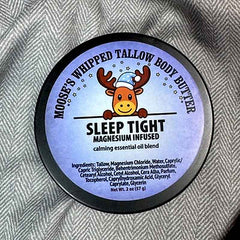
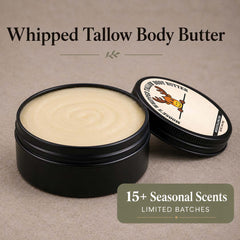
A balm built on beef suet tallow, fractionated coconut oil, beeswax, vitamin E, jojoba, castor, and egg yolk infused oil works differently. It sits on top of the skin as a stable seal instead of soaking in and disappearing.
Here’s how to apply it around the nose:
- Clean the area first with lukewarm water and pat dry.
- Warm a pea-size amount between your fingers.
- Dab a thin layer around the nostrils and across any cracked skin.
- Reapply after every tissue use, and never insert balm deep into the nostril.
Pro Tip: A little goes further than you’d expect. Thick globs don’t seal better, they just sit greasy on top and rub off on the next tissue.
This is cosmetic support for skin comfort, not a treatment for infection or illness. Keep it away from your eyes, and stop use if irritation increases.
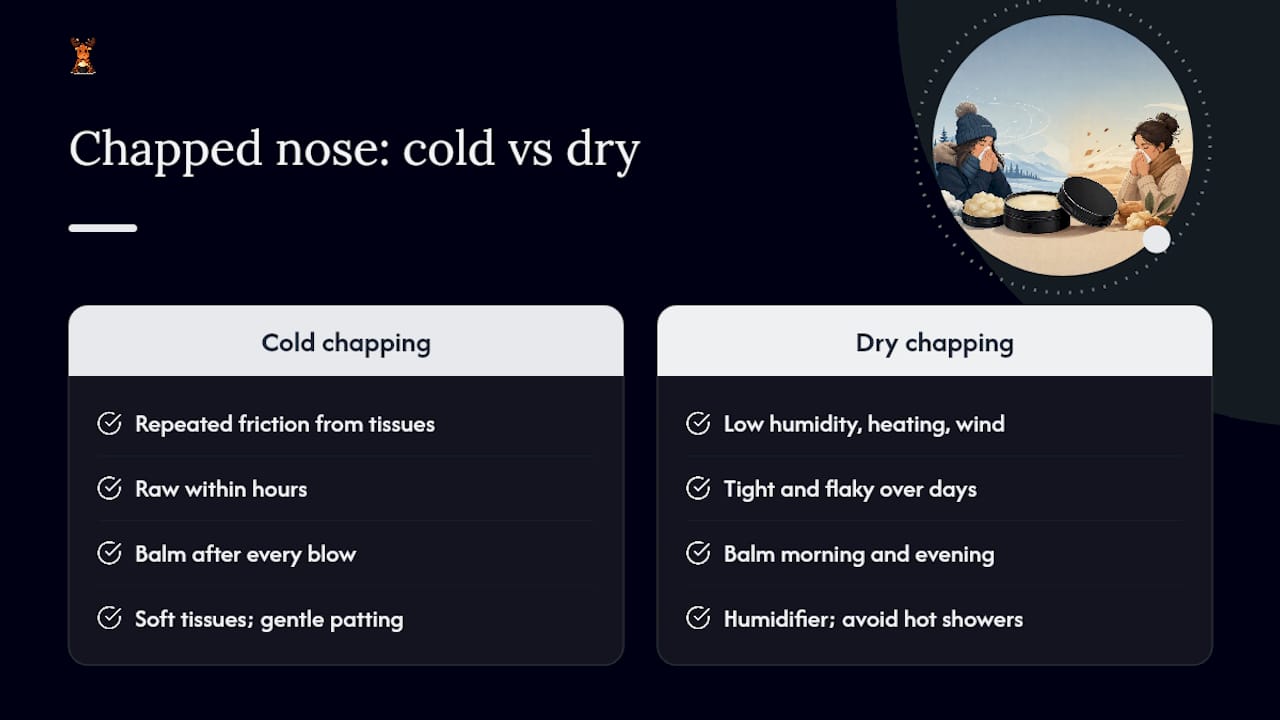
Differences in Caring for Chapped Skin Due to Colds Versus Dry Weather
Cold-related chapping and weather-related chapping look similar, but the cause behind each one changes what actually helps.
A cold strips skin through repeated friction. Every blow, every wipe, every tissue drags across skin that’s already inflamed from mucus and constant contact. The fix here leans heavily on frequency: balm after every single blow, soft tissues, and gentle patting, because the damage keeps happening as long as you’re sick.
Dry weather works differently. There’s no friction event, just slow moisture loss from low humidity, indoor heating, or wind exposure. The skin gets tight and flaky over days rather than raw within hours. Prevention matters more here than reactive care: a humidifier running consistently, a morning and evening balm application, and avoiding hot showers that strip natural oils further.
The overlap is real. Someone with a winter cold is often fighting both problems at once, friction from blowing and dryness from indoor heat. In that case, treat it as the cold scenario and reapply more often than you think you need to. The skin can’t tell the difference between the two causes. It only knows whether its barrier is intact or not.
Potential Complications From Untreated Chapped Nose Skin
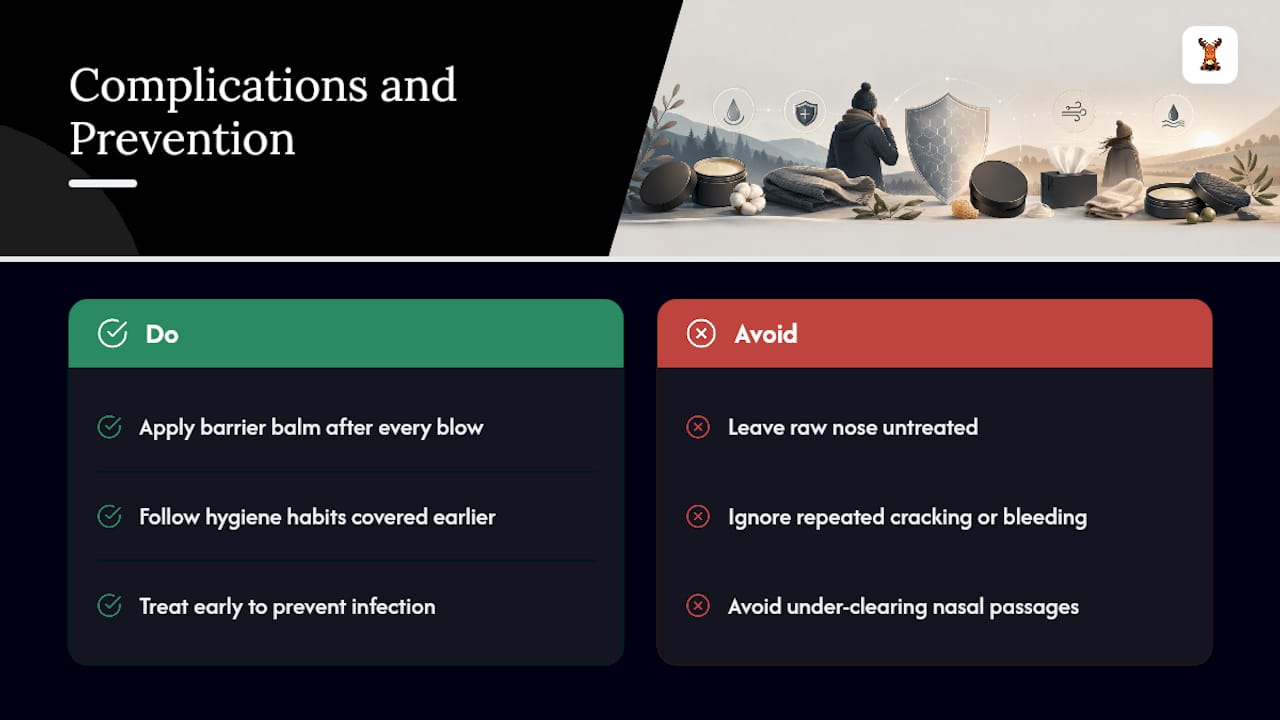
Leaving a raw nose alone rarely fixes itself faster. It usually gets worse, and the risks go beyond ongoing discomfort.
Cracked skin is an open door for bacteria. A small fissure at the base of the nostril can turn into a localized infection, showing up as increased redness, warmth, swelling, or pus. Left long enough, that can require antibiotics rather than a simple balm.
Repeated cracking in the same spot can also lead to slow-healing skin that scars or thickens over time, especially if the area keeps reopening every time you blow your nose. Bleeding becomes more frequent as the skin thins from constant irritation, and that bleeding itself introduces another entry point for bacteria.
There’s also a comfort cost that’s easy to underestimate. Untreated raw skin makes every cold last longer in a practical sense, since blowing your nose becomes something you dread instead of something you just do. That often leads people to under-clear their nasal passages, which can prolong congestion and, in some cases, contribute to sinus discomfort.
None of this requires alarm. It requires consistency. A barrier balm applied after every blow, paired with the hygiene habits covered earlier, closes the door before infection has a chance to walk through it.
Use and Selection of Medicated Treatments Like Hydrocortisone Creams for Severe Irritation
Basic barrier care handles most chapped noses. Severe irritation, the kind marked by intense redness, swelling, or itching that doesn’t ease with a balm, sometimes calls for something stronger.
A low-strength hydrocortisone cream can calm inflammation on the outside skin around the nostrils for a short stretch, usually a few days. It’s not meant for long-term use, and it’s not meant for the inside of the nose. Overusing hydrocortisone on facial skin can thin it over time, so this is a short-term tool, not a daily habit.
If the skin shows signs of infection, spreading redness, pus, or fever, hydrocortisone isn’t the right call. That situation usually needs a topical antibiotic instead, and that’s a decision for a clinician to make after actually looking at the skin. Self-diagnosing between “inflamed” and “infected” from a mirror is genuinely hard, even for people who deal with this every winter.
The safest approach: try consistent barrier balm and gentle habits first. If the redness or pain gets worse over two or three days instead of better, or if you notice pus or fever, that’s the point to call a clinician rather than reach for a stronger cream on your own.
Founder Perspective: Simple Ingredients, Clear Results
I started reading ingredient labels the day I found 52 items on my own lotion, with water listed first. That’s not skincare. That’s mostly water and filler. Skin recovering from a raw nose doesn’t need more ingredients. It needs fewer, better ones, used consistently, every single time you reach for a tissue.
— Brian Smith
Try These Moose’s Tallow Products for Barrier Support
Moose’s Tallow builds every balm on properly rendered local beef suet tallow, so you’re not choosing between “natural” and “effective.” You get both, without a 50-ingredient label to decode.
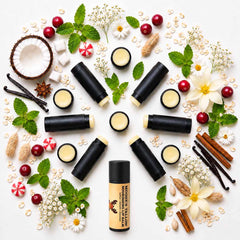
For small-area protection around the nostrils and upper lip, the Beef Tallow Lip Balm works well for frequent reapplication after each tissue use. It’s compact enough to keep in a pocket, which matters when you’re reapplying every hour during a bad cold. For thicker, itch-prone irritation that needs more staying power, Trail Relief offers a heavier barrier layer built for skin that’s been through real friction. And if you want proof of how durable a Moose’s Tallow formula can be, the Puppy Paw Balm is our toughest, most heavy-duty option, made to hold up against constant contact and wear.
Apply a small amount, dab it gently around the nostrils, and reapply after every blow.
Sources
- DailyMed: Saline nasal products - label information
- How to heal a raw nose from blowing - RealSimple
- Cleveland Clinic: Practical skin care advice (barrier repair focus)
FAQ
What Is the Fastest Way to Treat a Chapped Nose?
Apply a water-free occlusive balm or ointment right after every tissue use, and pat the skin dry instead of rubbing it. Most raw noses improve within a few days when you keep the barrier sealed consistently.
Can I Put Vaseline on a Chapped Nose?
Yes. Petrolatum is one of the strongest occlusives available and is commonly recommended for raw, cracked skin around the nostrils. For a water-free option built on beef suet tallow instead of petroleum, a barrier balm from Moose’s Tallow works on the same principle.
Why Is My Nose Dry and Raw From Blowing My Nose?
Repeated friction from tissues strips natural oils from the skin, and mucus adds extra irritation with every wipe. Soft tissues and gentle patting reduce this trauma significantly.
What Is the Best Ointment to Use on a Chapped Nose?
Petrolatum-based ointments offer the strongest seal for cracked or bleeding skin. Water-free, tallow-based balms are a strong alternative for people who want fewer ingredients while still getting a stable, absorbable barrier layer.
0 comments