



A deodorant detox is not a true bodily detox. It is your armpit’s microbiome and sweat glands returning to normal after you stop antiperspirant. The transition usually takes a few weeks to complete, sometimes longer. The single most important action: stop anything that burns, wash gently, and give a tolerant natural deodorant time to work.
TL;DR:
- Most people experience increased odor and sweat for two to six weeks as sweat glands and bacteria rebalance naturally.
- Surface residue from antiperspirants may prolong odor during the transition but does not require detoxing to remove toxins.
- Gentle cleansing and optional weekly clay masks support comfort, while aggressive scrubbing or strong acids can cause irritation.
- Signs of irritation include persistent redness, burning, swelling, or rash, which require stopping products and seeking medical advice if needed.
- Quality water-free deodorants with simple ingredient profiles, like tallow-based formulas, can make the transition more comfortable and support long-term skin health.
What Causes the Deodorant Detox Transition?
Antiperspirants work by plugging sweat ducts with aluminum compounds. That’s their job. Once you stop, those plugs slowly dissolve, and sweat starts flowing through channels that had been blocked for months or years.
At the same time, your skin’s bacterial population starts shifting. Antiperspirant use alters the mix of bacteria living on your skin, and research on the axillary microbiome shows species like Staphylococcus and Corynebacterium shift in abundance once product use changes. Different bacteria break down sweat differently, and some produce more of the compounds that smell.
Here’s what’s actually happening during this window:
- Aluminum plugs clear out, so more sweat reaches the surface than you’re used to.
- Bacterial populations rebalance, which can temporarily favor odor-producing strains.
- Bacteria metabolize sweat into volatile compounds, which is the actual source of body odor.
- None of this involves your liver, kidneys, or bloodstream. It’s a surface-level, skin-only adjustment.
The transition-related increase in odor is well documented and typically fades as your skin settles into its new normal.
Does the Armpit Detox Myth Hold Up to Evidence?
Not really, and it’s worth saying plainly. There’s no evidence that clay masks, charcoal scrubs, or vinegar soaks pull toxins out of your underarms. Your liver and kidneys handle detoxification. Skin does not.
There is no scientific evidence that underarm masks remove systemic toxins from the body. The organs responsible for filtering waste are the liver and kidneys, not the skin on your arms.
That’s the core finding from medical reviews on armpit detox, and it lines up with basic physiology. What masks and scrubs can do is remove surface residue and temporarily disturb the bacterial film on your skin.
The evidence gap in one line: no clinical studies show underarm masks clear systemic toxins, but multiple sources confirm they can strip or irritate skin if used carelessly.
Dermatology clinics warn that many popular detox recipes use ingredients strong enough to burn sensitive underarm skin. Clay and properly diluted vinegar tend to be gentler. Undiluted vinegar or fresh citrus juice can cause real chemical burns on skin that’s already adjusting to a new routine. Proceed carefully, and always patch-test first.
A Safe Routine for the Natural Deodorant Transition
You don’t need a complicated regimen to get through this phase. You need consistency and a light touch. Consumer health guidance points to gentle cleansing as the most reliable step, with masks as an optional extra, not a requirement.
Here’s a simple weekly and daily framework:
- Weekly clay mask (optional). Mix bentonite or kaolin clay with water, apply a thin layer for 10 to 15 minutes, then rinse. Always patch-test on your inner arm first and skip fresh citrus or undiluted vinegar as mixers.
- Morning cleanse. Wash underarms with a gentle, pH-balanced cleanser before applying deodorant.
- Apply your natural deodorant. Use a small amount and let it absorb for a minute before dressing.
- Midday reapplication. Carry a travel-size product for weeks one through three, when sweat and odor tend to run higher.
- Evening cleanse. Wash again at night to remove buildup from the day.
What to skip entirely: baking-soda pastes if you have sensitive skin, aggressive exfoliation, strong acids, and daily harsh scrubbing. Dermatologists note that rushing the process with abrasive ingredients tends to cause irritation rather than speed anything up.
Pro Tip: Keep a travel-size deodorant in your bag during weeks one through three. Reapplying at lunch isn’t a sign your product failed. It’s just part of the adjustment.
Is It Irritation or Just the Transition?
Telling normal adjustment apart from a real skin reaction matters more than most guides admit. A temporary odor spike is normal. Burning, swelling, or a spreading rash is not.
- Normal transition: mild odor increase, occasional extra sweat, no pain or visible skin change.
- Warning signs: burning on application, redness that persists past a few hours, swelling, or a rash that spreads.
If you spot warning signs, stop the product immediately, rinse with cool water, and give your skin a break with something plain and barrier-supporting. Baking-soda-heavy formulas are a common trigger for sensitive users, since baking soda raises skin pH and can lead to contact dermatitis in reactive skin. Switching to a baking-soda-free formula often resolves the issue within days.
| Situation | What it means | What to do |
|---|---|---|
| Mild odor increase, no pain | Normal microbiome adjustment | Continue routine, reapply midday |
| Burning on application | Ingredient sensitivity | Stop use, rinse, switch formulas |
| Redness lasting hours | Irritation, possibly baking soda | Rest skin, try a baking-soda-free deodorant |
| Rash or swelling | Possible allergic reaction | See a dermatologist |
For persistent reactions, a dermatologist can suggest a clinical antiperspirant or prescription option suited to your skin. That’s a medical conversation, not a cosmetic one, and it’s worth having if home fixes don’t work within a week or two.
What to Expect Week by Week
Knowing the rough timeline takes the guesswork out of the process. Most people move through it in stages.
- Week 1: Sweat volume often increases as aluminum plugs start clearing. Odor may show up earlier in the day than you’re used to. Stay hydrated, reapply as needed, and wear breathable fabrics like cotton or linen.
- Weeks 2 through 6: This is usually when odor peaks before it settles. Keep the gentle cleansing routine going and add one weekly clay mask if you want to speed up residue removal.
- Weeks 6 through 8: Odor should be trending back toward normal. If irritation persists past this window despite topical fixes, it’s worth trying a different formula rather than pushing through.
Most people see real improvement inside six weeks. A smaller group needs the full eight before things settle, and that’s still within the normal range.
How Moose’s Tallow Fits a Gentle Transition
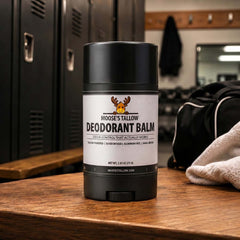
Moose’s Tallow builds deodorant on on properly rendered local beef suet tallow, not water. Tallow’s fatty-acid profile sits close to your skin’s own oils, so it supports the skin barrier while your microbiome resets.
We add fractionated coconut oil, beeswax, vitamin E, jojoba, and castor oil, each chosen for a purpose, never as filler. No olive, shea butter, or or other vegetable oils. Every ingredient is listed plainly, with nothing hidden.
Start small. Patch-test on your inner arm first. Carry a travel size for reapplication in week two, when odor tends to run highest.
Deodorant Detox vs. Just Switching Formulas: What’s the Difference?
People often treat “detox” and “switch” as separate projects. They’re not. A deodorant detox describes what happens to your skin after you switch, not a separate step you add on top of it.
Switching to natural deodorants is the action: swapping an aluminum-based antiperspirant for a formula that lets you sweat normally. The detox is the adjustment period that follows that switch. Some brands and articles market “detox kits” with masks and scrubs as supplemental but not mandatory.
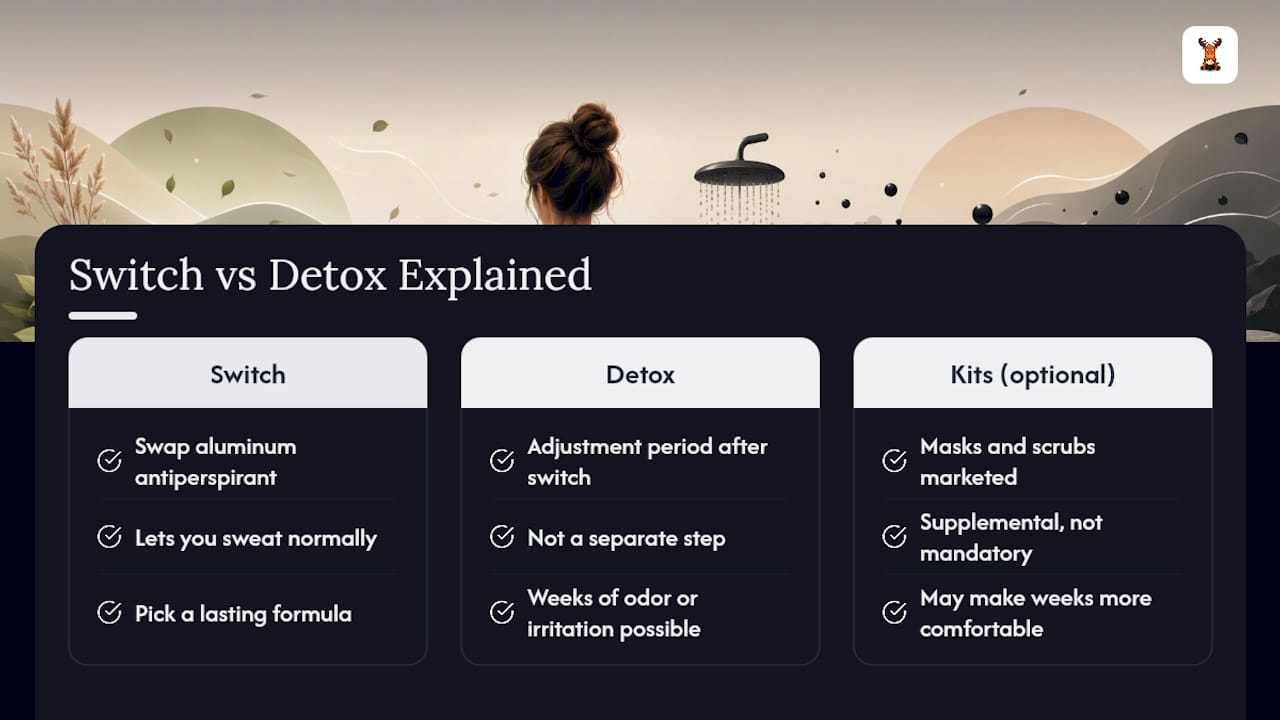
The real choice isn’t detox versus switching. It’s whether you support the switch with gentle care or just wing it. Skipping support entirely means riding out weeks of odor and possible skin irritation with no plan. Adding a light weekly mask and a consistent cleansing routine tends to make the same weeks more comfortable, according to practitioner-guided protocols, though the evidence here is more anecdotal than clinical.
The practical takeaway: focus your energy on choosing a deodorant formula you can stick with long term, not on finding the perfect detox ritual. The formula matters more than the mask.
Weighing the Long-Term Trade-Offs
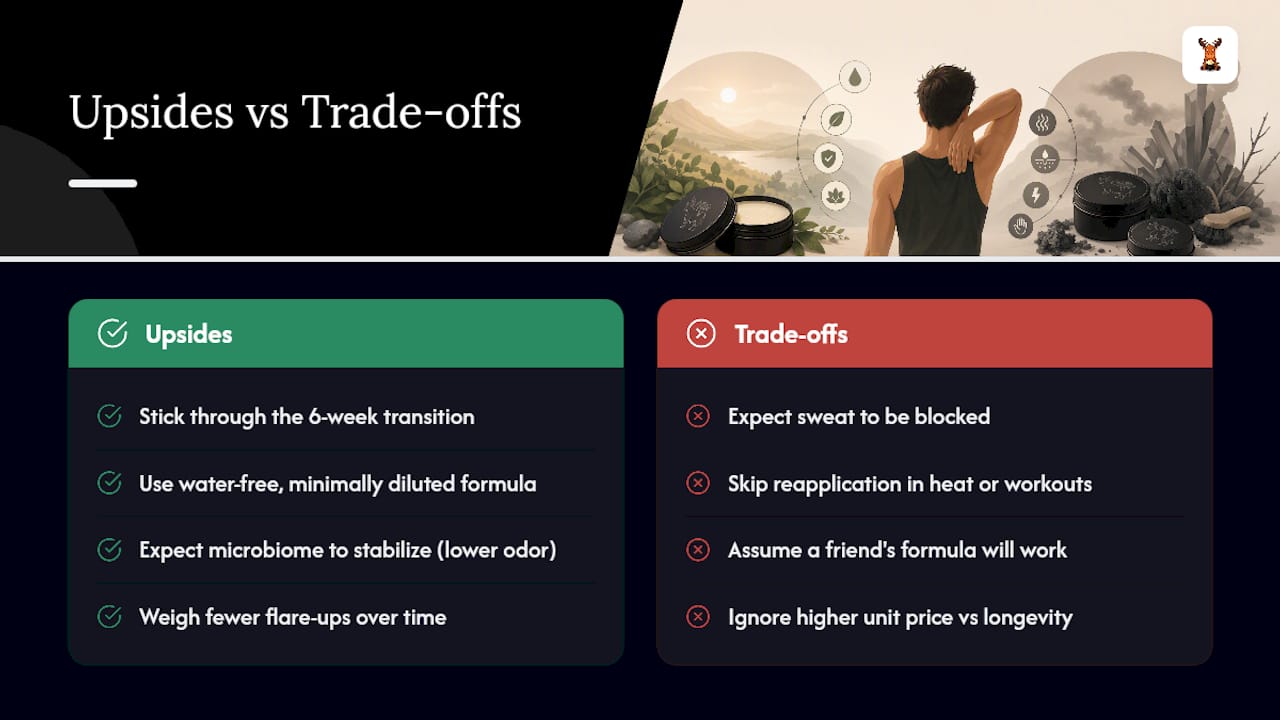
The long-term upside of sticking through a natural deodorant transition is real, even without dramatic claims attached to it. Many people find their body settles into a lower, more consistent odor baseline once the microbiome stabilizes. Skin that was irritated by daily aluminum exposure often calms down over months, especially with a water-free, minimally diluted formula supporting the barrier.
The trade-offs are worth naming too. Natural deodorants generally don’t block sweat, so you’ll sweat visibly through shirts in ways antiperspirant never allowed. That’s a lifestyle adjustment, not a flaw, but it catches people off guard. Reapplication during hot months or workouts becomes routine rather than optional. And formula-matching takes trial and error. What works for a friend’s skin may not work for yours, and skin chemistry varies enough that some people cycle through two or three formulas before landing on the right one.
There’s also a cost consideration. Quality natural deodorants with transparent ingredient lists often run a bit higher per unit than drugstore antiperspirant, though a small jar or balm tends to last longer than a stick because you use less per application. Weigh that against fewer skin flare-ups and a simpler ingredient list over time.
Getting Through the Social Side of the Transition
The odor increase during weeks one through six is the part nobody warns you about, and it’s often the reason people quit early. A few practical moves make the social side easier to manage.
Plan around it instead of hoping it won’t happen. If you have a big meeting, date, or event in week two or three, pack a travel-size deodorant and use the restroom for a quick midday reapplication. Nobody will notice. Breathable fabrics like cotton do real work here too, since synthetic blends trap odor against skin far more than natural fibers do.
Tell someone close to you what’s going on, if that feels comfortable. Knowing you’re mid-transition, rather than assuming something is wrong, takes the anxiety out of an odd smell day. Keep a small emergency kit: wipes, a spare shirt, and your deodorant, tucked in a bag or desk drawer for the first few weeks.
Give yourself permission to expect some rough days. This is temporary, and it resolves for most people within six weeks. Treating it as a known, finite phase rather than a personal failure makes the whole process far less stressful.
Founder Note: Why We Keep Formulas Simple
I built Moose’s Tallow after reading a lotion label with 52 ingredients, water listed first. That’s backwards to me. Skin doesn’t need a long list. It needs the right one.
If you’re mid-transition right now, patch-test before you commit, then be patient. Reapply midday when you need to. Reach out to our support team or check our product guides if you have questions along the way.
— Brian Smith
Try a Tallow Deodorant During Your Transition
Moose’s Tallow is a different route than antiperspirant switching kits or drugstore naturals loaded with fillers. Our deodorants use a properly rendered local beef suet tallow base, water-free and lightly diluted, so there’s less to react to while your skin adjusts.
The Aluminum-Free Natural Deodorant Tallow Balm works well for the daily routine outlined above: apply after your morning cleanse, carry it for midday reapplication in week two. If you want a different scent profile, the Forest Falls Deodorant uses the same tallow-first approach with a different fragrance.
Start with a small jar. Patch-test on your inner arm before your first full application, and browse the full natural deodorant collection to compare formats and scents before you commit.
This article is general information, not a substitute for advice from a qualified doctor. Consult a qualified healthcare professional about your own circumstances before acting on anything here.
Sources
- Everything you need to know about armpit detox
- Should I detox my armpits? (The Cut)
- Armpit Detox: Does It Work? (Cleveland Clinic)
- Axillary microbiome and odor-related research (PubMed)
- Armpit detox: does it work? (Healthline)
FAQ
How Do I Detox My Armpits?
There’s no medical “detox” step required. Wash gently, stop antiperspirant, and let sweat glands and skin bacteria rebalance over a few weeks. An optional weekly clay mask can help remove residue faster.
Do Armpit Detoxes Really Work?
Masks and scrubs don’t remove toxins from your body since your liver and kidneys handle that job. They can clear surface residue and briefly shift the bacterial film on skin, which is a cosmetic effect, not a medical one.
How Do You Detox Your Body from Deodorant Buildup?
You don’t detox your body from deodorant. You stop using antiperspirant, wash normally, and give your underarm skin time to clear aluminum residue and rebalance its bacteria naturally.
How Long Does a Deodorant Detox Take?
Most people see odor and sweat normalize within two to six weeks. A smaller group needs six to eight weeks, especially if they used strong antiperspirant for years.
Are Natural Deodorants Like Moose’s Tallow Good for the Transition?
Water-free, minimally diluted formulas built on tallow and gentle carrier oils like fractionated coconut oil tend to be easier on skin that’s already adjusting, since there are fewer added ingredients to react to.
0 comments