

Choosing the right natural lotion comes down to three things: knowing your skin type, reading the ingredient list honestly, and skipping anything that doesn’t earn its place in the formula. The best natural lotions lead with real moisturizers like beef suet tallow or fractionated coconut oil, avoid parabens, synthetic fragrances, and petroleum derivatives, and keep the ingredient count short enough that you can actually read it. If water is the first ingredient, you’re mostly buying water.
Here’s what to look for:
- Match the formula to your skin type — dry skin needs occlusives; oily skin needs lighter emollients
- Prioritize ingredient transparency — short lists with recognizable names are a green flag
- Avoid parabens, phthalates, synthetic fragrance, and petroleum-based ingredients
- Choose water-free formulas when possible — they require fewer preservatives and deliver more active ingredients per application
- Look for intentional ingredients — every item should have a reason to be there
How your skin type shapes your natural lotion choice
Dry, oily, sensitive, and combination skin all have different needs. Getting this wrong means buying a lotion that either sits on top of your skin or disappears in an hour.
- Dry skin needs rich occlusives that seal moisture in. Beef tallow is a strong occlusive that supports the skin barrier and locks in hydration. It works especially well for dry, flaky, or wind-chapped skin.
- Oily or acne-prone skin should approach heavy occlusives with caution. Tallow is high in oleic acid, which can be comedogenic for some people. Lighter options like jojoba absorb without clogging pores.
- Sensitive skin reacts most often to synthetic fragrance and harsh preservatives. Keep the ingredient list short. Patch test anything new on your inner arm before applying it widely.
- Combination skin benefits from lightweight emollients. Jojoba is a good fit here because it mimics skin’s natural sebum and absorbs cleanly without greasiness.
Patch testing is not optional for sensitive skin. Apply a small amount to your inner forearm, wait 24 hours, and check for redness or irritation before committing to full use.
What ingredients to seek and what to avoid
The ingredient list tells you everything. Front-label claims tell you almost nothing.
Seek these:
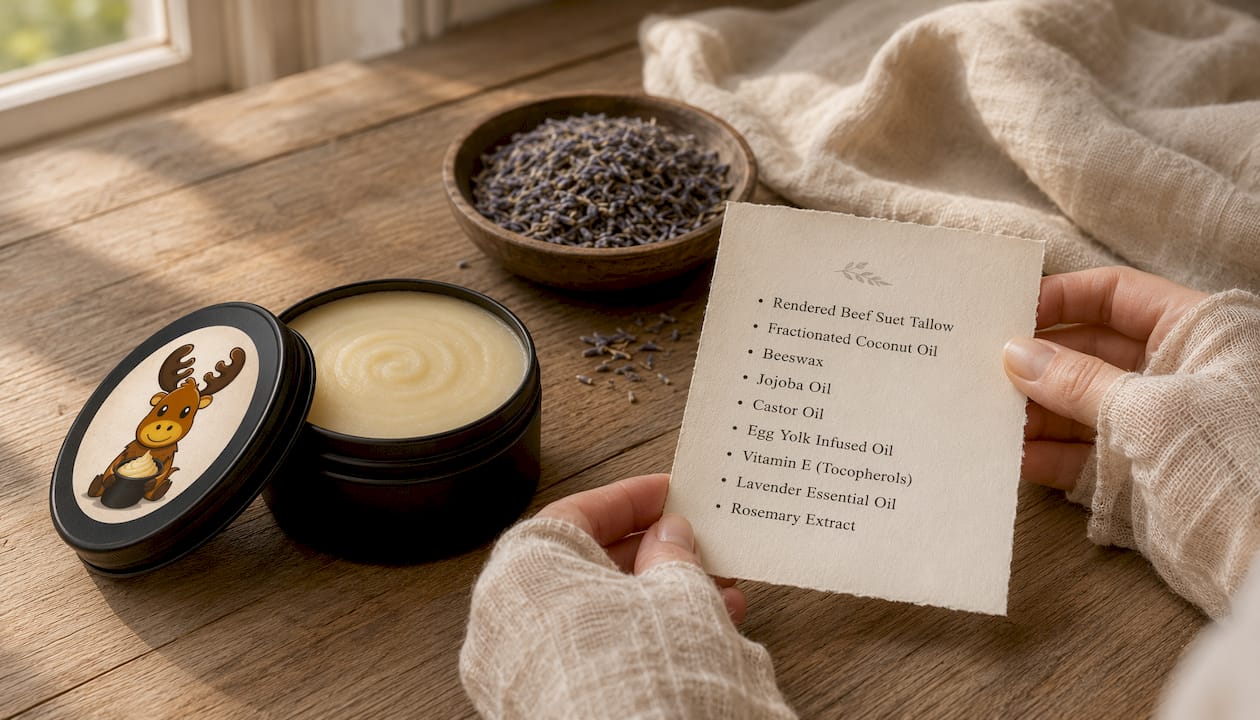
- Beef suet tallow — a rich occlusive with fat-soluble vitamins A, D, E, and K; supports the skin barrier for dry, non-acne-prone skin
- Fractionated coconut oil — stable, resists oxidation, absorbs easily, and extends shelf life without leaving a greasy residue; the preferred carrier oil for clean formulas
- Beeswax — a natural occlusive that creates a protective layer without synthetic chemicals
- Jojoba — a liquid wax that absorbs without greasiness and suits most skin types
- Vitamin E (tocopherols) — an antioxidant that protects skin cells and helps preserve the formula naturally
- Castor oil — adds slip and supports moisture retention
- Egg yolk infused oil — delivers fat-soluble nutrients and supports skin softness
Avoid these:
- Parabens (methylparaben, propylparaben) — linked to endocrine disruption in lab studies
- Synthetic fragrance / parfum — fragrance disclosure isn’t required in the US, so these terms can hide dozens of undisclosed chemicals
- Phthalates — often hidden inside “fragrance” listings
- Petroleum derivatives — mineral oil, petrolatum, paraffinum liquidum; occlusive but linked to environmental concerns and potential contamination
- PEGs and ethoxylated ingredients — look for “PEG” followed by a number, or the suffix “-eth”
- Phenoxyethanol — a preservative to phase out when cleaner alternatives exist
Pro Tip: “Fragrance-free” and “unscented” are not the same thing. Unscented products can still contain masking chemicals that cover up a scent. Always look for the words “fragrance-free” and confirm that “fragrance” or “parfum” do not appear anywhere on the ingredient list.
Essential oils are natural but not automatically safe. They can cause contact dermatitis in sensitive skin, especially in blended formulas. Single essential oils with full label disclosure carry less risk than vague “natural fragrance” listings.
How to read a natural lotion label accurately
The INCI naming system (International Nomenclature of Cosmetic Ingredients) uses Latin names for botanical ingredients. “Simmondsia Chinensis” is jojoba. “Cera Alba” is beeswax. Latin does not mean synthetic.
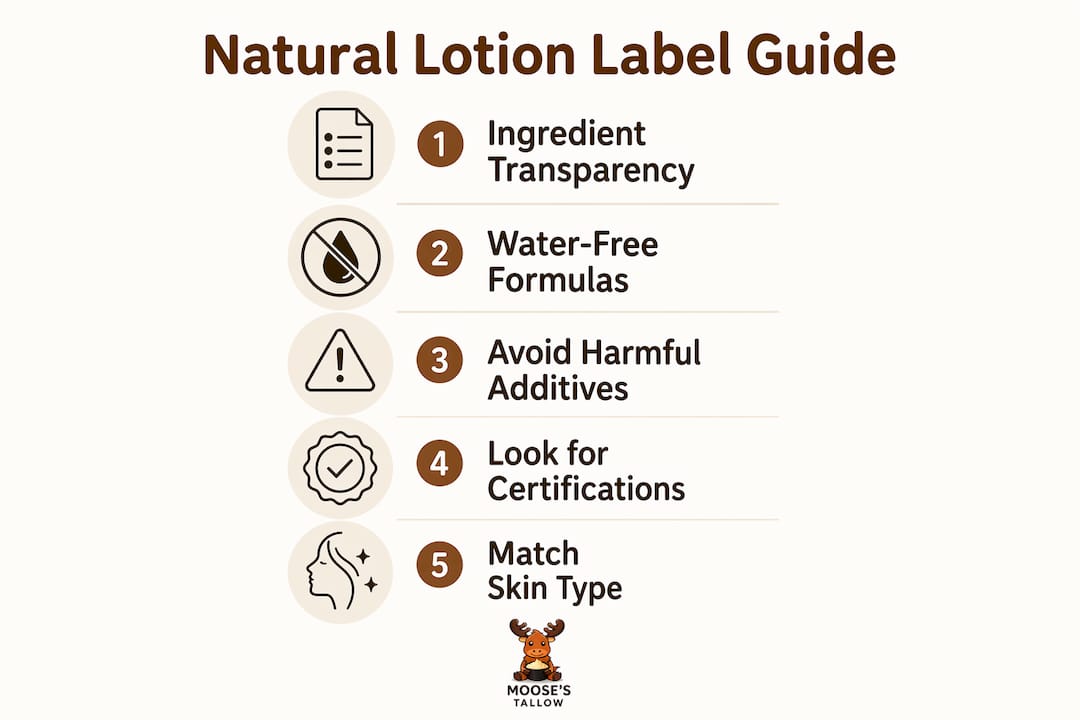
Ingredient order reflects concentration. Whatever appears first makes up the largest portion of the formula. If water is listed first and your key moisturizer is ninth, there is very little of it in the bottle. A good natural lotion puts its hero ingredients near the top.
Red flags to spot immediately:
- “Fragrance” or “parfum” anywhere on the list
- PEG compounds or ingredients ending in “-eth”
- Parabens listed by any name
- Petroleum-derived ingredients under any alias
Certifications worth trusting: USDA Organic is the only legally defined clean standard for personal care in the US. EWG Verified means every ingredient has been evaluated for human health and ecosystem safety. Made Safe prohibits undisclosed fragrance and harmful preservatives. The word “natural” on its own carries no legal definition and no audit requirement.
Water-free formulas deserve special mention. Lotions containing water require synthetic preservatives to prevent microbial growth. Water-free formulas based on tallow or fractionated coconut oil resist spoilage naturally, which means fewer preservatives and a cleaner ingredient list.
Application tips that actually improve results
Apply lotion right after bathing, while skin is still slightly damp. This traps moisture before it evaporates. For water-free balms and body butters, a small amount goes a long way because there is no water diluting the formula.
- Focus on dry zones first — elbows, knees, heels, and hands lose moisture fastest
- Use less than you think you need — with concentrated, water-free formulas, a pea-sized amount covers a large area
- Avoid heavy application in skin folds — areas where skin rubs together can develop bacterial or fungal issues with excess product
- Apply before bed on very dry areas — overnight absorption works well for cracked heels and rough elbows
- Store products away from heat and direct light — this preserves ingredient integrity, especially for vitamin E and tallow-based formulas
Moose’s Tallow products that show what clean formulas look like
Moose’s Tallow builds every product around properly rendered local beef suet tallow. No water. No fillers. Every ingredient is chosen on purpose.
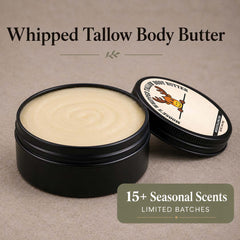
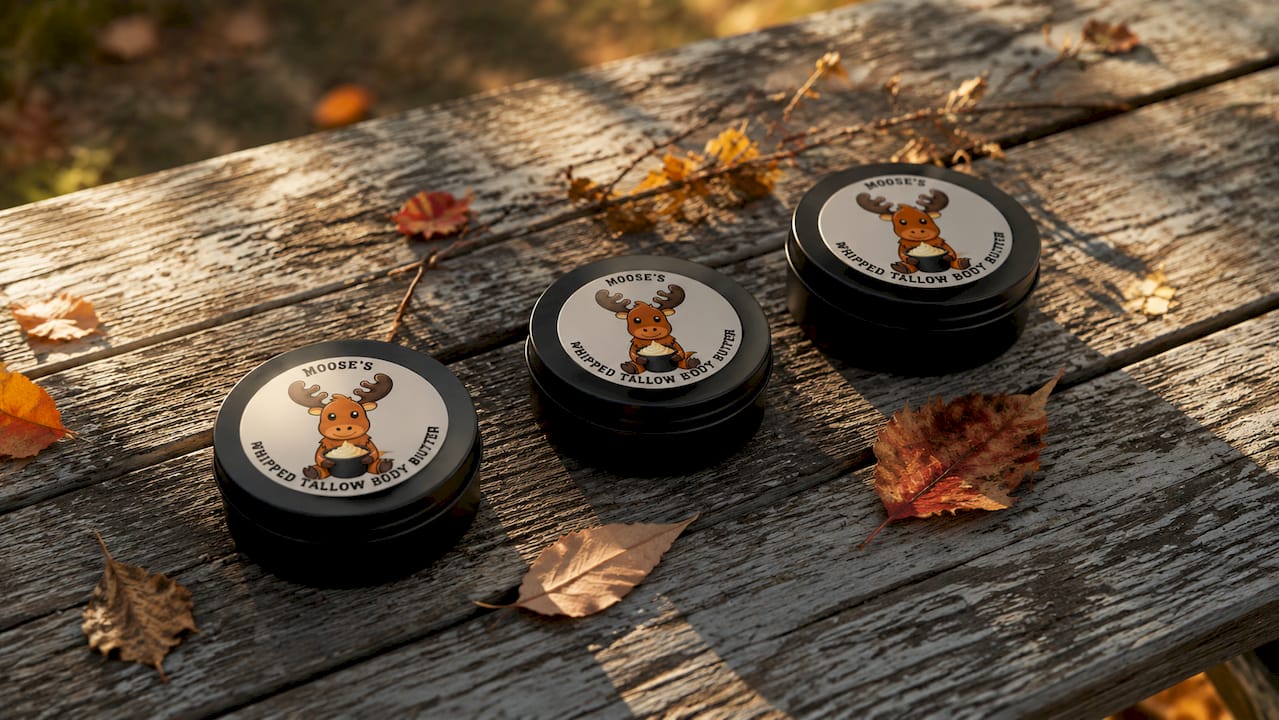
Whipped Tallow Body Butter is the flagship. It’s built on grass-fed beef suet tallow and fractionated coconut oil, whipped to a light, spreadable texture. The formula is water-free, which means no synthetic preservatives and no dilution. It absorbs cleanly and supports the skin barrier without a greasy finish.
Aluminum-Free Natural Deodorant — Tallow Balm applies the same ingredient philosophy to underarm care. Tallow and beeswax form the base. No aluminum, no synthetic fragrance, no petroleum derivatives. The formula stays on the skin without blocking pores or disrupting the skin’s natural function.
Natural Tallow Baby Butter with Calendula & Chamomile is formulated for the most sensitive skin. Calendula and chamomile are added for their gentle, skin-soothing properties. The ingredient list is short, every item is disclosed, and the formula is free of synthetic fragrance and harsh preservatives. For parents who want to know exactly what they’re putting on their baby’s skin, this is a clear example of what full ingredient transparency looks like in practice.
Quick checklist before you buy any natural lotion
Run through this before adding anything to your cart:
- [ ] Ingredient list is short and every item is recognizable
- [ ] No “fragrance,” “parfum,” or vague “natural fragrance” on the label
- [ ] No parabens, PEGs, or petroleum-derived ingredients
- [ ] Key moisturizers (tallow, fractionated coconut oil, jojoba, beeswax) appear near the top of the list
- [ ] Formula matches your skin type (occlusive-heavy for dry; lighter for oily or combination)
- [ ] Scent claims are specific (individual essential oils listed by name, or fragrance-free)
- [ ] Third-party certification present (USDA Organic, EWG Verified, or Made Safe)
- [ ] Water-free or water is not the first ingredient
Why sustainability matters when choosing natural lotion
Ingredient sourcing has a real environmental footprint. Beef tallow used in skincare is a byproduct of meat processing, which means it supports a circular approach rather than requiring dedicated crop production. When sourced from grass-fed, locally raised cattle, it fits within regenerative farming frameworks that prioritize soil health and lower waste.
Plant-based oils are not automatically more sustainable. Some widely used vegetable oils are linked to deforestation, high water use, and exploitative labor practices in their supply chains. Fractionated coconut oil, when responsibly sourced, offers a stable and lower-impact alternative to many unstable vegetable oils that oxidize quickly and require more frequent replacement.
Packaging and shelf life also matter. Water-free formulas last longer without synthetic preservatives, which reduces product waste. Smaller, concentrated formulas mean less packaging per effective use. When you buy a product where every ingredient is intentional, you’re also buying less of what you don’t need.
Moose’s Tallow: water-free skincare with nothing to hide
Founder Brian “Moose” Smith flipped over a lotion bottle and found it had a very long ingredient list starting with water. That moment led to Moose’s Tallow, a small-batch skincare line made in Lebanon, PA, built on the belief that skin needs the right ingredients, not a long list of them.
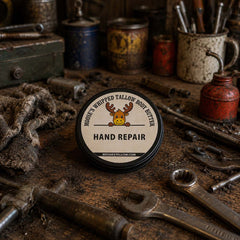
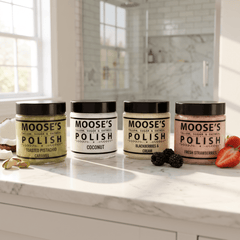
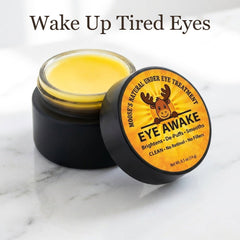
Every Moose’s Tallow product is water-free, handmade, and built on properly rendered local beef suet tallow. The formulas are minimal by design. Fractionated coconut oil carries the tallow cleanly into skin. Beeswax, vitamin E, jojoba, castor, and egg yolk infused oil round out the lineup. Nothing is added as filler. Every product ships with a 60-day guarantee.
If you’ve been reading labels and not liking what you find, shop Moose’s Tallow and see exactly what goes into every formula.
FAQ
What ingredients should I avoid in body lotion?
Avoid parabens, synthetic fragrance (listed as “fragrance” or “parfum”), phthalates, PEG compounds, phenoxyethanol, and petroleum-derived ingredients like mineral oil or petrolatum. These are linked to hormone disruption, skin sensitization, or environmental concerns.
How do I choose the right body lotion for my skin type?
Dry skin benefits from rich occlusives like beef suet tallow and beeswax. Oily or acne-prone skin does better with lighter emollients like jojoba. Sensitive skin needs short ingredient lists and no synthetic fragrance. Always patch test a new formula before full use.
How can I tell if a lotion is truly non-toxic?
Read the full ingredient list, not the front label. Look for the absence of parabens, synthetic fragrance, PEGs, and petroleum derivatives. Third-party certifications like USDA Organic or EWG Verified add a meaningful layer of verification beyond marketing claims.
Is “fragrance-free” better than “unscented” for sensitive skin?
Yes. “Fragrance-free” means no fragrance ingredients were added. “Unscented” can still contain masking chemicals that neutralize odor without eliminating fragrance compounds. For sensitive skin, fragrance-free is the safer choice.
Key Takeaways
Choosing a natural lotion well means prioritizing ingredient transparency, matching formula richness to your skin type, and skipping anything that doesn’t belong in a clean formula.
| Point | Details |
|---|---|
| Read the ingredient list | Ingredient order reflects concentration; hero ingredients should appear near the top, not buried at the bottom. |
| Avoid synthetic fragrance | “Fragrance” and “parfum” can hide dozens of undisclosed chemicals; choose fragrance-free products for sensitive skin. |
| Match formula to skin type | Dry skin needs occlusives like tallow; oily or combination skin does better with lighter emollients like jojoba. |
| Water-free formulas go further | Water-free products require fewer preservatives and deliver more active ingredients per application. |
| Moose’s Tallow | Handmade in Lebanon, PA, with water-free, tallow-based formulas and full ingredient transparency on every product. |
Recommended
- How to Choose Tallow Moisturizer Naturally for Healthier Skin – Moose’s Tallow
- Types of Natural Baby Lotions: A Parent’s Safe Skin Guide – Moose’s Tallow
- How to Choose Natural Skincare: Ingredients That Work – Moose’s Tallow
- Types of natural moisturizers: best picks for sensitive skin – Moose’s Tallow


0 comments