

Don’t stop washing your hands. Change how you wash them, and lock in moisture right after. If your skin is dry, red, cracked, or itchy from frequent washing, switch to lukewarm water and a fragrance-free cleanser, pat dry, then apply a lipid-rich moisturizer while hands are still damp. If cracks bleed or look infected, see a clinician.
TL;DR:
- Frequent hand washing with soap and water strips skin lipids, increasing transepidermal water loss and the risk of chronic hand eczema, especially for high-risk groups.
- Using lukewarm water and a gentle, fragrance-free cleanser, followed by immediate application of a lipid-rich moisturizer while skin is damp, helps maintain skin barrier health.
- A water-free, lipid-dense balm made from beef tallow and natural oils significantly aids in repairing cracked, fissured hands when applied regularly after washes and overnight under gloves.
- Alcohol-based hand sanitizers, when used with at least 60% ethanol or 70% isopropyl alcohol, do not significantly increase eczema risk and are a safer alternative when washing isn’t necessary.
- Signs of worsening dermatitis, such as bleeding cracks, spreading redness, pus, or no improvement after weeks of proper care, require prompt consultation with a healthcare professional.
What Does Hand Washing Dermatitis Look Like?
Hand washing dermatitis shows up as dry, red, scaly patches on the hands, often with cracks across the knuckles or fingertips. Skin can feel tight after drying, itch at night, or sting when you apply anything at all, even water. Some people notice small blisters on the sides of their fingers. Others just see rough, flaky patches that never fully heal between wash cycles.
There’s a real difference between temporary dryness and chronic hand eczema. Temporary dryness fades within a day or two once you ease up on washing or add moisturizer. Chronic hand eczema is different. It keeps coming back, it may spread past the hands to the wrists, and it often gets worse with each flare rather than better. If your skin has looked irritated for more than a few weeks, or keeps returning every time you cut back on care, you’re likely dealing with the chronic form, not a passing rough patch.
A few things push people into higher-risk territory:
- A personal or family history of atopic dermatitis or asthma
- Jobs involving wet work: nursing, food service, cleaning, hairdressing, childcare
- Frequent exposure to detergents, solvents, or cleaning chemicals
- Wearing occlusive gloves for long stretches, especially over damp skin
- Living somewhere with cold, dry winters that already strip moisture from skin
If more than one of these applies to you, your hands are working overtime just to stay intact. That doesn’t mean dermatitis is inevitable. It means your margin for error with washing technique and aftercare is smaller than someone without these risk factors. The good news: the fixes below work regardless of which risk factor put you here.
Why Does Frequent Handwashing Cause Dermatitis?
Skin holds onto water because of a lipid layer sitting on top of it, made of fats your skin produces naturally. Soap is designed to strip fats and oils, since that’s how it removes grease and germs. The problem is your skin’s barrier is made of the same basic material soap is built to dissolve. Wash often enough, and you strip protective lipids faster than your skin can replace them.
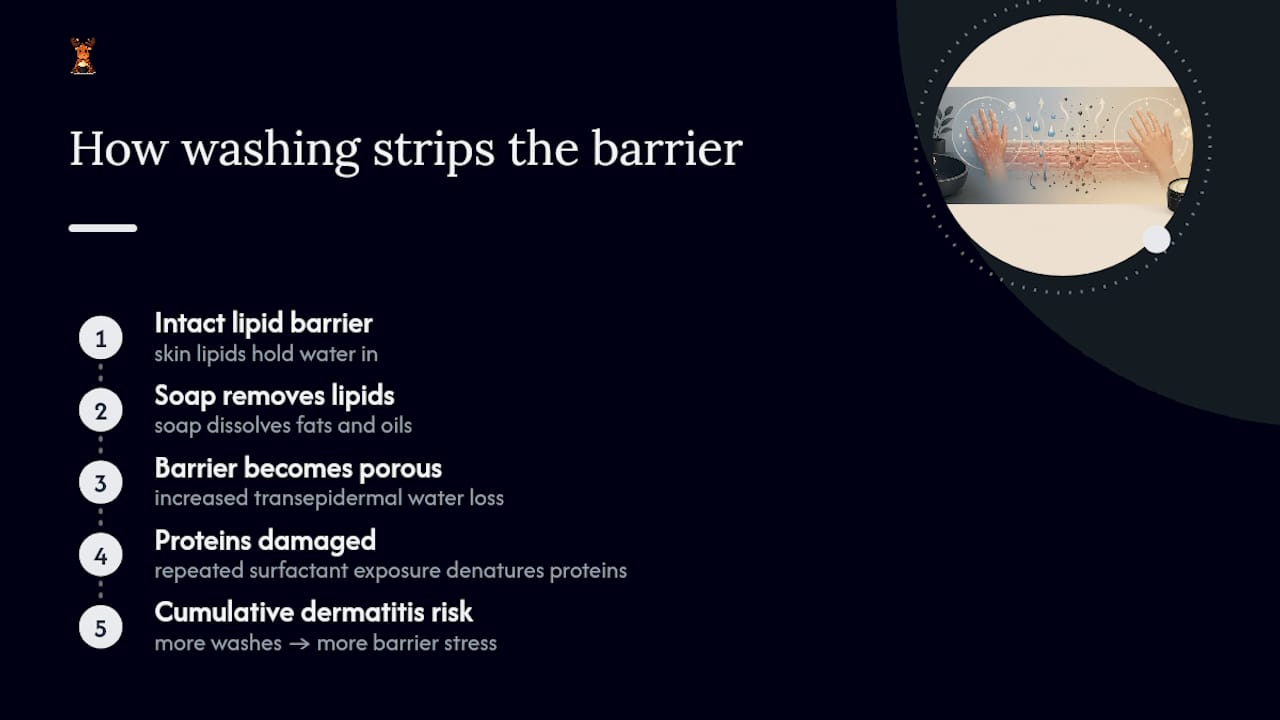
That damage has a name: increased transepidermal water loss, or TEWL. Once the stratum corneum, the outermost layer of skin, loses its lipid barrier, water escapes faster than normal and proteins in that layer can become denatured from repeated exposure to surfactants. The result is the classic dry, tight, cracked feeling that gets worse with every wash cycle instead of better.
This isn’t a minor cosmetic annoyance. A systematic review and meta-analysis on hand hygiene and hand eczema found that washing hands frequently significantly raised the risk of developing hand eczema compared with washing less often. The relationship is roughly a dose curve: more washes, more barrier stress, more risk, especially for people already prone to atopic conditions.
The same review found something people often get backwards: alcohol-based hand rubs were not significantly associated with increased risk of hand eczema, unlike frequent soap-and-water washing.
That matters if you’ve been avoiding sanitizer because it stings. The sting usually comes from applying alcohol to skin that’s already damaged, not from the sanitizer itself being harsher than soap. In fact, frequent hand washing during heightened hygiene periods has been shown to cause hand dermatitis specifically through repeated surfactant exposure, and the review’s own management advice centers on restoring lipids immediately after washing rather than washing less.
So the fix isn’t to wash less when hygiene calls for it. It’s to pick gentler washing where you can, use sanitizer as a substitute when appropriate, and never let a wash cycle end without a moisturizing step. Skip that last step consistently, and the barrier damage compounds day after day until you’re looking at chronic hand eczema instead of mild dryness.
How Should You Wash Your Hands to Avoid Skin Damage?
Good hand hygiene and healthy skin aren’t in conflict. You just need a routine that satisfies both at once.
- Remove rings and bracelets first. Soap and water pool underneath jewelry and dry out skin unevenly, plus rings trap irritants against the skin all day.
- Wet hands with lukewarm water, never hot. Hot water accelerates lipid stripping and does not clean any better than lukewarm water does.
- Use a small amount of a mild, fragrance-free cleanser. You need enough to lather, not enough to feel a strong soap smell afterward.
- Lather gently for about 20 seconds, covering backs of hands, between fingers, and under nails, per CDC handwashing guidance. Skip the vigorous scrubbing. Friction adds irritation without adding cleanliness.
- Rinse thoroughly. Leftover cleanser residue on the skin is a common, underrated source of ongoing irritation.
- Pat hands dry gently with a soft towel without rubbing, leaving them slightly damp.
- Apply moisturizer promptly after washing, while the skin retains some dampness.
When hands aren’t visibly dirty, an alcohol-based hand rub is a reasonable substitute for soap and water. The CDC recommends sanitizers with at least 60% ethanol or 70% isopropyl alcohol for exactly this use case, and WHO hand hygiene guidance supports the same approach for reducing unnecessary soap exposure throughout the day. Rub sanitizer in fully and let it dry on its own. Don’t wash it off with soap right afterward. That defeats the purpose and adds an extra strip cycle your skin didn’t need.
Pro Tip: Keep a travel-size bottle of fragrance-free moisturizer wherever you wash most, your kitchen sink, your bathroom, your desk drawer at work. The habit only sticks if the product is right there when your hands are still wet.
How Do You Repair and Protect Your Skin Barrier?
Timing matters more than most people realize. Applying a moisturizer to slightly damp skin seals moisture more effectively than applying to fully dry skin instead of trying to add moisture back after it’s already gone. The American Academy of Dermatology points to this timing mistake as one of the most common reasons moisturizing routines fail. People wait too long, and by then the barrier has already lost the water it needed.
Not all moisturizers do the same job. Three basic categories work together:
- Humectants pull water into the skin’s surface layer.
- Emollients fill gaps between skin cells and smooth the surface.
- Occlusives sit on top and physically block water from escaping.
A product that combines emollient richness with an occlusive layer, without a long ingredient list of fillers or fragrance, tends to work better for damaged hands than a thin, water-heavy lotion that evaporates in minutes. That’s a real distinction worth understanding before you buy anything: a lotion built mostly on water needs preservatives and stabilizers to keep that water from spoiling, which is exactly the kind of ingredient stacking that irritates already-sensitive skin. A water-free, lipid-dense balm skips that problem entirely.
For hands that are cracked or fissured rather than just dry, clinical guidance on hand hygiene and skin reactions recommends moisturizing multiple times daily rather than once, plus overnight occlusion for the worst spots. That means applying a rich balm before bed and covering hands with thin cotton gloves overnight. The gloves trap moisture against skin for hours instead of letting it evaporate, and most people wake up with a visible difference by morning. For a full walkthrough of this approach, see our guide on healing cracked hands in one to two weeks.
Pro Tip: On days with heavy wet work, apply moisturizer after every single wash, not just morning and night. Consistency beats intensity here. Five light applications a day beat one heavy one.
When Should You See a Doctor About Hand Dermatitis?
Most hand dermatitis responds well to a better washing routine and consistent barrier repair. But some signs mean it’s time to stop self-treating and get a professional evaluation.
- Deep fissures that crack open and bleed, especially across the knuckles
- Redness that spreads beyond the hands or feels warm to the touch
- Visible pus, yellow crusting, or a foul odor from any open crack
- Pain sharp enough to interfere with gripping objects or daily tasks
- No real improvement after two to three weeks of correct washing and moisturizing
A clinician evaluating chronic hand eczema will typically try to sort out whether you’re dealing with an irritant reaction, an allergic one, or both. Patch testing can identify a specific allergen, something in a soap, glove material, or workplace chemical, that’s driving repeated flares. From there, treatment options for persistent cases may include prescription-strength approaches, though that’s a conversation for you and your provider rather than something to self-diagnose from an article.
Walking into that appointment prepared helps. Bring photos of your hands from different points during a flare, not just the worst day. Keep a short symptom diary noting when things got better or worse. Write down every soap, sanitizer, lotion, and glove you use regularly, plus anything specific to your job, cleaning chemicals, food handling, patient care tasks. That list often points a clinician straight to the trigger faster than an exam alone.
What Hand Care Works Best for High-Risk Jobs?
Healthcare workers, food handlers, and childcare staff wash or sanitize their hands dozens of times a shift. Infection control isn’t negotiable in these jobs, so the fix has to work around frequency, not against it.
A realistic shift routine looks like this: use alcohol-based sanitizer for routine hand hygiene between tasks whenever policy allows it, since it’s gentler on skin than repeated soap washing. Save actual soap-and-water washing for visibly soiled hands or after specific high-risk contact. Moisturize at every break, not just at the end of the shift, and keep a personal tub of fragrance-free balm at your station rather than relying on whatever dispenser the breakroom has.
Gloves need their own strategy. If you’re wearing gloves for long stretches, thin cotton liners underneath reduce sweat buildup and friction against already-stressed skin. Change gloves regularly rather than wearing one pair for hours, since sweat trapped inside a glove is its own irritant. Never pull gloves on over hands that are still wet from washing or sanitizer. That traps moisture and residue against skin in a way that worsens irritation over a shift, not improves it. Occupational hand eczema guidance consistently points to this glove-and-liner combination as one of the more effective workplace adjustments available.
It’s also reasonable to ask your workplace for support. Requesting fragrance-free soap in dispensers, keeping emollients stocked in breakrooms, or building short moisturizing breaks into a shift are small asks with a real payoff for anyone whose hands take this kind of daily punishment.
Where Does a Tallow Hand Cream Fit Into This Routine?
Once you’ve got washing technique and timing down, the product you reach for afterward matters more than people expect. This is where a water-free, lipid-rich balm earns its place in the routine described above.
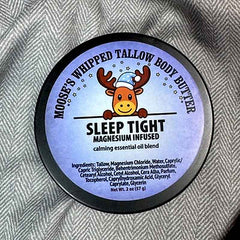
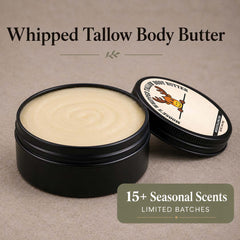
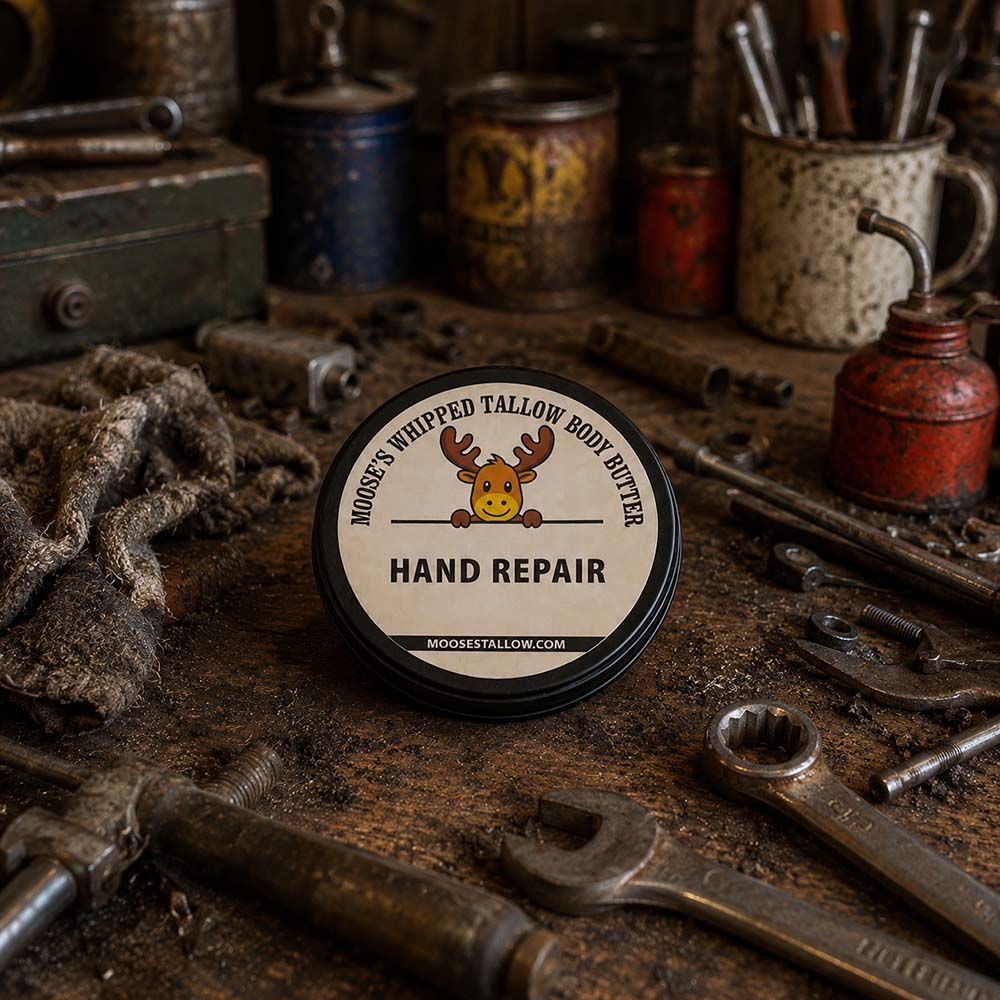
Moose’s Tallow builds its hand repair cream around properly rendered local beef suet tallow. Tallow’s fatty-acid profile sits close to what your own skin produces, which is part of why a concentrated, water-free lipid balm resists the fast evaporation that thinner, water-based lotions struggle with. Each ingredient in the formula has a specific job, never filler:
- Beef suet tallow provides the core lipid structure that mirrors skin’s own oils.
- Fractionated coconut oil works as the carrier oil, chosen for its stability, resistance to oxidation, easy absorption, and long shelf life, unlike heavier plant oils that can turn or feel greasy.
- Beeswax adds a light occlusive layer to help hold moisture in.
- Vitamin E (tocopherols) supports the formula’s freshness and stability over time.
- Jojoba and castor contribute additional lightweight lipid support without a heavy or sticky feel.
- Egg yolk infused oil rounds out the fatty-acid profile the formula is built around.
None of that includes olive, avocado, shea butter, or other plant oils sometimes marketed as gentle alternatives. Moose’s Tallow builds around animal-derived lipids instead, with fractionated coconut oil as the one carrier oil doing the stability work.
For actual use, the timing rules from earlier still apply: pat hands dry after washing, apply while skin is still slightly damp, and reapply through the day on heavy wet-work days. At night, a thicker layer under cotton gloves adds occlusion while you sleep. Keep a small tin in your bag or desk drawer so the habit survives a busy day. Every order carries a 30-day guarantee, and the product is made in small batches, not mass produced.
A Founder’s View on Simple Ingredients and Barrier-First Care
I started this brand after a health scare made me actually read my own lotion label. Fifty-two ingredients, and the first one was water. That felt backwards for something meant to fix dry skin, not dilute it.
Skin doesn’t need a long list. It needs the right lipids, delivered without a pile of fillers standing between your skin and the fat it’s actually asking for. That’s why Moose’s Tallow stays water-free and lightly diluted. Every batch is small, every ingredient earns its spot, and nothing goes in just to pad a label.
Hand washing dermatitis usually isn’t a hygiene failure. It’s a barrier failure that shows up because aftercare got skipped. Keep washing your hands the way your job or your health requires. Just don’t let a single wash cycle end without giving your skin back what it lost.
— Brian Smith
Try the Beef Tallow Hand Cream on Your Next Wash Cycle
Moose’s Tallow’s hand repair cream costs less than a dermatology copay and takes ten seconds to apply, right after your next wash. It’s built specifically for the routine this article walks through: a water-free, lipid-dense balm meant to go on while hands are still damp, sealing in moisture instead of sitting on top of dry, cracked skin doing nothing.
The formula leans on beef suet tallow and fractionated coconut oil rather than a long list of fillers, so there’s no guessing what’s actually working. Try consistent use after every wash for one to two weeks and watch how your hands respond. Every order ships small-batch and backed by a 30-day guarantee. If cracks bleed or don’t improve, see a clinician instead of waiting it out. Otherwise, add the tin to your sink or your bag and make it part of the routine.
Sources
The clinical claims in this article draw from a small set of sources worth reading directly if you want the full detail behind the guidance:
- Hand hygiene and hand eczema: A systematic review and meta-analysis
- When and How to Wash Your Hands | CDC
This article is general information, not a substitute for advice from a qualified doctor. Consult a qualified healthcare professional about your own circumstances before acting on anything here.
FAQ
How Do You Get Rid of Contact Dermatitis From Overwashing Your Hands?
Switch to lukewarm water and a fragrance-free cleanser, cut washing to only what’s necessary, and apply a lipid-rich moisturizer immediately after every wash while skin is still damp.
How Do You Get Rid of Hand Dermatitis Quickly?
There’s no overnight fix, but consistent moisturizing right after each wash, plus overnight occlusion with cotton gloves over a rich balm, typically shows visible improvement within one to two weeks.
How Did I Get Dermatitis on My Hands?
Hand dermatitis usually develops from repeated exposure to soap, water, and chemicals that strip the skin’s natural lipid barrier faster than it can rebuild, and washing eight or more times daily raises that risk significantly.
What Hand Soap Do Dermatologists Recommend for People With Eczema?
Dermatologists generally recommend fragrance-free, mild cleansers over heavily scented or antibacterial soaps, since fragrance and harsh surfactants add irritation without improving how clean your hands get.
Are Alcohol-Based Sanitizers Worse for Skin Than Soap?
No. Research shows alcohol-based hand rubs were not significantly associated with increased hand eczema risk, and the sting people feel usually comes from applying sanitizer to skin that’s already damaged.
0 comentarios