

Yes, hard water can cause or worsen dry, itchy skin. The calcium and magnesium minerals in hard water bind with soap, leave a filmy residue on your skin, and strip away natural oils. If your skin feels tight and uncomfortable right after a shower, hard water is a likely factor.
Three things to try right now:
- Turn the temperature down. Lukewarm water strips fewer oils than hot.
- Rinse longer. Get as much soap residue off as possible before you step out.
- Apply a water-free barrier balm within two minutes of patting dry. Damp skin absorbs it better.
Pro Tip: Don’t rub dry. Pat gently with a soft towel, then apply your barrier product immediately. Rubbing removes more of the oils your skin is already short on.
Key Takeaways
Hard water causes dry, tight skin by leaving mineral and surfactant residue that disrupts the skin barrier, and the most effective response combines immediate routine changes with water-free barrier products.
| Point | Details |
|---|---|
| Hard water disrupts the barrier | Calcium and magnesium bind with soap, leaving residue that strips natural oils and accelerates moisture loss. |
| Adjust your shower first | Lukewarm water, shorter showers, and thorough rinsing reduce mineral exposure before you add any product. |
| Apply barrier product immediately | A water-free balm applied to damp skin within two minutes of patting dry seals in moisture effectively. |
| Longer-term: consider softening | Shower filters offer modest help; ion-exchange softeners reduce surfactant residue more meaningfully for persistent cases. |
| Moose’s Tallow | Water-free, tallow-based balms built on beef suet tallow and fractionated coconut oil support the skin barrier without adding water-based irritation. |
How hard water damages your skin barrier
Hard water carries dissolved calcium and magnesium. When those minerals meet the surfactants in your cleanser or body wash, they form a sticky, insoluble compound. That compound doesn’t rinse away cleanly. It sits on your skin as a thin, chalky film.
That residue does two things. First, it holds surfactant deposition against the skin longer than normal, which degrades the lipid layer of the stratum corneum. Second, it physically blocks the skin’s ability to retain moisture, accelerating transepidermal water loss. The result is a compromised barrier that lets irritants in and lets hydration out.
Hard water minerals strip the skin of its natural oils and are consistently linked to increased dryness, sensitivity, and barrier disruption. Limiting exposure and applying lipid-rich, water-free barrier products are the steps most often recommended by clinicians. MDedge
For people with eczema or sensitive skin, the pathway is more direct. Observational studies associate living in hard water areas with higher rates of atopic dermatitis in children, suggesting hard water can be one environmental factor that increases risk. The mechanism is the same: residue disrupts the barrier, and a compromised barrier is more reactive to every other irritant it encounters.
The sequence looks like this: hard water + soap → mineral-surfactant binding → residue on skin → lipid loss → barrier breakdown → dryness and irritation.
Pro Tip: If your skin feels worse in winter when you shower more frequently, hard water is compounding the seasonal dryness. The fix is the same: shorter, cooler showers and immediate barrier support.
How to tell if hard water is causing your dry, itchy skin
The pattern matters more than any single symptom. Hard-water-related dryness tends to follow a consistent rhythm: it starts or worsens right after washing, it’s worse on body areas you scrub most, and it doesn’t fully respond to standard moisturizers.
Common signs:
- Skin feels tight or uncomfortable within minutes of stepping out of the shower
- You need more soap or shampoo than usual to get a lather
- Visible soap scum on shower walls, glass doors, or faucets
- A filmy or slightly gritty feeling on skin after rinsing
- Persistent flaking or itching that worsens in winter or after moving to a new area
- Eczema or sensitive skin that flares more often than it used to
A large population-level study found that harder municipal water was associated with higher rates of self-reported dry skin, which supports what many people already suspect from their own experience.
Simple at-home soap test: Fill a clear bottle with tap water. Add a few drops of pure liquid castile soap. Shake it. If it clouds up and produces little lather, your water is likely hard. Soft water produces a clear, sudsy result.
Pro Tip: Soap scum on your shower door is mineral residue from hard water. If you see it on glass, the same film is landing on your skin. That’s not a hygiene problem. It’s a chemistry problem.
Rule out hot showers and harsh cleansers first. Both strip oils independently of water hardness. If switching to lukewarm water and a gentle cleanser helps but doesn’t fully resolve the tightness, hard water is probably still a factor.
Immediate steps to ease dry skin from hard water today
You don’t need a water softener to feel better this week. These steps reduce exposure and protect your barrier right now.
- Shorten your shower. Aim for five to eight minutes. Every extra minute increases mineral and surfactant contact time.
- Use lukewarm water. Hot water accelerates oil loss. Lukewarm is enough to cleanse without stripping.
- Switch your cleanser. Drop anything with sodium lauryl sulfate (SLS). Look for low-foam, sulfate-free body washes or gentle syndet bars. Dermatologists and health sources consistently recommend gentler cleansers for people affected by hard water.
- Rinse longer than you think you need to. Spend an extra thirty seconds rinsing to reduce residue left on skin.
- Pat dry, don’t rub. Use a soft towel and press gently. Rubbing removes more of the oils your skin is already short on.
- Apply your barrier product within two minutes. Damp skin absorbs lipid-rich products more readily. Don’t wait until you’re fully dry.
What to look for in a post-shower barrier product:
- Water-free formulas (no water as the first ingredient)
- Beef suet tallow, fractionated coconut oil, beeswax, or vitamin E as primary ingredients
- Fragrance-free or lightly scented with natural sources only
- No SLS, no alcohol, no synthetic emulsifiers
What to avoid: alcohol-heavy toners, heavily fragranced lotions, products with SLS or sodium laureth sulfate, and anything with a long list of synthetic preservatives. Expert commentary consistently points to mineral residue as the trigger and barrier repair as the fix.
Pro Tip: Apply your barrier balm to slightly damp skin, not soaking wet. The goal is to seal in the moisture that’s already there, not to add more water that will evaporate.
Why water-free, tallow-based products support skin exposed to hard water
Hard water already adds unwanted water-based residue to your skin. A water-heavy lotion adds more. Water-free barrier products work differently. They replace the lipids your skin lost without introducing another water layer that will evaporate and potentially carry more mineral residue with it.
Beef suet tallow has a fatty-acid profile that closely resembles your skin’s own sebum. That similarity is why it absorbs cleanly rather than sitting on top. It supports the lipid layer of the stratum corneum in cosmetic terms, filling in where the barrier has been disrupted. You can read more about how fatty acids support the skin barrier and why tallow’s profile makes it a practical choice for dry, compromised skin.
Ingredients that complement tallow in a barrier-support formula:
- Fractionated coconut oil: stable, resists oxidation, absorbs easily, and has a long shelf life. It’s the preferred carrier oil in Moose’s Tallow formulas for exactly those reasons.
- Beeswax: creates a light, breathable seal that slows moisture loss without blocking the skin entirely.
- Vitamin E (tocopherols): supports the formula’s stability and works alongside tallow at the skin surface.
- Jojoba: a liquid wax ester that layers well with tallow and helps with spreadability.
- Castor oil: adds slip and helps the formula stay put on dry patches.
- Egg yolk infused oil: rich in naturally occurring lipids that complement tallow’s fatty-acid profile.
A note on water-free formulas: these are cosmetic products that support the skin barrier. They are not medical treatments and do not treat or cure skin conditions. If you have a diagnosed skin condition, talk to your clinician before changing your routine.
How to use a tallow balm after showering: scoop a small amount, warm it between your palms, and press it into damp skin. Focus on the areas that feel tightest. A little goes a long way. For guidance on applying tallow balm effectively, including how much to use and how often, that resource walks through the steps clearly.
Longer-term solutions: shower filters vs. whole-home water softeners
If adjusting your routine helps but doesn’t fully resolve the problem, reducing the mineral content of your water is the next logical step. Two main options exist: point-of-use shower filters and whole-home ion-exchange water softeners.
| Feature | Shower filter | Ion-exchange water softener |
|---|---|---|
| What it fixes | Reduces chlorine and some minerals at one showerhead | Removes calcium and magnesium from all household water |
| Skin benefit | Modest reduction in mineral exposure during showers | Meaningful reduction in surfactant residue and barrier disruption |
| Cost (rough) | $30 for the unit; filter replacements every few months | $800 installed; ongoing salt and maintenance costs |
| Installation | DIY, attaches to existing showerhead | Professional installation required |
| Time to effect for skin | Days to weeks | Weeks, depending on skin recovery |
Controlled research found that ion-exchange softening reduced surfactant residue on skin and mitigated measures of barrier impairment in test conditions. That’s a meaningful finding. A systematic review notes, however, that randomized trials of domestic softeners haven’t shown clear objective benefit for established eczema, so softening is more likely to help with general dryness and irritation than to resolve a diagnosed condition on its own.
Brands like Culligan and EcoWater offer ion-exchange whole-home systems with local installation and service networks across the US. Both provide consumer-facing resources on how softening works and what to expect.
Checklist when evaluating a water softener installer:
- Confirm the system uses true ion-exchange resin, not just a filter
- Ask how often the resin needs to be recharged (salt regeneration cycle)
- Ask about local plumbing compatibility and whether a bypass valve is included
- Get a quote that includes installation, not just the unit price
- Check whether the company tests your water hardness before recommending a system size
How to pick cleansers and moisturizers when you live with hard water
The goal is simple: stop adding to the damage and start replacing what’s lost. That means choosing products that don’t compound the residue problem and that actively support the barrier.
What to look for:
- Sulfate-free, low-foam cleansers (syndet bars or gentle liquid washes)
- Fragrance-free formulas, especially for body wash and moisturizer
- Water-free barrier balms for post-shower sealing
- Fractionated coconut oil as a carrier (stable, non-oxidizing, absorbs cleanly)
- Vitamin E as a supporting ingredient for barrier stability
- Short ingredient lists where every item has a clear purpose
Red flags to avoid:
- Sodium lauryl sulfate (SLS) or sodium laureth sulfate (SLES) as primary surfactants
- High fragrance loads, especially synthetic fragrance listed as “parfum”
- Alcohol-heavy toners or astringents
- Strong chemical exfoliants used daily on already-compromised skin
- Water as the first ingredient in a moisturizer (it evaporates and can carry residue)
When comparing moisturizer bases, fractionated coconut oil outperforms many vegetable oils for stability and shelf life. It resists oxidation, absorbs without a heavy residue, and pairs well with tallow in water-free formulas. Checking what ingredients to prioritize in a daily moisturizer can help you read labels more confidently.
Patch-test protocol for new products:
- Apply a small amount to the inside of your forearm or behind your ear.
- Leave it on for 24 hours without washing that area.
- Check at 24 hours and again at 48–72 hours for redness, itching, or swelling.
- If no reaction appears, the product is likely safe for broader use.
- If you react, stop use and note the ingredient list for future reference.
When dryness from hard water needs a clinician’s attention
Most hard-water-related dryness responds to the steps above within a few weeks. Some situations call for professional evaluation sooner.
See a dermatologist or your primary care clinician if you notice:
- Open sores, cracks, or bleeding on dry skin patches
- Signs of secondary infection: warmth, swelling, pus, or spreading redness
- Widespread inflammation that doesn’t respond to barrier care after two to three weeks
- Rapid worsening despite consistent gentle care
- Symptoms that look like eczema, psoriasis, or another diagnosed condition flaring
When you go, bring a clear timeline of when symptoms started or worsened, photos of affected areas, a list of products you’ve tried, and any observations about your water (soap scum, lather issues, recent move to a new area). That context helps a clinician distinguish hard-water irritation from other causes.
Dermatologists can evaluate barrier function directly and may suggest targeted approaches based on what they find. That’s a clinical conversation, not something a skincare product replaces.
Why I built water-free formulas for skin like yours
I started Moose’s Tallow after reading the label on my own lotion. Fifty-two ingredients. Water was first. I wanted to know what I was actually putting on my skin, and I couldn’t find a straight answer in that list.
The decision to go water-free wasn’t complicated. If hard water is already leaving mineral residue on your skin, adding a water-heavy lotion on top doesn’t help. You’re adding more of the thing that’s causing the problem. Tallow made sense because its fatty-acid profile is close to what your skin already produces. Fractionated coconut oil made sense as a carrier because it’s stable, resists oxidation, and absorbs cleanly without a greasy finish. Beeswax, vitamin E, jojoba, castor, and egg yolk infused oil each earn their place in the formula. Nothing is there as filler.
Everything is handmade in small batches in Lebanon, PA. Every order comes with a 60-day satisfaction guarantee. If it doesn’t work for your skin, you’re not stuck with it. That’s the honest version of what we do.
Water-free tallow balms for hard-water-related dryness
If you want to try a water-free barrier product without committing to a full routine overhaul, Moose’s Tallow makes it straightforward. The Vanilla Beef Tallow Lip Balm is a good starting point. Lips are often the first place hard-water dryness shows up, and a small lip balm lets you test how your skin responds to tallow and beeswax before trying a larger product.
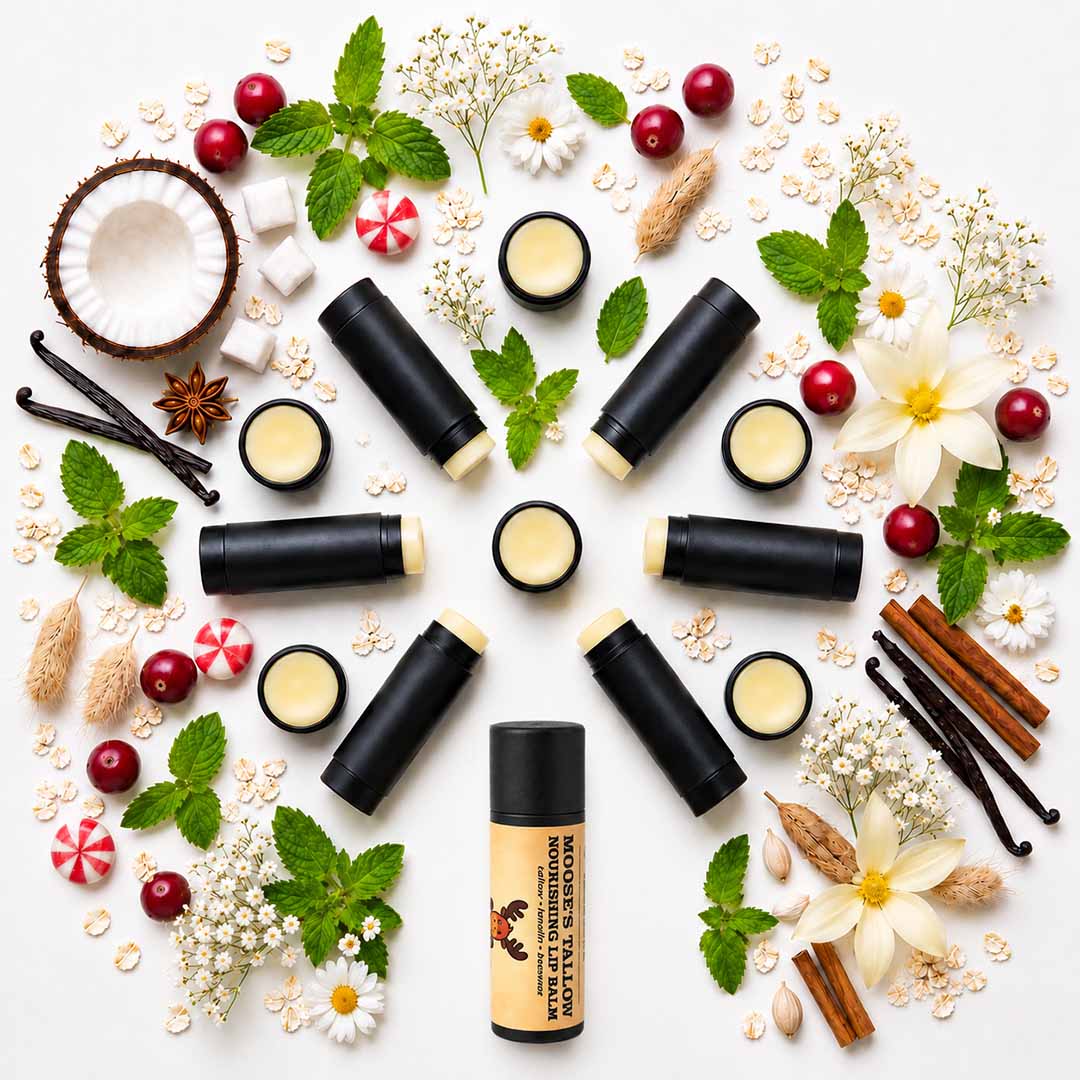
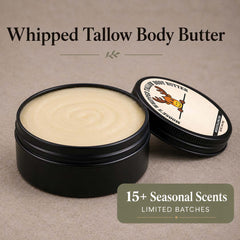
For body dryness, the whipped tallow body butter covers larger areas. It’s built on beef suet tallow and fractionated coconut oil, with beeswax, vitamin E, jojoba, castor, and egg yolk infused oil rounding out the formula. No water. No synthetic fillers. Every ingredient is listed and chosen on purpose.
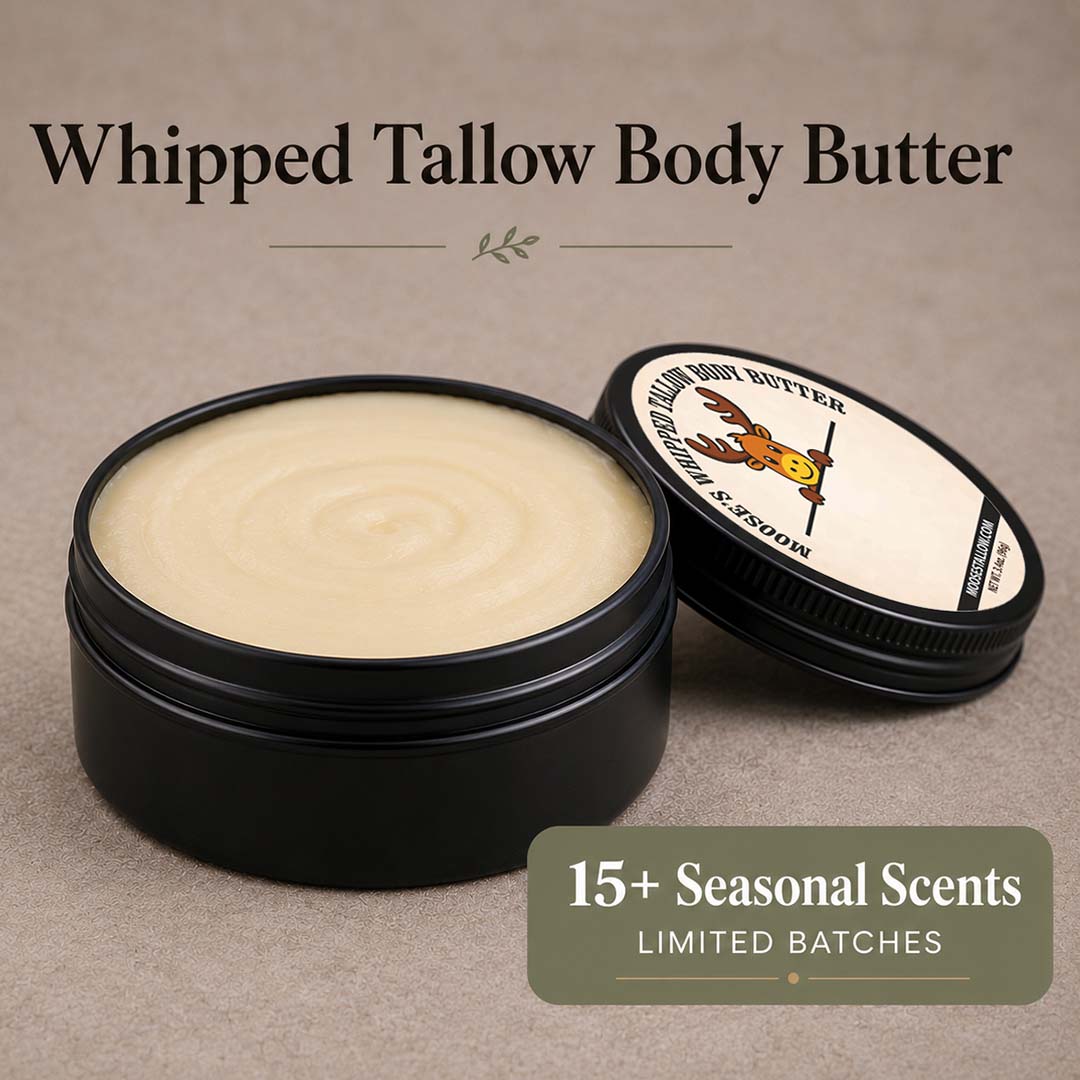
Products run $9 to $34. Every order ships across the US and comes with a 60-day guarantee. Browse the full line and find the right size to start with at Moose’s Tallow.
Sources
- Hard water versus your skin | MDedge
- Research into Hard Water Exposure and Eczema (Journal study) | ePrints/ScienceDirect
- The effect of water hardness on atopic eczema, skin barrier function: A systematic review, meta-analysis | Clinical and Experimental Allergy
- Research into Hard Water Exposure and Eczema | Healthline
- How Bad Is Hard Water for Your Skin? We Asked the Pros | RealSimple
This article is general information, not a substitute for advice from a qualified doctor. Consult a qualified healthcare professional about your own circumstances before acting on anything here.
FAQ
Does hard water actually cause dry skin?
Yes. Hard water minerals bind with soap to leave a residue that strips natural oils and disrupts the skin barrier, leading to dryness, tightness, and irritation. Population-level research supports the association between harder water and higher rates of self-reported dry skin.
How do you know if hard water is affecting your skin?
The clearest sign is skin that feels tight or uncomfortable immediately after showering, especially if you also see soap scum on shower surfaces. A simple soap test with castile soap and tap water can confirm whether your water is hard.
How do you fix dry skin caused by hard water?
Start with lukewarm showers, a sulfate-free cleanser, thorough rinsing, and a water-free barrier balm applied to damp skin right after patting dry. For persistent cases, a shower filter or ion-exchange water softener reduces mineral exposure at the source.
Can you reverse hard-water skin damage?
The skin barrier can recover with consistent barrier support. Switching to gentle cleansers, applying water-free lipid-rich products daily, and reducing mineral exposure gives the stratum corneum the conditions it needs to rebuild. Severe or persistent cases may need a dermatologist’s evaluation.


0 comments