


TL;DR:
- Elegir cuidado natural de la piel implica priorizar ingredientes como el sebo de res, la jojoba y la cera de abeja, que han demostrado nutrir la piel sin químicos dañinos. Como las etiquetas de “natural” no están reguladas, revisar las listas de ingredientes, las certificaciones y la transparencia es clave para tomar buenas decisiones. Hacer una prueba de parche a los productos nuevos ayuda a prevenir reacciones, y elegir fórmulas adecuadas para tu tipo de piel favorece un cuidado efectivo y personalizado.
Elegir cuidado natural de la piel significa escoger productos con ingredientes seguros y poco procesados que de verdad nutren tu piel sin químicos dañinos. El término “natural” no está regulado en Estados Unidos, así que cualquiera puede imprimirlo en una etiqueta. Saber elegir bien el cuidado natural de la piel exige mirar más allá del marketing y fijarte en la lista real de ingredientes. Ingredientes clave como el sebo de res, la jojoba, el aceite de coco fraccionado, la cera de abeja y los tocoferoles se ganan su lugar por su desempeño real, no por estar de moda.
Cómo elegir cuidado natural de la piel cuando las etiquetas pueden engañar
La palabra “natural” no tiene definición legal en los cosméticos de EE. UU. La FDA clasifica todos los cosméticos bajo la Ley FD&C sin importar cómo se comercialicen. Un producto etiquetado como “100% natural” enfrenta el mismo marco regulatorio que uno con ingredientes sintéticos. Esto importa porque traslada la responsabilidad a ti como comprador.
La Unión Europea adopta un enfoque un poco distinto. Según el Reglamento CE n.º 1223/2009, las afirmaciones de marketing como “natural” o “verde” deben ser verídicas y estar respaldadas por evaluaciones de seguridad. Aun así, tampoco existe una definición universal de “natural” en la UE. El resultado práctico es el mismo: la lista de ingredientes te dice más que la etiqueta frontal.
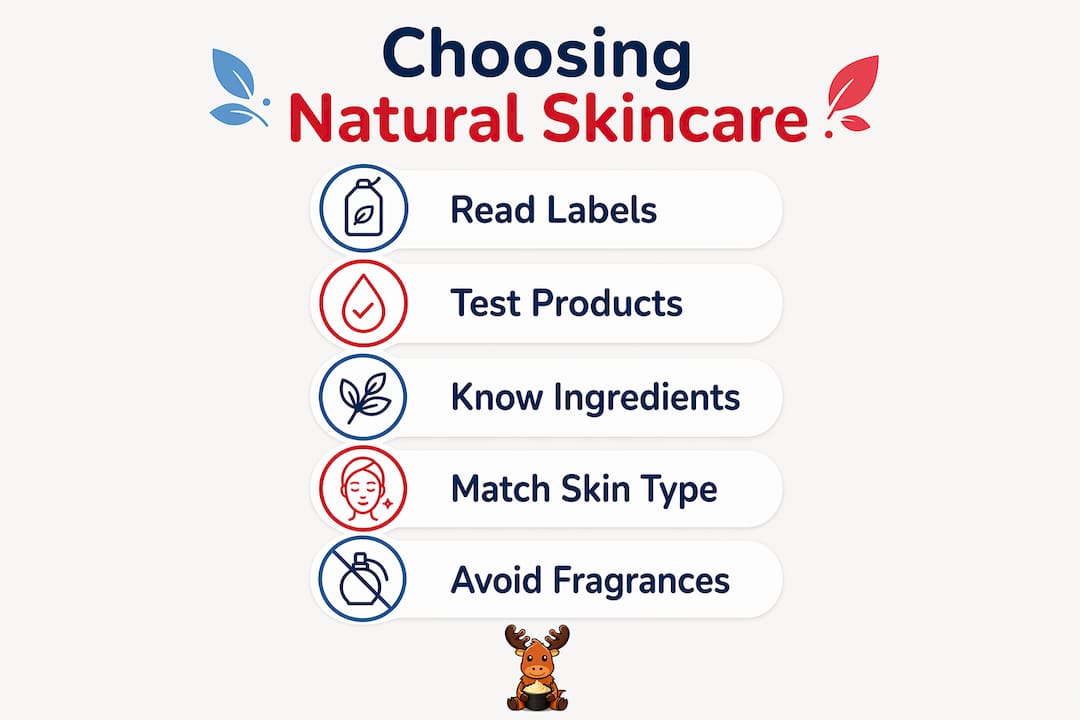
Esto es lo que debes buscar al leer las etiquetas:
- Posición en la lista de ingredientes: Los ingredientes se enumeran en orden descendente por concentración. Si el agua o un relleno aparece primero, ese es el ingrediente dominante.
- Fragancia en la lista: “Fragrance” o “parfum” en una etiqueta puede representar decenas de químicos no revelados. Esto ocurre incluso en productos naturales.
- Certificaciones: Busca los sellos USDA Organic, COSMOS o EWG Verified. Estos exigen verificación de terceros.
- Transparencia: Las marcas que revelan cada ingrediente y explican por qué está incluido merecen más confianza que las que se esconden tras afirmaciones vagas.
Entender qué hace que el cuidado de la piel sea natural en 2026 significa ir más allá de las palabras de moda y leer la formulación real.
¿Qué ingredientes naturales clave debes buscar?
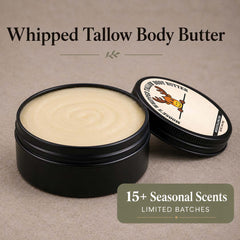
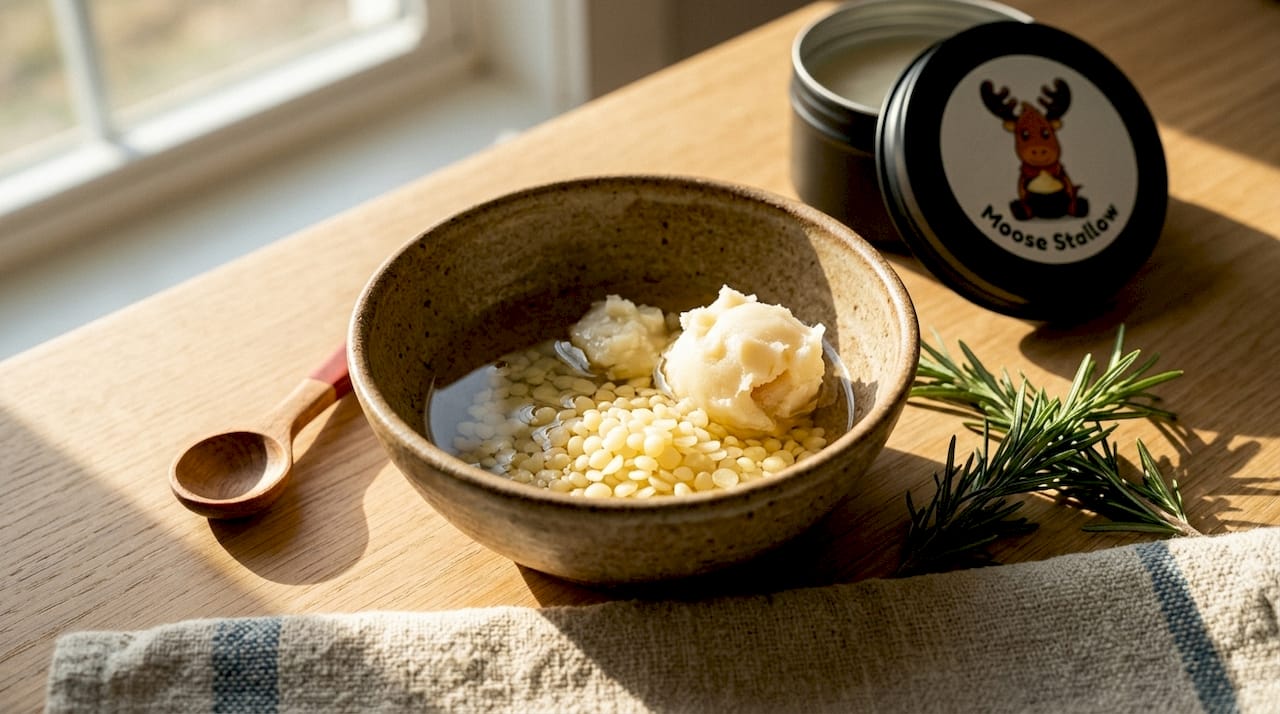
Los mejores productos de cuidado natural de la piel se construyen con ingredientes que tienen un propósito claro. En Moosestallow, cada ingrediente se gana su lugar. El sebo de res siempre es la base. Es rico en ácidos grasos que se parecen mucho al perfil lipídico de tu propia piel, lo que apoya la barrera de la piel y se absorbe sin dejar residuo grasoso.
Estos son los ingredientes principales que vale la pena buscar:
- Sebo de res: Muy humectante, que apoya la barrera y naturalmente compatible con la biología de la piel humana.
- Aceite de coco fraccionado: El aceite portador preferido por su estabilidad, resistencia a la oxidación y fácil absorción. Dura más que la mayoría de los aceites botánicos y no se pone rancio rápido.
- Cera de abeja: Crea una capa protectora sobre la piel sin tapar los poros. Retiene la humedad de forma eficaz.
- Jojoba: Técnicamente una cera líquida, la jojoba imita el sebo natural de la piel. Funciona bien para la mayoría de los tipos de piel.
- Tocoferoles (vitamina E): Un antioxidante natural que protege las células de la piel y prolonga la vida útil del producto.
- Aceite de ricino: Aporta espesor y ayuda a que otros ingredientes se adhieran a la piel.
- Aceites infusionados con yema de huevo: Ricos en lecitina y ácidos grasos, favorecen la suavidad y la nutrición de la piel.
Las fórmulas naturales con mucha fragancia son una de las principales causas de reacciones de sensibilidad, incluso cuando cada ingrediente es de origen vegetal. Esto significa que un producto puede ser realmente natural y aun así irritar tu piel si contiene altas concentraciones de aceites esenciales o extractos botánicos sin datos de seguridad.
Consejo: Al comparar aceites portadores, el aceite de coco fraccionado supera a la mayoría de las alternativas en estabilidad y vida útil. No se oxida rápido, así que tu producto sigue siendo efectivo por más tiempo y no desarrolla olor rancio.
¿Cómo probar de forma segura un producto nuevo de cuidado natural de la piel?
La prueba de parche es la forma más confiable de confirmar que un producto funciona para tu piel antes de usarlo por completo. Los ingredientes naturales como los extractos botánicos y los aceites esenciales son sensibilizantes frecuentes, así que incluso las fórmulas limpias pueden causar reacciones en algunas personas. Saltarse este paso es el error más común de quienes empiezan con el cuidado natural de la piel.
Sigue estos pasos cada vez que introduzcas un producto nuevo:
- Elige la zona de prueba. Aplica una pequeña cantidad detrás de la oreja para productos faciales. Usa la parte interna del antebrazo para productos corporales. Estas zonas dan los resultados de tolerancia más precisos.
- Aplica una pequeña cantidad. Usa más o menos la misma cantidad que aplicarías en un uso normal. No apliques de más.
- Déjalo puesto 24 horas. No laves la zona durante este periodo, a menos que notes una reacción inmediata.
- Observa hasta 96 horas. Las reacciones tardías son comunes con los ingredientes naturales. Revisa la zona a las 24, 48 y 96 horas.
- Evalúa el resultado. Enrojecimiento, comezón, hinchazón o granitos indican una reacción. Una piel sin cambios significa que el producto probablemente es seguro para un uso más amplio.
- Introduce un producto a la vez. Probar varios productos nuevos a la vez hace imposible identificar cuál causó una reacción.
| Tipo de reacción | Qué significa | Qué hacer |
|---|---|---|
| Enrojecimiento o comezón | Posible reacción irritante o alérgica | Suspende el uso de inmediato |
| Resequedad leve | Posible sensibilidad a un ingrediente | Espera 96 horas antes de decidir |
| Sin reacción | Es probable que toleres el producto | Procede con el uso completo |
| Hinchazón o ronchas | Reacción alérgica | Suspende el uso, consulta a un dermatólogo |
Consejo: Si tienes piel sensible, empieza con la fórmula más simple y sin fragancia que encuentres. Menos ingredientes significan menos posibles desencadenantes y una identificación más fácil si algo sale mal.
Cómo elegir productos según tu tipo de piel
El tipo de piel es el filtro más práctico para elegir los productos de cuidado natural adecuados. Una fórmula que le va de maravilla a la piel seca puede sentirse pesada en la piel grasa. Conocer tu tipo de piel reduce tus opciones rápido.
Una rutina mínima de limpiador, humectante y protector solar (SPF) es el punto de partida correcto para casi todos. Este enfoque cuida la piel sensible y te ayuda a identificar desencadenantes antes de agregar algo más.
- Piel seca o sensible: Los humectantes a base de sebo funcionan excepcionalmente bien aquí. El sebo de res apoya la barrera de la piel y se absorbe profundamente sin rellenos sintéticos. La cera de abeja agrega una capa protectora que retiene la humedad. Explora humectantes naturales para piel sensible para encontrar fórmulas hechas para este tipo de piel.
- Piel normal: La mayoría de las fórmulas naturales funcionan bien. Prioriza la calidad de los ingredientes y la simplicidad sobre la complejidad.
- Piel grasa: El aceite de coco fraccionado es un portador ideal porque se absorbe rápido y no se siente pesado. La jojoba también funciona bien, pues imita el sebo y le indica a la piel que produzca menos grasa con el tiempo.
- Piel mixta: Usa fórmulas más ligeras en las zonas grasas y más ricas en las zonas secas. Evita superponer varios activos botánicos hasta que sepas cómo responde tu piel.
Los cambios de estación también afectan lo que tu piel necesita. El invierno suele pedir fórmulas más ricas y oclusivas. El verano puede pedir aplicaciones más ligeras de los mismos ingredientes. Ajusta la cantidad que usas antes de cambiar de producto por completo. También puedes revisar una lista para el cuidado de la piel sensible para armar una rutina que mantenga tu piel calmada todo el año.
Puntos clave
Elegir bien el cuidado natural de la piel requiere saber leer ingredientes, un etiquetado honesto y hacer tu propia prueba de parche antes de comprometerte con cualquier fórmula nueva.
| Punto | Detalles |
|---|---|
| “Natural” no está regulado | Lee las listas de ingredientes con cuidado. Las etiquetas por sí solas no garantizan seguridad ni pureza. |
| Prioriza ingredientes con propósito | Busca sebo de res, aceite de coco fraccionado, cera de abeja, jojoba y tocoferoles por su desempeño comprobado. |
| Siempre haz una prueba de parche | Aplica en la parte interna del antebrazo o detrás de la oreja y observa hasta 96 horas antes del uso completo. |
| Ajusta los productos a tu tipo de piel | La piel seca y sensible se beneficia más de las fórmulas a base de sebo. La piel grasa va bien con el aceite de coco fraccionado. |
| Empieza simple | Una rutina mínima de limpiador, humectante y protector solar (SPF) reduce el riesgo de irritación y ayuda a identificar desencadenantes. |
Lo que he aprendido en años trabajando con ingredientes naturales
He visto a mucha gente salir mal parada por la palabra “natural”. Compran algo con una etiqueta bonita, una larga lista de extractos botánicos y un precio que sugiere calidad. Luego su piel reacciona. El problema casi siempre es la fragancia o un aceite botánico inestable que se oxidó dentro del frasco.
Lo que de verdad me ha funcionado es más simple de lo que la mayoría de las marcas quieren que creas. Sebo de res, aceite de coco fraccionado, cera de abeja y un puñado de adiciones con propósito. Ese es el enfoque de Moosestallow, y no es casualidad. El aceite de coco fraccionado, por ejemplo, no se pone rancio. Se absorbe limpio. No compite con el sebo. Cada ingrediente tiene una razón para estar ahí.
Lo otro que le diría a quien está empezando: hazle una prueba de parche a todo. Incluso a los productos en los que confías. Incluso a los productos con cinco ingredientes. Natural no significa a prueba de reacciones. Significa que los ingredientes vienen de fuentes reales. Tu piel igual tiene opiniones. Respétalo y evitarás casi toda la frustración que la gente asocia con cambiarse al cuidado natural de la piel.
Si quieres consejos basados en experiencia real, vale la pena leer los mejores consejos de cuidado natural de la piel para 2026 junto con esta guía.
Brian
Prueba el cuidado natural de la piel de Moosestallow para piel sensible
Los productos Moosestallow se basan en los principios que cubre este artículo. El sebo de res siempre es la estrella. Cada uno de los demás ingredientes, desde el aceite de coco fraccionado hasta la cera de abeja y los tocoferoles, se elige por una razón específica. No hay rellenos, ni botánicos innecesarios, ni fragancias sintéticas. Cada lote se hace a mano en cantidades pequeñas para que la calidad se mantenga constante. Si estás listo para probar un cuidado natural de la piel en el que de verdad puedas confiar, explora la colección de productos Moosestallow completa y encuentra una fórmula adecuada para las necesidades de tu piel. Ingredientes simples. Trabajo honesto.
Preguntas frecuentes
¿La FDA regula el cuidado “natural” de la piel?
La FDA no define “natural” para los cosméticos. Los productos con esa etiqueta se siguen regulando como cosméticos bajo la Ley FD&C, sin una categoría natural aparte.
¿Cuánto debe durar una prueba de parche?
Aplica el producto en la parte interna del antebrazo o detrás de la oreja y observa de 48 a 96 horas para detectar reacciones inmediatas y tardías.
¿Qué ingredientes naturales funcionan mejor para la piel sensible?
El sebo de res, la cera de abeja y el aceite de coco fraccionado los tolera bien la mayoría de los tipos de piel sensible. Apoyan la barrera de la piel sin aditivos sintéticos ni cargas altas de fragancia.
¿El cuidado natural de la piel aún puede causar reacciones?
Sí. Los extractos botánicos y los aceites esenciales son sensibilizantes comunes incluso en fórmulas totalmente naturales. Hacer una prueba de parche a cada producto nuevo es lo más seguro, sin importar el origen del ingrediente.
¿Cuál es la mejor rutina para alguien nuevo en el cuidado natural de la piel?
Empieza con un limpiador, un humectante a base de sebo y un protector solar (SPF). Manténlo simple, introduce un producto a la vez y haz una prueba de parche a cada uno antes de agregar algo nuevo.
Recomendados
- Qué hace que el cuidado de la piel sea natural: cualidades clave en 2026 – Moose’s Tallow
- Crea un flujo de cuidado natural de la piel para resultados duraderos – Moose’s Tallow
- Cómo evaluar los ingredientes de cuidado de la piel como un profesional – Moose’s Tallow
- ¿Qué es el cuidado natural de la piel? Beneficios, riesgos y consejos inteligentes – Moose’s Tallow


0 comentarios