

Jojoba oil supports the skin barrier mostly on the surface. It softens rough patches, adds slip, and helps slow water loss, but it does not add water itself. That means it works best on skin that is already a little damp, and it often needs a humectant or cream alongside it if your skin is very dry.
TL;DR:
- Jojoba oil mainly supports the skin surface by softening patches and slowing water loss rather than adding water or rebuilding the barrier from within.
- Its light occlusion sits between humectants and strong occlusives, making it suitable mainly for mildly dry skin when used after dampening the skin.
- Limited human and in vivo evidence suggests jojoba reduces water loss in formulated blends and enhances markers related to collagen and hyaluronic acid, but is not proven to rebuild deep skin barriers.
- Applying jojoba on damp skin and layering with humectants or thicker moisturizers improves its surface-supporting effects, especially for dry or sensitive skin types.
- Jojoba’s reputation for “barrier repair” is misleading; it offers surface support, and severe dryness or damage requires heavier, prescription-based products or dermatologist intervention.
How jojoba oil works on your skin
Jojoba is not really an oil. It is a liquid wax, made of wax esters that look a lot like the ones your own skin produces as sebum. That is part of why it feels so different from something like sunflower or almond oil. It glides on smooth, absorbs without much greasy residue, and has strong resistance to breaking down over time. A comprehensive review of jojoba’s chemistry describes these wax esters and their high oxidative stability as the reason jojoba works so well as a cosmetic emollient, one that conditions skin and helps manage water loss from the surface.
Here is where people get confused. “Occlusion” and “occlusive” get used loosely, but they matter for what you should expect. A true occlusive, like petroleum jelly, forms a thicker film that blocks water loss more completely. Jojoba’s occlusion is lighter. Research using confocal Raman microscopy found that jojoba and other plant oils mostly sit in the upper layers of the stratum corneum, the outermost skin layer, where they change how the lipids there are packed. They do not travel deep into skin to rebuild anything.

Formulation changes the picture, too. Plain jojoba oil behaves differently from hydrolyzed jojoba esters, hydrogenated jojoba, or jojoba blended into an emulsified wax. Each version has its own texture, stability, and skin feel, so a study on one type does not automatically apply to another.
It helps to place jojoba next to the other two ingredient types dermatologists talk about:
- Humectants like glycerin or hyaluronic acid pull water into the skin. Jojoba does not do this.
- Strong occlusives like petrolatum form a heavier barrier that blocks more water loss than jojoba can on its own.
- Jojoba’s role sits in between: an emollient that smooths, conditions, and adds light surface protection.
Knowing which category an ingredient belongs to helps you build a routine instead of guessing. Jojoba suits mildly dry skin; for very dry or cracked skin, use it with stronger moisturizers.
What the research actually shows about jojoba and barrier markers
Jojoba is well known, but evidence is more limited and specific than many claims suggest. It helps to look at what was actually tested, not just the headline.
A small pilot study looked at a formula containing hydrolyzed jojoba esters and glycerol, not plain jojoba oil. Researchers measured evaporative water loss at 8 and 24 hours after application.
A small preliminary study found that a formula with hydrolyzed jojoba esters and glycerol reduced evaporative water loss at 8 and 24 hours. That is a meaningful early signal, but it describes a specific formulated blend, not jojoba oil straight from the bottle.
Separately, an ex-vivo study, meaning testing done on skin tissue outside the body rather than on living people, looked at what happens when jojoba wax is applied directly to human skin samples. The ex-vivo organ-culture study reported increases in markers linked to collagen and hyaluronic acid, along with lower inflammatory markers, after jojoba wax treatment. That is encouraging for cosmetic research, but ex-vivo results do not prove the same thing happens on living skin in daily use. Tissue in a lab dish does not behave exactly like skin on your arm.
Jojoba is stable, resists breakdown better than many plant oils, and is traditionally used as an emollient. None of this amounts to jojoba rebuilding barrier structure from within.
Putting the in-vivo, ex-vivo, and formulation data together, the pattern is consistent. Jojoba mostly stays near the surface. That is not a weakness, it is simply what the ingredient is suited for: a light, breathable layer of surface support rather than deep repair.
- Human data on plain jojoba oil and TEWL is limited; most direct evidence involves specific jojoba-based formulas.
- Ex-vivo findings on collagen and hyaluronic acid markers are promising but need confirmation in real-world, living skin studies.
- Reviews consistently describe jojoba as stable and skin-conditioning rather than barrier-rebuilding.
Jojoba provides surface support and helps limit water loss, not deep barrier repair. That distinction should guide how you use it.
How to use jojoba oil for barrier support
Getting the timing and pairing right matters more than the amount you use. Here is a simple routine based on how jojoba actually behaves on skin.
- Cleanse gently with a mild, non-stripping cleanser.
- Pat your skin so it is damp, not dry, before applying anything.
- Apply a few drops of jojoba oil while skin is still slightly moist.
- Follow with a cream or ointment on top if your skin is very dry or cracked.
- Repeat once or twice daily, adjusting based on how your skin feels.
Applying to damp skin matters because jojoba works by sealing in moisture that is already there. On completely dry skin, there is less to hold onto, so the effect is weaker.
Before using jojoba oil anywhere on your face, patch-test on your inner arm for a day or two. Watch for redness, bumps, or itching. If your skin is oily or acne-prone, start with less and only in a small test area, since reactions vary from person to person.
If your skin needs more than light surface support, combine jojoba with a humectant like glycerin or hyaluronic acid underneath, then seal with a cream or ointment on top for severe dryness. This layering approach matches what dermatologists generally recommend for moisturizing routines, where you build hydration in stages rather than relying on one product to do everything.
Not all jojoba products are equal. Some of the research behind jojoba’s barrier effects used hydrolyzed esters or emulsified wax preparations, not plain oil. If you want a jojoba product for a specific effect, check what form it is in and whether it matches how it was studied.
Pro Tip: Apply jojoba right after a shower, while your skin is still damp, for the best slip and the most water-loss protection.
When jojoba oil falls short and what to watch for
Jojoba is not a fix for every kind of dryness, and it is worth knowing its limits before you rely on it.
Oils, including jojoba, liquefy at body temperature and spread thin. They generally do not block water loss as well as thicker, petrolatum-based ointments. According to dermatology guidance on choosing moisturizers, a good moisturizer needs to both add water and prevent it from escaping. Oils mostly do the second part. For very dry or cracked skin, a cream or ointment usually works better than an oil alone.
Quality and freshness matter more than people expect. If a jojoba oil is old, poorly stored, or has started to break down, its free fatty acid content can rise, which raises the risk of irritation. Keep jojoba oil in a cool, dark place, and check that it still smells clean before using it.
A few practical safety notes:
- Some people experience clogged pores or breakouts from jojoba, especially with heavy use on acne-prone skin.
- Allergic reactions are uncommon but possible, so always patch-test first.
- Stop use and see a dermatologist if you notice persistent redness, swelling, or a rash that does not clear up.
- Remember that plain jojoba oil and specialized jojoba ester preparations are not interchangeable, since the research behind each differs.
If you have already tried the basics and your skin still feels tight, flaky, or painful, that is a sign to talk to a dermatologist rather than adding more products.
How Moose’s Tallow approaches jojoba in our formulas
I started Moose’s Tallow after a health scare made me actually read my own lotion label. It listed 52 ingredients, water first. That felt backwards, so I set out to build something simpler, with every ingredient chosen for a reason.
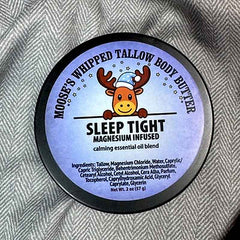
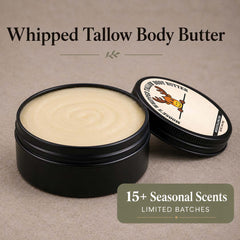
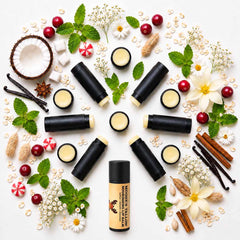
Jojoba earns its place in our formulas for the same reasons the research points to: it conditions the skin surface and helps support the barrier without adding bulk. We pair it with fractionated coconut oil as our preferred carrier, since it resists oxidation, absorbs cleanly, and holds up well on the shelf. Beeswax and vitamin E round things out for texture and stability, all built on a base of properly rendered local beef suet tallow.
- Tallow & Zinc Outdoor Sun Balm combines jojoba with tallow and zinc for outdoor skin protection.
- Baby Bum Butter uses jojoba alongside tallow and zinc for diaper-area skin.
- Natural Tallow Baby Butter with Calendula & Chamomile blends jojoba with calming botanicals for delicate baby skin.
We make everything by hand in small batches, back every order with a 30-day guarantee, and keep our tallow versus plant oil comparisons public for anyone who wants to dig deeper.
Why the “barrier repair” language misleads you
The biggest problem with jojoba’s reputation is the word “repair.” Repair implies your skin was broken and jojoba fixed it. What the evidence actually supports is surface support: less water loss, a softer feel, a smoother surface for other products to work on top of.
That distinction matters more than most routines admit. People with genuinely damaged, cracked skin often reach for another light oil when what they need is a thicker ointment and, sometimes, a dermatologist’s help. Jojoba is a good tool for maintenance and daily comfort, not for pulling severely compromised skin back to health on its own.
If I had to prioritize one thing, it would be this: match the tool to the problem. Use jojoba on damp skin for daily upkeep. Reach for something heavier, and reach for a dermatologist, when the damage goes deeper than the surface.
— Brian Smith
Ready to try jojoba-based barrier support
If you want jojoba’s surface-conditioning benefits without a 52-ingredient label, our formulas keep things simple: tallow, jojoba, and a small list of purposeful ingredients, nothing more. Every product is water-free and lightly diluted, so the active ingredients do the work.
For daily outdoor protection, the Tallow & Zinc Outdoor Sun Balm combines jojoba with zinc for skin exposed to sun and wind. For diaper-area care, Baby Bum Butter pairs jojoba with tallow and zinc for delicate skin. For everyday baby skin, Natural Tallow Baby Butter with Calendula & Chamomile adds soothing botanicals to the same tallow-jojoba base.
Browse our full collection of tallow-based products to find the right fit for your skin.
Sources
- Jojoba Oil: An Updated Comprehensive Review on Chemistry, Pharmaceutical Uses, and Toxicity
- Study on jojoba esters + glycerol and TEWL (pilot)
- Topical application of jojoba wax enhances pro-collagen III and hyaluronic acid and reduces inflammation in ex-vivo human skin
- In vivo confocal Raman microscopic determination of depth profiles of the stratum corneum lipid organization influenced by application of various oils
- How to pick the right moisturizer for your skin — American Academy of Dermatology
FAQ
What are the disadvantages of jojoba oil for skin?
Jojoba oil sits mostly on the skin’s surface, so it does not add water or rebuild deeper barrier structure. Some people also experience clogged pores or irritation, especially with heavy use on acne-prone skin, so a patch test is worth doing first.
Which oil is best for a damaged skin barrier?
No single oil rebuilds a damaged barrier on its own. For very dry or damaged skin, dermatologists generally recommend a cream or ointment rather than an oil alone, since these add and lock in moisture more effectively.
What is the fastest way to repair a skin barrier?
There is no fast fix for a compromised skin barrier. The most reliable approach is gentle cleansing, applying moisturizer to damp skin, and layering a humectant with an occlusive cream, with a dermatologist’s guidance for anything severe or persistent.
Is jojoba oil antifungal?
Jojoba oil is not established as an antifungal treatment, and no cosmetic claim of that kind is supported here. It is best understood as a surface-conditioning emollient rather than a treatment for fungal skin issues.
0 comentarios