

Yes. Most damaged skin barriers recover once you stop the habits causing the damage and switch to a simple, lipid-rich routine. Repair does not require a twelve-step regimen. It requires the opposite. Start with three moves today:
- Stop exfoliants, acids, and anything that stings.
- Switch to a gentle, fragrance-free cleanser.
- Apply a lipid-rich moisturizer or balm right after washing.
Expect less stinging and flaking within days. Full recovery for a badly compromised barrier can take several weeks to months, depending on the extent of damage.
TL;DR:
- Removing exfoliants, acids, and harsh cleansers is crucial before adding new products, as continued use can delay or worsen recovery.
- The recovery timeline varies from days for mild damage to several months for severe issues, depending on the extent of the damage and triggers.
- Using a moisturizer with lipids, humectants, and an occlusive layer directly supports rebuilding the skin’s barrier and prevents ongoing water loss.
- Consistent, simplified routines with fragrance-free, pH-balanced products are more effective than complex regimens in restoring skin barrier health.
- Proper repair depends on removing chronic habits like overwashing and layering actives, then gradually reintroducing supportive products over weeks.
What is skin barrier repair, exactly?
Your skin’s outer layer, the stratum corneum, works like a brick wall. Skin cells are the bricks. Lipids, mainly ceramides, cholesterol, and fatty acids, are the mortar holding everything together. When that mortar is intact, water stays in and irritants stay out.

Skin barrier repair means rebuilding that mortar. The stratum corneum acts as the main permeability barrier, and lipids are what make it work. Skin also needs a slightly acidic surface. That acidity activates the enzymes that produce these lipids in the first place. Strip the acid mantle with a harsh soap, and you slow down your skin’s own enzyme activity that builds lipids. You are not just washing away dirt. You are interrupting a chemical process your skin runs on its own.
What are the signs your skin barrier is damaged?
Your skin usually tells you before you notice anything in the mirror. Tightness right after washing is often the first clue.
Common signs include:
- Persistent dryness that lotion does not fix
- Tightness, especially after cleansing
- Flaking or rough patches
- Stinging when you apply products that never used to sting
- Redness or visible irritation
- New sensitivity to products you have used for years
- Sudden breakouts in areas that were previously clear
These signs of barrier damage are your cue to simplify, not add more products. If you notice painful cracks, bleeding, oozing, or spreading redness, that is beyond a simple routine fix. See a dermatologist. A weekend hiker who scrubs with a foaming cleanser twice a day and feels stinging under sunscreen is describing barrier damage, not sensitive skin genetics.
What causes a damaged skin barrier?
Barrier damage rarely comes from one bad product. It builds from repeated small insults your skin cannot outpace.
Overwashing tops the list. Hot showers, frequent hand washing, and harsh surfactant cleansers strip lipids faster than your skin can replace them. Layering acids, retinoids, and physical scrubs on top of that, especially all in the same week, compounds the problem. Frequent washing and harsh cleansers are common contributors to barrier damage, and dermatology research consistently points to simplifying the routine as the fix.
Environment plays a role too. Cold, dry winter air pulls moisture out. Wind and sun exposure add stress outdoors. Indoor heating dries the air just as much as winter cold does. Occupational exposure, think hairstylists, nurses, and dishwashers, adds constant water and chemical contact that wears down the barrier day after day.
How do you repair a damaged skin barrier?
Repair works best in a specific order. Skipping steps or piling on new products at once usually backfires.
- Stop everything abrasive. Pause retinoids, acids, scrubs, and any product that stings. Switch to lukewarm water. Hot water feels good and does real damage.
- Cleanse gently, once or twice a day. Choose a nonstripping, pH-friendly cleanser. Avoid alkaline bar soaps. An acidic skin surface supports the enzymes that build and maintain your barrier, so a cleanser that disrupts that pH works against you from the first wash.
- Moisturize with a three-part strategy. Look for a moisturizer or balm that pairs humectants (glycerin, hyaluronic acid) with real lipids (ceramides, cholesterol, fatty acids) and an occlusive layer like petrolatum or a lipid-rich balm at night. Moisturizers combining occlusives, humectants, and emollients do the most to rebuild what is missing.
- Read labels for what to avoid. Fragrance, denatured alcohol, and long ingredient lists with unclear purpose are common triggers. Fewer ingredients, chosen on purpose, tend to be gentler.
- Wear sunscreen daily. Pick a gentle, mineral, broad-spectrum formula that does not sting on compromised skin.
- Reintroduce actives slowly. Wait until flaking and stinging resolve. Add one product back at a time, spaced a couple of weeks apart, so you can tell what your skin tolerates.
Pro Tip: Apply your moisturizer to slightly damp skin right after cleansing. It traps water at the surface instead of letting it evaporate, which makes the occlusive layer work harder for you.
How long does the skin barrier take to repair?
Mild damage often improves relatively quickly with less stinging and flaking appearing after stopping harmful habits and simplifying your routine.
More significant damage, especially from chronic triggers, generally takes longer to restore and may require weeks to months. Skin has a built-in self-repair system that releases stored lipids immediately and ramps up lipid production over time, but that system needs the stressors removed to catch up. If you see no improvement after a few weeks of a simplified routine, or symptoms worsen, that is worth a dermatologist visit.
How do you keep your skin barrier from getting damaged again?
Prevention is simpler than repair, and far less frustrating. A few consistent habits do most of the work.
- Keep your routine short. Add one new product at a time, and wait a week before judging it.
- Choose fragrance-free, pH-friendly cleansers and moisturizers built around ceramides or other physiological lipids.
- Run a humidifier during dry winter months when indoor heating pulls moisture from the air.
- Wear sunscreen every day, not just at the beach.
As skin ages, lipid composition shifts and moisture retention naturally declines, which is exactly why consistent lipid support matters more, not less, over time. Our skin barrier guide breaks this down further if you want the deeper mechanics.
Why Moose’s Tallow fits a barrier-friendly routine
Brian Smith started Moose’s Tallow after a health scare sent him looking at his own lotion label. It listed 52 ingredients. Water was first. That did not sit right with him, so he set out to build something simpler.
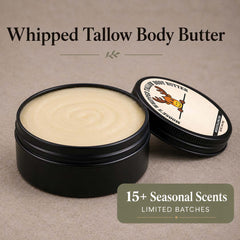
Every Moose’s Tallow product starts with properly rendered local beef suet tallow. Its fatty-acid profile sits close to your skin’s own oils, so it absorbs cleanly instead of sitting on top. Formulas stay water-free and lightly diluted, built around fractionated coconut oil, beeswax, vitamin E (tocopherols), jojoba, castor, and egg yolk infused oil. Fractionated coconut oil is our carrier oil of choice because it resists oxidation and stays stable on the shelf, unlike heavier plant oils.
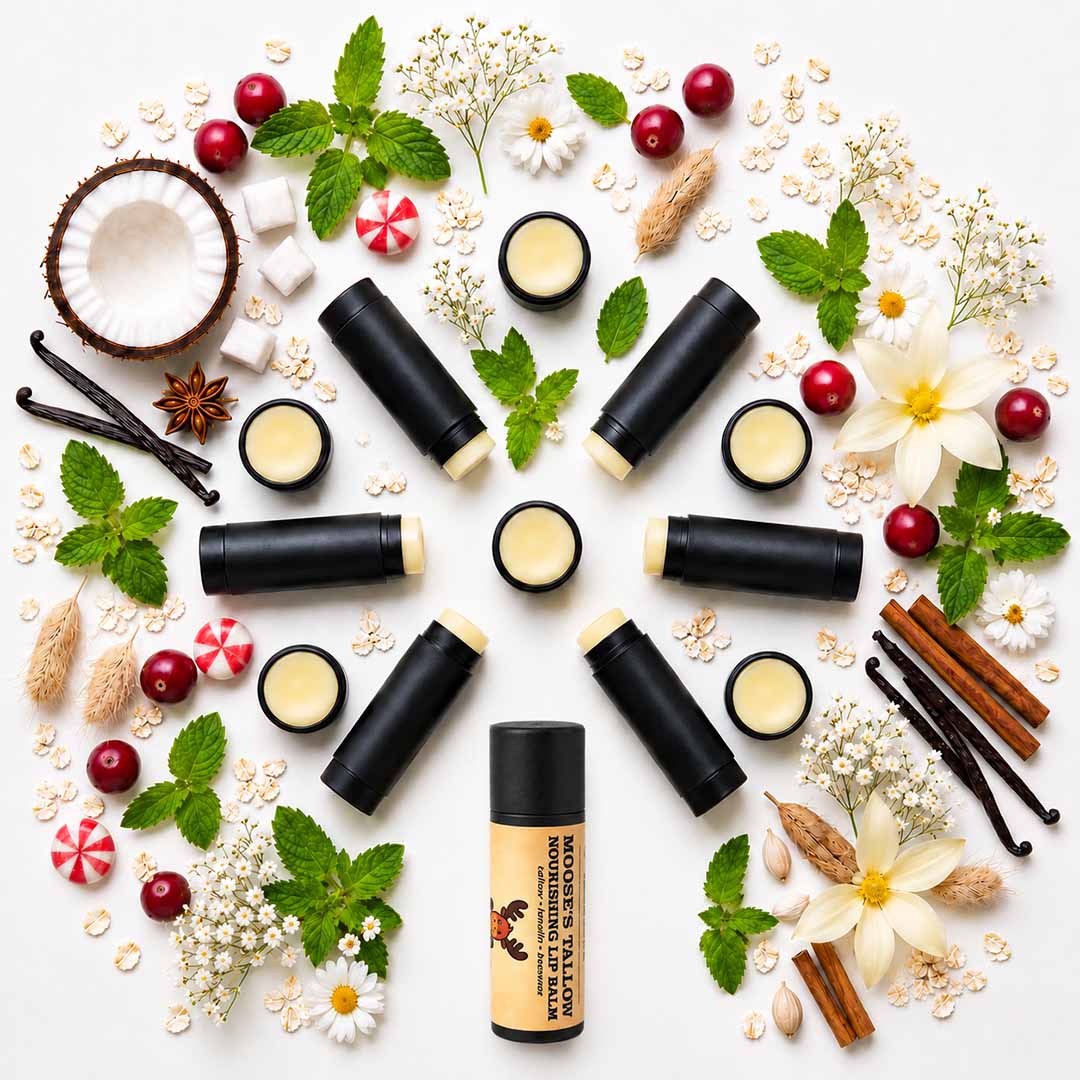
Two products map directly to barrier support. The Tallow & Zinc Outdoor Sun Balm gives you an occlusive layer with zinc for time outdoors. The Beef Tallow Lip Balm targets chapped, cracked lips the same way. Everything is handmade in small batches in Lebanon, PA, shipped across the US, and backed by a 30-day guarantee.
Does diet or hydration affect skin barrier repair?
What you eat and drink shows up on your skin, even if it works slower than any topical product. Your skin barrier is built from fats, and dietary fat quality affects the raw material your body has to work with.
Diets low in essential fatty acids can leave skin more prone to moisture loss over time. That does not mean a single meal changes your barrier overnight. It means chronic patterns, low fat intake, poor hydration, high alcohol consumption, catch up with your skin eventually. Drinking enough water supports overall skin function, though it will not undo damage from a harsh cleanser or replace a moisturizer. Hydration works from the inside; lipid-rich products work from the outside. You need both angles covered, not one instead of the other.
If your diet already includes a reasonable mix of healthy fats, from fish, nuts, or seeds, you likely have the internal side handled. The bigger lever for most people with a damaged barrier is still what they put on their skin and how often they wash it. Think of diet as a slow, steady contributor and topical care as the fast-acting fix. Neither replaces the other, but topical care is where you will see change first.
Does skin type change how you repair the barrier?
Oily skin, dry skin, and eczema-prone skin all need the same lipids. They just need different textures and amounts.
Dry skin usually needs the heaviest hand. Richer balms and creams with a strong occlusive layer, applied at night and sometimes in the morning too, tend to work best. Oily skin still needs lipid support, contrary to what a lot of oily-skin advice suggests. Skipping moisturizer because skin feels greasy often backfires, since a stripped barrier can trigger more oil production to compensate. A lighter lotion or gel cream with the same core lipids, ceramides, cholesterol, fatty acids, usually fits better than a heavy balm.
Sensitive skin needs the shortest ingredient list you can find. Fragrance, essential oils, and harsh preservatives are common triggers, so fewer ingredients chosen on purpose beats a long list every time. Eczema-prone skin often has a genetic tendency toward lower ceramide levels, which makes consistent lipid replacement even more important, not optional. Flare-ups usually call for a dermatologist’s input on prescription options alongside a simplified daily routine.
Across every skin type, the goal stays the same: remove what is stripping the barrier, then replace what is missing. The formula changes in texture and richness, not in core ingredients.
When should you see a dermatologist for barrier repair?
Most barrier damage responds to a simplified routine within a few weeks. Some cases need more than an over-the-counter fix.
A dermatologist can prescribe topical steroids for short-term flare control when inflammation is severe. They can also identify whether eczema, contact dermatitis, or a fungal issue is the real driver behind what looks like simple dryness. Prescription-strength barrier creams containing ceramides in specific ratios are sometimes recommended for eczema-prone patients, since over-the-counter versions vary widely in formulation quality.
In-office procedures rarely target barrier repair directly, since most barrier issues are chemical and behavioral, not structural. That said, a dermatologist can evaluate whether a light chemical peel or in-office treatment for a separate concern, like acne scarring, is safe to schedule around your recovery timeline. Generally, wait until your barrier has recovered before adding any elective procedure. If symptoms include bleeding, oozing, spreading redness, or a rash pattern you have not seen before, book an appointment rather than testing more products.
What are common myths about skin barrier repair?
The biggest myth is that more products fix barrier damage faster. The opposite is usually true. A ten-step routine on compromised skin adds more potential irritants right when your skin needs fewer.
Another common misconception: “natural” or “clean” automatically means gentle. Plenty of natural ingredients, citrus oils and certain essential oils among them, are common irritants. The ingredient list matters more than the marketing language on the bottle.
A third myth is that a damaged barrier means you need to exfoliate to “remove dead skin” and speed healing. Exfoliation is precisely what usually caused the damage. Skip it entirely until your skin has recovered.
Last, people often assume repair means finding one miracle ingredient. Real repair comes from a shift in behavior, less washing, gentler products, consistent moisturizing, not a single hero ingredient added to an otherwise damaging routine.
What the research actually supports about skin barrier repair
Here is where I differ from a lot of the advice floating around: the skincare industry sells barrier repair like it is a product problem. It is mostly a behavior problem. You can buy the best ceramide cream on the market and still have a damaged barrier in a month if you are washing with hot water twice a day and layering three acids on top.
The research backs this up plainly. Recovery works best when the ongoing stressor is removed first; products alone rarely undo repeated damage. That is not a popular message, because it does not sell a bigger routine. It sells a smaller one.
What I think readers should prioritize first is subtraction, not addition. Stop the exfoliants. Stop the hot showers. Stop the ten-step routine. Then add back one lipid-rich moisturizer and let it do its job. Simple, water-free formulations with real lipids, not diluted with water and filler, tend to respect that process instead of working against it.
— Brian Smith
Get a barrier-friendly routine that actually works
There are other routes to barrier repair: prescription creams, department-store serums stacked with actives, or a bare-bones drugstore lotion that lists water first and fillers after. Moose’s Tallow takes a different path. Every formula starts with properly rendered local beef suet tallow, whose fatty-acid profile sits close to your own skin oils, so it absorbs instead of sitting on the surface waiting to be wiped off.
Nothing in our lineup is diluted with water or padded with filler oils like olive or shea butter. You get beef suet tallow, fractionated coconut oil for stability and easy absorption, beeswax, vitamin E, jojoba, castor, and egg yolk infused oil, each one chosen on purpose. If your lips are chapped from wind or your skin needs occlusive support outdoors, start with the Beef Tallow Lip Balm or the Tallow & Zinc Outdoor Sun Balm. Every order ships from our small batch in Lebanon, PA, backed by a 30-day guarantee, so you can try it without risk.
Key Takeaways
Skin barrier repair works when you remove the daily habits stripping your lipids and replace them with a simple, lipid-rich routine.
| Point | Details |
|---|---|
| Stop first, add later | Remove exfoliants, hot water, and harsh cleansers before adding any new product. |
| Lipids are the mortar | Ceramides, cholesterol, and fatty acids hold the stratum corneum together and prevent water loss. |
| Timeline varies by severity | Mild damage eases within days to two weeks; deeper damage can take months. |
| Match texture to skin type | Dry skin needs richer balms; oily and sensitive skin still need lipids, just lighter ones. |
| Moose’s Tallow fits the routine | Water-free, lipid-rich formulas like the Tallow & Zinc Outdoor Sun Balm support barrier-friendly care without fillers. |
This article is general information, not a substitute for advice from a qualified doctor. Consult a qualified healthcare professional about your own circumstances before acting on anything here.
Sources
- Signs Your Skin Barrier Is Damaged
- Skin 101: Understanding the fundamentals of skin barrier physiology
- Contributors to skin barrier impairment and the role of gentle routines
- Fundamentals of skin barrier physiology
FAQ
What is the fastest way to repair a damaged skin barrier?
Stop harsh products and hot water immediately, switch to a gentle cleanser, and apply a lipid-rich moisturizer or occlusive balm right away. This combination usually brings noticeable relief within days.
How long does the skin barrier take to repair?
Mild damage often improves within days to two weeks once triggers stop. More severe or chronic damage can take several weeks to a few months to fully restore.
Should I moisturize a damaged skin barrier?
Yes, moisturizing is essential, not optional. A moisturizer combining humectants, emollients, and physiological lipids like ceramides directly supports the repair your skin is trying to do on its own.
Can a tallow-based balm help with skin barrier repair?
Beef suet tallow has a fatty-acid profile close to your skin’s own oils, which supports clean absorption. Moose’s Tallow builds its balms water-free and lipid-rich to work with that process rather than against it.
Do I need to stop using retinol or acids while repairing my barrier?
Yes, pause actives like retinol, exfoliating acids, and physical scrubs until stinging and flaking resolve. Reintroduce one product at a time, spaced a few weeks apart, once your skin has stabilized.


0 comentarios