

La compatibilidad con la biología de la piel se define como el grado en que un producto de cuidado funciona en armonía con la estructura natural de tu piel, apoyando la integridad de la barrera y la hidratación sin causar irritación ni alteraciones. La mayoría de las personas nunca piensan en esto hasta que su piel reacciona mal a un producto que esperaban amar. La verdad es que una textura agradable o un aroma fresco casi no te dicen nada sobre cómo un producto interactúa con tu piel a nivel biológico. La compatibilidad real en el cuidado de la piel significa que los ingredientes del producto se alinean con los lípidos, las proteínas y los procesos de señalización que tu piel ya usa para mantenerse sana. El sebo de res, por ejemplo, tiene un perfil de ácidos grasos parecido a los aceites propios de tu piel, lo que lo convierte en uno de los ejemplos más claros de un ingrediente naturalmente compatible.
¿Qué es exactamente la compatibilidad con la biología de la piel?
La compatibilidad con la biología de la piel se basa en la estructura del estrato córneo, la capa más externa de tu piel. Esta capa está formada por células muertas rodeadas de una matriz lipídica compuesta por ceramidas, ácidos grasos libres y colesterol. Esa matriz actúa como la barrera principal de tu piel contra la pérdida de agua y el estrés ambiental. Un producto compatible respeta y refuerza esa matriz en lugar de despojarla o alterarla.
La barrera de la piel también está regulada por procesos moleculares complejos. Las investigaciones muestran que la vía de señalización Hippo participa en la formación y el mantenimiento de la barrera, lo que significa que los productos tópicos pueden influir en el comportamiento celular más allá de una simple cobertura superficial. Un producto que aporta lípidos fisiológicos, los mismos tipos de grasas que tu piel produce de forma natural, apoya estos mecanismos de reparación mucho mejor que uno que solo sella la superficie.
Un proceso que vale la pena entender es la separación de fases líquido-líquido, que regula los gránulos de queratohialina, esenciales para la diferenciación de la piel y la integridad de la barrera. Esto no es solo teoría. Significa que tu barrera cutánea es un sistema dinámico y vivo, no un muro estático. Los productos que trabajan con este sistema producen resultados duraderos. Los productos que trabajan en su contra causan problemas con el tiempo.
- Las ceramidas rellenan los espacios de la matriz lipídica y evitan la pérdida de agua
- Los ácidos grasos libres mantienen el pH ligeramente ácido de la piel sana
- El colesterol mantiene la bicapa lipídica flexible y funcional
- El ácido hialurónico retiene el agua en las capas más profundas de la piel
Consejo: Busca productos que aporten estos tipos de lípidos directamente, en lugar de productos que solo cubren la superficie. Cubrir crea una suavidad temporal. Aportar lípidos fisiológicos apoya una reparación real de la barrera.
¿Cómo afectan los ingredientes del cuidado de la piel a la compatibilidad?
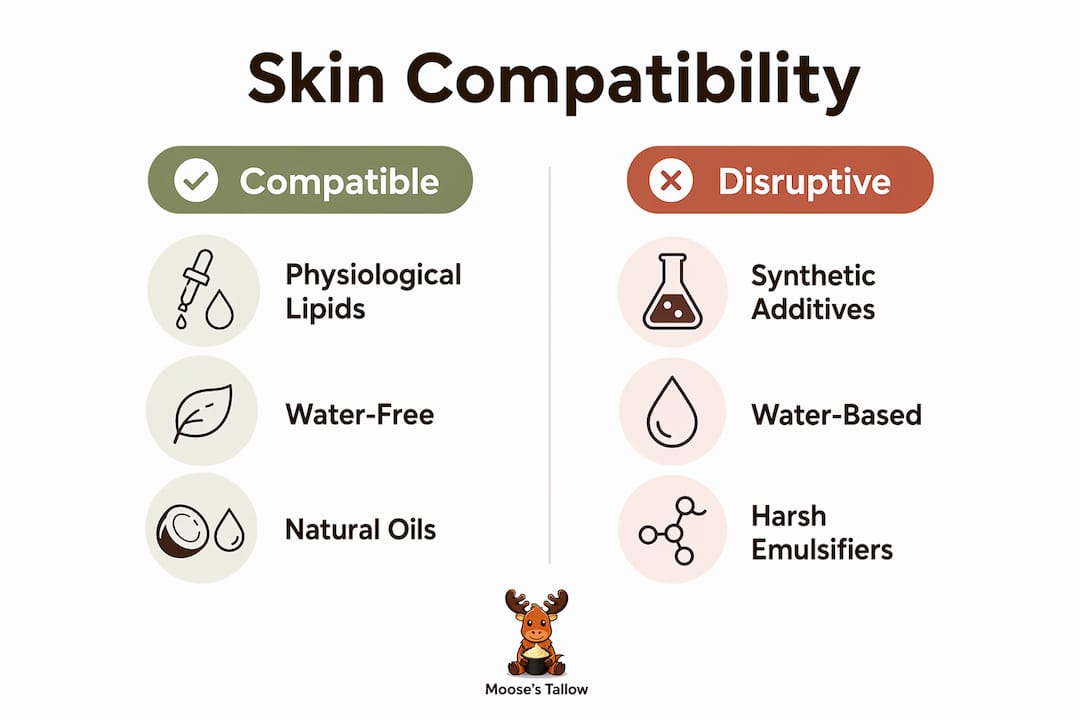
No todos los ingredientes son iguales, y la diferencia entre un producto compatible y uno perturbador muchas veces está en las decisiones de formulación, no solo en los ingredientes activos. Ciertos emulsionantes que se usan para estabilizar las lociones a base de agua pueden alterar la bicapa lipídica y aumentar la pérdida de agua transepidérmica (TEWL), incluso cuando los ingredientes activos se toleran bien. Por eso una loción puede sentirse bien al aplicarla y aun así dejar tu piel más seca con el tiempo.
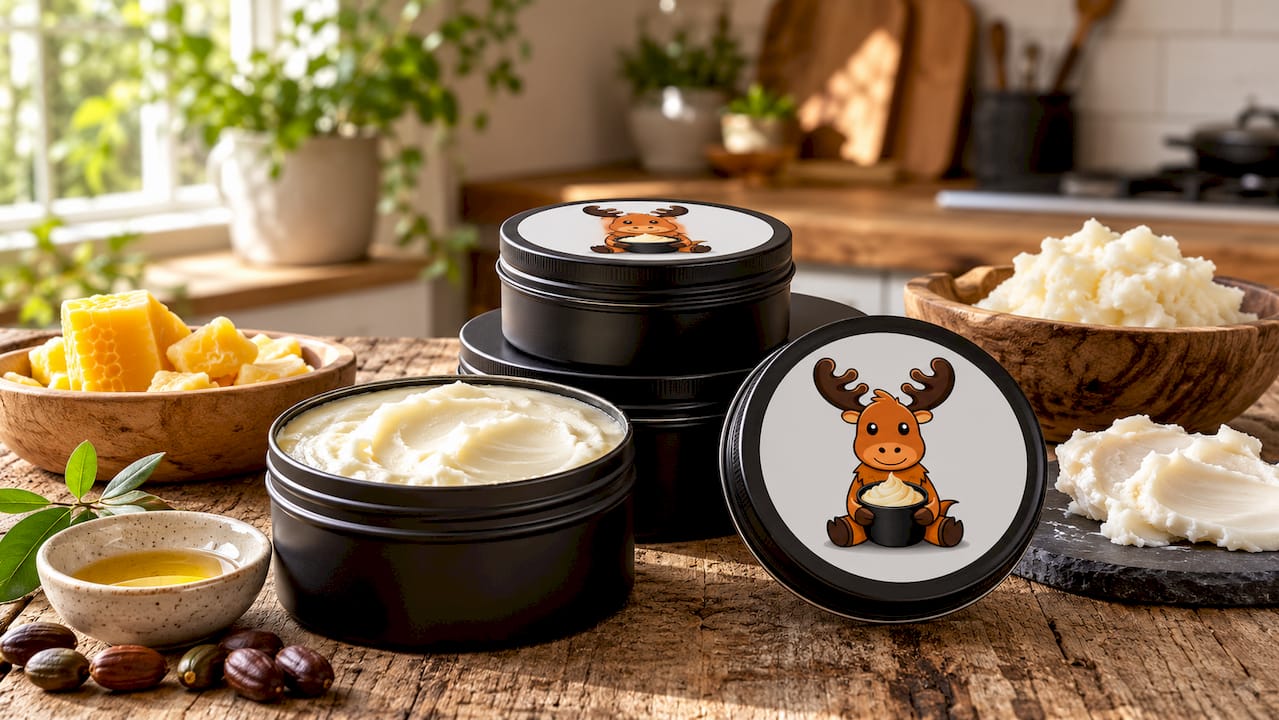
La distinción entre ingredientes naturales biocompatibles y aditivos sintéticos importa aquí. El sebo de res imita los lípidos nativos de la piel, lo que significa que se absorbe de forma limpia y apoya la barrera en lugar de quedarse encima de ella. El aceite de coco fraccionado es el aceite portador preferido en las fórmulas de Moose's Tallow porque es estable, resiste la oxidación, se absorbe con facilidad y tiene una larga vida útil. La cera de abeja aporta estructura sin bloquear los procesos naturales de la piel. La vitamina E (tocoferoles), la jojoba, el aceite de ricino y el aceite infusionado con yema de huevo cumplen cada uno un propósito específico en la fórmula, nunca como relleno.
| Enfoque de formulación | Efecto en la biología de la piel |
|---|---|
| A base de agua con emulsionantes | Puede alterar la bicapa lipídica y aumentar la TEWL |
| Solo oclusivos pesados | Puede bloquear la descamación y atrapar irritantes |
| Aporte de lípidos fisiológicos | Apoya la reparación natural de la barrera y la hidratación |
| Sin agua, dilución mínima | Reduce la exposición a rellenos y el estrés en la barrera |
Consejo: Revisa si el agua es el primer ingrediente en tu humectante actual. Si lo es, el producto es en su mayoría agua con una pequeña cantidad de ingredientes activos. Una fórmula sin agua entrega más de lo que tu piel realmente necesita.
Puedes aprender más sobre cómo evaluar los ingredientes del cuidado de la piel para afinar tu habilidad de leer etiquetas antes de tu próxima compra.
¿Cómo puedes evaluar la compatibilidad en tu rutina de cuidado de la piel?
Evaluar la compatibilidad con la biología de la piel requiere tiempo y atención. Las señales más claras de incompatibilidad aparecen rápido. El enrojecimiento, la picazón, el ardor, la tirantez o los granitos en un plazo de 24 a 48 horas indican hipersensibilidad o alteración de la barrera, no una verdadera reacción alérgica en la mayoría de los casos. Si notas alguno de estos, deja de usar el producto y dale a tu piel una semana para recuperarse antes de probar algo nuevo.
Pero la compatibilidad real se juzga mejor en un periodo más largo. Los resultados fisiológicos a lo largo de un mes, incluida una mejor textura de la piel, una hidratación más duradera y una aplicación de maquillaje más uniforme, son los verdaderos indicadores de un producto compatible. Un mes le da a tu piel tiempo suficiente para completar un ciclo completo de renovación y mostrar un cambio medible.
Aquí tienes un enfoque práctico para dar seguimiento a la compatibilidad:
- Empieza con un producto nuevo a la vez. Agregar varios productos al mismo tiempo hace imposible identificar qué ayuda o qué perjudica.
- Fotografía tu piel con una iluminación constante al inicio y en las marcas de dos y cuatro semanas. Los registros visuales revelan cambios que podrías pasar por alto día a día.
- Anota cuánto dura la hidratación después de aplicar. Un producto compatible mantiene la piel cómoda por horas, no solo minutos.
- Da seguimiento a factores ambientales como el clima, la dieta y los niveles de estrés. Todos afectan cómo responde tu piel y pueden imitar reacciones al producto.
- Evita limpiadores o exfoliantes agresivos durante el periodo de evaluación. Alteran la barrera y enturbian tus resultados.
La evaluación científica de la compatibilidad tópica combina mediciones de TEWL con pruebas de permeabilidad para medir la función de la barrera de forma objetiva. No puedes replicar eso en casa, pero dar seguimiento a la duración de la hidratación y a la textura de la piel te da un equivalente práctico. La paciencia es la herramienta más subestimada en el cuidado de la piel.
¿Qué papel juega el cuidado de la piel limpio y natural en la compatibilidad con la biología de la piel?
El cuidado de la piel limpio y natural apoya la compatibilidad con la biología de la piel al aportar ingredientes que la piel ya reconoce. Los lípidos biocompatibles como el sebo restauran la matriz lipídica de forma natural, mejorando la absorción y la hidratación sin obstruir los poros ni causar irritación. Este es el argumento central a favor de la transparencia en los ingredientes: cuando sabes exactamente qué hay en un producto y por qué, puedes hacer un juicio real sobre si le conviene a tu piel.
Las fórmulas que aportan lípidos fisiológicos en lugar de solo sellar la superficie apoyan mejor los mecanismos naturales de reparación de la piel. El sebo de res hace exactamente esto. Su composición de ácidos grasos se parece mucho a los lípidos que produce tu piel, por eso se absorbe sin dejar un residuo pesado y por eso la piel suele responder bien a él con el tiempo.
La transparencia en los ingredientes también significa saber qué no hay en un producto. Moose's Tallow no usa aceite de oliva, aguacate, almendra, manteca de karité, semilla de uva ni otros aceites vegetales. Estos son comunes en el cuidado natural de la piel, pero no forman parte de la fórmula de Moose's Tallow. El enfoque se mantiene en ingredientes estables, con propósito y genuinamente compatibles con la biología de la piel.
- El sebo de res aporta ácidos grasos que reflejan el propio perfil lipídico de la piel
- El aceite de coco fraccionado se absorbe con facilidad y resiste la oxidación para una vida útil más larga
- La cera de abeja aporta estructura y una protección suave sin bloquear la función de la piel
- La vitamina E (tocoferoles) apoya la defensa antioxidante natural de la piel
- La jojoba y el aceite de ricino añaden textura específica y propiedades de barrera sin relleno
Entender los conceptos básicos de la barrera de la piel te ayuda a ver por qué estas elecciones de ingredientes no son arbitrarias. Cada uno se gana su lugar en la fórmula.
Puntos clave
La compatibilidad real con la biología de la piel requiere productos que aporten lípidos fisiológicos, eviten los emulsionantes que alteran la barrera y ofrezcan mejoras medibles en hidratación y textura a lo largo de al menos un mes de uso constante.
| Punto | Detalles |
|---|---|
| La compatibilidad es biológica, no sensorial | Una textura agradable no confirma la compatibilidad; el apoyo a la barrera y la retención de hidratación sí. |
| La alineación con la matriz lipídica es lo que más importa | Ingredientes como el sebo de res reflejan los lípidos nativos de la piel y se absorben sin alterarla. |
| Los emulsionantes conllevan un riesgo real | Incluso los activos bien tolerados pueden aumentar la TEWL si los excipientes de la fórmula alteran la bicapa lipídica. |
| Evalúa a lo largo de un mes | La textura de la piel, la duración de la hidratación y la aplicación del maquillaje son los indicadores confiables de una compatibilidad real. |
| Las fórmulas sin agua reducen la exposición a rellenos | Quitar el agua elimina la necesidad de emulsionantes y entrega más ingredientes activos por aplicación. |
Lo que he aprendido sobre la compatibilidad que la mayoría de las etiquetas no te dirán
Empecé Moose's Tallow porque volteé un frasco de loción y conté 52 ingredientes. El agua era el primero. No sabía qué eran la mayoría de los demás. Lo que sí sabía era que mi piel nunca se sentía realmente mejor después de usarla. Se sentía bien por una hora y luego tirante otra vez. Ese ciclo parecía normal porque no tenía nada con qué compararlo.
Lo que he aprendido desde entonces es que la mayoría de las personas confunden la sensación inmediata con la compatibilidad. Un producto que se siente sedoso al aplicarlo puede estar lleno de emulsionantes que estresan la barrera en silencio todos los días. Los consumidores a menudo confunden una textura agradable con compatibilidad, pero la compatibilidad real se nota en cómo se comporta tu piel horas después, no segundos después de aplicar.
La otra cosa que he aprendido es que la paciencia es genuinamente difícil de vender. La gente quiere resultados rápido. Pero la biología de la piel no funciona en un plazo de 48 horas. La mejora real en la integridad de la barrera y la retención de hidratación toma semanas. Le digo a la gente que le dé a cualquier producto nuevo un mes completo antes de juzgarlo. Ese consejo no es popular, pero es honesto.
Lo que creo con más fuerza es esto: respetar la biología de tu piel significa elegir ingredientes que tu piel ya sabe usar. El sebo de res no es una moda. Es una grasa que tu piel reconoce a nivel molecular. Ese reconocimiento es lo que la compatibilidad realmente parece en la práctica. Sin necesidad de lenguaje de marketing.
Brian Smith
Moose's Tallow y el cuidado natural compatible con la piel
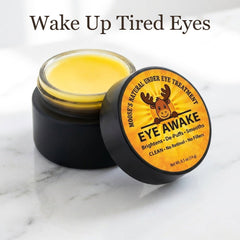
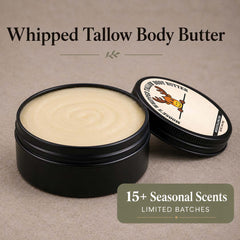
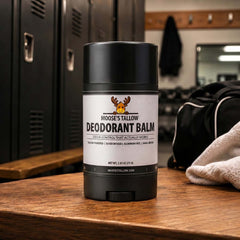
Moose's Tallow construye cada producto en torno a ingredientes que tu piel realmente puede usar. La manteca corporal de sebo batida es sin agua, hecha con sebo de res correctamente procesado y aceite de coco fraccionado, y se absorbe sin dejar una capa grasosa. El bálsamo labial reparador y la crema de manos siguen el mismo principio: ingredientes mínimos, cada uno elegido a propósito. Si tienes piel seca o sensible y estás cansado de productos que se desvanecen rápido o dejan tu piel tirante, la colección de cuidado natural para el invierno es un buen lugar para empezar. Cada producto se envía con una garantía de 60 días.
Preguntas frecuentes
¿Qué significa la compatibilidad con la biología de la piel?
La compatibilidad con la biología de la piel significa que un producto de cuidado funciona en armonía con la estructura natural de tu piel, apoyando la integridad de la barrera y la hidratación sin causar irritación ni alteraciones.
¿Qué tan rápido aparece la incompatibilidad de la piel?
Las señales de incompatibilidad, como enrojecimiento, picazón, ardor, tirantez o granitos, suelen aparecer en las primeras 24 a 48 horas de uso.
¿Por qué se considera que el sebo de res es compatible con la biología de la piel?
El sebo de res tiene un perfil de ácidos grasos que se parece mucho a los lípidos propios de la piel, lo que le permite absorberse de forma limpia y apoyar la barrera sin obstruir los poros ni causar irritación.
¿Los ingredientes naturales también pueden alterar la barrera de la piel?
Sí. Incluso los ingredientes naturales pueden estresar la piel si la fórmula genera una oclusión excesiva o usa emulsionantes que alteran la bicapa lipídica del estrato córneo.
¿Cuánto tiempo debes probar un producto para conocer su verdadera compatibilidad?
La compatibilidad real se evalúa mejor a lo largo de un mes, observando mejoras en la textura de la piel, la duración de la hidratación y el confort general, en lugar de la sensación inmediata.
Recomendados
- Cómo entender la compatibilidad de la piel: una guía práctica – Moose's Tallow
- Sebo vs aceites vegetales: 22% más hidratación para tu piel – Moose's Tallow
- El cuidado natural de la piel explicado: beneficios para la piel sensible – Moose's Tallow
- Cuidado apto para eczema: lo que de verdad funciona – Moose's Tallow


0 comentarios