


TL;DR:
- Skin compatibility refers to how well a skincare product interacts with your skin type and barrier without causing irritation. Recognizing signs like redness, itching, or breakouts helps determine if a product is suitable for your skin, which depends on understanding your skin’s condition and ingredient chemistry. Proper testing and gentle routines are essential for choosing effective skincare that supports your skin’s health and barrier integrity.
Skin compatibility is defined as the degree to which a skincare ingredient or product works with your skin type and barrier without causing irritation or damage. When there is a mismatch, your skin signals it clearly: redness, itching, burning, tightness, or small breakouts appear within hours or days. Understanding skin compatibility is the foundation of choosing skincare that actually works for you. It goes beyond reading labels. It means knowing your skin type, respecting your barrier, and learning how ingredients interact at a chemical level.
How to identify your skin type and compatibility needs
Skin type analysis is the starting point for every good skincare decision. The five recognized skin types are dry, oily, combination, sensitive, and normal. Each one responds differently to the same ingredient, which is why skin type is the primary factor in determining whether a product helps or harms.
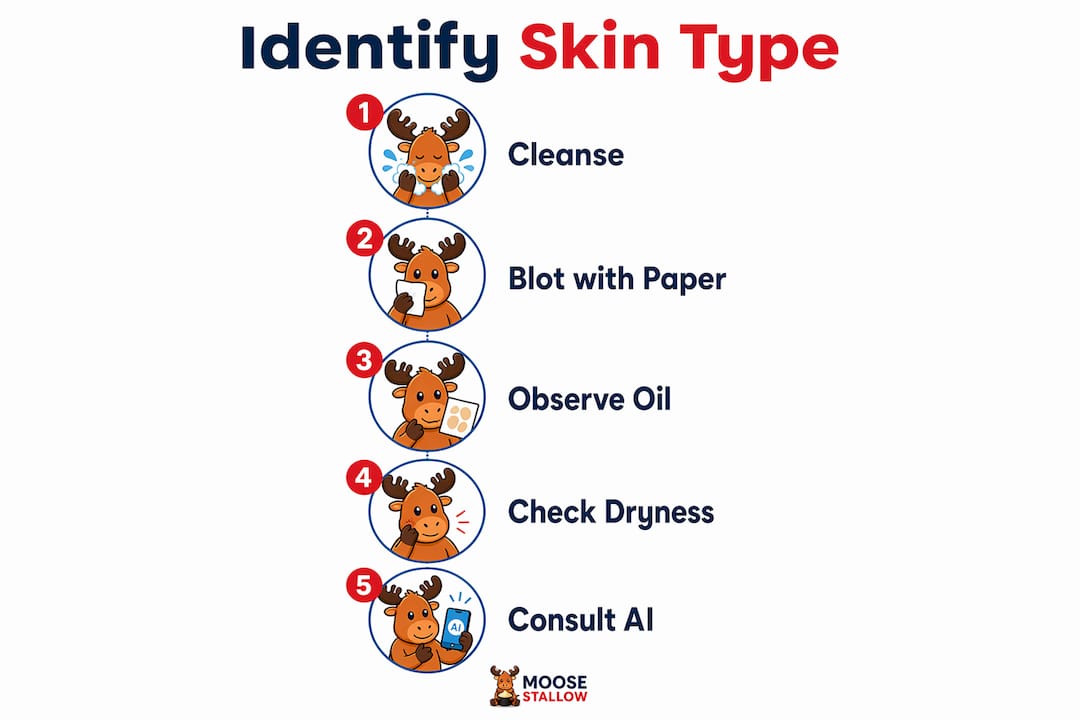
The classic blotting paper test remains one of the most reliable home methods. Press a clean tissue to your face one hour after washing. Oily skin leaves a clear film on the paper. Dry skin leaves nothing. Combination skin shows oil only in the T-zone. Sensitive skin often reacts to the test itself with flushing or tightness.
AI-powered tools have changed skin type analysis significantly. La Roche-Posay’s AI platform analyzes six or more skin concerns with over 95% accuracy in under one minute using photo databases. That speed and precision gives you a detailed starting point before you spend money on products.
Your skin barrier condition matters just as much as your skin type. A damaged skin barrier increases reactivity to even mild ingredients. This means a product that works perfectly for someone with a healthy barrier can cause irritation for someone whose barrier is compromised. Barrier support is not optional. It is the prerequisite for everything else.
Key signs your barrier needs attention before adding new products:
- Skin feels tight or rough after washing
- Moisturizer stings or burns on application
- Redness appears without a clear cause
- Skin feels dry even after applying products
If you recognize these signs, start with simple ingredient skincare before layering actives.
What factors determine ingredient compatibility?
Ingredient compatibility in skincare is determined by three things: pH level, molecular weight, and the interaction between active compounds. Get these wrong, and products cancel each other out or irritate your skin.

pH levels and active ingredients
Every active ingredient has a pH range where it performs best. Misaligned pH levels between products can neutralize effectiveness and disrupt your barrier. Here is a clear reference:
| Active Ingredient | Optimal pH Range | Compatibility Note |
|---|---|---|
| Vitamin C (L-ascorbic acid) | Below 3.5 | Conflicts with high-pH actives; apply first |
| Retinol | 5.5–6.0 | Avoid layering with acids; use at night |
| Niacinamide | 5.0–7.0 | Broadly compatible; good beginner active |
| AHAs/BHAs | 3.0–4.0 | Do not layer with Vitamin C same session |
Niacinamide stands out here. It controls oil, strengthens the barrier, and reduces redness with no serious conflicts. For anyone new to actives, it is the safest place to start.
Molecular weight and layering order
Molecular weight determines how deep an ingredient penetrates. Lighter molecules go deeper. Heavier ones sit on the surface. This is why layering from thinnest to thickest is the correct sequence. Apply water-based serums first, then thicker creams, then oils or balms last to seal everything in.
Limit yourself to two or three serums per session. More than that and you risk ingredient conflict and barrier overload. Learn more about maximizing moisturizing effects to get layering right.
Pro Tip: Apply Vitamin C in the morning and retinol at night. This separation by time of day prevents pH conflict and protects your barrier from unnecessary stress.
How do you test for skin compatibility at home?
Patch and stinging tests are the standard methods for identifying skin hypersensitivity. Common incompatibility signs include redness, itching, burning, tightness, dryness, and small pimples. These appear within 24–48 hours of exposure.
A home patch test is simple and takes less than five minutes to set up. Follow these steps:
- Choose a discreet area such as behind your ear or on your inner wrist.
- Apply a small amount of the new product to that area.
- Leave it on for 24–48 hours without washing it off.
- Check for redness, itching, or burning at the 24-hour mark and again at 48 hours.
- If no reaction appears, apply the product to a small area of your face for three to five days before full use.
- Introduce only one new product at a time so you can identify the cause if a reaction does occur.
The skin renewal cycle is roughly 28 days. This means you need at least 4–6 weeks of consistent use to fairly evaluate whether a product is working. Stopping after one week tells you almost nothing.
Pro Tip: Keep a simple notes app log of every new product you introduce, the date you started, and any reactions you notice. This turns guesswork into a clear record you can share with a dermatologist if needed.
Common myths about skincare product interactions
No product is inherently bad for skin. According to Dr. Michele Green, skin type is the deciding factor in compatibility, not the product itself. A rich balm that causes breakouts on oily skin may be exactly what dry or sensitive skin needs.
Skincare works best when you treat it as a system, not a collection of isolated products. Industry experts advocate for cycling actives intelligently to avoid conflicts and address multiple concerns safely. Rotating retinol, Vitamin C, and acids on different days prevents overloading your barrier while still delivering results.
Here are the most common myths, corrected:
- Myth: More actives mean faster results. Fact: Layering too many actives at once increases irritation risk and reduces each ingredient’s effectiveness.
- Myth: Natural ingredients are always safe. Fact: Natural ingredients can still disrupt pH balance or trigger reactions in sensitive skin.
- Myth: If a product burns, it is working. Fact: Burning is a sign of incompatibility or barrier damage, not efficacy.
- Myth: You need to use a product daily to see results. Fact: Cycling actives on alternate days often produces better results with less irritation.
If you want to choose natural skincare that actually fits your skin, start by understanding what your skin type needs, not what a trend recommends.
Key takeaways
Skin compatibility is determined by matching ingredients to your skin type, barrier condition, and the pH and molecular weight of each product in your routine.
| Point | Details |
|---|---|
| Know your skin type first | Dry, oily, combination, sensitive, and normal skin each respond differently to the same ingredient. |
| Respect pH ranges | Vitamin C needs pH below 3.5; retinol works best at 5.5–6.0; layering them together reduces both. |
| Patch test every new product | Apply to a discreet area and observe for 24–48 hours before full face use. |
| Allow 4–6 weeks to evaluate | Skin renews roughly every 28 days; short trials give incomplete results. |
| Cycle actives, not stack them | Rotating retinol, acids, and Vitamin C on separate days prevents barrier overload. |
Why simplicity is the most underrated skincare strategy
I have spent a lot of time thinking about what actually makes skincare work. The answer is almost always simpler than the industry wants you to believe. When I started formulating Moosestallow products, the clearest lesson I kept coming back to was this: a compromised barrier makes everything worse. It does not matter how good an ingredient is on paper. If your skin barrier is damaged, that ingredient will likely irritate rather than help.
That is why I believe patch testing is not optional. It is the most honest conversation you can have with your skin. And patience matters just as much. Four to six weeks feels like a long time when you want results. But rushing that process is how people end up blaming good products for problems caused by incompatibility.
The other thing I keep coming back to is ingredient transparency. When you know exactly what is in a product and why each ingredient is there, compatibility becomes much easier to assess. That principle shapes every Moosestallow formula. Beef suet tallow, fractionated coconut oil, beeswax, tocopherols, jojoba, castor, and egg yolk infused ingredients. Each one earns its place. Nothing is there to pad a formula or cut costs.
— Brian
How Moosestallow supports your skin’s natural compatibility
Moosestallow builds every product around ingredients that work with your skin’s biology, not against it. Beef suet tallow sits at the center of every formula because its fatty acid profile closely mirrors the skin’s own lipids. Fractionated coconut oil is the preferred carrier here because it absorbs cleanly, resists oxidation, and extends shelf life without adding unnecessary weight. Beeswax, tocopherols, jojoba, castor, and egg yolk infused ingredients round out formulas that prioritize barrier support and honest performance.
There are no fillers. No harsh synthetics. Every ingredient is chosen for what it does, not how it looks on a label. If you are ready to try skincare built around barrier-first principles, explore the full Moosestallow collection and find a formula that fits your skin type and concerns.
FAQ
What is skin compatibility in skincare?
Skin compatibility is the match between a skincare ingredient and your skin type, barrier condition, and existing routine. A compatible product supports your barrier without causing redness, itching, or breakouts.
How do i know if a product is incompatible with my skin?
Common signs of incompatibility include redness, burning, itching, tightness, and small pimples appearing within 24–48 hours of use. A patch test behind the ear is the most reliable way to check before full application.
Can i use vitamin c and retinol together?
Vitamin C requires a pH below 3.5 while retinol works best at 5.5–6.0. Layering them in the same session reduces the effectiveness of both. Apply Vitamin C in the morning and retinol at night to avoid this conflict.
How long should i test a new skincare product?
Allow at least 4–6 weeks of consistent use before judging a product. The skin renewal cycle is roughly 28 days, so shorter trials do not give a complete picture of how your skin is responding.
Is niacinamide safe for sensitive skin?
Niacinamide is one of the most broadly compatible actives available. It works across all skin types, strengthens the barrier, reduces redness, and has no serious conflicts with other common ingredients.


0 comments